| | | | Szabolcs Panyi
Central Europe investigative editor | | | The name VSquare comes from V4, an abbreviation of the Visegrád countries group. Over the years, VSquare has become the leading regional voice of investigative journalism in Central Europe. We are non-profit, independent, and driven by a passion for journalism.
Support our investigations: donate today, keep our stories flowing.
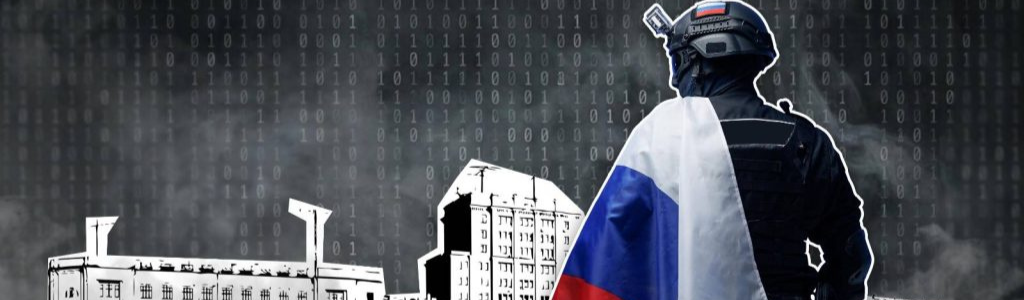
Help us spread the word by sharing this newsletter’s online version. | | | | | Hungary has quietly expelled Artur Sushkov, a 36-year-old Russian SVR officer posing as a third secretary at the Russian Embassy in Budapest, who spent years networking inside the think-tanks and academic institutions closest to the Orbán government — running informants, recruiting assets, and vacuuming up everything from political intelligence to the Wi-Fi password. The expulsion came months after Hungary's own counterintelligence service had recommended it: the Orbán government blocked the move earlier this year, unwilling to irritate Moscow in the middle of the election campaign. Sushkov and his wife were finally put on a plane on May 4 — weeks after Orbán's defeat removed the political shield that had kept a Russian spy in Budapest. We’ll have some more information on Russian espionage in Budapest in our scoops section, but until then, read my fresh story here. | | | Hidden inside Bauman Moscow State Technical University — one of Russia's most prestigious engineering schools — is a secret department that doesn't appear on any organizational chart. Based on over 2,000 leaked internal documents, VSquare and an international consortium including Der Spiegel, Le Monde, The Guardian, The Insider, Delfi Estonia, and Frontstory.pl reveals how "Department No. 4" systematically funnels graduates into the GRU units behind Russia's cyberattacks, election interference, and NATO sabotage operations. The curriculum runs from password cracking and server hacking to DDoS attacks and propaganda video production — all overseen by Lieutenant Colonel Kirill Stupakov, himself an active GRU officer, alongside sanctioned Fancy Bear hackers who evaluate the students they'll soon command. Read our investigation here. | | | | SPICY SCOOPS There is always a lot of information that we hear and find interesting and newsworthy but don’t publish as part of our investigative reporting—and share instead in this newsletter. PROVOCATION SEASON: RUSSIA'S ELECTION CALENDAR THREATENS NATO'S EASTERN FLANK Western intelligence services are picking up distress signals from the Kremlin. Russia is on the back foot on the battlefield in Ukraine, its economy is under growing strain, and — crucially — polling ahead of the September 18–20 parliamentary elections looks bad for Putin's United Russia. According to multiple Central European security sources, a deepening conflict has emerged between the presidential administration and the siloviki — the heads of the military and security services and their allies. One message Western intelligence has intercepted: fears that the siloviki have convinced Putin that, while a decisive breakthrough in Ukraine remains out of reach, a new kinetic provocation against an EU country could inflame nationalist sentiment at home and reverse United Russia's slide in the polls. Such provocations could go well beyond recent sabotage attacks, arsons and explosive packages. One aim could be to prove that the Trump administration doesn't honor NATO's Article 5 – something Polish PM Donald Tusk has recently very explicitly warned of. This aligns with what analyst Evgenii Liamin of the EK Strategic Communications Center documented in a recent report. Russia's security establishment — Shoigu, Naryshkin, Patrushev, Lavrov, and Medvedev — has launched a coordinated escalation campaign built around the narrative that "Europe is preparing aggression against Russia," accompanied by concrete provocations: increased Baltic airspace violations, shadow fleet tankers now escorted by naval frigates, and the Russian Ministry of Defense publishing a target list of European drone manufacturers supplying Ukraine. The campaign's timing and coordination suggest the security bloc is openly pushing for expanding the war beyond Ukraine, where Russia cannot deliver the decisive victory it needs. Escalation, Liamin argues, is politically useful for the Kremlin: it converts internal weakness into siege psychology, justifies further militarization, and — in the event of even a limited tactical success — strengthens the siloviki in their competition with civilian factions for control of the agenda. The risk, he concludes, is that even a limited Russian operation against an EU member state, if not met with an immediate NATO response, would amount to a hammer blow against the Alliance's credibility. “Based on our source work and analysis of Russia's internal and geopolitical dynamics, escalation beyond Ukraine remains one of the key scenarios being discussed or prepared for within parts of the Russian elite. A "party of escalation" — associated with the FSB's political-operational wing, hardline security factions, Nikolai Patrushev, and Igor Sechin — sees continued war, deeper militarization, harsher domestic dictatorship, and alignment with China as instruments of regime survival” – EK Strategic Communications Center’s founder Egor Kuroptev told VSquare. He calls the other faction the "party of pause" – linked to big business and parts of Putin's older KGB-connected circles, who view the war as increasingly costly, destabilizing, and dependent on further extraction from business and civilian sectors. According to him, amid US pressure on NATO and doubts over Washington's readiness to defend Europe, the Kremlin sees a temporary window for coercive action before Europe's defense buildup — and possible political changes in Washington — narrow Russia’s room for maneuver. “A limited provocation against a smaller EU or NATO member, in the Baltic region or around the Suwałki Corridor, could replace war fatigue with fear of a larger conflict, suppress domestic pressure, and blackmail Europe — making escalation, possibly after a short pause, almost the only remaining instrument for preserving the regime in its current form” – Kuroptev argues. Meanwhile, Putin and his propagandists are telling the Russian public that it’s not them but NATO which is looking out for a conflict. "Western media widely circulated Putin's statement that the end of the war in Ukraine is near, but missed the key context: the very next day he drove to visit his former school teacher — both moves signal the launch of the Kremlin's State Duma election campaign. His remarks are aimed at Russians who want peace, but his actual message was carefully hedged: he'd like the war to end, but 'Western globalists are waging war against us,' so the outcome isn't entirely in his hands" — former Czech security analyst Václav Malík, now working at the Prague-based Center for an Informed Society think-tank, tells me. Malík adds that, at the same time, Belarusian dictator Alexander Lukashenko announced continued "targeted mobilization" to prepare for war, while a prominent Kremlin commentator warned that unless Russia starts striking drone production facilities in Europe, Ukraine will eventually overwhelm it. "The pattern is consistent: while signaling peace to domestic audiences, the Kremlin simultaneously sustains the narrative that Russia faces an existential threat from the West and must keep preparing for broader war" — the analyst says. NO MORE QUIET EXITS? HUNGARY'S COUNTERINTELLIGENCE RECKONING AFTER ORBÁN Quiet expulsions have been the hallmark of Hungary's counterintelligence operations under Viktor Orbán's sixteen years. When Russian spies were sent home — rarely — it was always kept under wraps to avoid irritating the Kremlin. That is expected to change under Péter Magyar's freshly formed government, which has already summoned the Russian ambassador to the foreign ministry after Russia's drone attack on Transcarpathia — the region in western Ukraine that is also home to a significant Hungarian minority. But according to Hungarian national security and counterintelligence sources, the Magyar government will soon be presented with more retaliatory options: a long list of more than a dozen of identified Russian spies operating under diplomatic cover in Budapest. Right after Russia's full-scale invasion of Ukraine in February 2022, Hungary's counterintelligence service handed the Orbán government exactly such a list of diplomats to expel. According to a counterintelligence source, the answer was a flat "no" — making Hungary almost the only country in the EU and NATO that took no such steps. As a result, the SVR and GRU rezidenturas at the Russian Embassy on Bajza Street have remained almost entirely intact. In recent years, according to my knowledge, very few quiet expulsions took place. One was SVR officer Artur Sushkov, expelled on May 4, 2026 — his infiltration of the Mathias Corvinus Collegium, the Hungarian Institute of International Affairs, and Ludovika Public Service University is detailed in our investigation above. The other I've heard of — reported here for the first time — happened on June 20, 2024, when Andrey Tarakanov, a GRU officer posing as a third secretary, was quietly shown the door. He had barely spent a year in Hungary, arriving in August 2023, and according to a source familiar with his activities, was involved in Russian influence operations directed not at Hungary itself but at other EU countries — reinforcing what national security experts have long warned: Budapest has become a staging ground and logistics hub for Russian espionage against the broader Schengen area. The new Magyar government is set to receive a refreshed list of Russian intelligence officers under diplomatic cover as it moves to close the counterintelligence gap that Orbán deliberately left open in the EU/NATO shield. (Read our previous interview with former Hungarian counterintelligence officer Ferenc Katrein on how expulsions of Russian diplomats are conducted.) | | | | | | | DESSERT AND FURTHER READINGS
| For those still hungry for more, we’re finishing today’s menu with a couple of recommendations from our friends and colleagues. SLOVAKIA WANTS TO DEFEND NATO'S EASTERN FLANK, WHILE ITS PM COURTS THE COUNTRY THREATENING IT. Slovakia's foreign policy schizophrenia on full display: while PM Fico flew to Moscow to meet Putin for the fourth time, his defence minister was in Warsaw announcing Slovakia's first-ever Baltic Air Policing mission. Also in this issue of How We Cee It: Poland signs the SAFE rearmament loan despite a presidential veto — and whether Slovenia's Janša is the next Orbán (spoiler: probably not). HOW THE RUSSIAN REGIME SILENCED A MAN WHO SET HIMSELF ON FIRE IN PROTEST AGAINST THE WAR. On the third anniversary of Russia's full-scale invasion, Aleksandr Okunev walked into Kaliningrad's Victory Park at 5 am, wrote "No to war" in the snow, and set himself on fire. By 9:15 am the scene was scrubbed clean. In his farewell note, he wrote that he knew it would never make the news — and he was right. A joint investigation by my Tallinn colleague Holger Roonemaa's Delfi team, LRT, and iStories reconstructed what happened and how the regime buried it. Read it in Holger’s The Baltic Flank newsletter. PUTIN'S PRIEST HARASSED HIS ASSISTANT, THEN SENT THE POLICE AFTER HIM. NOW THE POLICE HAVE REVERSED COURSE. Deník N reports that Hungarian police have dropped their investigation of Georgy Suzuki, the former assistant to Russian intelligence-linked Orthodox Metropolitan Hilarion in Budapest. Suzuki fled to Japan after accusing the cleric of sexual harassment — taking €90,000 in watches and cash on his way out. Police had issued an international arrest warrant for theft, but reversed course after accepting Suzuki's account of the abuse. Hilarion has since been based in Karlovy Vary, Czech Republic. | | | |
|