
|
Is Trump losing it?
PLUS: Edith Wharton, toothaches, and the first installment of your Summer Bookies
| |||||||||||||||


 |
Hello — This week in 1915, author and NYC native Edith Wharton wrote a dispatch for US newspapers from the front lines of World War I in France, where she had moved. She was upset that the US hadn’t entered the war (it wouldn’t do so until 1917, three years after fighting began). See more below.
The sun rose in Boston at 5:22 a.m. and will set at 7:59 p.m. for 14 hours and 37 minutes of sunlight. There’s a new moon Saturday.
Dread going to the dentist? Don’t. In fact, be grateful there are dentists. The Old Farmer’s Almanac says that in the really olden days, people used some pretty bizarre “remedies” to try to get relief from intense toothaches. They included eating grasshopper eggs, holding a live frog or fresh cow manure against your aching cheek, and picking your teeth with the nail of the middle toe of an owl, which is more difficult than you would think, given that an owl has four toes. Here’s more.
🤯 Is Trump losing it?
It’s a question that’s been asked for years, given that Trump’s megalomania was on display for decades during his career as a real estate developer. But concern accelerated when he was first elected president, because lots of people recognized that having a greedy, aging, self-centered moron in the highest political office in the land may not be the best idea.
Those worries about his mental health have never disappeared, but they are being voiced now perhaps louder than ever. Trump is writing increasingly bizarre, lengthy, incomprehensible social media posts. He attacked the pope. He has threatened to wipe Iran off the map because its leaders surprised him by doing very predictable things like launching attacks against US military bases in the Middle East and closing the Strait of Hormuz. His ramblings during meetings are painful to watch: Mispronounced words, wrong names, slurred speech.
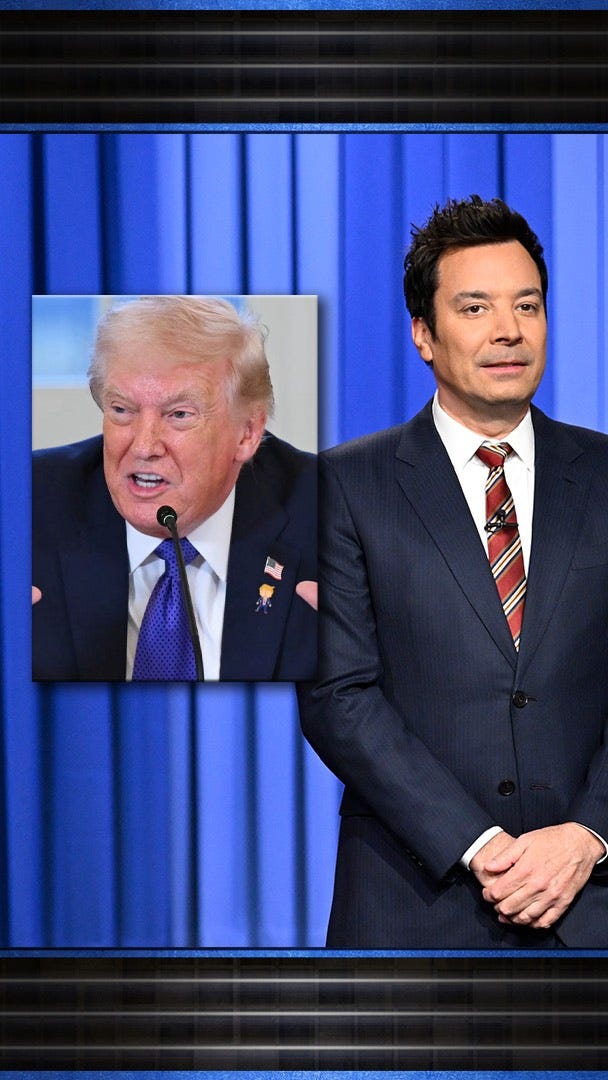
The current warnings are reminiscent of the alarms raised by mental health professionals within a few months of his first inauguration in 2017. That spring, more than 30 psychiatrists warned at a conference at Yale University that Trump had a dangerous mental illness and that they had an ethical responsibility to warn the American public. They said he was a paranoid, delusional narcissist and liar who engages in grandiose thinking.
That same year, more than 41,000 mental health professionals signed a petition saying that Trump had a serious mental illness and was "psychologically incapable of competently discharging the duties" of the presidency. They said those mental issues included narcissism, paranoia, sociopathy, and sadism.
Still in 2017, a forensic psychiatrist published a book containing essays by 27 psychologists, psychiatrists, and mental health professionals arguing that Trump’s pathological traits put the nation at risk. Those traits included narcissistic personality disorder, extreme hedonism, and bullying. The book was called “The Dangerous Case of Donald Trump.”
(I’m sensing a pattern here.)
Were all of these mental health professionals simply a bunch of sore-loser Democrats? All I know is that retired Marine Corps General John Kelly, when he became Trump’s second chief of staff in 2017, secretly read the book to try to figure out how to handle Trump’s irrational behavior.
As Susan Glasser of the New Yorker and Peter Baker of The New York Times wrote in their book “The Divider:”
[Kelly] sought help to understand the president’s particular psychoses and consulted it while he was running the White House, which he was known to refer to as ‘Crazytown.’
Kelly told others that the book was a helpful guide to a president he came to consider a pathological liar whose inflated ego was in fact the sign of a deeply insecure person.
Fast forward to today. Baker, the Times’ chief White House correspondent, wrote on Wednesday that Trump’s erratic behavior and extreme comments are reviving the debate about his mental health (🎁).
A series of disjointed, hard-to-follow and sometimes-profane statements, his extreme threats, and his head-spinning attacks “have left many with the impression of a deranged autocrat mad with power,” Baker writes.
On April 30, three dozen neurologists, psychiatrists, and other physicians with extensive experience diagnosing cognitive disorders — and all with different backgrounds and political leanings, including two Nobel Prize recipients — issued a statement that Trump was too mentally unfit to have access to the country’s nuclear trigger. They wrote, in part:
It is our professional opinion that the behaviors of Donald Trump, tragically, are neither momentary lapses nor political theater. It is our professional opinion that they reflect a rapidly worsening, reality-untethered, increasingly dangerous decline [including] marked deterioration in cognitive functioning, evidenced by disorganized and tangential speech, rambling digressions, factual confusions, unexplained sudden changes of course in strategic matters, both national and international, episodes of apparent somnolence during critical public proceedings.
We are compelled to warn of a President of the United States who is increasingly a danger to the public. We do not take our statement, and the responsibility that comes with making it, lightly.
Earlier this week, Yahoo! News, the Daily Beast, and other outlets noted the dramatic increase in Trump’s middle-of-the-night unhinged posts on Truth Social. For example, this past Monday night, he posted or reposted 55 times between 10:15 p.m. and 1:13 a.m. — 55 posts in less than 3 hours. No wonder he’s falling asleep in meetings.