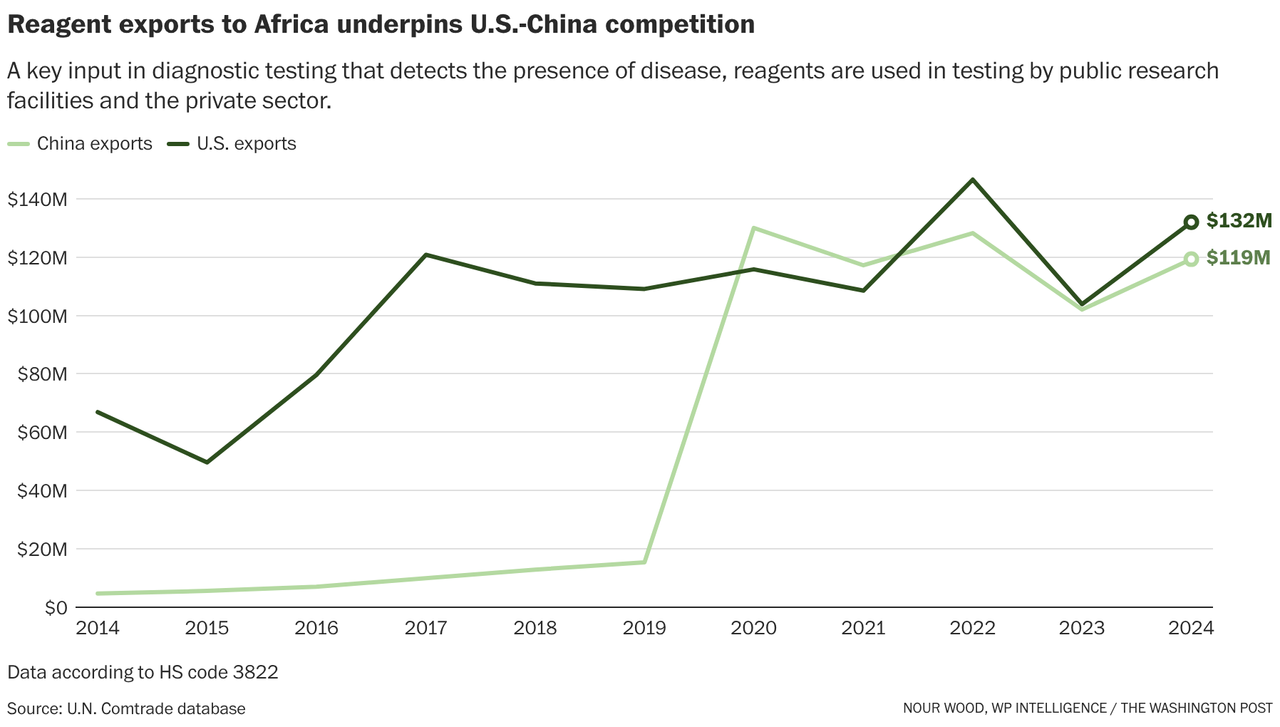
| |  | The Lead Brief | The Trump administration is preparing to deploy a new model for purchasing the tests that detect HIV, tuberculosis and other infectious diseases abroad, hoping to streamline contracting that promotes American manufacturers while making foreign assistance more sustainable, according to a senior State Department official. In details shared first with Nour and me, the official said the move is also designed to help United States-based diagnostics companies compete against lower-cost Chinese rivals that have gained ground across Africa in recent years. Under the plan, the U.S.-funded testing program would purchase diagnostic machines, testing materials — such as reagents — and maintenance services directly from manufacturers as part of a single contract, rather than a piecemeal approach through third-party organizations, said the official, who spoke on condition of anonymity because the plans have yet to be announced. It’s part of the “America First” global health strategy the Trump administration unveiled last September. → On Friday, the State Department kicks the official procurement process for these tests by releasing a request for information (RFI) from industry players and others seeking input on the proposed overhaul. In the coming months, the administration will then put out a request for proposal (RFP) to diagnostic manufacturers. The Trump administration has argued that a reliance on outside partnerships was a major flaw of the U.S. Agency for International Development’s assistance model, consuming financial resources that should be spent directly on aid. For example, the State Department estimates 66 percent of the fiscal 2024 budget for the President’s Emergency Plan for AIDS Relief, universally known as PEPFAR, represented “duplicative and highly inefficient” spending not directly related to health commodities and health care workers. Now, the federal government wants to eliminate middlemen organizations and develop all-inclusive contracts directly with diagnostics manufacturers. Using federal funds to promote diagnostics companies — including Abbott, Cepheid and Hologic — based in the United States is a cornerstone of the strategy, according to the document released in September. HOW IT WORKS The State Department is moving to implement a bundled “per-test” rate covering everything from machines and maintenance to reagents and distribution — an approach officials believe will keep equipment functioning longer, guarantee larger purchasing volumes and eventually allow partnering governments to buy into the same negotiated pricing structure themselves. The official said Thursday that the government plans to maintain the level of spending on diagnostic testing abroad — roughly $200 million per year — but hopes the money will now go further. The State Department says that securing these lower prices for the recipient countries is a step toward a long-term goal of shifting program funding away from the U.S. “Because we’re buying across all the countries — and if we’re creating a contract that countries can buy into, in addition to that volume that we’re guaranteeing — it allows the manufacturers to know the volume that they can be assured of better than if each country was having to procure individually, where they would price differently,” the senior official said. “The pool aspect makes it price-competitive.” The 32 countries — including Nigeria, Burkina Faso and Ethiopia — that have already signed bilateral health deals with the administration will be prioritized for procurement. Why it matters: The “America First” strategy is being deployed following the administration’s dismantling of USAID and the traditional foreign assistance model. The plan, which also includes the deals with individual countries — mostly in Africa — has drawn criticism from some transparency advocates and sparked frustration among some partner countries, as Adam Taylor in The Washington Post newsroom reported last month. But the public-private partnerships have appeared less controversial. The State Department has already inked deals with Gilead Sciences to provide millions of its HIV prevention shots to lower-income countries and SC Johnson to provide a machine meant to prevent the transmission of malaria. More on those deals below. What to watch: One of the main goals of the overhaul is to thwart growing Chinese influence. “There’s aggressive price competition in Africa and other places from Chinese manufacturers of diagnostic tests, and so we believe this will really help us compete as a nation in that environment,” the senior State Department official said. “If we have really good products, countries will want them.” | 

_tstmp_1756933376-1920-1080.png)