| | Putin arrives in Beijing with the Ukraine war weighing on Russia, an Ebola outbreak spreads through ͏ ͏ ͏ ͏ ͏ ͏ |
| |  | Flagship |  |
| |
|
The World Today | 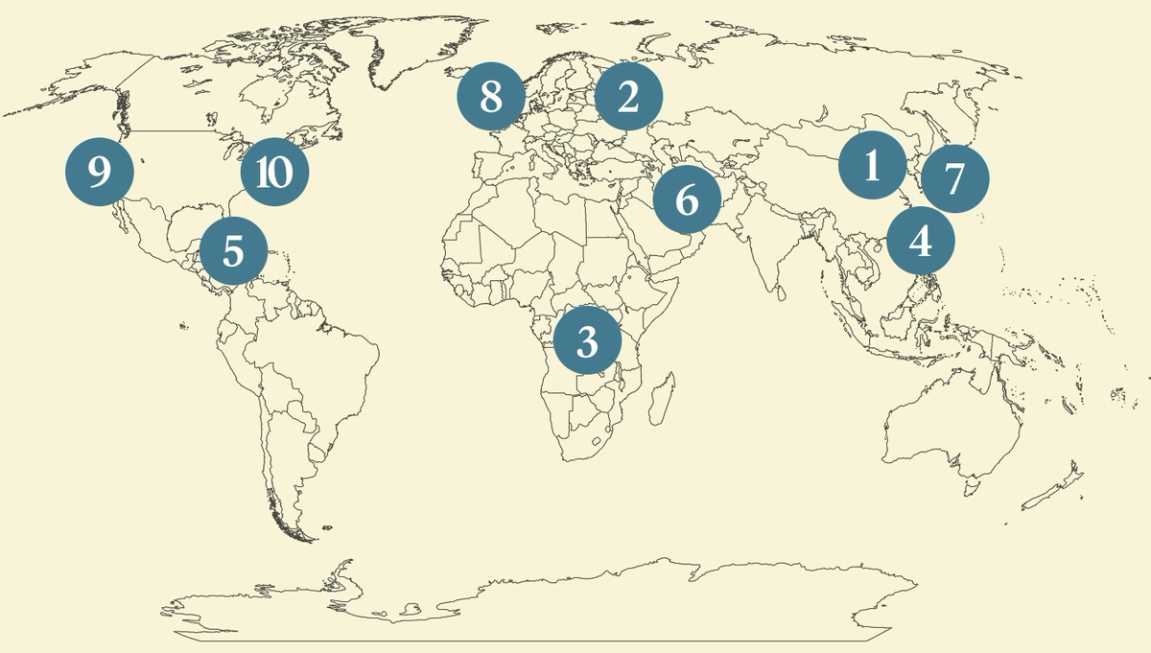 - Putin heads to Beijing
- Russia’s Ukraine time bomb
- African Ebola outbreak
- Philippines backs Taiwan
- Cuba ‘bloodbath’ warning
- Inflation fears persist
- Japan’s economic boost
- Jobs hit by AI, inflation
- AI’s close-knit aristocracy
- High-end art sales rebound
 Capturing the ‘brilliance and magnetism’ of a late US Supreme Court justice. |
|
Putin, Xi to discuss energy, Ukraine |
 Sputnik/Alexander Kazakov/Pool via Reuters Sputnik/Alexander Kazakov/Pool via ReutersRussian President Vladimir Putin opens a visit to Beijing today that will focus on energy sales, cementing Xi Jinping’s status as a leader who holds court and whom fellow heads-of-state increasingly travel to see. The timing of the trip — days after Xi hosted US President Donald Trump — is coincidental, however, given Trump’s travels were rescheduled from March. It will also likely underscore the increasingly lopsided relationship between Russia and China: Core to the talks will be a gas pipeline long in the making, which Moscow hopes will be of renewed importance to Beijing given uncertainty in global energy supplies because of the Iran war. Also likely on the agenda: the Ukraine war, which Xi reportedly told Trump that Putin may regret. |
|
Putin seeks projection of power |
 Prokofyev/Pool via Reuters Prokofyev/Pool via ReutersThe Kremlin launched three days of nuclear drills, a show of force that comes with its war in Ukraine going badly. Kyiv has fought the Russian army to a standstill in recent months: Drones are killing Russian soldiers and disrupting logistics and oil infrastructure. Moscow’s recruitment is unable to keep up with losses. Geopolitically, the Kremlin is facing setbacks as well: Ukraine is edging closer to EU membership, now that Hungary’s pro-Russia former leader has gone and taken his veto with him. Whether or not Kyiv can militarily defeat Moscow, “they are showing to the world, to themselves, and to the Russians who care to know,” one historian told Foreign Policy, “that time is not necessarily on Russia’s side.” |
|
Ebola outbreak grips central Africa |
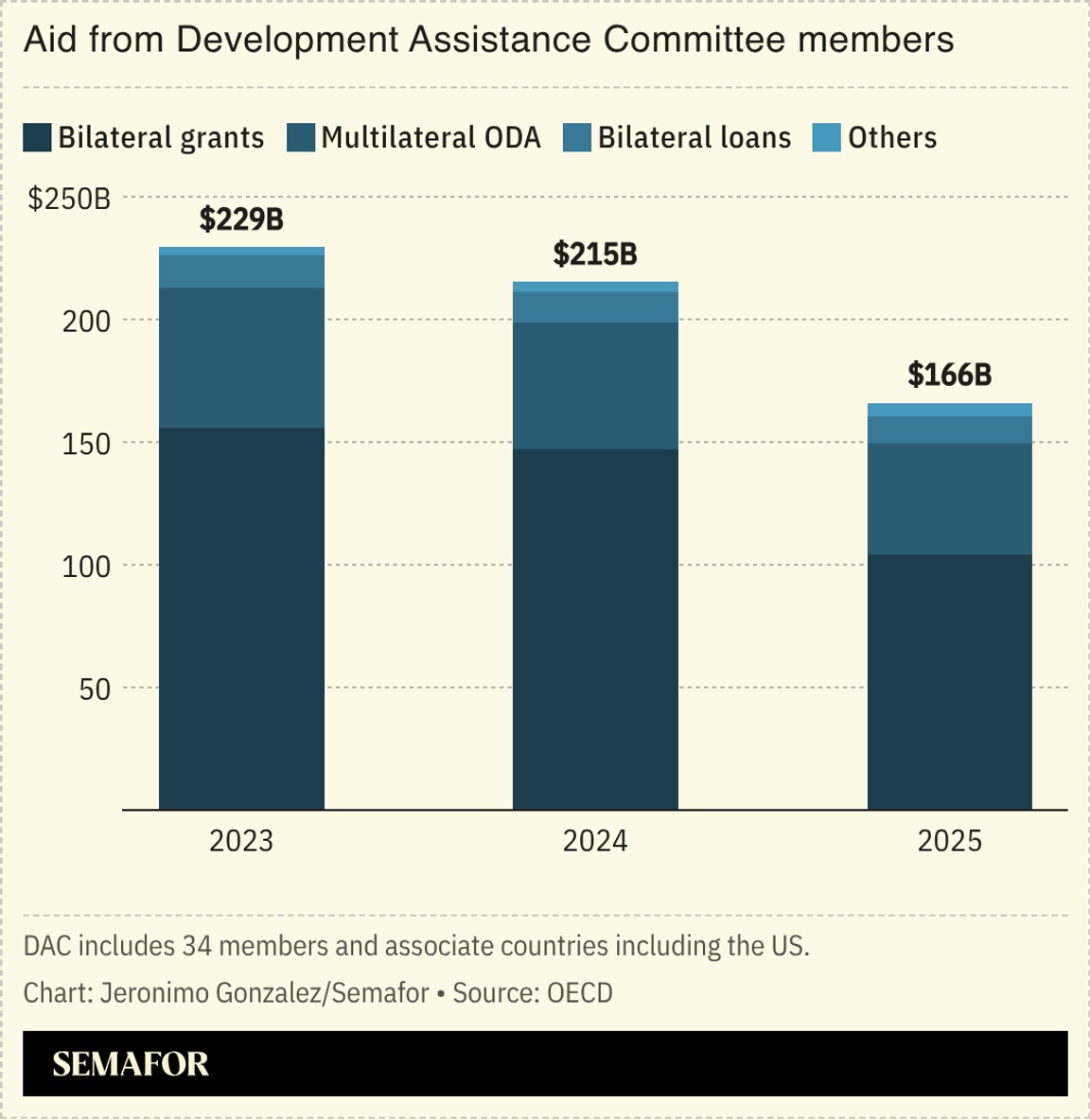 An Ebola outbreak in central Africa has killed at least 131 people. Washington placed travel restrictions on visitors from the Democratic Republic of Congo, South Sudan, and Uganda after the WHO declared a global health emergency. There are no treatments for this Ebola strain, and scientists are racing to trial new ones, Nature reported. Ebola periodically escapes animal reservoirs and causes human outbreaks in Africa; one in 2013-2016 killed at least 11,000 people. The virus spreads by fluid contact, often at funerals where mourners communally wash the dead; it is relatively unlikely to cause pandemics since it is not aerially transmitted, but the world is less prepared now for such a risk than it was pre-COVID, a WHO report found. |
|
Philippines pledges Taiwan support |
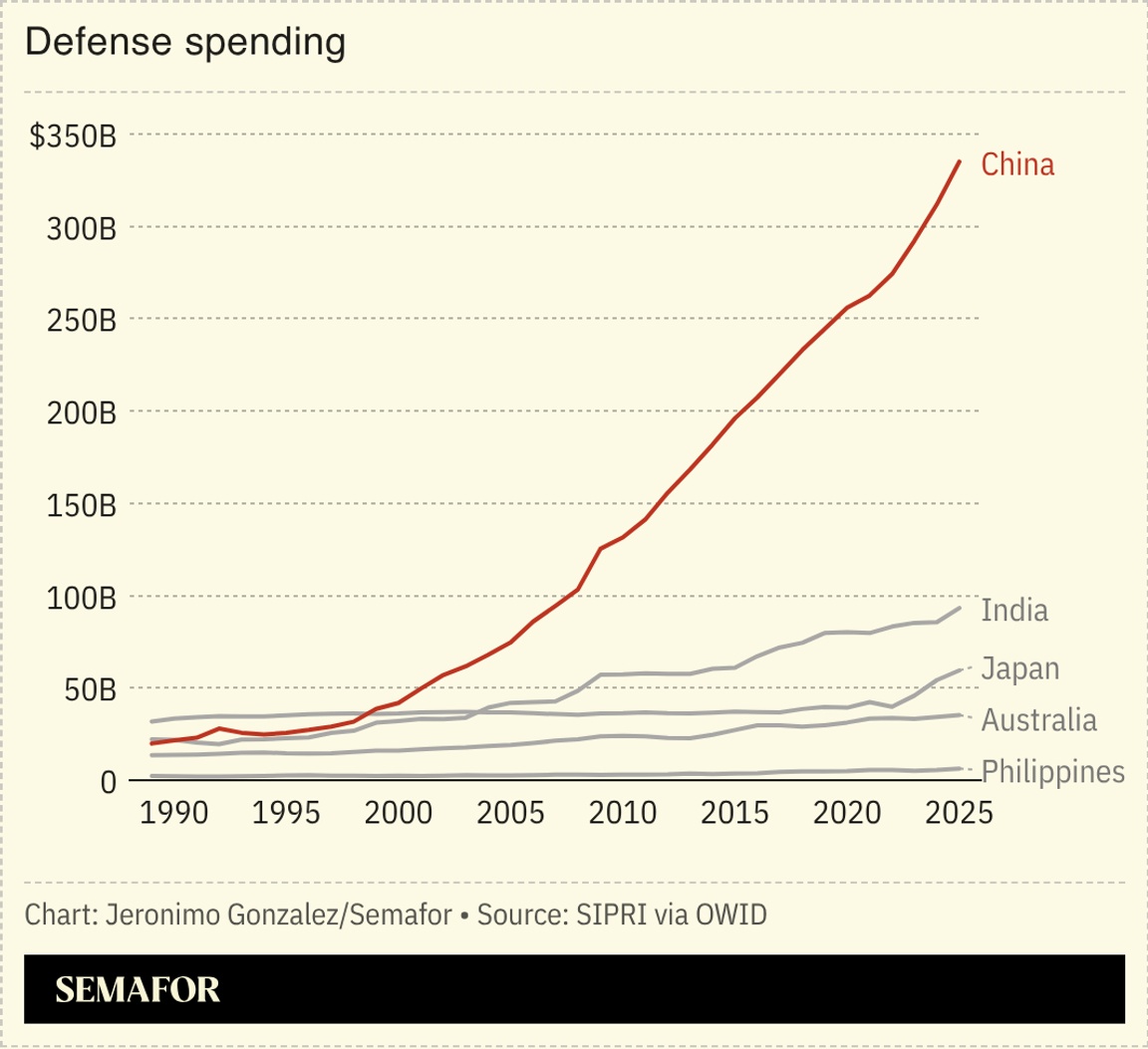 The Philippines president said his country would likely get involved in any conflict involving Taiwan, comments that could draw Beijing’s ire. The remarks come before he travels to Tokyo to discuss security cooperation; Japan’s own leader angered Beijing by saying that, if necessary, her country could help defend Taiwan, which China says is a renegade province. Though Beijing has emerged as Asia’s preeminent military power — a former CIA analyst said it was “hard to point to an area” where China wasn’t dominant — an attempt to take the island isn’t guaranteed success. A “failure of imagination led Russia to disaster in Ukraine. A similar failure in Beijing could lead China to disaster in Taiwan,” the Financial Times’ Gideon Rachman wrote. |
|
Cuba warns US of ‘bloodbath’ |
 Norlys Perez/Pool /Reuters Norlys Perez/Pool /ReutersCuba’s president said that any US military action against his country would lead to a “bloodbath” for both countries. Miguel Díaz Canel’s comments come a day after Axios reported, citing US intelligence, that Havana had acquired hundreds of drones and discussed plans to use them against Washington’s military assets in the region. Though White House economic and diplomatic pressure has so far not led to the overthrow of the regime in Havana — Washington’s stated goal — some US officials are discouraging a military intervention. “Cuba is asking for help, and we are going to talk,” one White House official told Semafor’s DC politics team. |
|
Inflation fears persist globally |
|
 What happens when every interaction on the internet becomes monetized? Joe Weisenthal, co-host of Bloomberg’s Odd Lots podcast, thinks we’re already finding out. After more than two decades reporting on business, he has witnessed the transformation of financial media firsthand, from the early “golden” era of Twitter, when amateurs would engage in what he calls “unmonetized transactions,” to now, when everyone with expertise is selling something. In this week’s episode of Compound Interest, presented by Amazon Business, Liz and Semafor Editor-in-Chief Ben Smith ask Weisenthal about the future of financial journalism in the age of AI, the creator economy, and what gets lost when every interaction becomes monetized. Listen to the latest Compound Interest episode now. |
|
Japan braces for cooling growth |
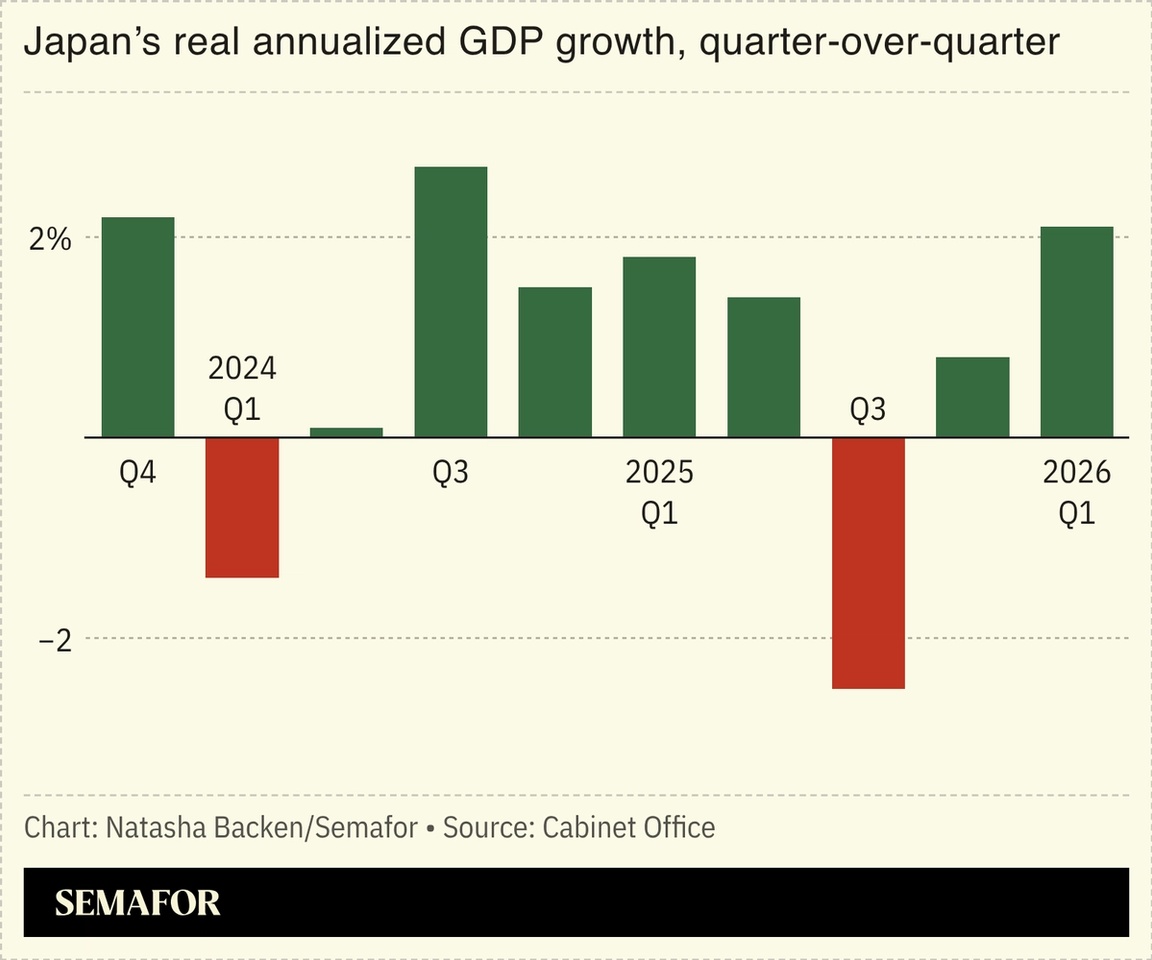 Japan’s economy grew at an annualized rate of 2.1% in the first quarter, surpassing expectations, though analysts warned that the fallout of the Iran war could hamper future expansion. The strong results were driven by rising US-bound exports and sturdy domestic consumption, the latter thanks to a temporary cash handout program, Nikkei reported. Yet analysts predicted that annualized growth will cool in the second quarter to less than 1% as the country — which received around 90% of its oil imports from the Middle East before the start of the war — grapples with fuel shortages. Higher prices and slowing growth have sparked fears of stagflation in the world’s fourth-largest economy. |
|
Standard Chartered to slash jobs |
 Peter Nicholls/Reuters Peter Nicholls/ReutersBanking giant Standard Chartered will cut 15% of its workforce by 2030 as its use of AI increases. The UK-headquartered company, which has large offices in China, India, Malaysia, and Poland, said it was boosting automation, but would move some affected staff into new roles. Several other banking and tech firms have announced job cuts that they attributed to AI, but the job market is under other pressures too. The UK announced unexpectedly high unemployment and slow wage growth, which analysts attributed to the Iran war. Rising prices may push AI adoption: Britain’s health service proposed cutting recruitment and boosting AI use to avoid “financial ruin” as growing demands for care, rising inflation, and an aging society push up costs. |
|
 Carbon capture was sold as a climate fix. Instead, it became an ethanol empire. In Carbon Cowboys, the new season from Drilled, award-winning climate journalist Amy Westervelt investigates the tech, politics, and economics of next-gen fuels. From Brazil to North Dakota, Carbon Cowboys unpacks how ethanol, carbon capture, and “sustainable” aviation fuel projects reshape global energy markets. Listen now. |
|
|


