(Chris Unger/Getty Images) |
|
|
|
The US honey industry is in a bit of a sticky spot, as bee colony losses mount but demand for honey just keeps on rising. Americans bought $1.6 billion worth of honey in the 12 months through March 2026, up 10% from the same period a year earlier, but while many enthusiasts proselytize the health benefits of local honey, most of that sweet nectar came from far away.
Stocks wavered on Wednesday as traders digested peace progress, with President Trump saying that the US is “not satisfied” with the deal with Iran. The S&P 500 managed to eke out a new record closing high by an incredibly thin margin, while the Nasdaq 100 and Russell 2000 closed just below record highs.
|
|
|
|
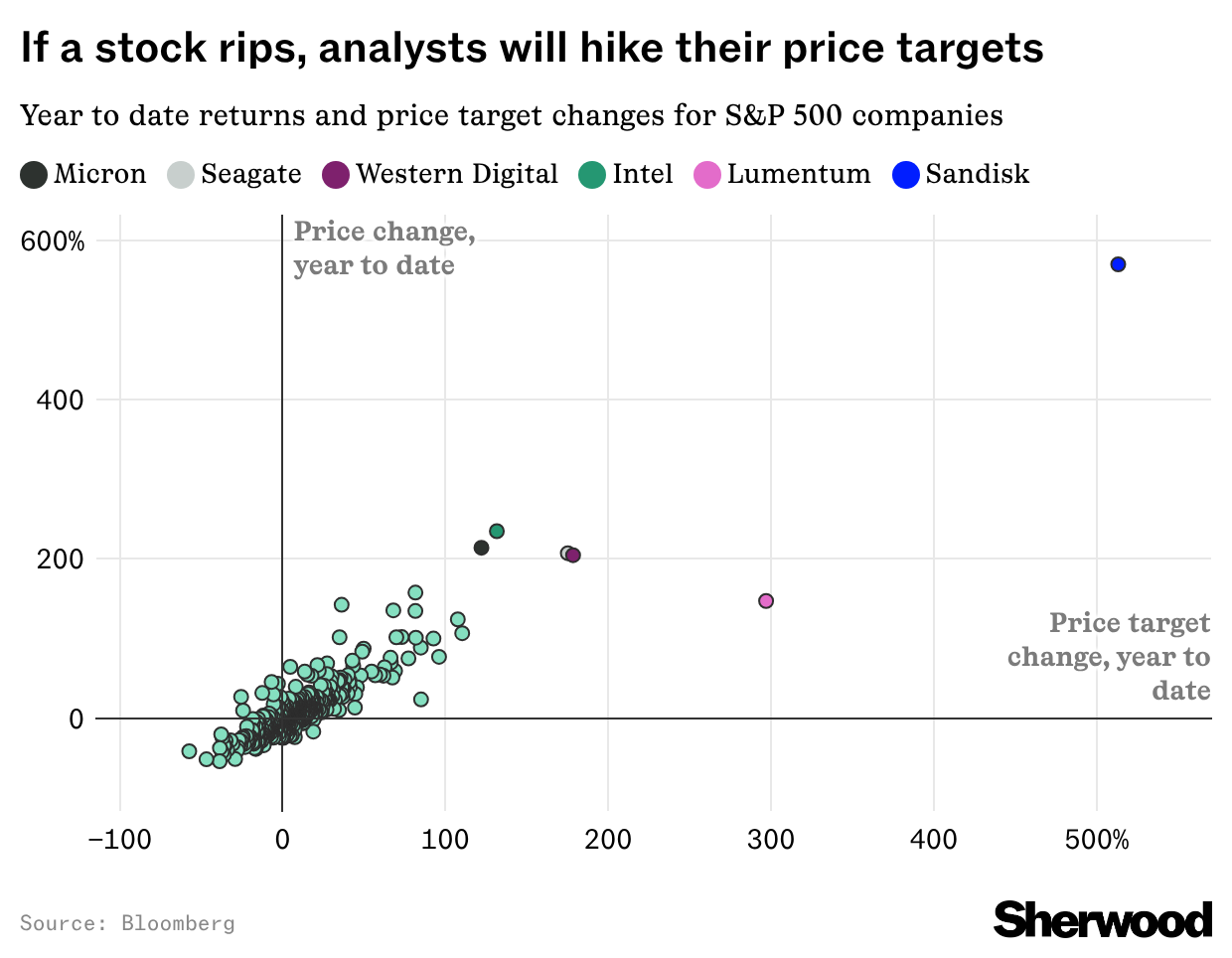
As we covered in yesterday’s newsletter, Micron ripped after an analyst tripled his price target on the stock. The dirty little secret of most analyst calls, however, is that they’re mainly following price: |
|
|
|
Meta jumps after announcing paid subscriptions for Instagram, WhatsApp, Facebook, and AI |
On Wednesday, Meta announced that it’s rolling out Meta One, a suite of paid versions of its most popular apps that offer extra features like profile customization, super reactions, and story insights. |
- Instagram Plus and Facebook Plus will cost $3.99 a month, while WhatsApp Plus is going for $2.99, according to TechCrunch.
-
The company is also launching two AI subscription tiers — one for $7.99 and another for $19.99 for more advanced users. People can continue using the Meta AI chatbot for free, but will now run into limits.
-
Together, these represent Meta’s first large-scale attempt to monetize everyday consumer use of its flagship apps through subscriptions rather than relying solely on advertising.
|
|
|
|
Meta’s head of product, Naomi Gleit, said in an Instagram post that the company has “more plans on the way for creators, businesses, and Meta AI power users.”
Meta has struggled to justify its enormous AI capital expenditure to investors since it lacks the recurring cloud revenue of its peers. New subscription revenue streams could help reassure investors that Meta has additional ways to monetize its AI investments beyond advertising.
|
|
|
|
Depth data built for what’s next.
|
Nasdaq TotalView Plus expands full depth-of-book transparency across all Nasdaq equity markets in one consolidated solution. Built for extended trading hours, it delivers a more continuous view of liquidity beyond the traditional day—helping traders reduce complexity and make smarter decisions as trading goes round the clock.
|
|
|
|
Tesla is recovering in Europe. BYD is still beating it. Ferrari is… doing something else? |
- In April, BYD registered more than twice as many cars as Tesla in the EU, UK, and the European Free Trade Association.
- It’s also growing faster, with BYD up 115% compared with April 2025, while Tesla grew 47% in that time. Year-to-date registration data tells a similar story.
-
Tesla recently received approval for a version of its supervised Full Self-Driving tech in the Netherlands, its first European market, and expects “EU-wide” approval in the second or third quarter of this year.
|
Meanwhile, in other European electric car news, Ferrari unveiled its highly anticipated first electric vehicle, the Ferrari Luce, which looks different than pretty much every Ferrari to come before it. Shareholders panned the debut, sending the stock down 5.3% in the US and 8.4% in Milan on Tuesday.
|
|
|
|
Tesla thinks upcoming approval of supervised FSD is integral to its success on the continent.
“It’s worth noting that we do not actually yet have approval for supervised FSD in Europe,” CEO Elon Musk said during an earnings call last year. “So our sales in Europe, we think, will improve significantly once we are able to give customers the same experience that they have in the US.” |
|
|
|
Teens aren’t getting summer jobs like they used to — this year could be worse than ever |
According to a new report, US workers aged 16 to 19 are projected to gain just 790,000 jobs from May through July this year, the lowest summer hiring total since the Bureau of Labor Statistics began tracking the data in 1948. Meanwhile, older workers are now more likely to be employed than teens.
|
|
|
|
|