| | The US could miss a golden opportunity to cement its grip on the global gas market, the godfather of͏ ͏ ͏ ͏ ͏ ͏ |
| |  | Energy |  |
| |
|
 - Oil up, insurance flat
- Record clean tech trade
- Oil investment drops
- Kerfuffle at BP
- Energy transition lessons
 Trump’s maneuver to lower gasoline prices flops, while China trumpets a “historic breakthrough” on fracking. |
|
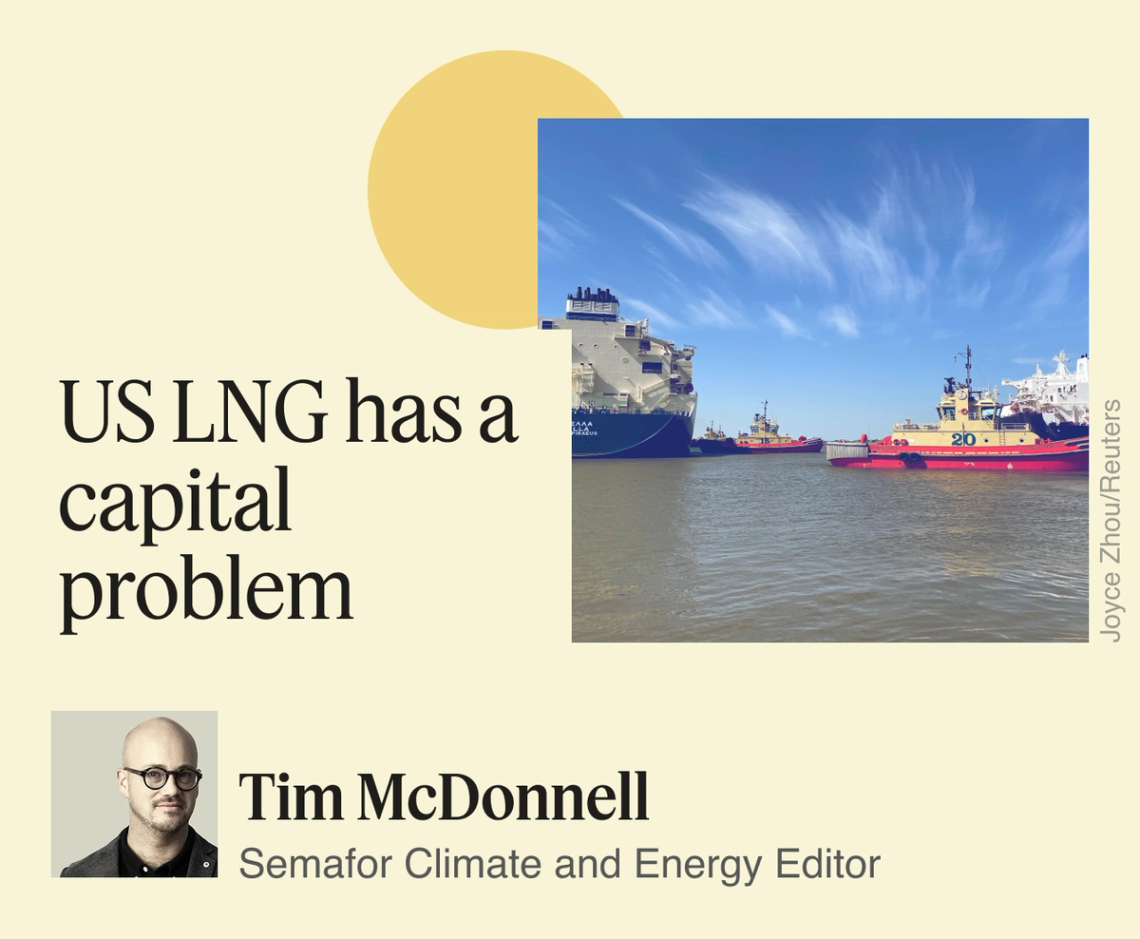 The US could miss a golden opportunity to cement its grip on the global gas market, the godfather of US LNG warns. In just one decade, the US has gone from an LNG importer to the world’s top exporter. And while the market was starting to feel crowded with sellers prior to the war in Iran, now it’s facing a major shortfall because of the effective closure of the Strait of Hormuz and heavy damage to Qatar’s Ras Laffan terminal. Between this year and 2034, the world will be short by at least 135 million metric tons of LNG, equal to nearly one-third of global pre-war production, according to a new forecast by S&P Global Energy. “We are not looking at a temporary bottleneck,” said Shankari Srinivasan, S&P’s vice president of global gas and LNG, but rather “a fundamental global supply shock.” If anyone could have seen this coming, it might have been Charif Souki. The legendary restauranteur-turned-gas tycoon was behind the first LNG shipments to leave the US, a bet that had many analysts sniggering before he became, for a time, the country’s highest-paid CEO. Between the war and the global race to electrification, the world is desperate for more US gas, he told me this week. In turn, facing a crammed domestic market, the best chance for US gas producers to grow is overseas. Yet Souki was decidedly bearish about the prospect of building more LNG terminals, the business that made his fortune. The problem is Wall Street’s reaction to the shifting rules of the LNG market, he told me: “LNG is definitely capital-constrained. Private equity has a hard time deploying capital because they’re pursuing business models that aren’t designed for the kind of risk you need to take.” Souki may have a bit of baggage in this area — he was forced out of both the LNG companies he founded in part due to disagreements with shareholders and lenders — but his view seems widely shared. In a survey of PE firms and their institutional investors this month by consulting firm Campbell Lutyens, investors ranked their appetite for LNG projects midway down a list of 20 energy subsectors, in between biogas and carbon capture. And Ben Dell, who straddles both worlds as co-founder of PE firm Kimmeridge and chairman of Commonwealth LNG, the country’s newest terminal, told me yesterday he agrees: “Raising capital to finance LNG is still extremely difficult, and it isn’t going to get easier.” The upshot, Souki said, is the risk of a disconnect between what global markets want, and what US infrastructure is capable of providing, with billions of dollars at stake. |
|
 Stringer/Reuters Stringer/ReutersOil prices were back on the rise Thursday after the US and Iran traded a fresh round of airstrikes. Despite signals earlier in the week that negotiators were making progress toward a ceasefire, tensions are now escalating again, with Washington and Tehran deeply divided over potential future rules of transit through the Strait of Hormuz. US President Donald Trump insisted this week that political pressure to lower gasoline prices would not force his hand into an unfavorable deal. But conditions in the global oil market are set to worsen in the next few weeks, Morgan Stanley analysts warned, as the rate of releases from global strategic reserves plummets to less than a third of current levels. In the meantime, insurance rates for tankers passing the strait — the most important indicator of whether the waterway is “reopening” — haven’t budged, Dylan Mortimer of the brokerage firm Marsh told Semafor on Thursday. “Meaningful change in insurance conditions would likely require a sustained de-escalation in regional tensions and clearer security assurances for merchant shipping,” he said. |
|
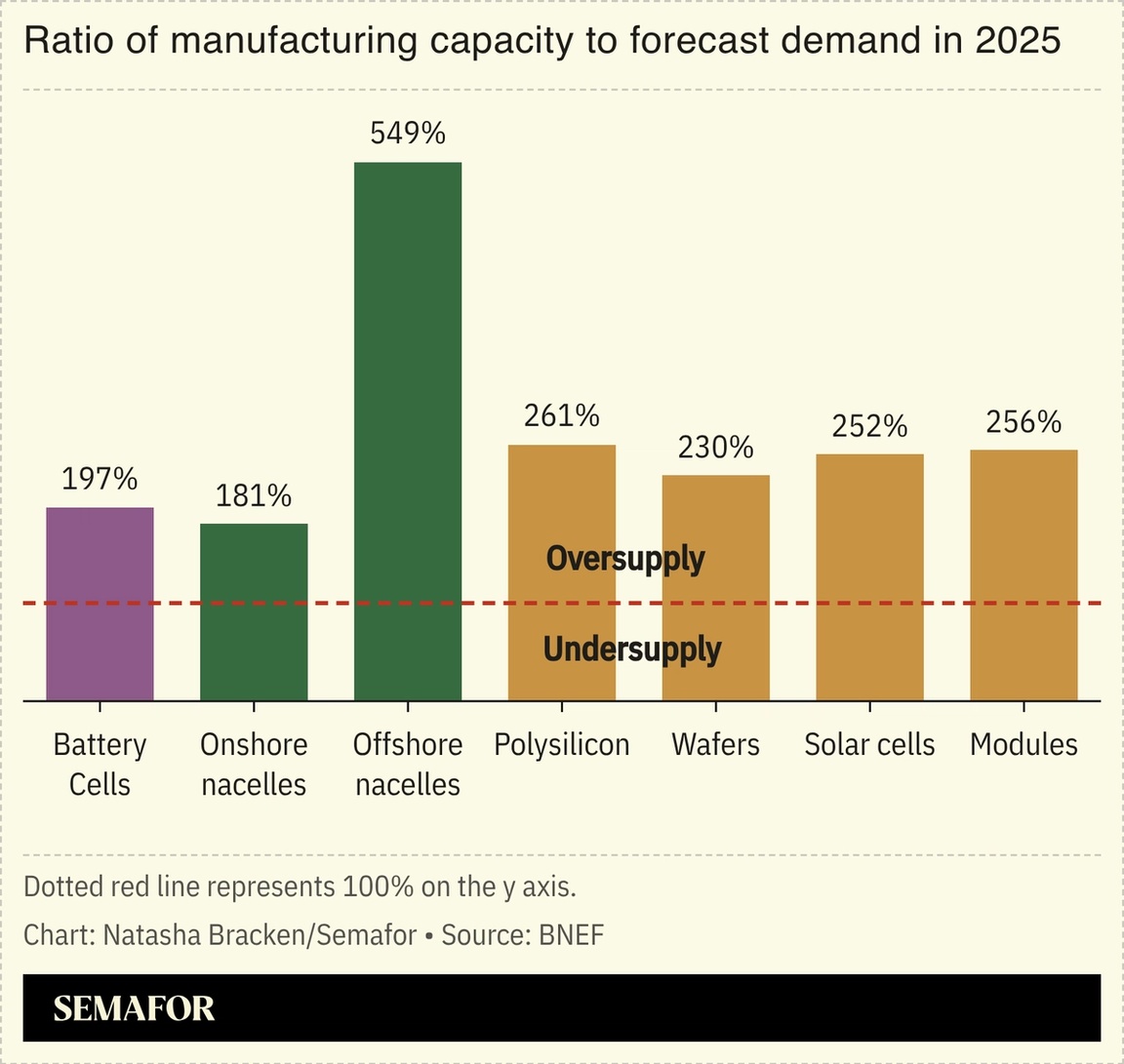 Global shipments of clean-energy products reached a record $479 billion in 2025, overcoming major headwinds to cross-border trade. After falling 7% between 2023 and 2024, trading volumes rose 1% this year, suggesting that US President Donald Trump’s tariffs on the energy transition sector — however frequently imposed and revised — did little to stifle trade in batteries, solar cells, and electric vehicles, a BloombergNEF report found. That momentum is likely to continue as countries, rattled by the more volatile fossil fuel markets this year, increasingly bet on greener alternatives, especially in net-importing regions. Already, countries like India and Türkiye are growing solar manufacturing hubs, importing midstream solar cells rather than finished photovoltaic modules. But increasing capacity outside of China is compounding the existing issue of oversupply that spans the entire clean-tech value chain, with global manufacturing capacity now exceeding 200% of what is needed to meet demand. That glut helps explain why efforts to onshore production in the US and Europe are unlikely to turn either region into a major clean-tech exporter. |
|
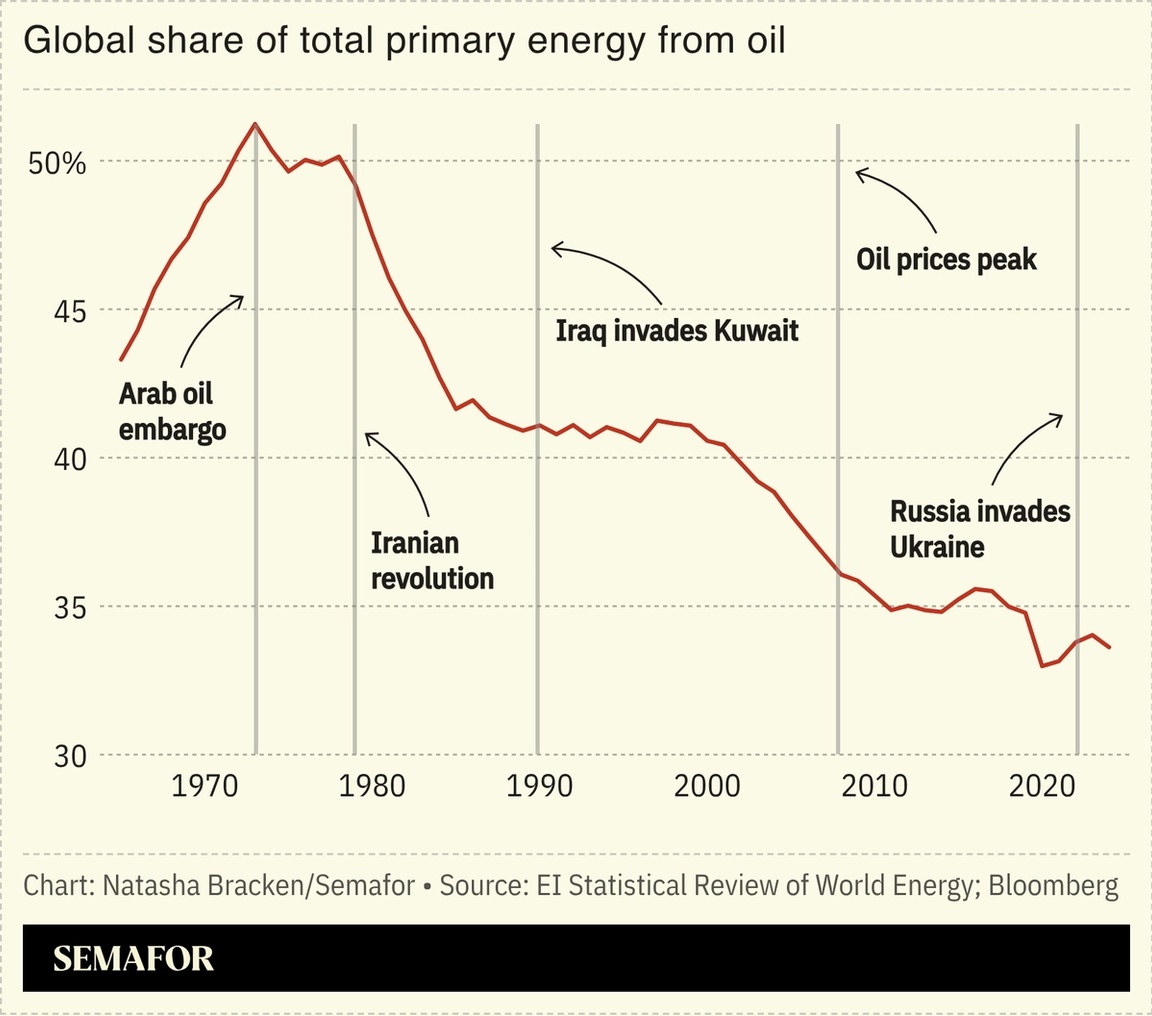 Global investments in oil projects are set to drop below $500 billion in 2026 for the third straight year, while spending on natural gas projects is expected to rise by more than 10%, the highest level in a decade, a new report by the International Energy Agency said. Throttled traffic in the Strait of Hormuz has upended fossil fuel markets, causing price hikes and supply shortages, and prompting countries to boost spending on homegrown energy, namely renewables, LNG, or coal. Energy investments are still projected to rise this year, but they will mostly focus on electrification. “We are in the midst of the largest energy security crisis the world has ever faced — and I believe this will reshape investment strategies globally,” the head of the IEA said. |
|
 Luke MacGregor/Reuters Luke MacGregor/ReutersBP’s ousted chair said he intends to challenge accusations against him. Albert Manifold was abruptly removed from his position at the top of the oil major’s board this week over what the company said were “serious concerns” related to “governance standards, oversight, and conduct.” Subsequent reporting in the Financial Times and elsewhere cited internal complaints about bullying-style behavior toward senior staff, and allegations that Manifold tried to prevent new CEO Meg O’Neill from meeting with other board members (a BP spokesperson didn’t return a request for further detail). In a statement to the New York Times, Manifold said he “dispute[s] entirely the characterization of my conduct, and will not allow a false narrative to go unchallenged.” In any case, BP has gone through three full-time CEOs and three board chairs in just three years, at a time when it is under pressure from activist investors and being eyed up as a takeover target by rival majors. The company has also swung its strategy widely, from an embrace of low-carbon business lines to a hard pivot back to oil and gas. Along the way, it unsuccessfully sought to scrap shareholder resolutions demanding the company disclose more data about its emissions and align its business model with the Paris Agreement. “What investors are saying is that boards are playing with fire if they try to take away shareholders’ voice on issues of climate strategy,” Andrew Logan, oil and gas director for the investor advocacy group Ceres, told Semafor. |
|
 After more than a decade as Cisco’s CEO, Chuck Robbins says passive-aggressive behavior is “like death” to companies like his. On this week’s episode of The CEO Signal, presented by PwC, Robbins tells Penny and Andrew how he sets the pace for the tech giant’s shift to AI, why a bad decision beats a delayed decision, and what his approach is to people who aren’t on board with the strategy: “You get rid of them”. Robbins explains his biggest strategic calls and reflects on what he’s learned about leadership, including when to step out of the room so the CEO’s viewpoint doesn’t distort the decision-making process. Listen to the latest episode of The CEO Signal now. |
|
Energy transition lessons |
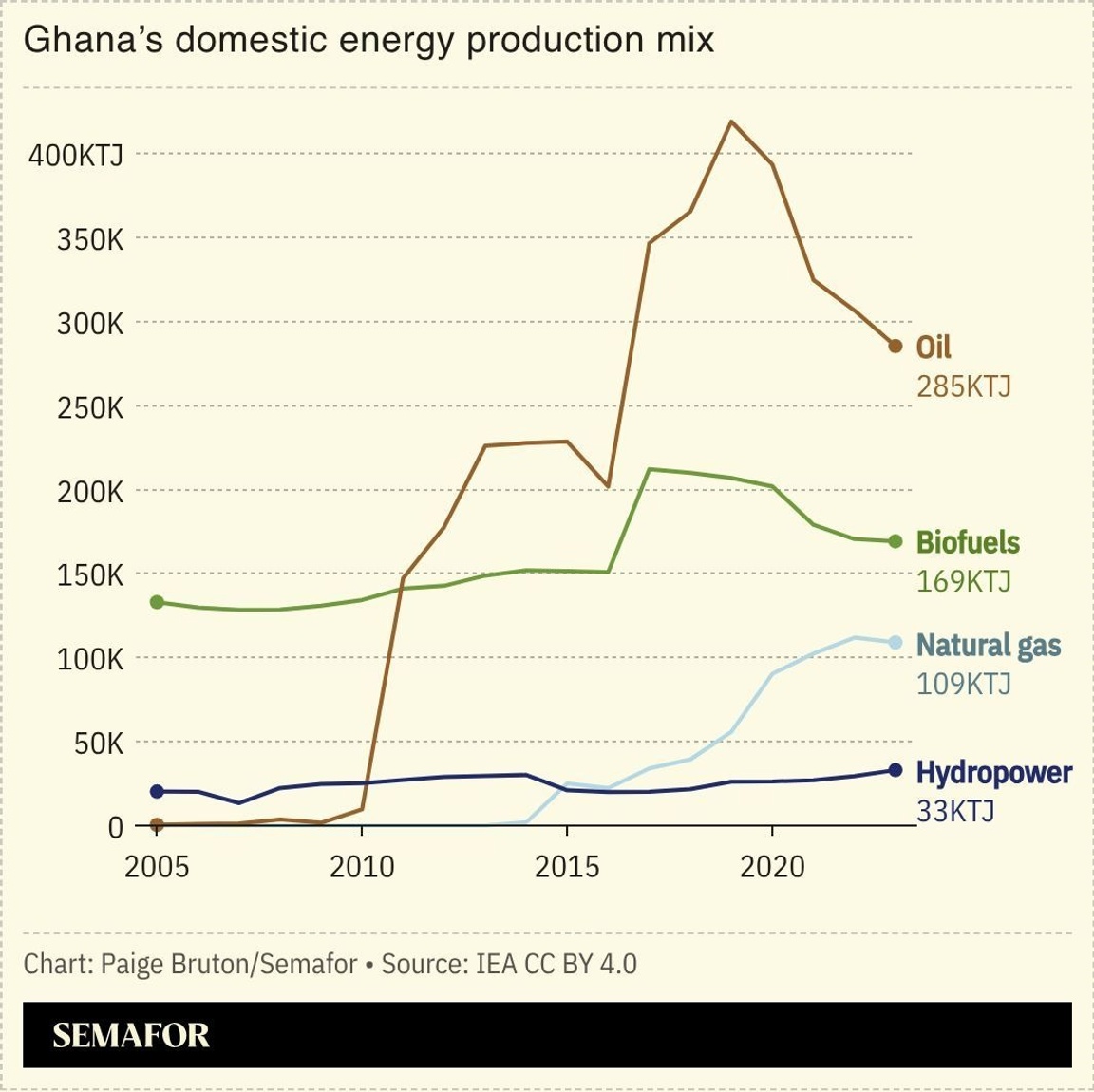 African countries can secure better outcomes from Chinese-supported power projects by learning from Ghana, a new report argued. The Energy for Growth Hub, a Washington-based think tank, said the West African nation delivered five solar, hydro, and gas projects with China between 2013 and 2020 “at reasonable cost, on relatively strong timelines, and with fewer quality problems” than elsewhere in the region. It noted four lessons from Ghana that other countries could use: set cost benchmarks, use competitive tendering, hire expert negotiators, and invest in construction oversight. Ghana’s experience of Chinese-supported power plants, the think tank wrote, shows the host government, which often owns the asset and carries the debt, must “drive the terms, standards, and delivery.” — Preeti Jha This item first appeared in Semafor’s Africa briefing, subscribe here. → |
|
|
 New Energy Thomas Mukoya/Reuters Thomas Mukoya/ReutersFossil Fuels- Beijing achieved a “historic breakthrough” in the exploration and development of medium- and low-maturity shale oil in the country, China’s state owned media reported.
- The president of the Federal Reserve Bank of Dallas warned that the US cannot fill the energy gap in global supplies left by the closure of the Strait of Hormuz, adding that global fossil fuel consumption will have to fall more significantly should the key waterway remain shut.
- The UK’s energy price cap will rise 13% from July 1, the highest increase in energy bills since 2023 as the war in Iran continues to upend oil and gas markets.
Tech- Nuclear power startup Newcleo announced plans to go public via a merger with a blank-check company in a deal valuing it at roughly $2.4 billion.
Politics & Policy- US President Donald Trump’s plan to reduce domestic gasoline prices by implementing a waiver that allowed foreign-flagged ships to move fossil fuels between US ports has had limited success.
- Six European Union countries have resisted an EU plan to reduce the number of free CO2 permits given to industries.
Minerals & Mining- Zambia’s state-controlled mining investment company will sell a majority stake in a lime and cement venture to a privately held Chinese company
|
|
|


