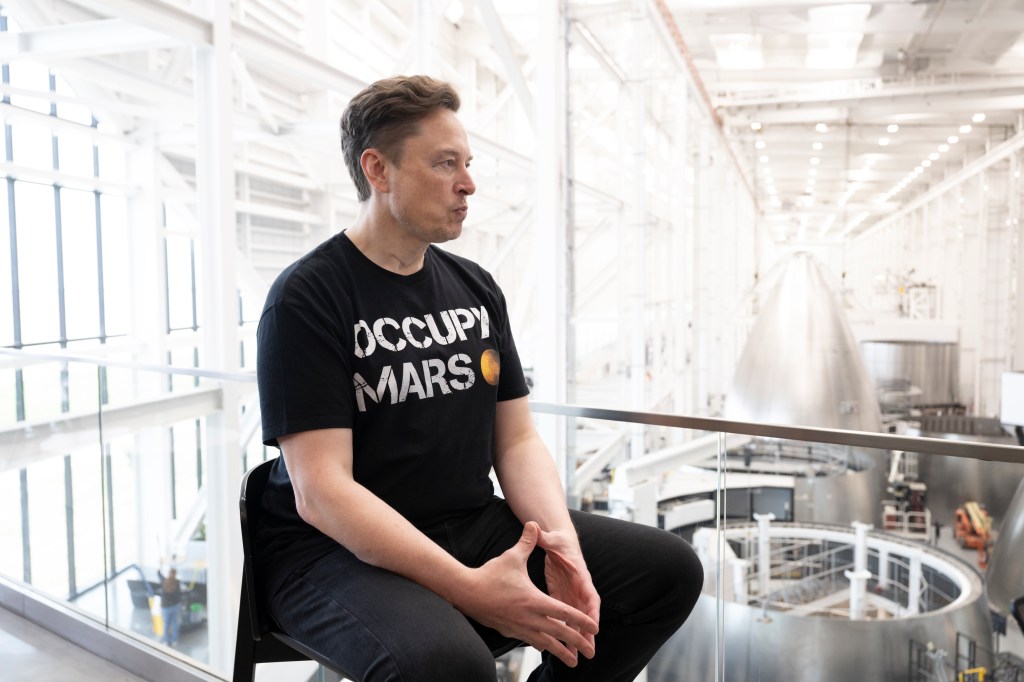
 Elon Musk at SpaceX headquarters near Brownsville, Texas. Marvin Joseph/The Washington Post/Getty Images
The magic number for the SpaceX IPO?
$135 per share.
With almost 556 million shares on offer, Elon Musk’s rocketmaker (and the world’s most valuable private company) aims to raise $75 billion in its
imminent public debut.
But traditionalists would say the timing is all wrong.
Typically a company going public engages in a roadshow where executives pitch their stock offering to prospective investors. Once interest is assessed, and just before the offering itself, a price is determined.
Not so for SpaceX—but then again, Musk has never been one to follow standard protocol.
SpaceX’s CEO, who retains a 42% stake in the company but controls more than 85% of its voting power, stands to become—with
a roughly 2% increase in share price—the world’s first trillionaire based on net worth.
The all-important date for SpaceX’s debut is June 12. Its Nasdaq ticker will be SPCX.
And what will SpaceX use all that money for, you ask? AI computing infrastructure via its xAI (now “SpaceXAI”) unit, the expansion of its Starlink satellite network, and R&D for its Starship rocket and planned Mars missions.
Lest you think the Space Exploration Technologies Corp. makes most of its money from space exploration, a useful reminder: Three of every five dollars SpaceX makes comes from Starlink. The rest? AI and space, a buck each.
—AN