Hello!
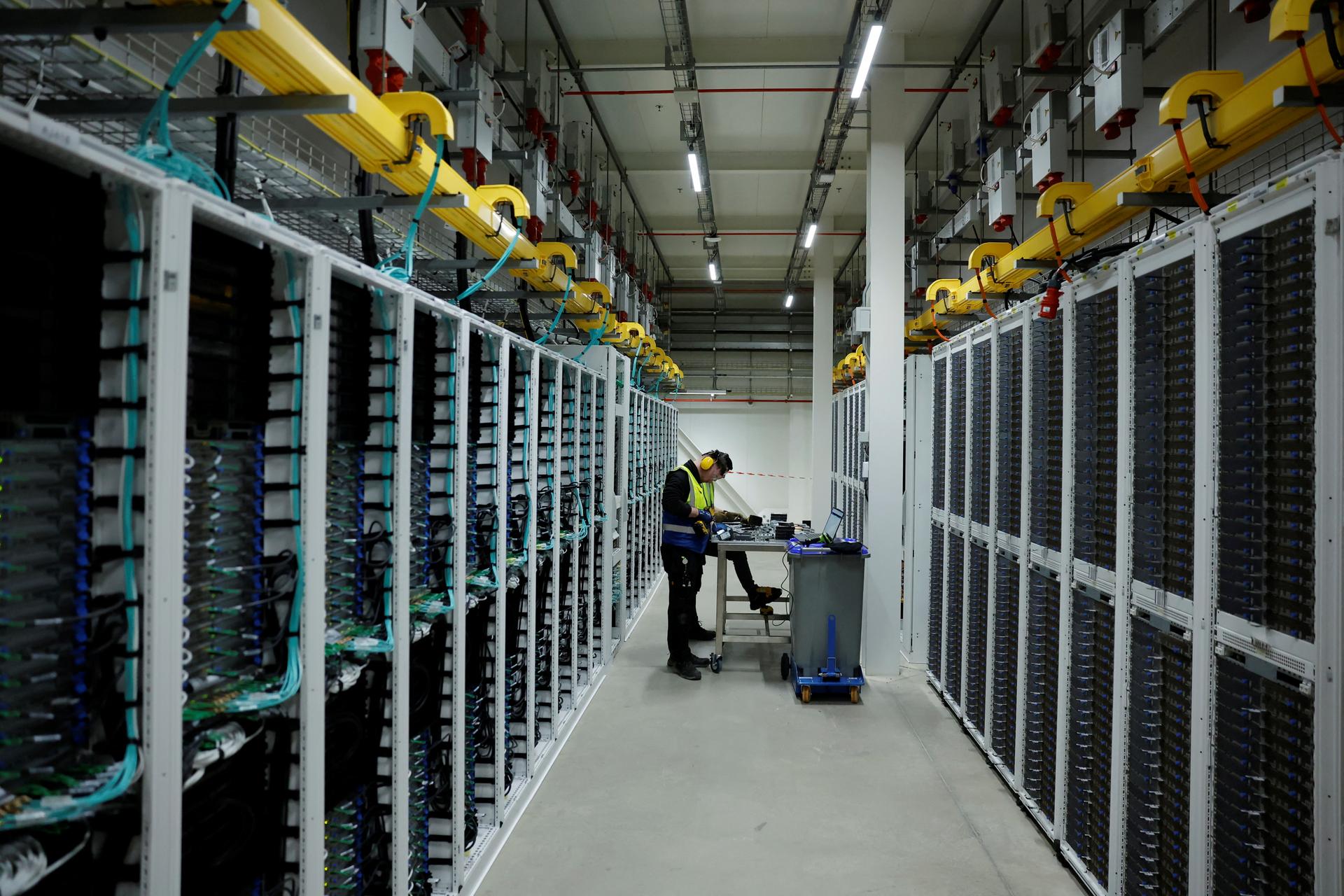
It’s time for another focus on data centers as United Nations researchers warned in a report that their power and water use is set to double by 2030, driven by the surge in demand from artificial intelligence.
The United Nations University Institute for Water, Environment and Health said in its report that unless governments heed the rising environmental costs of AI, the rapid rollout could also strain scarce land resources and create mountains of electronic waste.
Speaking of governmental involvement, the European Union said on Wednesday it is developing minimum energy-efficiency standards for data centers as concerns grow over their rapidly rising power use. Before we get into the proposed law, here are some tech and rights stories on my radar: |
|
|
Employees work in the Microsoft cloud data hall in the Microsoft data centre in Dublin, Ireland. REUTERS/Clodagh Kilcoyne |
Power hungry and emissions heavy |
According to the U.N. report, annual power consumption from data centres is projected to double to 945 TWh by 2030, around the same as the whole of Japan, with AI accounting for 40% of the total.
Water consumption is expected to reach 9.3 trillion litres, while CO2 emissions will rise to 399 million tons. The centers consumed 4.5 trillion litres of water in 2025, enough to meet the needs of more than 600 million people in Sub-Saharan Africa, while generating 189 million tons of carbon dioxide emissions.
In fact, a recent MIT report found that the carbon intensity of electricity used by data centers was 48% higher than the U.S. average.
"The public debate still often treats AI as software, but AI is also physical infrastructure: data centres, electricity generation, cooling systems, transmission networks, chips, minerals, land and water," said Kaveh Madani, the institute's director and the report's lead author. |
|
|
| What about Europe’s proposed law? |
The EU is looking at tackling some of these issues as data centres’ energy use risks slowing the bloc’s clean energy transition - if fossil fuel plants are kept running longer or new ones are built to meet demand - and could push up power costs as grids come under strain.
"If not tackled at EU level now, these challenges could grow considerably and become harder to solve in the coming years, as the energy consumption of the sector is expected to increase further," the Commission said. The EU is also working on a sustainability label for data centres, covering criteria including water use and clean energy supply, which large facilities would have to make public. That proposal, expected on Wednesday, has been delayed. Officials told Reuters the Commission is still debating issues including how to assess data centres powered by nuclear energy. A Commission spokesperson did not immediately respond to a request for comment.
The plans are part of a broader EU tech package aimed at boosting domestic cloud and AI capacity and reducing reliance on Big Tech. Other measures include using generative AI to speed up permitting for new energy projects and funding AI tools to help manage Europe's power grid. |
Demonstrators clash with police during a protest against a luxury resort linked to Donald Trump's son-in-law, Jared Kushner, in Tirana, Albania. REUTERS/Florion Goga |
-
Albania anti-Kushner resort protests: Thousands of Albanians took to the streets of Tirana this week protesting against a development planned by a company linked with Donald Trump's son-in-law Jared Kushner on an environmentally sensitive part of the Adriatic coastline near the Vjosa-Narta protected landscape, a wetland home to flamingos, seals and sea turtle nesting sites.
-
South Africa xenophobia: Malawi will join other countries in repatriating its nationals seeking to leave South Africa, where attacks on African migrants have been reported in parts of the country. Over the weekend, Mozambique said five of its citizens died in anti-immigration violence in the South African town of Mossel Bay in the latest flare-up of xenophobic attacks.
- Cuba’s fuel blockade: Millions of Cubans are suffering from a lack of running water, electricity and fuel, in the wake of hardened sanctions and a fuel blockade by the administration of U.S. President Donald Trump. Click here for an insightful article on how Cubans are still going strong amid such tough times.
-
Venezuela business reforms: A dozen sources with knowledge of private sector investment deliberations told Reuters that global investors are still wary of signing deals in Venezuela, even after the interim government enacted business-friendly reforms backed by U.S. President Donald Trump. “Legal certainty, at this moment, does not exist,” said a lawyer at an advisory firm who asked not to be identified for security reasons. Click here for the full Reuters exclusive.
|
|
|
|
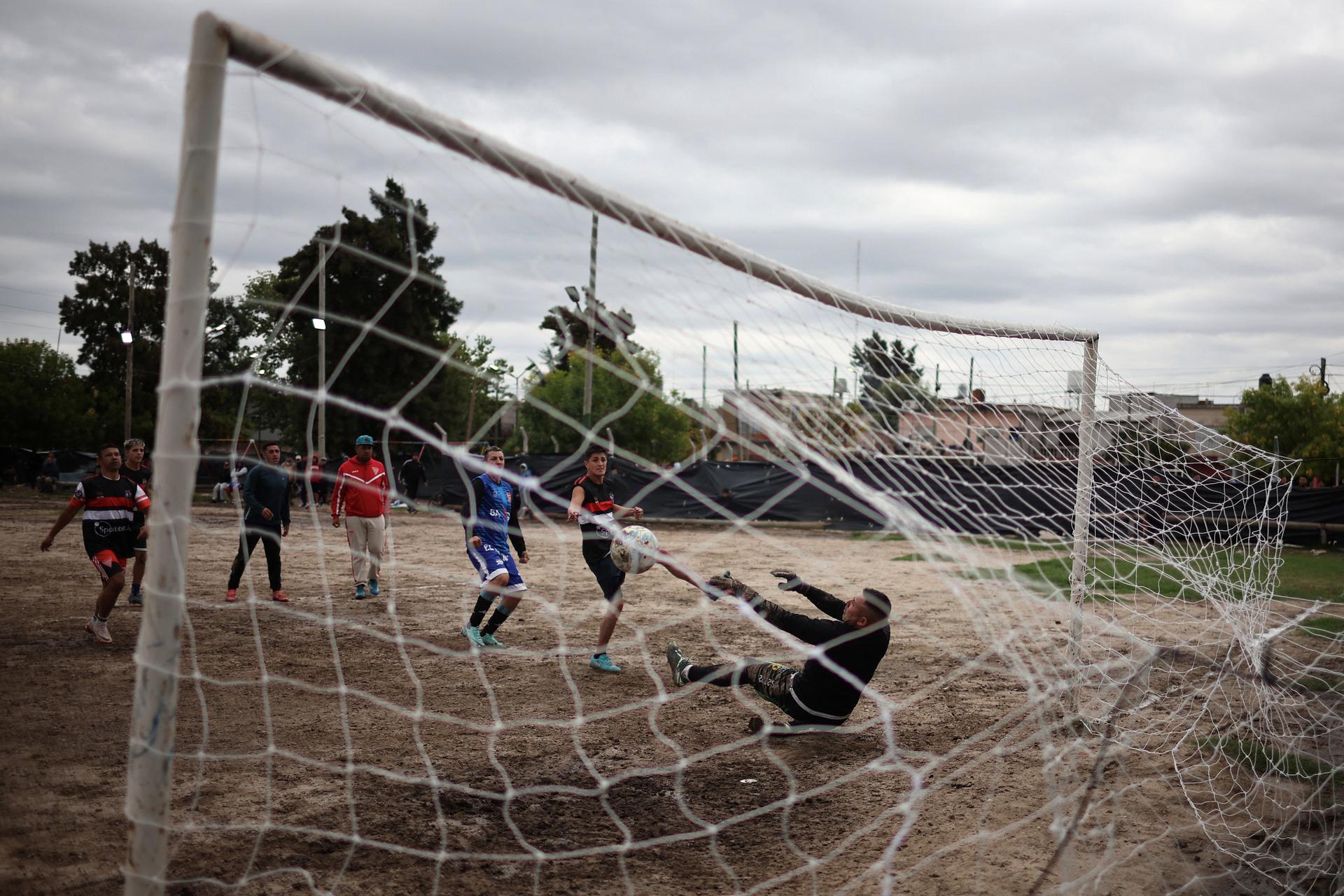
People play a football match during a tournament to compete for a cash prize in Ingeniero Budge, outskirts of Buenos Aires, Argentina. REUTERS/Agustin Marcarian |
Click here for an inspiring image-led story on the power of football in Argentina as young, passionate players hone their skills through amateur games for extra cash.
For three-time World Cup champions Argentina, football is a feverish passion that permeates every home and every makeshift dirt field, known as a ‘potrero’, where youngsters play, dreaming of reaching the top leagues. Argentine legend Diego Maradona famously honed his skills at a potrero in Villa Fiorito on the outskirts of the capital. |
|
|
|
Sustainable Switch was edited by Elaine Hardcastle. |
|
|
|
|