|
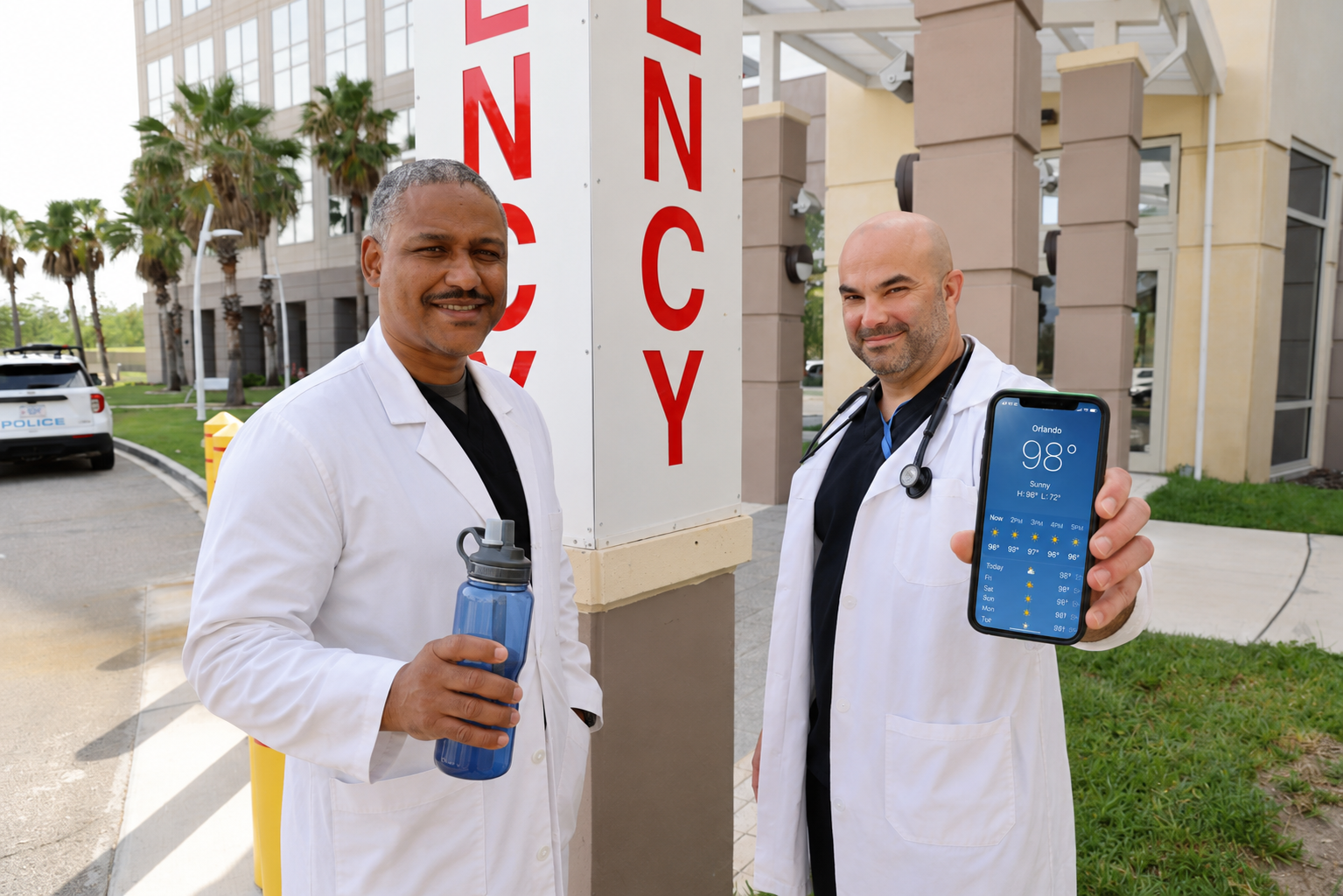
It’s Getting Hot Out There: Orlando VA Experts Share By Hansraj Raghunandan, Public Affairs Specialist, Orlando VA Healthcare System Pictured in photo: Dr. Ramon Nunez (left) and Dr. Camilo Mohar, emergency physicians at the Orlando VA Medical Center, encourage Veterans to stay hydrated, monitor weather conditions, and take precautions to prevent heat-related illnesses during As temperatures climb across Central Florida, Orlando VA Healthcare System emergency physicians are encouraging Veterans to take precautions to avoid heat-related illnesses that can quickly become serious during the summer months. While many people may associate summer heat with inconvenience and discomfort, extreme temperatures can lead to serious medical conditions that send thousands of Americans to emergency departments each year. “July is consistently the peak month, accounting for approximately 30 percent of all annual heat-related emergency department visits.” According to Nunez and fellow emergency physician Dr. Camilo Mohar, heat-related illnesses range from mild conditions such as heat rash and muscle cramps to life-threatening emergencies like heat stroke. “We see a wide spectrum of heat-related illnesses,” said Nunez. “Fortunately, we often see the more benign forms, but during the summer months it’s common for people to experience fatigue, muscle cramps, and other symptoms simply from being exposed to Florida’s heat and humidity.” Understanding the warning signs can help Veterans seek help before symptoms worsen. Mohar explained that heat cramps typically involve painful muscle cramps caused by heat exposure and dehydration. Heat exhaustion can cause elevated body temperature, fatigue, weakness, and lethargy, while heat stroke is considered a medical emergency. “The cardinal sign of heat stroke is altered mental status,” said Mohar. “Patients may become confused, disoriented, behave erratically, or even lose consciousness. When that happens, immediate medical attention is needed.” Heat-related illnesses occur when the body can no longer effectively regulate its temperature. As body temperature rises, the heart works harder and blood vessels widen in an attempt to cool the body. If these cooling mechanisms fail, organs can begin to suffer damage. Veterans should watch for early warning signs such as excessive thirst, heavy sweating, muscle cramps, swelling in the hands or legs, unusual fatigue, or dizziness. In some cases, the body’s ability to sweat may decrease as overheating becomes more severe. Certain Veterans may face a higher risk than others. Older adults and individuals taking medications for cardiovascular disease, lung conditions, autoimmune disorders, or some mental health conditions may have a reduced ability to regulate body temperature. “An ounce of prevention is worth more than a pound of cure,” said Mohar. “If you’re taking medications that increase your risk, it’s especially important to avoid prolonged heat exposure and prepare before going outside.” Both physicians emphasized that hydration is one of the most important ways to prevent heat-related illness. However, they noted that many people wait too long to begin drinking fluids. “You need to start hydrating before you go out,” said Mohar. “If you wait until the time you feel thirsty, it’s already too late. You’re beginning to get dehydrated.” During periods of heavy activity and sweating, water alone may not always be enough. Electrolytes lost through perspiration may also need to be replenished. Mohar recommends diluting sports drinks with water to reduce excess sugar while still replacing important salts lost through sweating. Additional heat safety tips include: • Wear loose-fitting, light-colored clothing • Carry water and drink fluids regularly • Seek shade whenever possible • Wear a wide-brimmed hat when outdoors • Use portable cooling fans or misting devices • Avoid strenuous outdoor activities during the hottest part of the day, typically between noon and 2 p.m. • Check on elderly neighbors, family members, and fellow Veterans during extreme heat “It’s prevention, really,” said Mohar. “Veterans are trained to prepare for challenges, and heat is no different. If you’re prepared and aware of the risks, you can avoid many of these problems before they start.” As summer temperatures continue to rise, Orlando VA providers encourage Veterans to stay alert, stay hydrated, and seek medical attention if heat-related symptoms do not improve quickly after moving to a cool environment. By taking simple precautions and planning ahead, Veterans can enjoy everything the summer months have to offer while staying safe, healthy, and ready for the season.
### Established in October 2006, the Orlando VA Healthcare System (OVAHCS) was designated a 1a facility (most complex) in 2021, with more than 5,660 employees and an annual budget of $2.4B and serves more than 149,000 Veterans in Central Florida. The Orlando VA Medical Center at Lake Nona provides outpatient, inpatient, and emergency services. Lake Nona’s 65-acre medical campus encompasses 134 acute inpatient beds, providing complex Medical/Surgical/Mental Health specialty care, advanced diagnostic services, and a large multispecialty outpatient clinic, as well as a 120-bed Community Living Center, two Mental Health Residential Rehabilitation Treatment Programs/Domiciliaries (60-beds located at the Lake Nona Campus and 56 beds at the Lake Baldwin Campus). Outpatient services are provided at a Health Care Center in Viera, a Multispecialty Community-Based Outpatient Clinic in Daytona Beach, and five Community-Based Outpatient Clinics located in Clermont, Lake Baldwin, Kissimmee, Deltona, Palm Bay and Tavares.
To learn more about the facilities and services offered by the OVAHCS, please visit: VA Orlando Health Care | Veterans Affairs, subscribe to receive email updates by clicking here, like us on Facebook at: Orlando VA Healthcare System | Facebook, follow us on Instagram at: Orlando VA Healthcare System (@ovahcs) • Instagram photos and videos or on Twitter at: @OVAHCS / Twitter. MEDIA CONTACT:
|


Keep updated & let us know how we're doing. |
|


|
You have received this message because you are subscribed to Veterans Health. Access your Subscriber Preferences to make changes to your subscription or Unsubscribe. Get this as a forward? Sign Up to receive updates from Veterans Health. Having questions or problems? Please visit Subscriber Help for assistance. |
||
 |
 |
|