| | In this edition: South Africa GDP figures, Zipline’s expansion plans, Rwanda secures IMF credit faci͏ ͏ ͏ ͏ ͏ ͏ |
| |  | Africa |  |
| |
|
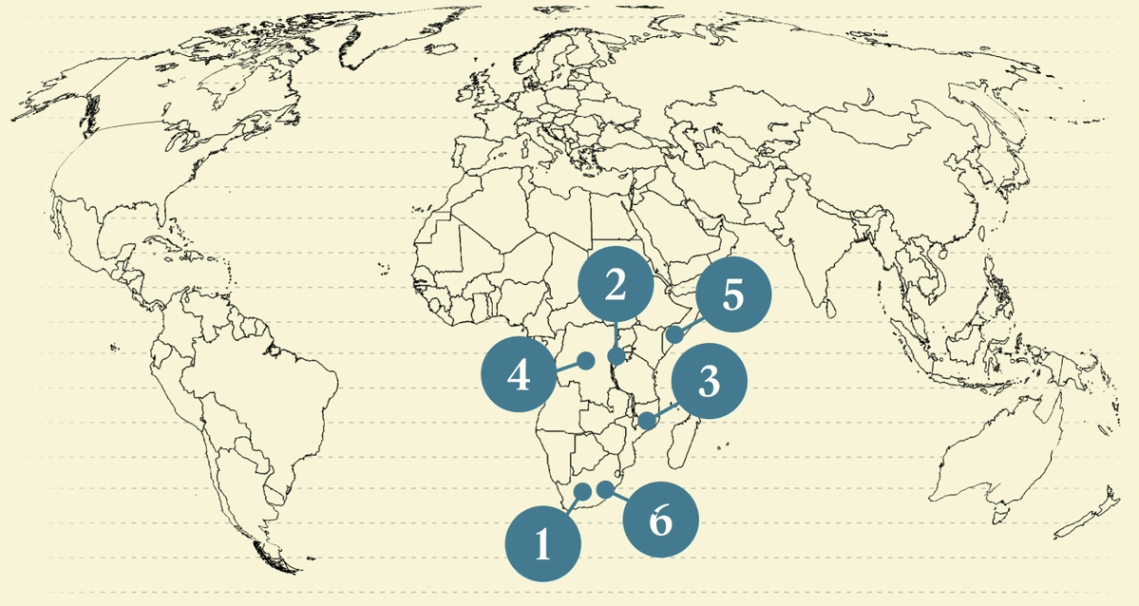 - South Africa’s flat growth
- Rwanda lands IMF support
- Gas set to drive growth
- DRC cobalt restrictions
- World Cup ref barred
- Zipline eyes expansion
 Archaeologists unearth details of Namibian genocide. |
|
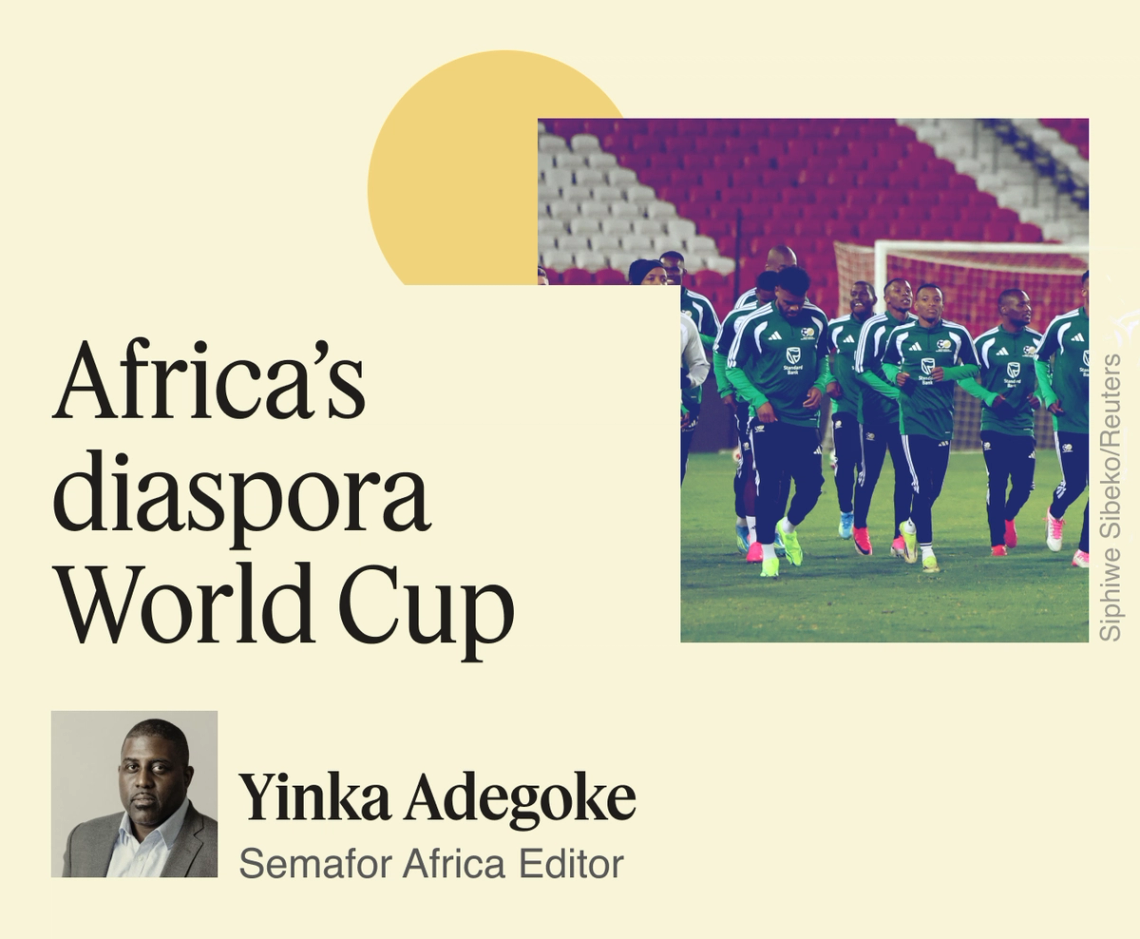 When South Africa’s Bafana Bafana kick off against co-host Mexico on Thursday, they will do so as part of the largest African contingent ever to grace a men’s football World Cup. The 10 African countries playing across the US, Canada, and Mexico are part of a development story that has become inseparable from migration — and from a pointed question about who the game is actually being built for. For decades, the measure of African footballing progress was simple: How many of your best players were earning wages in Europe? The number kept climbing. Today that benchmark has been overtaken by something more complex. It is no longer just that African players ply their trade internationally — increasingly, African national teams are fielding players born abroad. DR Congo’s squad draws 20 of its 26 players from outside the country. Morocco, the continent’s top-ranked team, counts 19. Meanwhile, Europe’s leading sides field more and more stars who are descendants of African migration. New research from economists at the World Bank and the University of Bologna attempts to put a price on that exchange. Their concept, “leg drain,” treats football talent like brain drain: a valuable export whose rewards often accrue elsewhere. They estimate talent redirected through dual-citizenship eligibility is worth more than €20 billion globally — and that Africa is often on the losing end. DR Congo’s actual World Cup squad is valued at €128 million; without leg drain, they estimate, it would command €355 million. The exact valuations are debatable. The broader trend is not. Diaspora is no longer a subplot in international football. It is one of the forces reshaping the sport and multigenerational African diaspora is a large part of the reason why. Yet this sits awkwardly alongside new restrictions on movement by the co-host United States. While teams increasingly benefit from globally mobile players, fans from Senegal and Côte d’Ivoire face US travel restrictions, and a Somali referee has been denied entry. Africa’s influence on this World Cup is impossible to miss. The longer-term question is whether the continent is capturing more of that value — or exporting it. |
|
South Africa Q1 GDP edges higher |
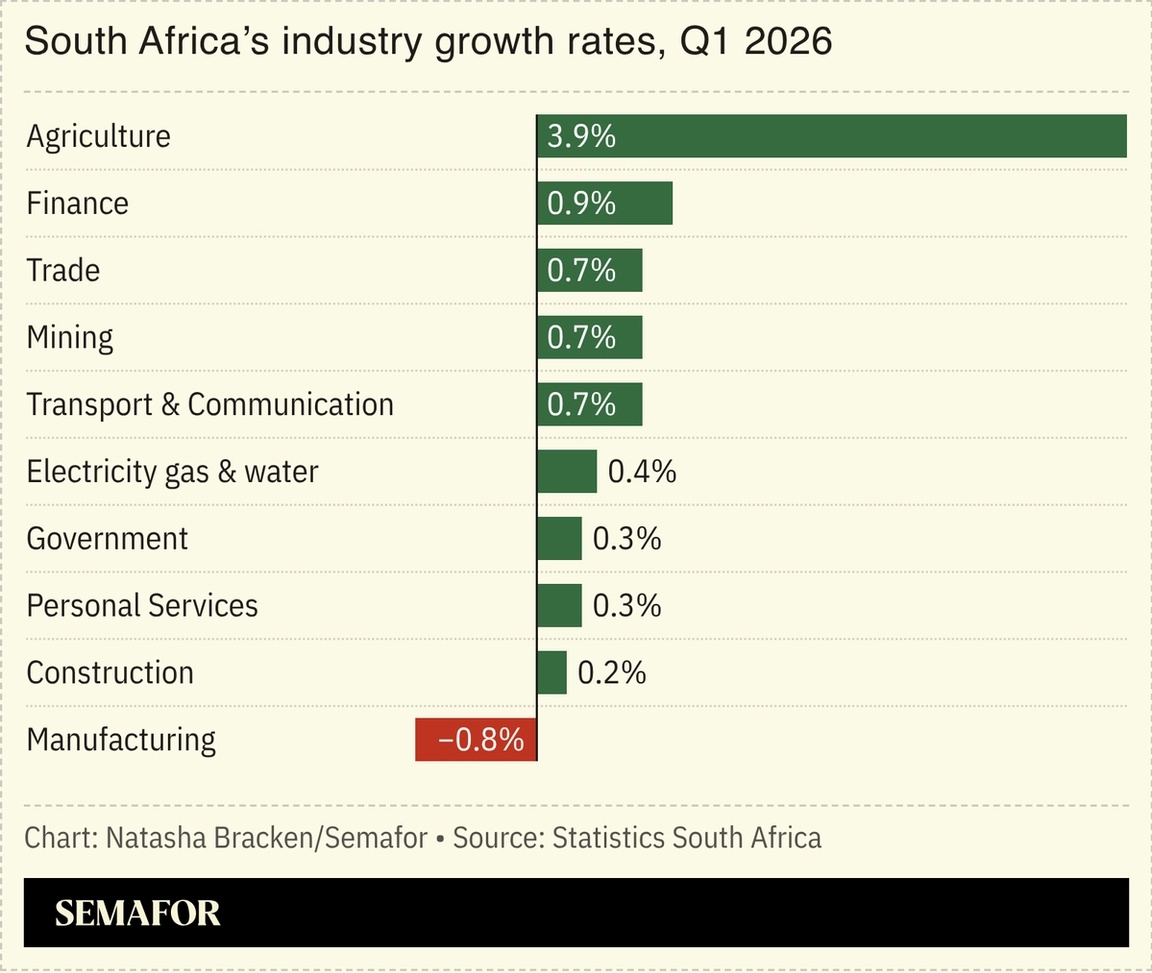 South Africa recorded modest growth of 0.5% in the first three months of the year, showing the extent to which Africa’s biggest economy remains exposed to the Middle East energy shock. The stagnation is feeding into a volatile social environment, where nearly one in three is jobless. Public anger over rising living costs and weak job creation has already spilled into xenophobic violence in several communities in recent months, testing the state’s ability to maintain order. The figures capture economic activity before the impact of the Iran war filtered through, while an interest rate hike earlier this month, aimed at curtailing the inflationary impact of the conflict, looks set to erode consumer spending. David Omojomolo, an economist at Capital Economics, said the first quarter data showed “weakness under the hood,” which “will make the Reserve Bank cautious about delivering aggressive interest rate hikes.” — Tiisetso Motsoeneng |
|
Rwanda secures IMF credit facility |
 The International Monetary Fund approved a $250 million credit facility for Rwanda, noting that a prolonged war in the Middle East may jeopardize the country’s resilience. It is the first African country to seal an IMF economic package since the start of the Iran war which has pushed up energy, food, and fertilizer prices across the continent. The loan agreement involves a 38-month program to help Kigali “adapt to tighter global financing conditions while sustaining growth,” the Washington lender said on Monday. Rwanda’s economy grew 9.4% last year but inflation hit 13% in April, far exceeding the National Bank of Rwanda’s 2-8% target range. — Alexander Onukwue |
|
Gas offers Mozambique growth |
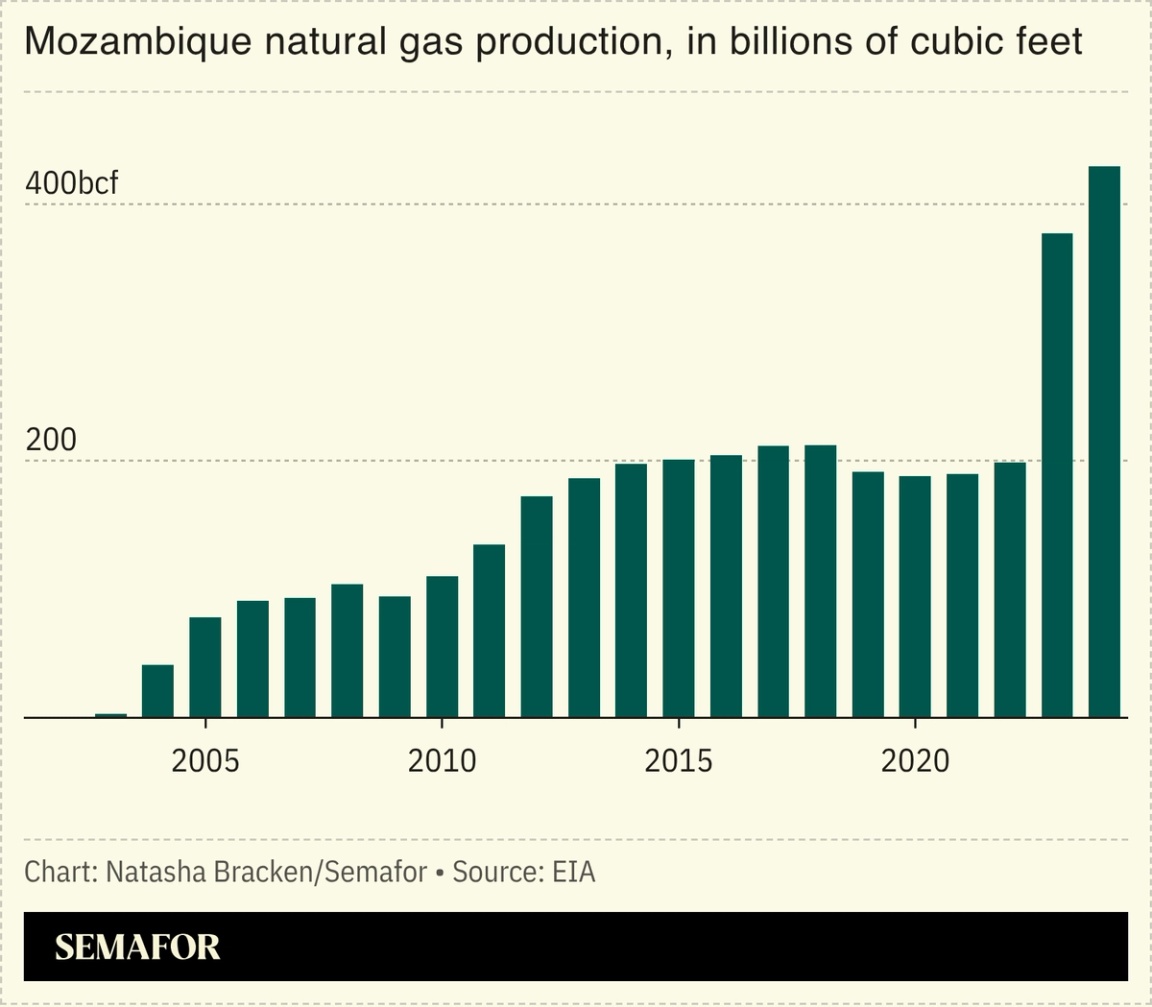 ExxonMobil’s gas project is forecast to lift Mozambique’s economy by more than 4% a year once production starts in four years, Standard Bank estimates. Mozambique has the world’s eleventh largest gas reserves and the $30 billion Exxon-Mobil-led project, alongside TotalEnergies’ $20 billion gas project, are central to reshaping the economy. The country has positioned itself as a source of liquefied natural gas as an alternative for global buyers hit by disruptions around the Strait of Hormuz. Standard Bank, Africa’s biggest lender by assets, said the Exxon-Mobil project will add up to $150 billion in tax revenue over a 30-year period. But the timeline depends on stability in northern Mozambique, where an armed insurgency has disrupted work and delayed earlier project milestones. — Tiisetso Motsoeneng |
|
DRC cobalt curbs drive scramble |
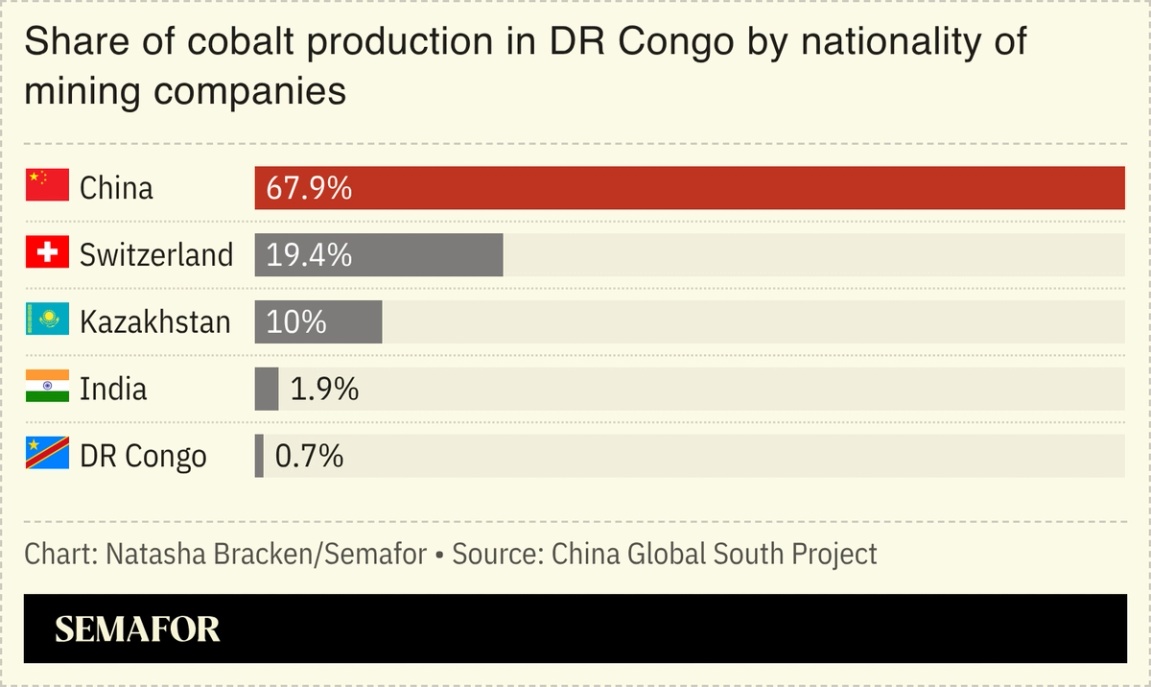 DR Congo’s export restrictions on cobalt, a key component in electric vehicle batteries, sent smelters worldwide scrambling for alternatives. The Central African country, which accounts for over 70% of global cobalt mine supply, imposed sales caps last year in order to boost prices, which have recently reached record levels, and drive domestic processing. The move ended a long stretch in which shipments were frozen and gave Kinshasa firmer control of a mineral that underpins the global battery industry. While the market fallout reflects the risks of overreliance on a single supplier, it also underscores Africa’s leverage over China, the biggest miner on the continent. African countries have also vied to increase local minerals processing, with some making it a requirement in production agreements. A version of this item first appeared in Semafor Flagship, subscribe here. → |
|
|
World Cup referee barred entry |
 Somalis hold pictures of referee Omar Abdulkadir Artan. Feisal Omar/Reuters Somalis hold pictures of referee Omar Abdulkadir Artan. Feisal Omar/ReutersA FIFA-selected referee from Somalia who was set to make history at the World Cup has become the latest flashpoint in the debate over US travel restrictions. Omar Abdulkadir Artan, who was Africa’s top male referee in 2025 and the first Somali ever selected to officiate at a World Cup, was denied entry to the United States after arriving in Miami despite holding a valid visa. US officials said Artan was deemed inadmissible due to unspecified “vetting concerns,” while FIFA confirmed he will no longer work the tournament after being told his status would not change. Somalia’s government has sought answers, while the top Democrat on the Congressional Soccer Caucus is calling for the decision to be reversed. Artan’s case has sharpened concerns that immigration restrictions could complicate the expanded World Cup, which will have a record 10 African teams and many fans have reported visa denials. As of January, 30 African countries, including Somalia, faced some form of US entry restriction. — Adrian Elimian |
|
Zipline plans Africa expansion |
 Stephen Lam/Reuters Stephen Lam/ReutersZipline, the Washington-backed logistics firm pioneering large-scale drone deliveries in Africa, plans to extend its presence on the continent by rolling out services trialled in Rwanda, an executive told Semafor. The company plans to include livestock insemination in its expansion plans across Africa, its country director for Rwanda, Pierre Kayitana, said in an interview. The move comes after a recently published study by company researchers claimed that a combination of Zipline’s cold-chain storage and drone delivery system caused a 17% rise in farmers’ income from increased piglets and pork production. Rwanda is Zipline’s largest office in Africa but also operates in Côte d’Ivoire, Ghana, Kenya, and Nigeria. The company is in “advanced talks” with Lesotho to begin offering drone deliveries, Kayitana said. It is also negotiating with authorities in Kigali, Abidjan and Abuja to make its presence in each country nationwide by setting up more distribution centers for deliveries, he said. — Alexander Onukwue |
|
 Business & Macro |
|
|


