| | The US launches another wave of strikes against Iran, US inflation hits a three-year high, and the m͏ ͏ ͏ ͏ ͏ ͏ |
| |  | Flagship |  |
| |
|
The World Today | 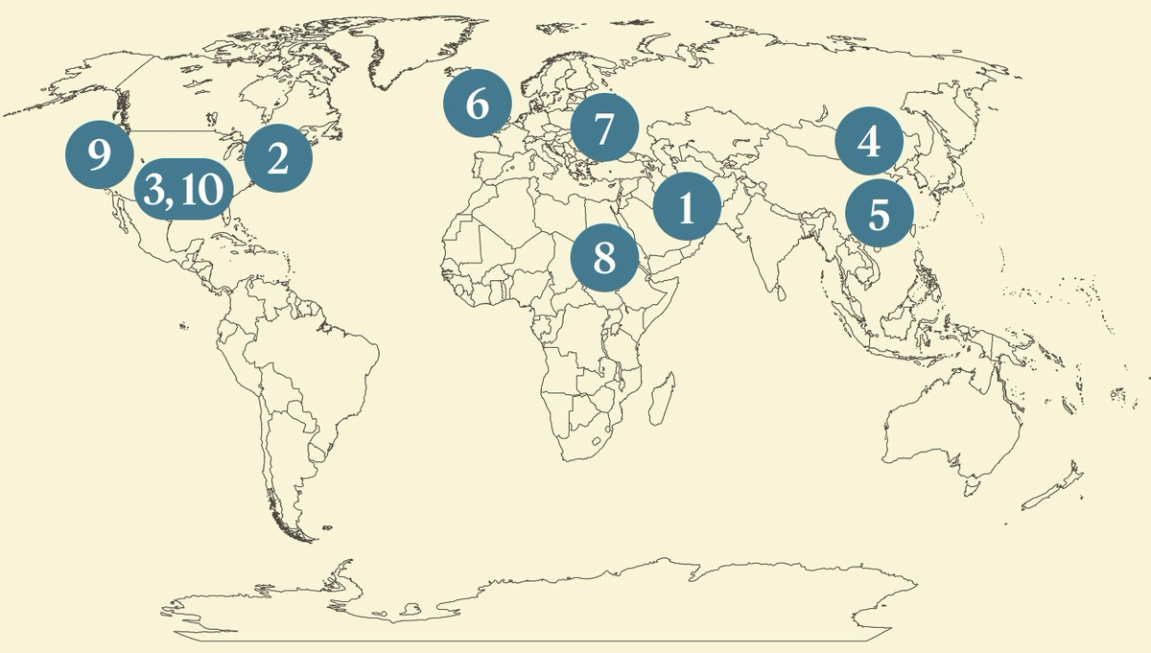 - US strikes Iran again
- Trump ‘loves the inflation’
- SpaceX valuation concerns
- Chinese investors, US IPOs
- China dumping concerns grow
- Violence tests Europe leaders
- Ukraine’s version of Patriots
- Conflicts hit record high
- Technology of the century
- World Cup grass complaints
 How to watch the men’s World Cup like a genius. |
|
US launches more strikes on Iran |
 Evan Vucci/Reuters Evan Vucci/ReutersThe US launched another wave of strikes against Iran on Wednesday, hours after President Donald Trump voiced frustration with the long-drawn-out peace talks with Tehran. The attacks marked the latest sign that the countries’ ceasefire is deteriorating, after Iran struck US bases in Bahrain, Jordan, and Kuwait. Trump, who vowed to hit Iran “hard,” is considering an operation that is “big in scale but short in duration,” in an attempt to push Tehran to change its stance in negotiations, Axios reported. The US president also touted a “secret” mission that he said has moved 200 commercial ships and 100 million barrels of oil through the Strait of Hormuz, over which Iran is refusing to cede control. |
|
US inflation hits three-year high |
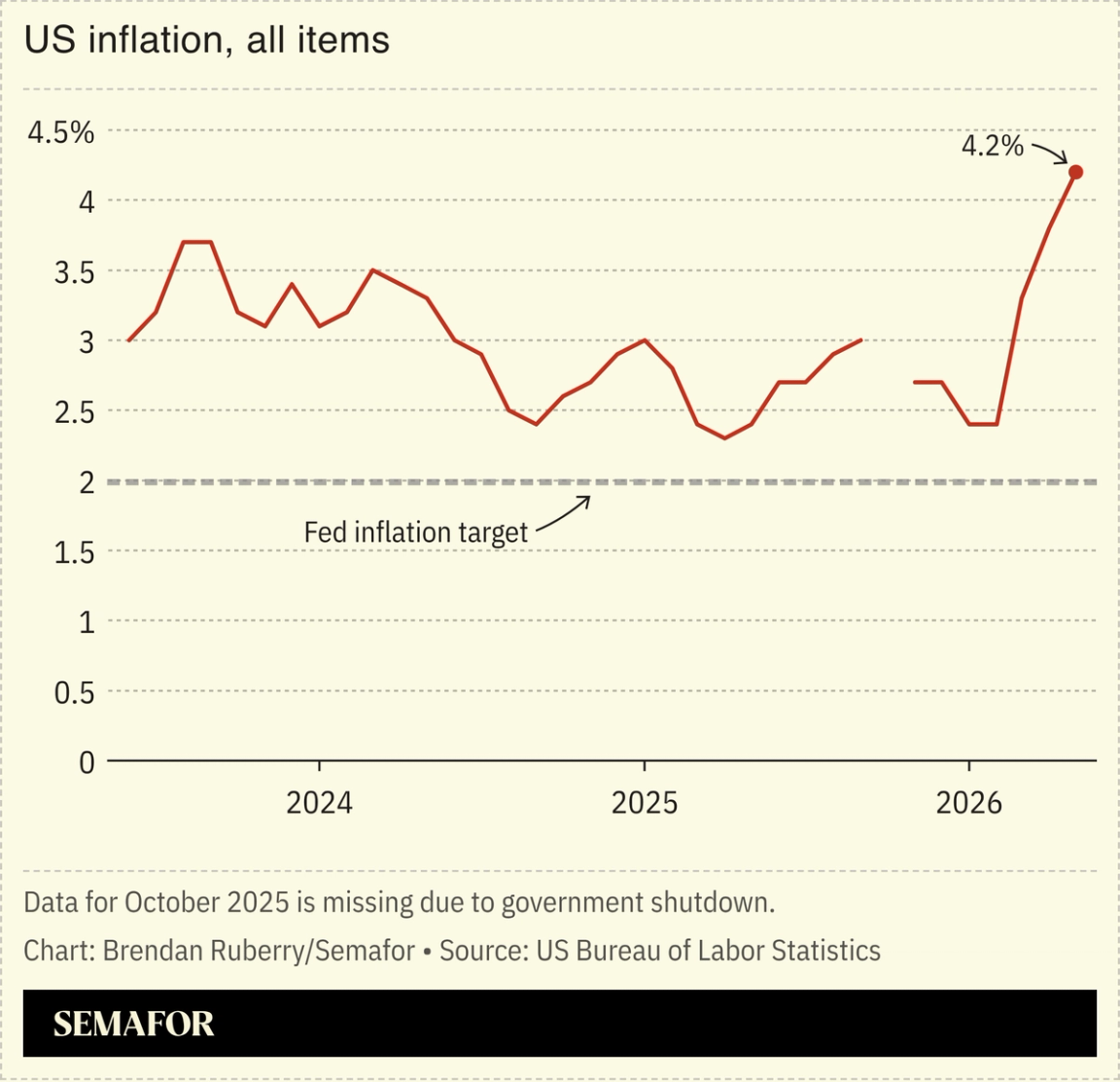 US inflation hit a three-year high of 4.2% in May, as the Iran war drove up energy prices. President Donald Trump signaled he wasn’t worried about the reading Wednesday, saying, “I love the inflation,” and predicting that prices are “going to come down like a rock” after the conflict ends. The inflation report was something of a “Rorschach test,” a Barclays economist wrote: Beyond the headline figure, core goods inflation declined, possibly because of tariff effects wearing off. The hot inflation reading, coupled with strong jobs data, reinforces the likelihood that the US Federal Reserve will hold interest rates steady next week, putting new Fed Chair Kevin Warsh at odds with Trump’s demand to slash rates. |
|
SpaceX IPO is oversubscribed |
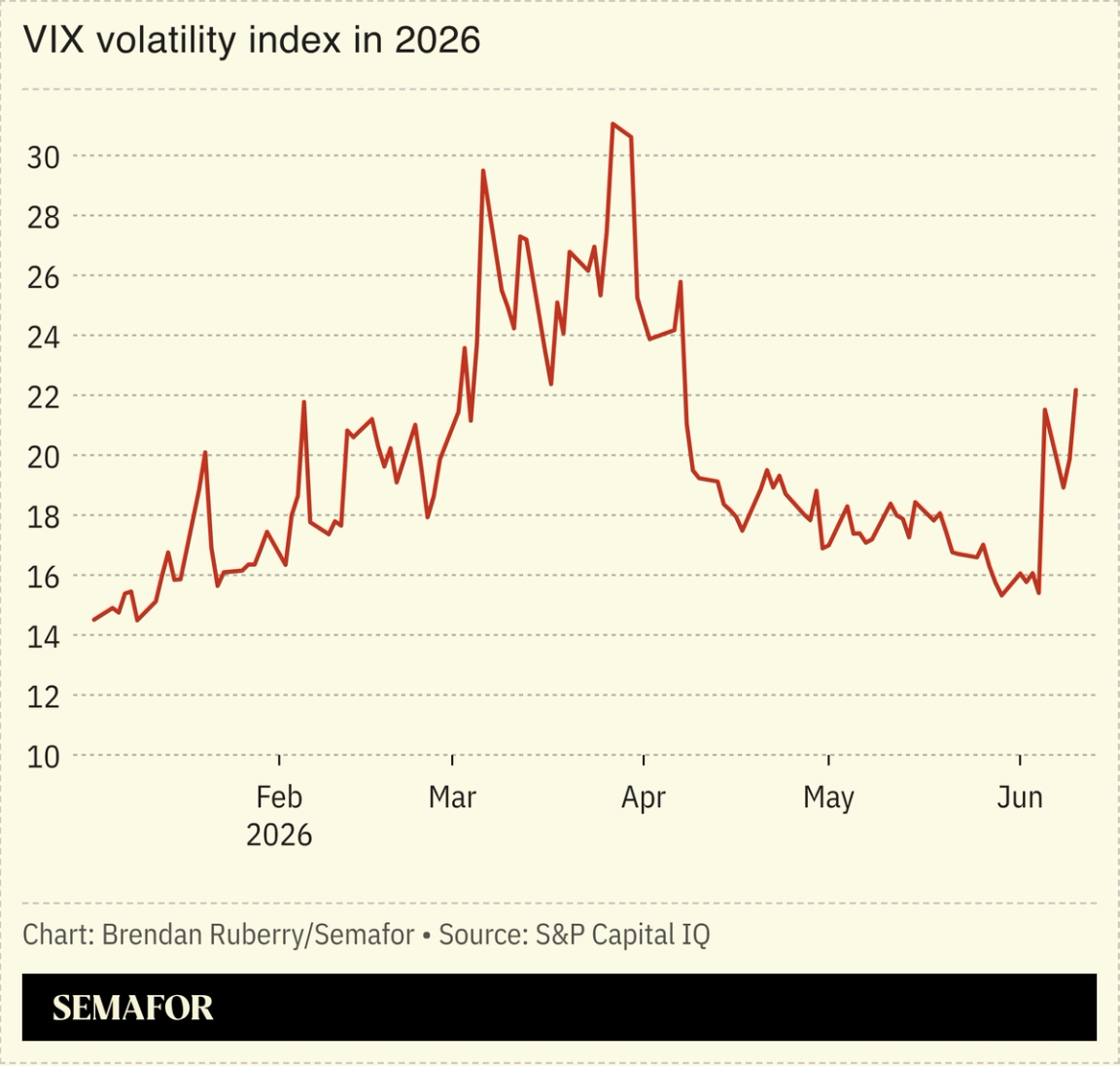 The upcoming SpaceX IPO is raising concerns among some investors that the offering will simply be too large for the market to absorb in a healthy way. The market debut on Friday, set to be the largest in history, is more than four times oversubscribed, Bloomberg reported. Stocks fell last week as analysts speculated investors were selling shares to make space for the SpaceX IPO and other big upcoming tech listings, namely OpenAI and Anthropic, the Financial Times wrote. “Record new issues is one of the classic signs of a bubble,” one investment executive said. US Sen. Elizabeth Warren this week called for regulators to delay the IPO, citing SpaceX’s historic valuation among other concerns. |
|
Chinese investors want in on US IPOs |
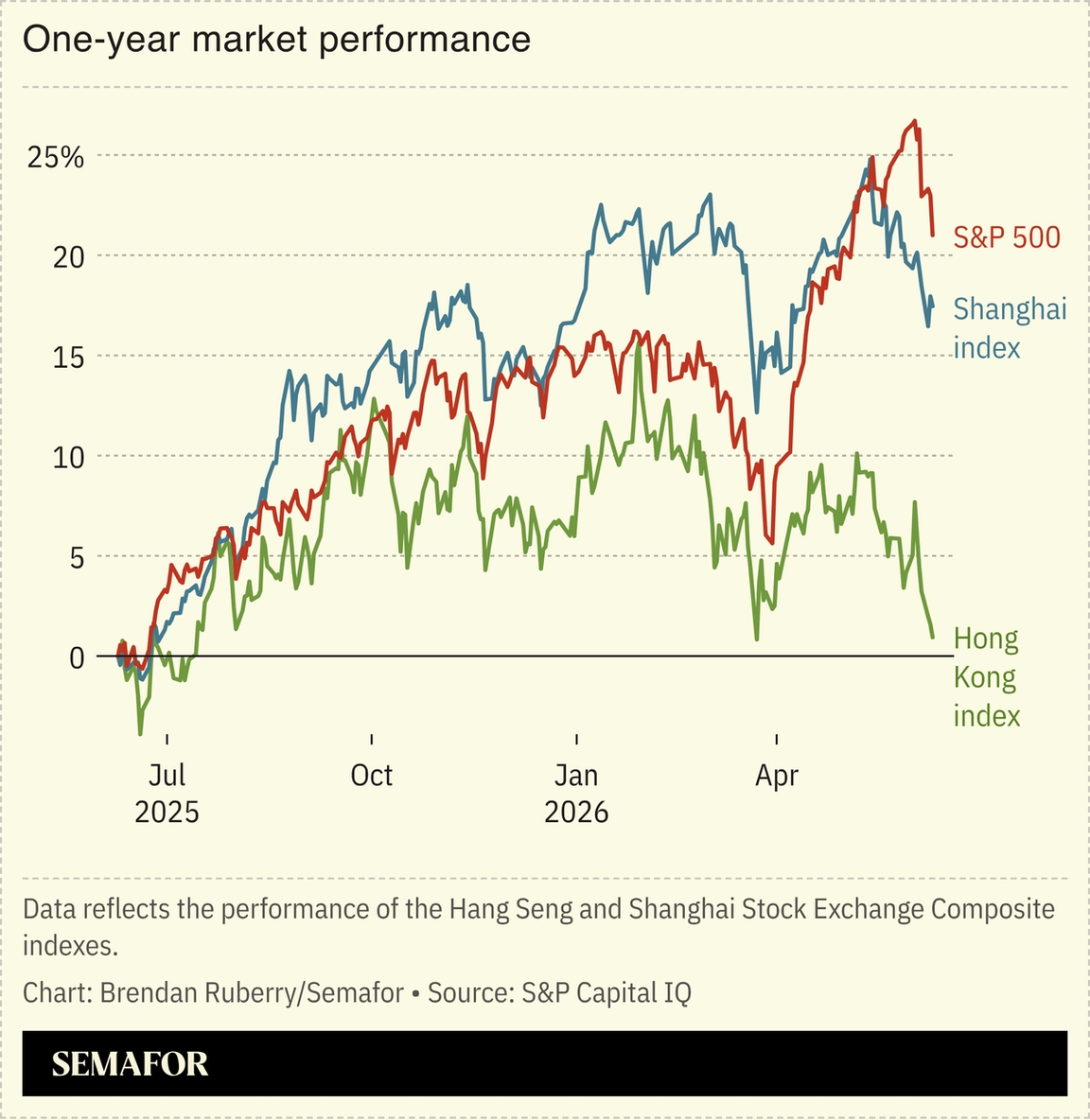 Ordinary Chinese investors are turning to digital assets to skirt Beijing’s rules and bet on big US IPOs like SpaceX and OpenAI. The workaround involves cryptocurrency that purportedly has exposure to the underlying stocks, the Financial Times reported, despite Beijing’s ban on converting cash into crypto. There are concerns, though, that these securities aren’t all legitimate, showing how far the investors are willing to go to take advantage of the red-hot US market. Chinese tech stocks have wavered this year amid scrutiny of steep AI spending and broader market volatility. Some Chinese AI startups have gone public, but their valuations pale in comparison to their American counterparts. |
|
US lawmakers warn on China dumping |
 Tasos Katopodis/Getty Images for Semafor World Economy Tasos Katopodis/Getty Images for Semafor World EconomyBipartisan US lawmakers worry that the Trump administration is going easy on foreign companies potentially involved in dumping Chinese and Russian goods in the US. In a letter to the US Commerce secretary, two China-critical congressmen suggested Washington is departing from its policy of imposing maximum tariffs on companies that refuse to comply with investigations into imports being dumped or unfairly subsidized by a foreign government. Officials across the Atlantic have also raised concerns about a flood of cheap Chinese goods undercutting local industries: The EU recently brainstormed ways to counter Chinese overcapacity, in “a test of whether advanced industrial democracies can preserve manufacturing capacity in the face of state-backed overproduction on a continental scale,” an Atlantic Council expert wrote. |
|
Violence tests European leaders |
 Belfast. Isabel Infantes/Reuters Belfast. Isabel Infantes/ReutersA spate of high-profile violent crimes is roiling the UK and France. The French president said Wednesday that trust in the country’s institutions is “at stake,” after an 11-year-old girl was killed by a suspect who had twice been formally accused of rape, with the revelations triggering protests and a political crisis. The UK government is grappling with a wave of anti-immigrant violence in Northern Ireland after a Sudanese refugee was accused of a stabbing. “The Belfast riots are the latest upheaval in a prolonged crisis over race and immigration in Britain,” The Washington Post wrote. British authorities are also facing blowback over the death of a student who was stabbed by a Sikh man, and was handcuffed by officers as he lay dying. |
|
Ukraine’s cheaper version of Patriots |
 A Russian missile explodes over Kyiv. Gleb Garanich/Reuters A Russian missile explodes over Kyiv. Gleb Garanich/ReutersUkraine has built and tested a low-cost alternative to US Patriot missiles, potentially reducing a shortfall in anti-air interceptor weapons. Patriots cost more than $4 million each and take around two years to build; the Iran war has depleted US stockpiles so far that they will take at least three years to replenish. But overseas orders are at record-high levels: Lockheed Martin aims to triple production but does not expect to do so until 2030. Ukraine’s version costs $700,000, and uses infrared rather than ground-based radar — a less precise, but cheaper, guidance system. Russian ballistic missile attacks are “the gift and the curse” for Ukraine, a defense analyst said, giving it plenty of testing opportunities for its surface-to-air weaponry. |
|
 Track Vietnam’s ‘era of national rise.’ Vietnam is in the midst of its most ambitious economic reforms since the 1980s, prioritizing AI, semiconductors, and EVs as leaders lay the groundwork for double-digit annual GDP growth moving forward. Follow the country’s increasingly critical global role through the Vietnam Weekly, written by Ho Chi Minh City-based reporter Mike Tatarski. Subscribe here. |
|
Conflicts at highest level since WWII |
 Thomas Peter/Reuters Thomas Peter/ReutersThe number of direct conflicts between states reached its highest level since World War II. The Uppsala Conflict Data Program recorded 65 active conflicts in 2025, of which the number of interstate conflicts doubled to eight — the highest since data collection began in 1946. It also documented a stark rise from 187,000 conflict deaths in 2024 to 244,600 in 2025, mostly driven by violence in Sudan. Harvard psychologist Steven Pinker argued in 2013 that humanity is becoming less violent and wars rarer, but anthropologists have disputed those claims. Global peacefulness deteriorated for the 12th consecutive year, the latest Global Peace Index showed, as the economic cost of violence was more than $20 trillion in 2025 — equivalent to 10.5% of global GDP. |
|
AI could be tech of the century |
By 2040, AI will be the “technology of the century,” akin in impact to the harnessing of electricity, a group of experts and forecasters predict. The panel used Nate Silver’s “Technological Richter Scale,” ranking technology into categories such as “technology of the month,” like a smartphone app, or “…of the epoch,” such as the rise of humans. Most placed AI century-level or above, and they assigned roughly a one-in-four chance of AI reaching millennium-level impact — comparable to the agricultural revolution — by 2040. They also gave a median forecast of artificial general intelligence — AI that outperforms humans at most cognitive tasks — arriving in 2050. Experts were more optimistic about AI than the public, with most expecting a positive or very positive outcome. |
|
US stadiums build greener pastures |
 Denny Medley-Imagn Images via Reuters Denny Medley-Imagn Images via ReutersThe men’s World Cup is also an experiment in the science of grass. FIFA doesn’t allow matches to be played on synthetic surfaces, posing a challenge for North American stadiums that use turf. Grass researchers have raked in millions of dollars “to figure out how to |
|
|


