| | The US and Iran exchanged fire again, straining an already fragile ceasefire and pushing oil prices ͏ ͏ ͏ ͏ ͏ ͏ |
| |  Beijing Beijing |  Mexico City Mexico City | Kinshasa |
 | Energy |  |
| |
|
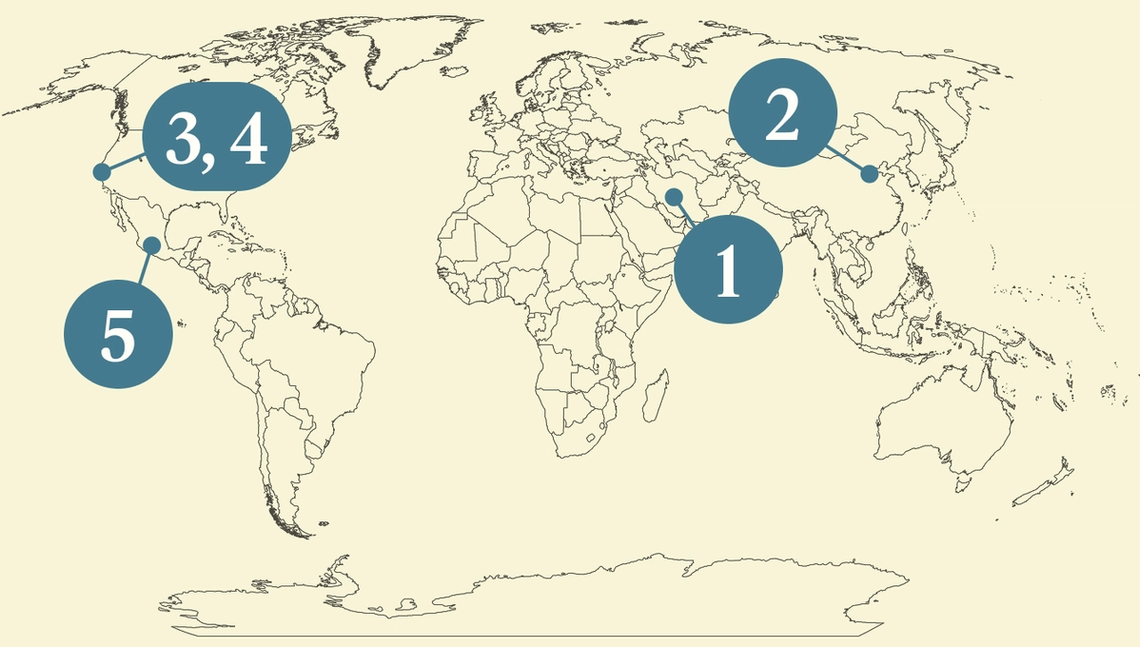 - Escalation in Hormuz
- Outbound investment push
- Nvidia’s PR challenge
- Solar beats coal
- World Cup heat risk
 Why General Motors is betting on sodium-ion batteries, and ExxonMobil is betting on Mozambique. |
|
 The wave of record-breaking public offerings for AI megacompanies that has Wall Street fixated this week is also buoying energy startups that see a chance to win back investors’ favor after the disappointing climate tech boom of the early 2020s. In the past quarter or so, a rising number of energy tech startups have hit the public market. Geothermal pioneer Fervo raised $1.9 billion; small nuclear reactor manufacturer X-energy raised more than $1 billion, joining a series of other nuclear startups with more on the way; last week the gas generator manufacturer Innio raised $2.4 billion and on Tuesday a similar company, ERock, raised $600 million. These companies all have two things in common: A plan to get rich selling electrons to data centers, and a conviction that the stock market is the best place to find the capital they need to do so. The hullabaloo around the SpaceX IPO, which is expected to be the largest in history when it hits the Nasdaq tomorrow, plus the similarly massive upcoming Anthropic and OpenAI debuts, could pose a risk for future energy tech aspirants. As my colleague Rohan Goswani observed, “the sheer amount of money these AI giants will need raises concerns they’ll crowd out fast followers.” But for now, it seems more likely that the rising tide will lift many boats, Beau Bohm, global co-head of equity capital markets at investment bank Cantor Fitzgerald, told me. Gigantic AI IPOs “expand overall appetite for the infrastructure thesis more broadly,” he said. “The actual risk to this cohort of new energy tech IPOs is a softening of the overall AI demand narrative, not necessarily competition from these mega AI offerings. If these deals perform well, investors are going to have a lot more appetite to deploy capital into the picks and shovels around AI.” |
|
 Ministry of Interior of the Kingdom of Bahrain/Handout via Reuters Ministry of Interior of the Kingdom of Bahrain/Handout via ReutersThe US and Iran exchanged fire again, straining an already fragile ceasefire and pushing oil prices up. US President Donald Trump said Iran would “pay the price” for not making a deal, while Tehran declared the Strait of Hormuz closed once more and said it had hit two oil tankers in the channel. Trump said that the US military had escorted ships carrying 100 million barrels of oil through the strait, but that is just five days of normal throughput. Brent crude jumped overnight, with higher global energy prices driving inflation and growing expectations of rate hikes from the European Central Bank today, and the Federal Reserve over the course of the year. Even after the strait reopens, oil prices are on track to continue rising for the next “five to 10 years,” the CEO of Shell warned. And if fighting does resume in earnest, Rystad Energy forecast that prices will quickly jump to $150 per barrel. But a few more LNG tankers managed to slip through. |
|
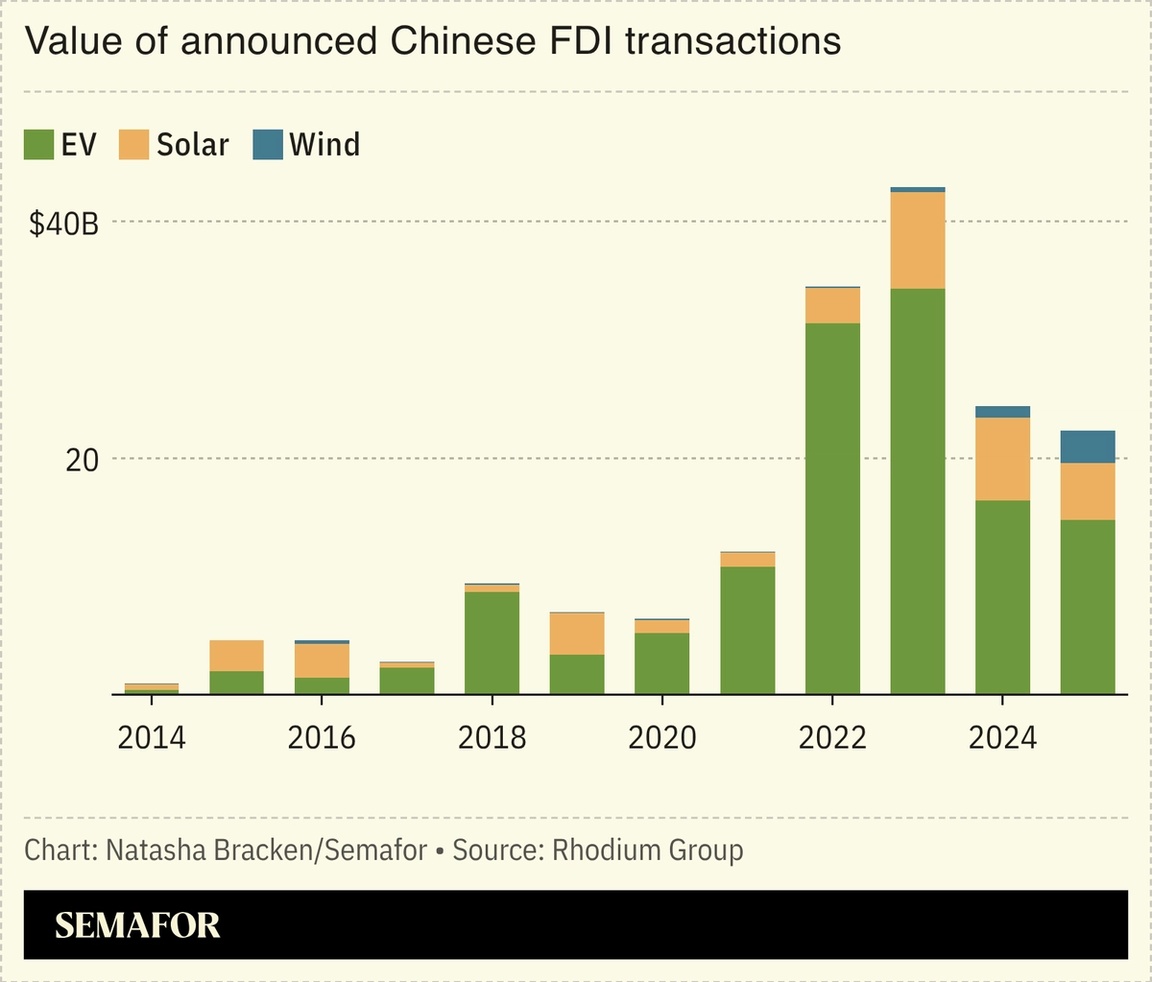 China’s main way of serving overseas markets is, by a wide margin, exports, but rising trade barriers may leave the country with little choice but to expand its investments in foreign countries’ clean tech manufacturing capacity. Since 2014, China has announced $173 billion of FDI in clean technology sectors, but new data from Rhodium Group found that only around half of those commitments have materialized. Chinese investors have largely kept overseas manufacturing as an afterthought. The rise of trade barriers and localization requirements, however, have been gradually forcing Chinese firms to look abroad, outside of their historic pattern of foreign investments, which served to support the extraction of other countries’ resources. In solar PV, for example, Chinese firms moved into Cambodia, Malaysia, Thailand, and Vietnam to circumvent US and EU trade barriers; as those hubs drew scrutiny, investment shifted to Ethiopia and the Philippines. |
|
 Jonathan Ernst/Reuters Jonathan Ernst/ReutersThe benefits of AI outweigh its costs, Nvidia’s head of sustainability argues. As the artificial intelligence boom is greeted by a skeptical America, Josh Parker wants to educate policymakers and the public about the positive impacts that the technology — and especially data centers — can have on communities. “I don’t think it’s irrational for people to have anxiety about the future, because AI is so transformative, and we’re entering an era of unknowns and transformation,” Parker told Semafor. He contended, however, that data centers’ adverse impacts, including higher electricity costs, are smaller than people think and “the benefits are very, very significant.” Nvidia, in partnership with other companies, is piloting technologies that allow data centers to adjust their power usage during periods of peak demand. Although the net upside “works out very positively, we just have a big mountain to climb in terms of helping people understand that,” he said. Parker touted tax benefits offered by some states to encourage data center construction and jobs created by the projects. He argued that data centers “strongly support energy affordability” by incentivizing grid upgrades and because of new technologies that make them “assets to the grid.” —Morgan Chalfant This item first appeared in Semafor’s twice-daily US politics briefing, subscribe here. → |
|
|
 For the first time, the US got more electricity from solar in a month than it got from coal. Solar contributed 12.8% of the US power mix in May, Ember reported, beating coal’s 12.2%. Some of that surge is being driven by data centers, many of which are finding solar to be the fastest form of energy they can build, notwithstanding recently renewed efforts by the Trump administration to keep old coal plants running. Natural gas remains the country’s top source of power, accounting for 37% of the mix in May. |
|
 Eloisa Sanchez/Reuters Eloisa Sanchez/ReutersThis year’s World Cup is already historic for being the biggest in the competition’s history, stretching across Mexico, the US, and Canada — but it could also become the hottest and most polluting tournament ever. Heat is a central concern, measured not just by air temperature but by the wet-bulb index, which factors in humidity, wind, and sunshine. At 26°C, water breaks are mandatory; at 28°C, players’ unions want games halted; at 32°C, play stops entirely. The first two thresholds are very likely, The Nature Conservancy’s Chief Scientist Katharine Hayhoe said, the third is a possibility. For football fans, the quality of the spectacle is at risk too: Climate change has increased the likelihood of temperatures high enough to affect player performance in 97 of the 104 tournament matches, Climate Central found. FIFA’s decision to expand from 32 to 48 teams also means more host countries, more fans, longer travel distances, and a much larger carbon footprint. According to one estimate, this year’s tournament could generate 7.8 million metric tons of CO2 — for reference, the 2022 World Cup in Qatar produced roughly 3.8 million tons. —Natasha Bracken |
|
 New Energy- The European Commission pledged €5 billion to solar and wind projects in North Africa and the Middle East, which could then return electricity back into Europe’s grid through high-voltage transmission lines under the Mediterranean sea.
- Global grid capex is set to surpass $650 billion this year, up 5% from 2025 and more than double the investments recorded in 2020, largely driven by price inflation, according to a Rystad Energy report.
Fossil Fuels- Kuwait, a country completely reliant on the Strait of Hormuz for its energy shipments, is in talks with Saudi Arabia and the UAE about expanding their pipeline system to take in Kuwaiti barrels.
- Governments spooked by recent energy shocks will want to build larger stockpiles than they had before the Iran war began, a trend that will keep oil prices higher for longer.
- Fuel supply disruptions have sparked panic-buying in Russia’s Krasnodar region, after Ukrainian attacks on energy infrastructure affected fuel distribution across multiple southern regions and Russian-occupied Crimea.
- ExxonMobil’s gas project is forecast to lift Mozambique’s economy by more than 4% a year once production starts in four years, Standard Bank estimates.
Politics & Policy- In preparation for COP31, host country Turkey will seek to gather support for a global target for electricity to meet 35% of the world’s energy demand by 2035 in an effort to cut fossil fuel consumption.
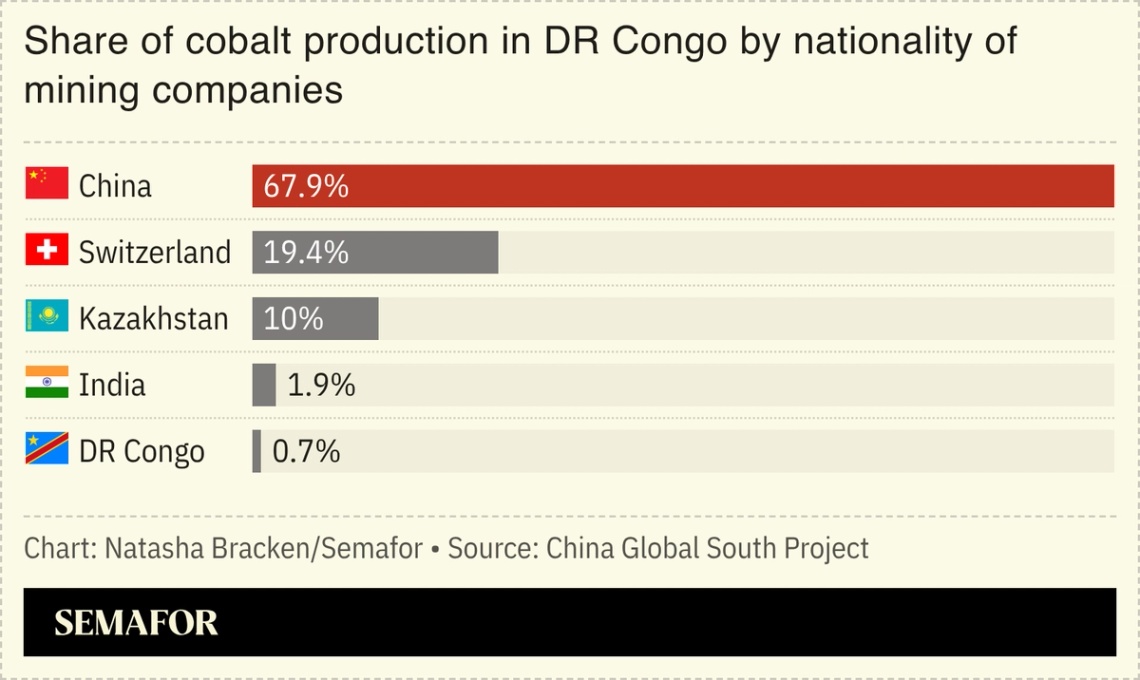
Minerals & Mining- DR Congo’s export restrictions on cobalt, a key component in electric vehicle batteries, sent smelters worldwide scrambling for alternatives, and served as a reminder of the risks that come with relying on a single producer.
 EVs- Almost 10 years after Rivian revealed its hyped and pricey R1T pickup, the EV maker began shipping the first version of the R2, a vehicle meant to bring Rivian to the masses.
Personnel |
|
Landon Mossburg, CEO and Founder, Peak Energy. This week the company signed a deal with General Motors to scale up production of sodium-ion batteries for grid storage. 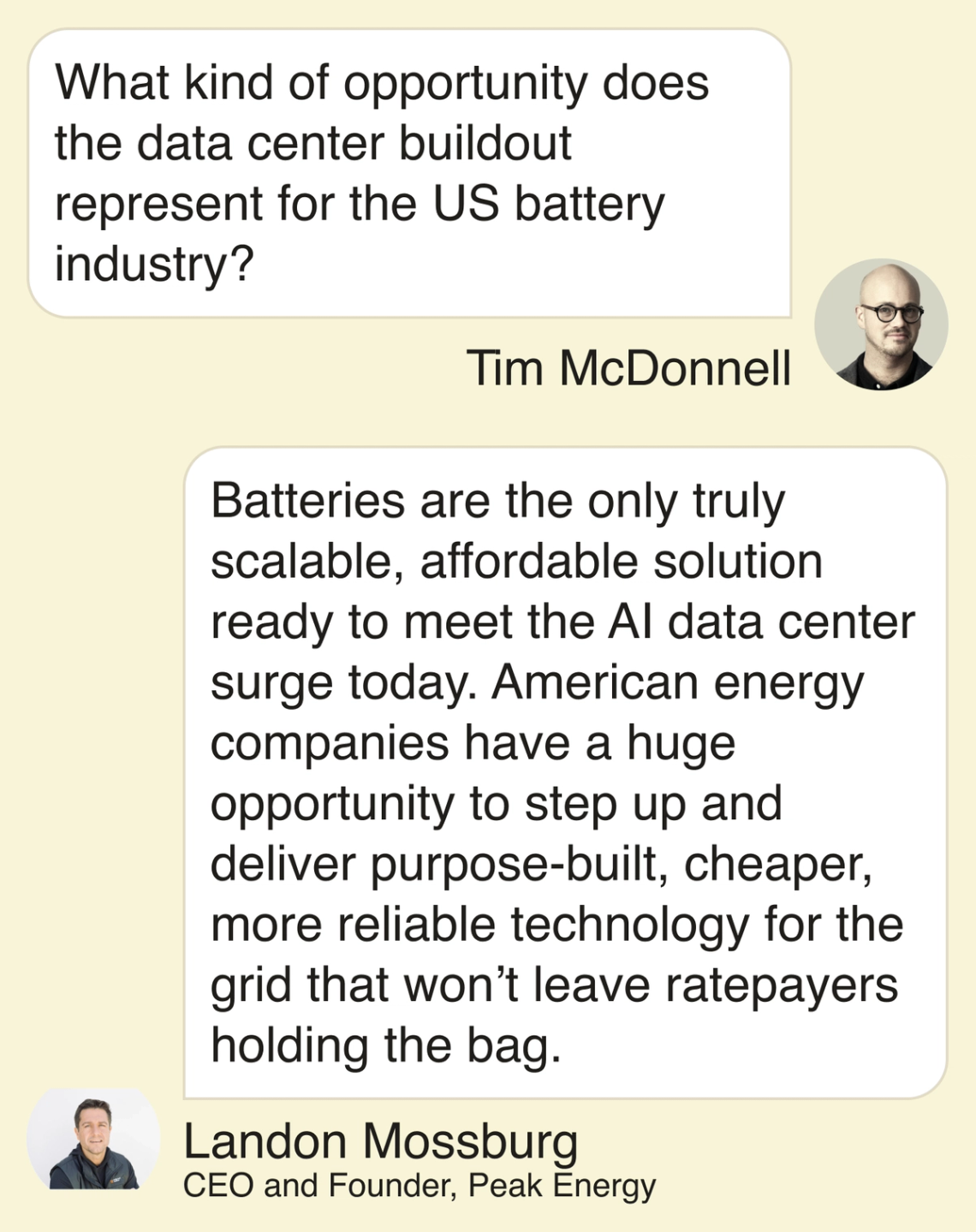 |
|
|


