| | In this edition, Jeff Bezos reveals more details about his new AI venture, and some CFOs are reasser͏ ͏ ͏ ͏ ͏ ͏ |
| |  | Business |  |
| |
|
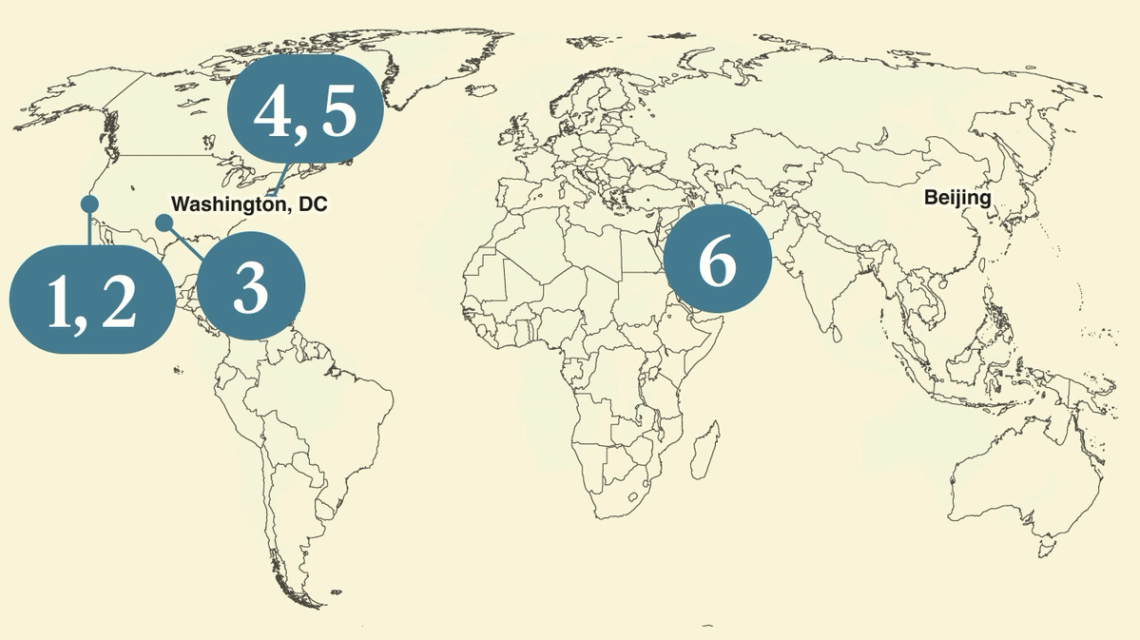 - Bezos’ new AI venture
- Tokenmaxxing sticker shock
- SpaceX IPO Eve
- Sports leagues’ veto power
- Iran war impacts global GDP
- Force majeure in Dubai
|
|
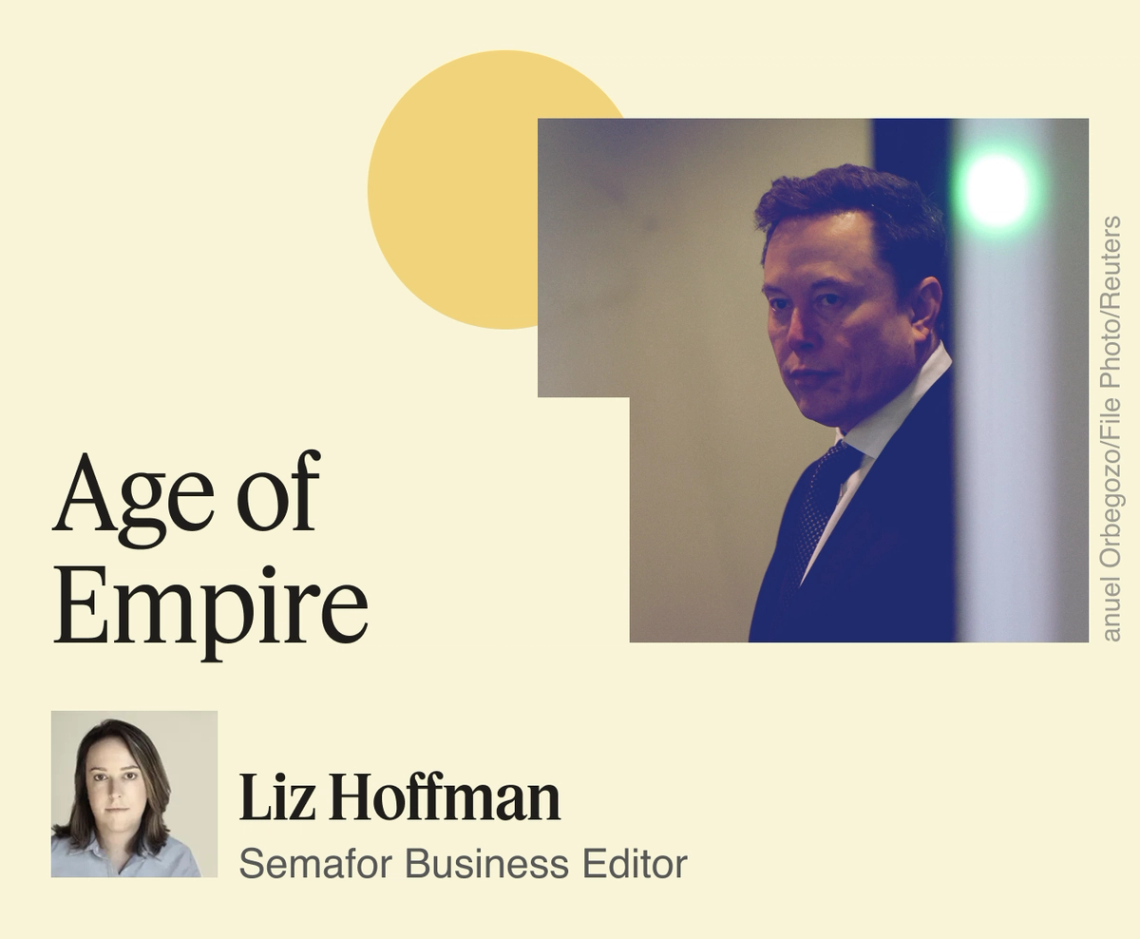 This week’s IPO of SpaceX isn’t just about growing the rocket and satellite company. It’s about Elon Musk consolidating his empire: He’s already merged X and xAI into the rocket and satellite company, and is expected to add Tesla once SpaceX has a stock to use as currency. (You can’t buy a $1.4 trillion company for cash.) When I spoke this week to Jeff Bezos about Prometheus, his “physical AI” lab, it was clear he’s heading in this direction, too. He wouldn’t discuss its arguably more ambitious second act — which, from what I understand, sounds a lot like an AI-powered Berkshire Hathaway. Two of the most ambitious people alive are building the same thing: a holding company glued together by AI. Big Tech has been moving in this direction for decades. Amazon started with retail, but now spans cloud, ads, logistics, healthcare, satellites; Alphabet started with search, but now has self-driving cars and human-longevity research. Meta built its own frontier AI lab not because it had to — it could be a customer of OpenAI or Anthropic — but because Mark Zuckerberg wants to own the cutting edge. Conglomerates need a secret sauce to turn two and two into five. Synergy can do it — Disney’s parks run on its studios’ IP — but it’s usually overhyped by empire-building CEOs. Management can do it, as Harold Geneen proved at ITT through brutal operations reviews, but even the best boss can keep on top of only so many things. Cheaper capital can drive it, as it has for Big Tech. So can the halo effect — briefly for Jack Welch’s GE, longer for Warren Buffett, and now for Musk. The trouble is that, too often, the sauce turns out to be weak, and shareholders realize they don’t need a CEO to diversify a portfolio for them. Vimal Kapur, the CEO splitting Honeywell in three, tells Semafor’s Andrew Edgecliffe-Johnson in an interview running tomorrow that the scale industrial conglomerates could offer was worth more than specialization in the era of globalization, but “that value creation got maxed out.” AI could be the new glue. If every company eventually becomes a wrapper for AI, there is real value in putting them all under one owner with superior management, data, or operations. If Jensen Huang woke up tomorrow and decided that Nvidia should run a bank, I suspect some investors would be into it — especially if he were prepared to allocate some of his precious GPUs to do it. “Driverless cars, high-speed internet beamed from space, video games controlled by our brains alone, and life-saving drugs designed on laptops,” my colleague Reed Albergotti wrote this week. “AI is what ties these things together.” One caveat: AI cuts both ways. The same models that let CEOs see across a sprawling empire also let analysts and activists see through one, dissolving the complexity that conglomerates hide behind. And if AI commoditizes operational excellence, then domain depth is the only real moat, which is an argument for more focus, not less. The conglomerate may not have been a bad idea so much as a premature one. ITT’s Geneen never got to run the experiment with the right tools. Musk and Bezos are about to. |
|
Bezos raises $12B for AI that builds things |
 Courtesy of Prometheus Courtesy of PrometheusJeff Bezos is ready to open up about Prometheus, the secretive AI startup he’s leading with former Google X executive Vik Bajaj. The tech billionaire said in an interview that he had raised $12 billion to build an AI “physical world” lab, which emerged Thursday from stealth, valued at $41 billion. Bezos, JPMorgan, BlackRock, Goldman Sachs, and venture-capital firms DST Global and Arch Venture Partners all invested. Prometheus aims to do for engineering and manufacturing what large language models have done for text. Building what Bezos called an “artificial general engineer,” he wants to create a counterpart to the LLMs OpenAI and Anthropic have created by distilling a sea of words on the internet. Prometheus is instead ingesting large amounts of data and other information from the physical world to help accelerate the manufacturing of everything from skyscrapers to smartphones to jet engines. “Something that today was going to take 100 engineers 10 years to build, if you can change that to taking 10 engineers one year to build, you’re just going to get way more things built,” Bezos said in an interview. Bezos said he isn’t worried about massive job losses, and that the economy could see a labor shortage as AI makes it easier and cheaper to build new things. |
|
Token sticker shock has CFOs pushing back |
 Chris Tuite/Semafor Chris Tuite/SemaforAs AI bills stack up, the bean-counters are taking note. Tokenmaxxing has reached such absurd levels — “nobody has budgeted” for it, Box CEO Aaron Levie said at a Semafor Tech event Wednesday — that some CFOs are reasserting control over surging token costs. Uber CEO Dara Khosrowshahi, who told Semafor he was vibe coding his own apps earlier this year, is now cracking down on his workers’ use of Claude Code. The AI labs are responding in kind: OpenAI is weighing “drastic” price cuts, The Wall Street Journal reported, anticipating a similar move from Anthropic. Still, Cisco president Jeetu Patel said AI consumes nearly five times as much bandwidth as a human conducting the same task. “You have to make sure that there’s a mechanism” to control costs “so CFOs don’t give up on this thing,” Patel said at Semafor Tech. The soaring costs add a level of complexity around AI’s promise as an equalizer that lets startups and solo entrepreneurs compete with incumbents. Citadel Securities’ Frank Flight noted this week that the cutting edge of AI is becoming too expensive for anyone but the richest tech giants to develop, leaving it “concentrated among a narrower set of firms with the balance sheets to absorb the compute cost.” — Rohan Goswami |
|
 Joe Skipper/File Photo/Reuters Joe Skipper/File Photo/ReutersAt T-minus 20 hours or so, Wall Street is watching SpaceX’s record-shattering IPO with wary excitement. Ahead of tonight’s pricing and tomorrow’s start of trading, there is little sign that investors have rotated out of other assets — Treasury yields are steady, though gold has taken a hit — or much desire (even from Jefferies, the only big investment bank left out of the IPO) to facilitate shorting SpaceX shares. SpaceX futures on Hyperliquid, which lets traders make bets on it prior to listing, have fallen sharply in recent weeks but are holding at $160, suggesting SpaceX will open with a decent pop (double-levered SpaceX ETF, anyone?). The rocket maker is expected to be worth $1.7 trillion when it debuts, more than Tesla. But the potential for a face-plant remains, especially given the large percentage of shares that will be doled out to retail investors who are, by and large, big Musk fans but also tend to be twitchy. “Greed is a powerful and fleeting force, but AI greed may be more powerful and more fleeting,” Ed Elson, host of Prof G Markets, noted recently. — Rohan Goswami |
|
Sports leagues’ veto power on Kalshi contracts |
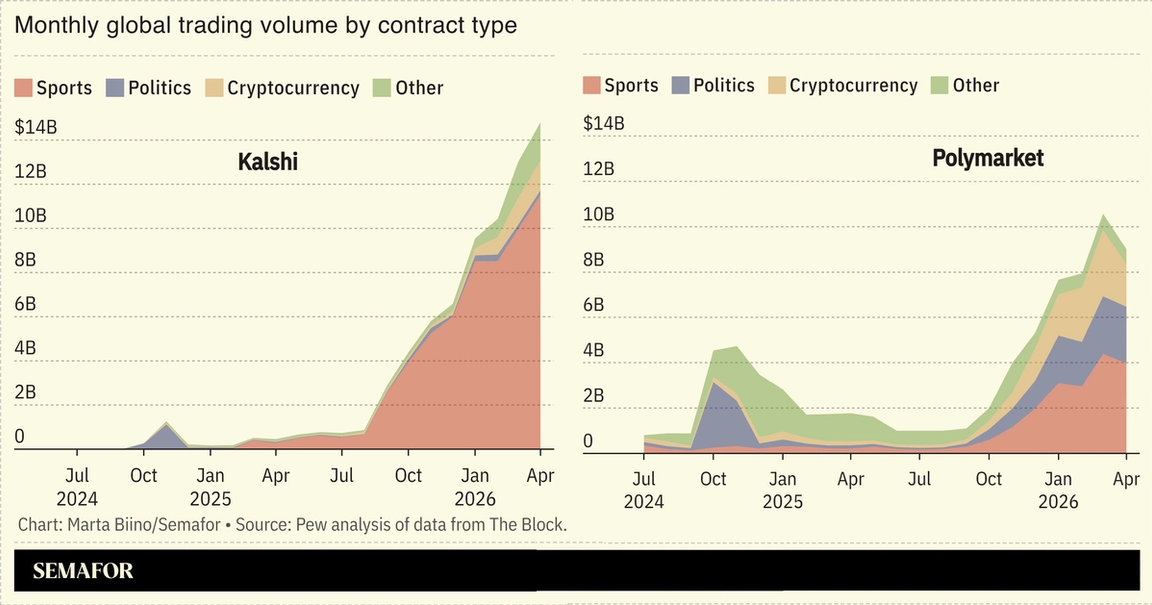 The CFTC’s new prediction markets proposal would let sports leagues veto certain contracts, Chairman Mike Selig told Semafor’s Eleanor Mueller, the clearest sign yet of where the agency will land in the fight between exchanges like Kalshi and leagues like the NBA that worry about the incentives for cheating. Kalshi and Polymarket should ensure listings are “approved by the leagues,” Selig said, flagging contracts on injuries and officiating calls as particular concerns. Contracts tied to war and terrorism won’t be allowed. The proposed rules, announced this week, are the CFTC’s efforts to bring more rules to online casinos and elbow state regulators out of the picture. He said more insider-trading cases are “in the pipeline” and that, after rounds of staffing cuts, the CFTC is using AI to surveil for insider trading. “Work that would take a ton of man hours that we can do in just minutes.” |
|
Slower growth, higher rates |
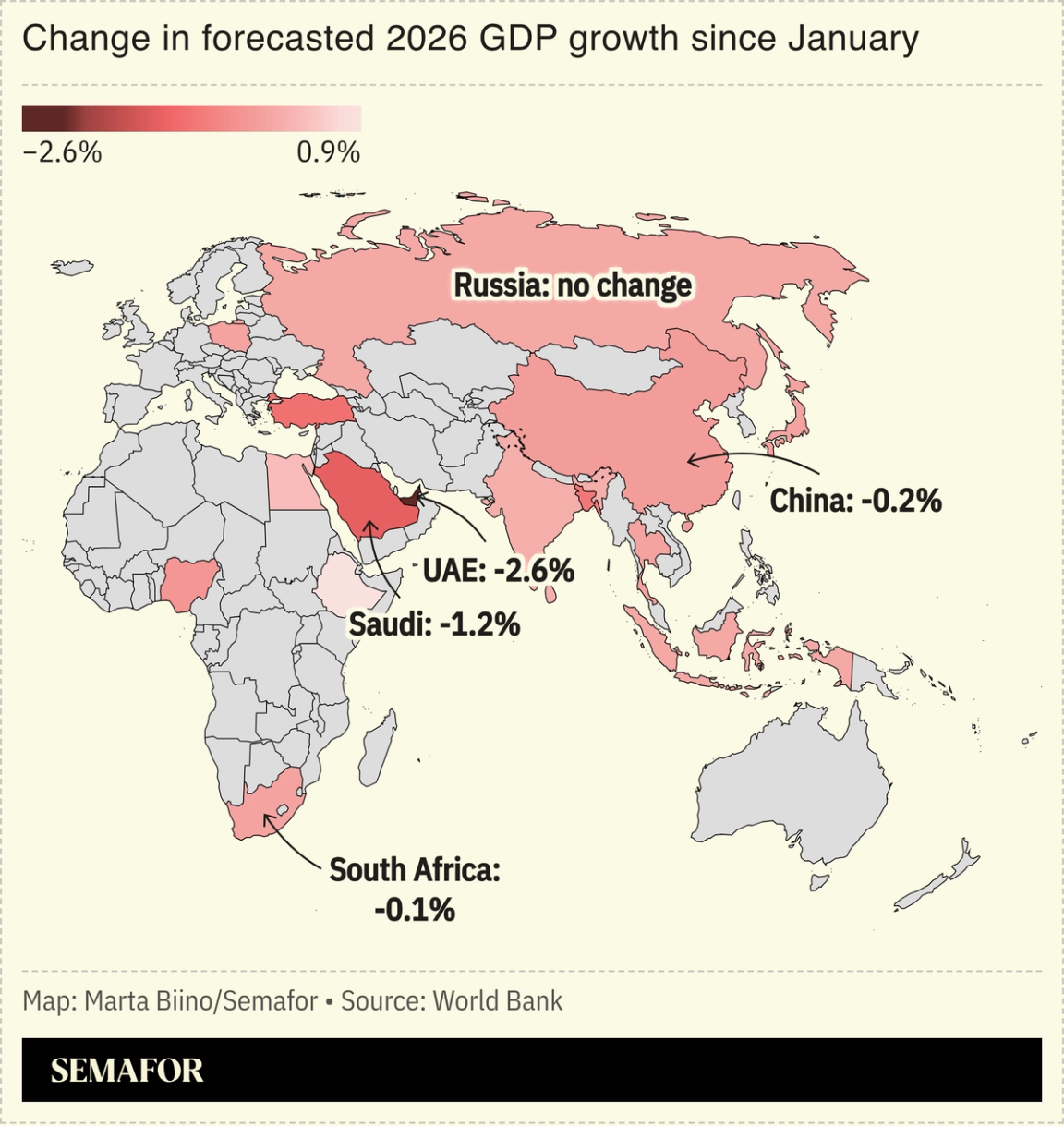 The Iran war is expected to drag the global economy to its slowest growth since the start of the pandemic, the World Bank said Thursday. The group expects GDP growth to fall to 2.5% this year and has cut its forecasts for two-thirds of countries since January. The toll is steepest on developing countries, as it always is. Rising borrowing costs are another challenge to growth. The European Central Bank raised interest rates Thursday, becoming the first of the world’s advanced-economy central banks to do so, and this week’s high US inflation numbers put pressure on the Federal Reserve — and its new chair — to do the same this year. Consumer prices rose 4.2% in May and wholesale prices rose 6.5%. Traders are putting two-thirds odds on at least one rate hike, and possibly as many as three, by the fall, according to CME data. |
|
Dubai real-estate giant flashes warning signal |
 Courtesy of Majid Al Futtaim Courtesy of Majid Al FuttaimOne of the UAE’s biggest conglomerates is flashing a warning sign to global investors about how safe it is to invest in the Gulf right now. Majid Al Futtaim, which owns some of the region’s largest malls and most luxurious property projects, has told some customers it’s breaking contracts due to the Iran war’s impact on its business, Semafor’s Mohammed Sergie and Matthew Martin report. Dubai’s property market has been one of the world’s strongest in recent years, leading global sales of homes worth more than $10 million, according to real estate consultancy Knight Frank. But invoking “force majeure” clauses to nix contract terms raises concerns about the future of that growth. The move is one of the first known cases of a privately held firm acknowledging the war’s impact on its operations. (State-controlled energy companies in Kuwait and Qatar made similar moves in March, when they couldn’t get their oil and gas out of the Strait of Hormuz.) MAF didn’t respond to a request for comment. |
|
 Every great company was once an impossible idea. Masters of Scale explores how the world’s boldest founders overcame doubt and built companies that matter. Each episode unpacks the unconventional bets, audacious decisions, and defining moments behind the organizations disrupting industries and changing the world. For anyone who wants to understand how the future actually gets made. Find them wherever you get your podcasts. |
|
➚ BUY: Alberta. The province’s energy minister said he’s talking to an unnamed large company about financing a new pipeline that could take 1 million barrels of oil a day to Canada’s west coast. ➘ SELL: Albania. Street protests in Tirana oppose a |
|
|


