|
A large new study confirms what lots of parents are already worried about: social media can harm young people.
Based on data from nearly 1,200 children, the study found kids who used social media for more than 2 hours a day were at higher risk of mental illness and poor wellbeing. The risk was highest for children aged 12 to 13.
Today, youth psychology expert Nandi Vijayakumar, who led the study, explains there’s evidence even teens on the cusp of adulthood remain vulnerable to the harms of social media.
But social media doesn’t have to be so harmful. In a new multimedia feature, tech expert Dana Mckay shows how five simple design tweaks could make social media less addictive and more like the public square it once promised to be.
|
|
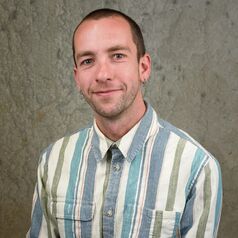
Drew Rooke
Deputy Science + Technology Editor
|
|
| |
| |
| |

Nandi Vijayakumar, Deakin University; Susan M. Sawyer, The University of Melbourne; Sylvia C. Lin, Deakin University; Murdoch Children's Research Institute
A new study involving 1,195 young people found clear risks from heavier social media use on young people’s mental health.
|
 Dana McKay, Michael Cowling & The Conversation Digital Storytelling Team Social apps like Instagram, TikTok and Facebook are designed to be addictive. What would they look like if we removed the worst features?
|
| |

Michelle Grattan, University of Canberra
The Albanese government's latest budget has given fodder to those seeking to feed the disillusionment overtaking a growing number of Australians.
|

Jessica Genauer, UNSW Sydney
Escalating a conflict is paradoxically one way to end it. But this strategy can be flawed, particularly in a region like the Middle East.
|

Luke Munn, The University of Queensland
A massive new data centre in Sydney would be the world’s biggest. It’s the latest push in the AI boom – but a backlash is building.
|

Jessica Pallant, RMIT University; Adrian R. Camilleri, University of Technology Sydney; Jeannie Marie Paterson, The University of Melbourne
Showing one product but pairing it with the price of a different product is common on online shopping sites. It’s not just wasting your time: it can be illegal.
|

Molly Johnston, Monash University; Julian Koplin, Monash University; The University of Melbourne; Neera Bhatia, Deakin University
Punishment for a crime shouldn’t extend to denying women’s fertility when they’re released from prison. Here’s why.
|
Politics + Society
|
-
Steven Stern, Bond University
An expanded tournament means traditionally strong nations may not all progress as far as usual at the World Cup.
-
Kris Gledhill, Auckland University of Technology
The government says proposed move-on orders will tackle disorder. Critics argue they risk punishing homelessness while doing little to address its causes.
-
Ellen Rock, UNSW Sydney
The judgment allows a man who was unlawfully detained to claim compensation from the government. It’s the latest in the ongoing fallout of the “NZYQ” case.
-
Simon Adams, Murdoch University
Instead of bringing people together, the World Cup is in danger of being remembered for the climate of exclusion and fear generated by one of its host nations.
|
|
Health + Medicine
|
-
Stuart Ekberg, Flinders University; Anthony Herbert, The University of Queensland; Katie Ekberg, Flinders University
Research shows there’s more we can do to engage children during health care appointments. Three experts explain.
|
|
Environment + Energy
|
-
Éva Plagányi, CSIRO; Laura Blamey, CSIRO
If you’re a tiny prawn, barramundi or rare sawfish in a northern Australian gulf, you can’t easily swim south to escape the heat.
-
Alberto Meucci, The University of Melbourne; Guisela Grossmann-Matheson, The University of Melbourne; Shiaohuey Chow, The University of Melbourne
Strong, reliable winds blowing over Australia’s southern seas make offshore wind farms appealing. These winds are set to stay strong.
|
|
Science + Technology
|
-
Anna Marie Brennan, University of Waikato
Commercial operators are launching more rockets and carrying more passengers than ever before. But international space law was written in the 1960s.
-
Vanessa Pirotta, Macquarie University
Chinese scientists have discovered hundreds of ancient whale carcasses deep in the Diamantina Zone off the coast of Western Australia.
|
|
Arts + Culture
|
-
Sasha Grishin, Australian National University
This is the largest and most innovative Cartier exhibition to ever come to Australia.
|
|
|
|
|
NDIS changes
“I wish that the government, review panels and the media would consider the experiences and views of people like ourselves on the NDIS. Our severely disabled 37-year-old daughter Sarah is smack bang on the target for who the NDIS was supposed to help. As her parents and guardians, we are very miserable about the management of the NDIS for some glaring reasons including the following: disabled people are mostly portrayed as people who NDIS funding can 'improve', by gaining social skills or employment etc. There are people like Sarah who have so much developmental delay or brain damage that they can’t 'grow' through therapy or activities. In many ways, caring for
Sarah is just about keeping her safe, entertained, fed and healthy. It doesn’t make them any less worthy of funding but we feel that people like Sarah are unreported and ignored because there’s nothing exciting about them. We worry that the government will prioritise funding to people who can improve and contribute to society, and that funding for people like Sarah will be disparaged as 'glorified babysitting'. (Yes, we’ve had a provider say that to us in the past!)”
Andrew Von Berky, Bellthorpe QLD
Discontinuation of Zoladex
“Thank you for publishing the article by Dr Nial Wheate about Zoladex being potentially discontinued in November. I’m really concerned. For me this is about quality of life but for patients with cancer this may be life and death. I have been prescribed Zoladex for 2+ years by my gynaecologist to treat endometriosis, PMDD and complex regional pain syndrome. The prescription is somewhat off-label as you’re only meant to be on it for six months but because of my age (nobody seems willing to perform a hysterectomy on a 38-year-old without children) and CRPS (surgery can exacerbate pain) I’m highly reliant on Zoladex for quality of life and management of debilitating,
constant pain. I’ve tried absolutely everything and suffered a lot, Zoladex is absolutely making life bearable for me. I’m currently researching how I can draw attention to this issue and ensure continuous access to women like me in Australia. Although I have chronic pain and fatigue, I potentially have more bandwidth for activism since I’m not battling cancer like some other patients. That’s why I want to take up this cause with urgency.”
Laurel Fox
We'd love to hear from you. You can email us with your thoughts on our stories and each day we'll publish an edited selection.
|
| |
|
|
University of Melbourne
Parkville, Melbourne, Australia
•
Full Time
|

|
The Conversation AU/NZ
Melbourne VIC, Australia
•
Part Time
|
< | |