Hello, this is Mared Gwyn writing in the early morning from Luxembourg, where there’s plenty of action on EU foreign policy and enlargement lined up for the day. More on that later.
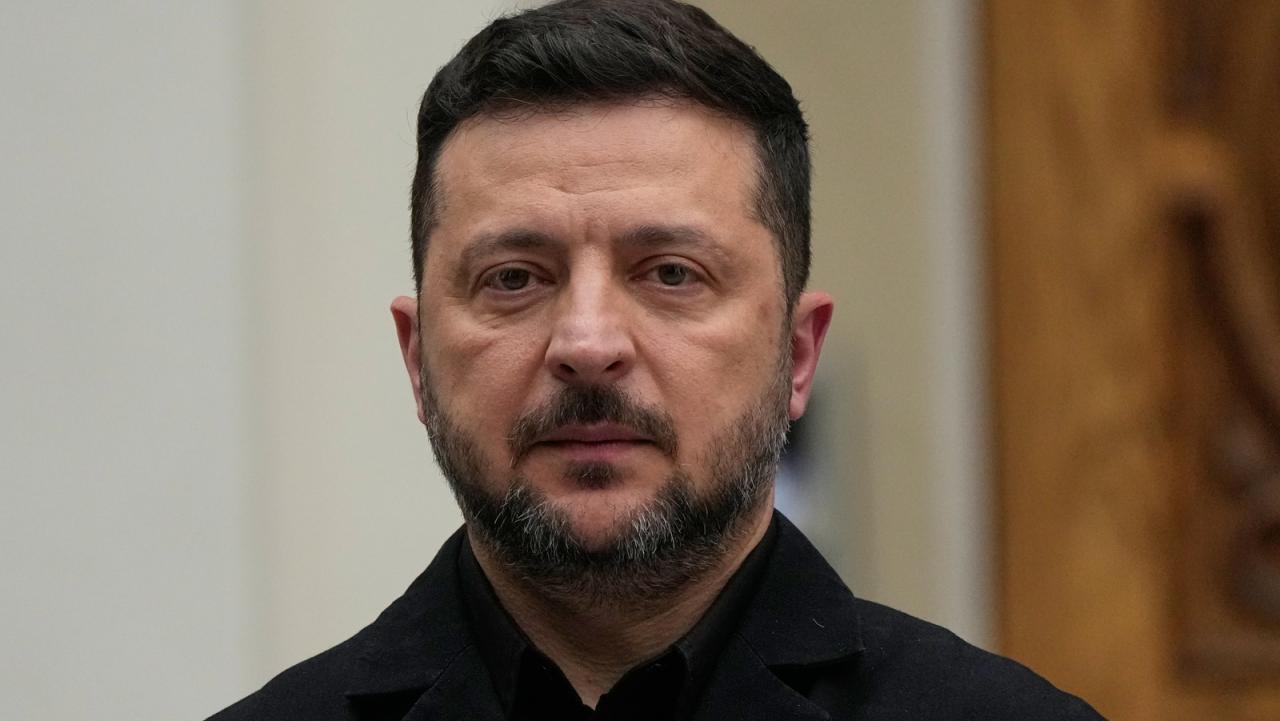
As you were sleeping, Russia launched yet another round of ballistic missile strikes on Kyiv, striking the city's historic Assumption Cathedral within the Kyiv Pechersk Lavra, one of Ukraine's most significant religious and cultural sites which holds some of the country’s most revered shrines and relics. It comes just as President Zelenskyy is expected to join leaders at the G7 summit for talks on Ukraine’s future. More on that in our top story below.
But first, let’s take you to Évian-les-Bains in France, the Alpine town which will provide the stunning backdrop to a much-anticipated G7 summit over the next few days. The action kicks off later today with a bilateral meeting between US President Donald Trump and French President Emmanuel Macron, before leaders gather over dinner.
In a timely fashion, both Washington and Tehran confirmed overnight that a peace deal to bring the war in Iran to an end has been “completed” and will be signed on Friday.
Off the back of the announcement, the leaders of France, Germany, the UK and Italy – all headed to Évian – have called for the immediate reopening of the Strait of Hormuz in order to stabilise the world’s economy. A substantial military undertaking will be required to clear mines and ensure freedom of navigation through the critical waterway – with France and the UK expected to take on a leading role.
This G7 summit is also set to be dominated by not only geopolitics, but also the macroeconomic imbalances plaguing the Group of Seven economies. Leaders are expected to broach the difficult subject of Chinese industrial over-capacity and how to bring Beijing into negotiations on rebalancing trading relationships.
Also, keep an eye out for talks on AI and online safety due to take place towards the end of the summit, when tech executives from Anthropic, OpenAI, Google and Mistral AI join leaders for talks. My colleagues Maria Tadeo and Angela Skujins, both on the ground in Évian, have this must-read preview.
EU examining Anthropic restrictions: The G7 discussion on AI comes just as the European Commission is looking into the practical implications of the US export control measures the US government has imposed on Anthropic’s most powerful models Fable 5 and Mythos 5 over their cybersecurity capabilities, my colleague Luca Bertuzzi writes in to report.
Commission spokesperson Thomas Regnier recognised that highly capable AI models raised serious cybersecurity concerns, but warned that “contingency measures taken in this light should not be discriminatory against partners.”
For the Commission, the episode is yet another illustration that Europe needs to strengthen its technological sovereignty. The CEO of Anthropic Dario Amodei will participate in a working lunch with G7 leaders and the chief executives of other leading AI companies on Tuesday.
Moldova, Ukraine kick off EU membership talks: Today also marks the big moment that Ukraine and Moldova have been yearning for: the formal opening of the first cluster of negotiations to become members of the European Union. The cluster, known as “Fundamentals” because it covers human rights, the judiciary and the rule of law, is the first and last to be opened in the long-winded accession process, my colleague Jorge Liboreiro reports.
Hungary firmly blocked the crucial step for almost two years until the April elections precipitated a series of events that culminated in an agreement between Budapest and Kyiv to lift the contentious veto. To understand how much things have changed since then, last Friday, EU ambassadors agreed on their common position for the first cluster without discussion.
The so-called Intergovernmental Conference (IGC) with Ukraine will take place at 18.00 CET today in Luxembourg, followed by the one with Moldova at 20.00 CET. Cyprus, the country that holds the rotating presidency of the EU Council, will chair the session. Marta Kos, the European Commissioner for Enlargement, will also participate. Will there be another IGC before the end of the month? We’re hearing that Cyprus is very keen to open Cluster 6 (“External Relations”) before it passes the baton to Ireland on 1 July. Watch this space.
Also today: Before the IGCs convene, foreign affairs ministers will gather in Luxembourg to discuss Russia’s war on Ukraine, the fragile situation in the Middle East, and the troubled state of EU-China relations, my colleague Jorge Liboreiro reports.
Among other things, ministers will debate the possibility of imposing sanctions on Itamar Ben-Gvir, the Israeli minister accused of humiliating European citizens on board the Gaza flotilla, and introducing restrictions on trade with the illegal settlements in the West Bank.
The political winds are shifting towards both decisions, but there’s still no clear path to forge ahead. Regarding Ben-Gvir, it’s a matter of unanimity, and the Czech Republic has already said it opposes blacklisting sitting ministers. Regarding the settlements, a group of member states insists trade restrictions should be approved by a qualified majority, as is the case for any trade measures, but the European Commission argues that, in practice, they would amount to sanctions and therefore require unanimity. Amid the impasse, some capitals are applying their own bans. “Obviously, it is much better if we do this at a European level,” a diplomat said.
Another European diplomat expressed exasperation at the Commission’s reluctance to come forward with a plan, which has been demanded by at least 15 member states. “It is incumbent on the Commission to come up with a proposal. It should not be left to member states taking individual measures as they've been forced to,” the diplomat said.
Kallas in the spotlight: The meeting of foreign ministers comes at a precarious time for the person who will chair the talks: High Representative Kaja Kallas. A French non-paper that proposed three options to revamp her position, including two that would drastically weaken its mandate, sent shockwaves and put her in a tight spot. But, as Jorge explains in his analysis, the backlash goes beyond Kallas as a person and lays bare the hard truths of the EU's foreign policy.
|