Hello!
It’s been a back-to-back World Cup action, so time for a breather! Let’s focus on another major global event – the G7 meeting in France.
Group of Seven leaders are meeting from June 15 to 17 in the French town of Evian-les-Bains, but the gathering got off to a tense start. Click here to keep up with live G7 news.
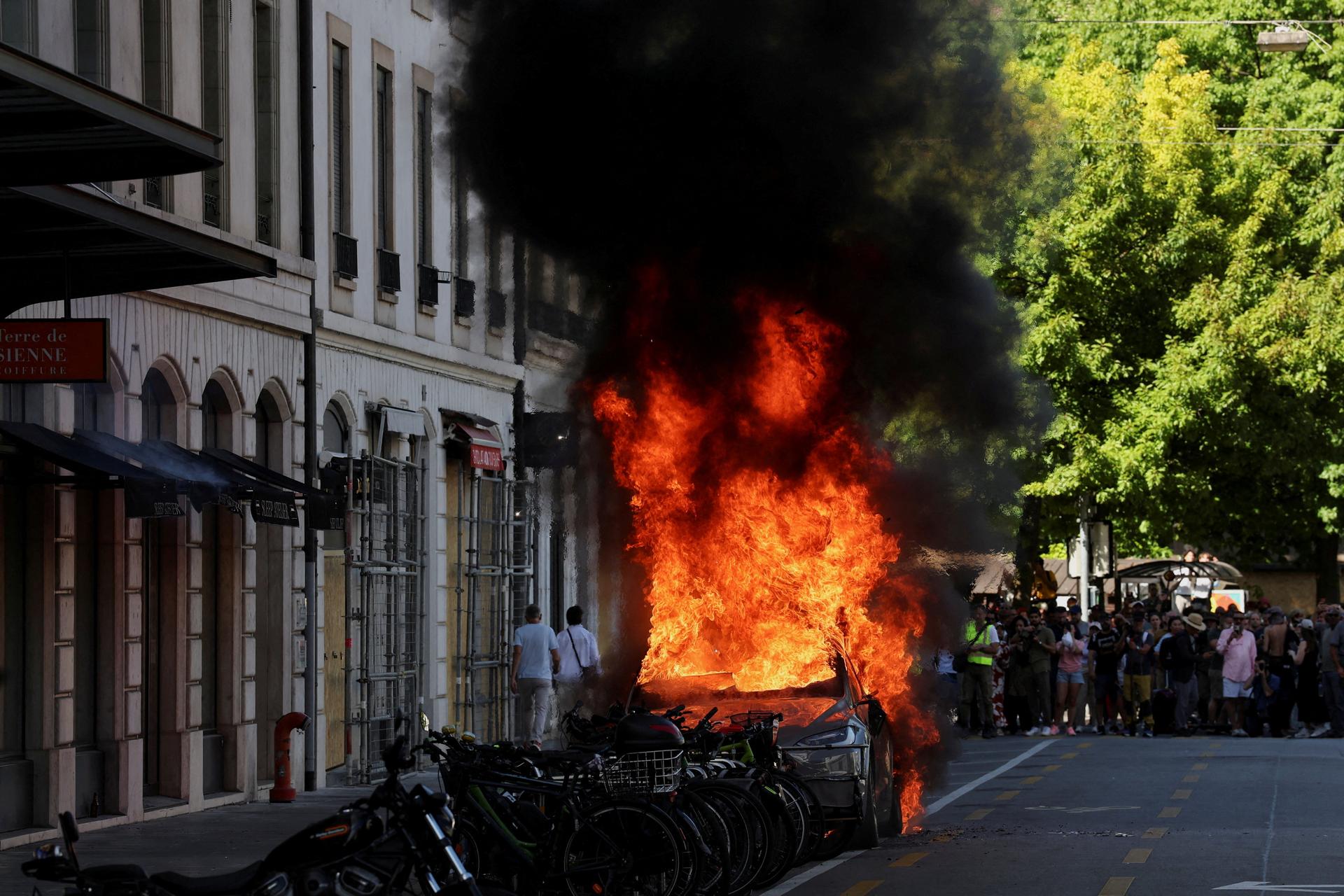
About 20,000 people joined a protest that began peacefully before turning sour, with protesters targeting what they described as symbols of capitalism and multilateralism, including the parked Tesla and a United Nations office. Speaking of the U.N., happy 15th birthday to the United Nations Human Rights Council’s Guiding Principles on Business and Human Rights (UNGPs).
Colleagues at Ethical Corp Magazine have commissioned a piece on where the principles stand today - and why they matter more than ever. Click here to check it out. But before we get into the details of the protest and meeting with the G7 leaders, here are some World Cup human rights-related stories on my radar: |
|
|
A Tesla car burns during a protest against the upcoming G7 summit in Evian-les-Bains in France, in Geneva, Switzerland. REUTERS/Umit Bektas |
‘How the rich can become even richer’ |
Over the weekend, protesters set fire to a Tesla vehicle and smashed windows at a U.N. agency as anger flared ahead of the G7 summit across the border in France.
Demonstrators ripped bricks from the ground to hurl at police, who responded with tear gas. Children cried as gas drifted through Geneva's sun-baked streets, Reuters witnesses said. Protests have long accompanied G7 meetings, with demonstrators decrying capitalism, globalisation, climate change and inequality.
Many said they were protesting against the G7 as a symbol of concentrated political and economic power. Last week Tesla owner Elon Musk, who has worked as an advisor to U.S. President Donald Trump, became the world's first trillionaire. "To me, it's a meeting of the rich that shows once again how the rich can become even richer while the poor are left behind," said protester Pippa Saugy. |
|
|
|
First up is the U.S. war with Iran. European leaders are expected to warn Trump that a superficial interim deal risks entrenching Tehran's nuclear and ballistic missile programs. French President Emmanuel Macron said a Tuesday lunch session would focus on the safe reopening of the Strait of Hormuz, including a possible Franco-British-led maritime mission and identifying alternative energy routes bypassing the waterway. Trump said the strait would be "completely open" on Friday. Leaders will also press him to rethink his strategy on ending the Ukraine war. France is using its G7 presidency to spotlight mounting global economic imbalances. Mismatches in trade and capital flows have reached what Macron has called "unsustainable" levels. There’s also a focus on raw materials as the Trump administration's push to boost critical minerals production by regulating prices is facing skeptical G7 allies and a divided mining industry. Negotiations for a Western trading bloc are stumbling over concerns about the plan's cost and governance, according to diplomatic sources and a Reuters analysis of corporate policy recommendations. Key concerns center around who would pay a premium for minerals, how far down the supply chain those subsidies should go and how governance would work, according to European officials. Click here for the full Reuters analysis. |
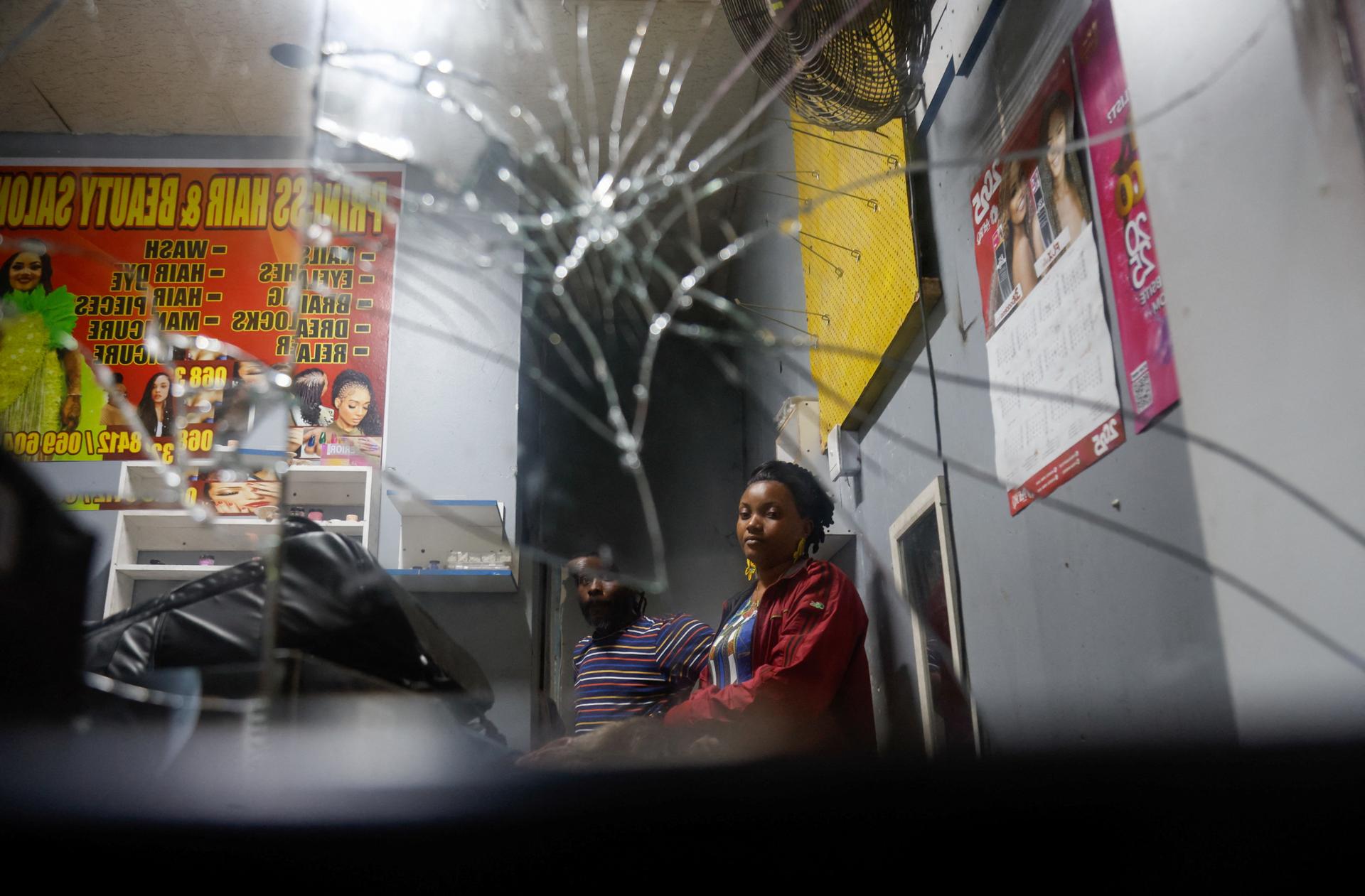
33-year-old Princess Adjei sits inside her salon, which was destroyed in a xenophobic attack on May 18, in Durban, South Africa. REUTERS/Rogan Ward |
-
South Africa xenophobia: South Africa has in recent weeks seen a wave of protests and attacks against other African nationals, some of whom are in the country legally, as anti-immigrant groups blame them for high unemployment and crime. The attacks are damaging the country’s reputation. During the South Africa and Mexico World Cup match, many African people took pride in supporting Mexico on social media.
-
Under-16s social media ban: British Prime Minister Keir Starmer said he would ban social media sites for under-16s and impose restrictions on gaming and live-streaming platforms, going further than any other country in taking on Big Tech. Click here to learn more about what is being banned, how the measures will be enforced, and when they are expected to take effect.
-
Thames Water rescue: Britain's environment minister Emma Reynolds has raised concerns about a proposed £10 billion ($13.4 billion) rescue package for Thames Water, bringing the nationalisation of the UK's biggest water supplier one step closer. The utility has been fending off financial collapse since 2023, struggling with a £20 billion debt pile, heavy fines for sewage pollution and its Victorian-era pipes and pumps.
-
Aussie El Nino: Australia's weather bureau warned an El Nino weather pattern has formed in the tropical Pacific and could intensify in the second half of 2026 to become one of the strongest in seven decades. Sea surface temperatures in the region exceeded El Nino thresholds and atmospheric indicators all aligned with the phenomenon, the Bureau of Meteorology said in a statement.
-
Coral reef survival: Scientists have identified nearly 166,000 sq km (64,000 sq miles) of coral reefs that can survive and recover from climate change, three times more than previously estimated, research showed. An analysis of 45,000 coral surveys together with decades of climate and ocean data has identified climate-resilient reefs across 71 countries and 100 territories that have not previously been recognized.
|
|
|
|
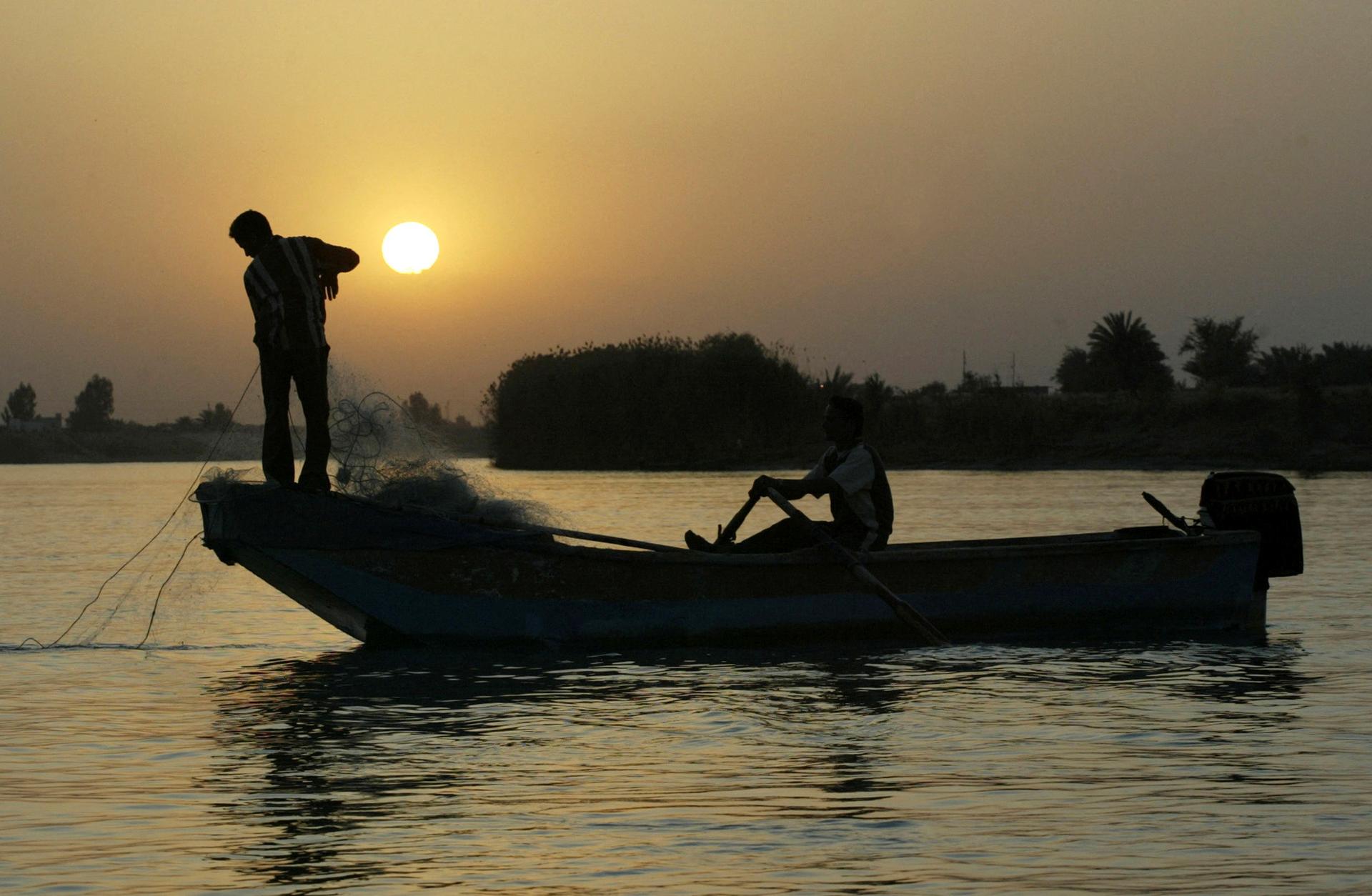
A fisherman casts a net as he fishes in Euphrates river in Falluja, 50 km (30 miles) west of Baghdad. REUTERS/Mohanned Faisal
|
I often feel that learning more about the past helps shape our present and future. This is why today’s spotlight shines a light on some new research that has deciphered how the Euphrates River, the longest river in southwest Asia, was formed.
Researchers said decoding the river's backstory was important for understanding the milestones in human culture in agriculture, writing, urban development and other areas that occurred on its floodplains.
Click here to learn more about when the Euphrates was born and how researchers used seismic images of buried sediments and other data to come to their conclusion. |
|
|
|
Sustainable Switch was edited by Mark Potter. |
|
|
|
|