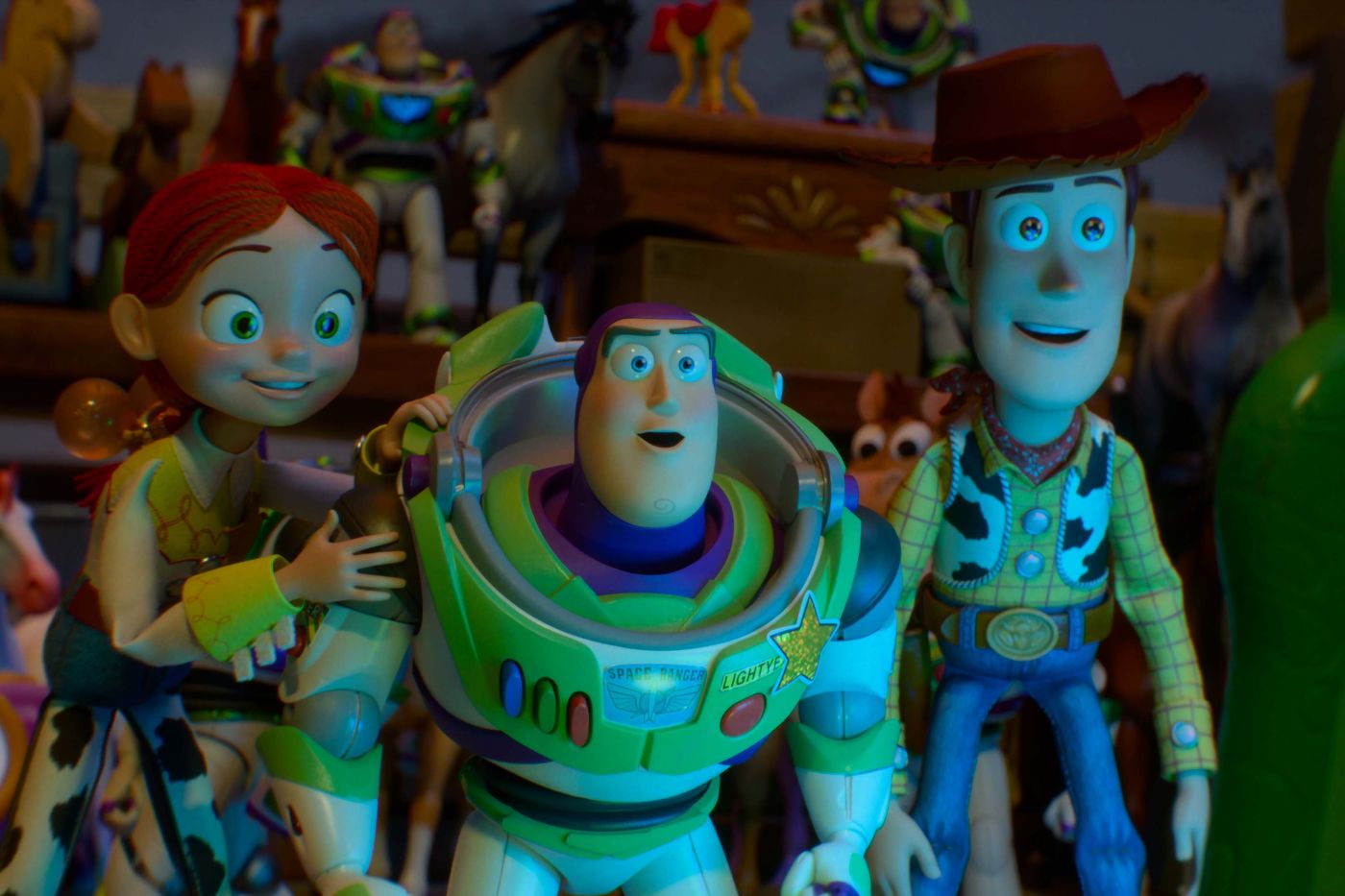
The question of what counts as a toy in real life more or less comes down to what a kid might want to play with, but in Toy Story, the matter is existential. Toys have sentience as well as the ability to move around when humans aren’t looking. Over five installments now, Pixar’s flagship franchise has built out what amounts to a theology etched in plastic and rubber about what constitutes a toy. Because, despite the company’s anthropomorphized desk-lamp logo, these movies aren’t doling out self-awareness to stuff all willy-nilly. Obviously, your standards like rag-doll Woody (Tom Hanks) and action-figure Buzz (Tim Allen) and trademarked classics like the Potato Heads and Slinky Dog can come to life. But so can characters pushing the knickknack/plaything boundary, like porcelain figurines and piggy banks. (It helps to have a face.)
Being assembled and claimed by kindergartner Bonnie transforms an initially reluctant Forky from trash to toy in Toy Story 4, but becoming discarded and ownerless doesn’t rob lost toys of their selfhood. What seems to matter most is the potential for these items to be receptacles for a child’s imagination and love, something they remain animated by even as those children grow up and move on. All of which makes Toy Story 5’s proposition that high-tech new additions, like proto-tablet antagonist Lilypad (Greta Lee), can also talk, think, and move around on their own downright maddening.