What matters in U.S. and global markets today

Start the day with Reuters on the stories moving U.S. and global markets. Subscribe for $1/week.


Morning Bid U.S.

Morning Bid U.S.

A Reuters Open Interest newsletter

What matters in U.S. and global markets today


By Mike Dolan, Editor-at-Large, Finance & Markets

Big Tech started the week in reverse, with megacaps Alphabet and Amazon each falling around 5% on Monday, dragged down by a mix of concerns: interest rate expectations, lofty AI spending and rising debt.

Even SpaceX, which commenced debt-raising plans of its own on Monday, clocked its biggest loss since its IPO, dropping some 16%.

I'll get into that and more below.

But first, check out my latest column on why Britain's next government must really deliver - or risk more political volatility and economic woe.

And listen to the latest episode of the Morning Bid daily podcast. Subscribe to hear Reuters journalists discuss the biggest news in markets and finance seven days a week.


Data refreshes every time you open this email. For more U.S. market news, click here. Please send any feedback to morningbid@thomsonreuters.com.


Today's Market Minute

  • The United States waived sanctions on Iran for 60 days from Monday after the first talks under a nascent peace deal, with U.S. President Donald Trump saying he will "do what I have to do" if Iran does not stick to its side of the agreement.
  • Elon Musk's SpaceX turned to the bond market for the first time on Monday, capitalizing on a post-IPO momentum that has vaulted its cash reserves past $100 billion as the rockets-to-AI group ramps up spending.
  • Alan Greenspan, hailed as the greatest Federal Reserve chairman when he retired in 2006 but derided for a severe financial crisis that followed barely two years later, died on Monday aged 100, his wife said.
  • India has swung to buying Russian crude oil and coal to bolster its energy supplies after flows were disrupted and prices rose during the Iran conflict. ROI Asia Commodities Columnist Clyde Russell explains the implications.
  • No prudent investor would build a portfolio around a single stock - so why build one around a single timeframe with short-term market bets? Marty Fridson makes the case for "time diversification".
 

SpaceXhaust

Stumbling megacaps dragged the S&P 500 and Nasdaq lower on Monday, though chipmakers did much better, ahead of memory chipmaker Micron's results due out Wednesday. A recent theme seemed to play out again: buying stocks that benefit from the AI spending splurge and selling those doing all the spending.

However, the hawkish Fed interest rate outlook weighed on stocks at large, with a rate hike now fully priced in for September and a more than 50% chance of two by year-end.

Tech stocks around the world fell overnight in the slipstream, with South Korea's high-flying KOSPI index off nearly 10% on Tuesday, partly on warnings about the ongoing weakness of the Korean won. Stateside, Wall Street futures were in the red before the bell, with Nasdaq futures tumbling more than 2%.

Elsewhere, in currency markets, the yen continued to flirt with 40-year lows set two years ago, with Fed-fuelled dollar strength trumping the impact of last week's Bank of Japan rate hike. There were reports of contact between Tokyo and Washington officials on the issue of yen stability, keeping intervention fears on the boil.

On the energy front, oil prices continued their slide under $80 per barrel, with Brent crude trading at around $77/bbl early on Tuesday. That came amid more signs of returning oil flows through the Strait of Hormuz and as the U.S. waived sanctions on Iran for 60 days on Monday after initial peace talks.

In Europe, British Prime Minister Keir Starmer's resignation on Monday left UK markets relatively unperturbed. Focus is now shifting to how quickly his likely successor Andy Burnham can be appointed - and who Burnham might choose as finance minister.

The data slate for Tuesday will include the release of flash U.S. and global business surveys for June, though the big retreat in oil prices since last week's U.S.-Iran memorandum of understanding came after those polls were conducted.

With that, onto today's column.


Revolving-door UK leadership leaves no room for remedy

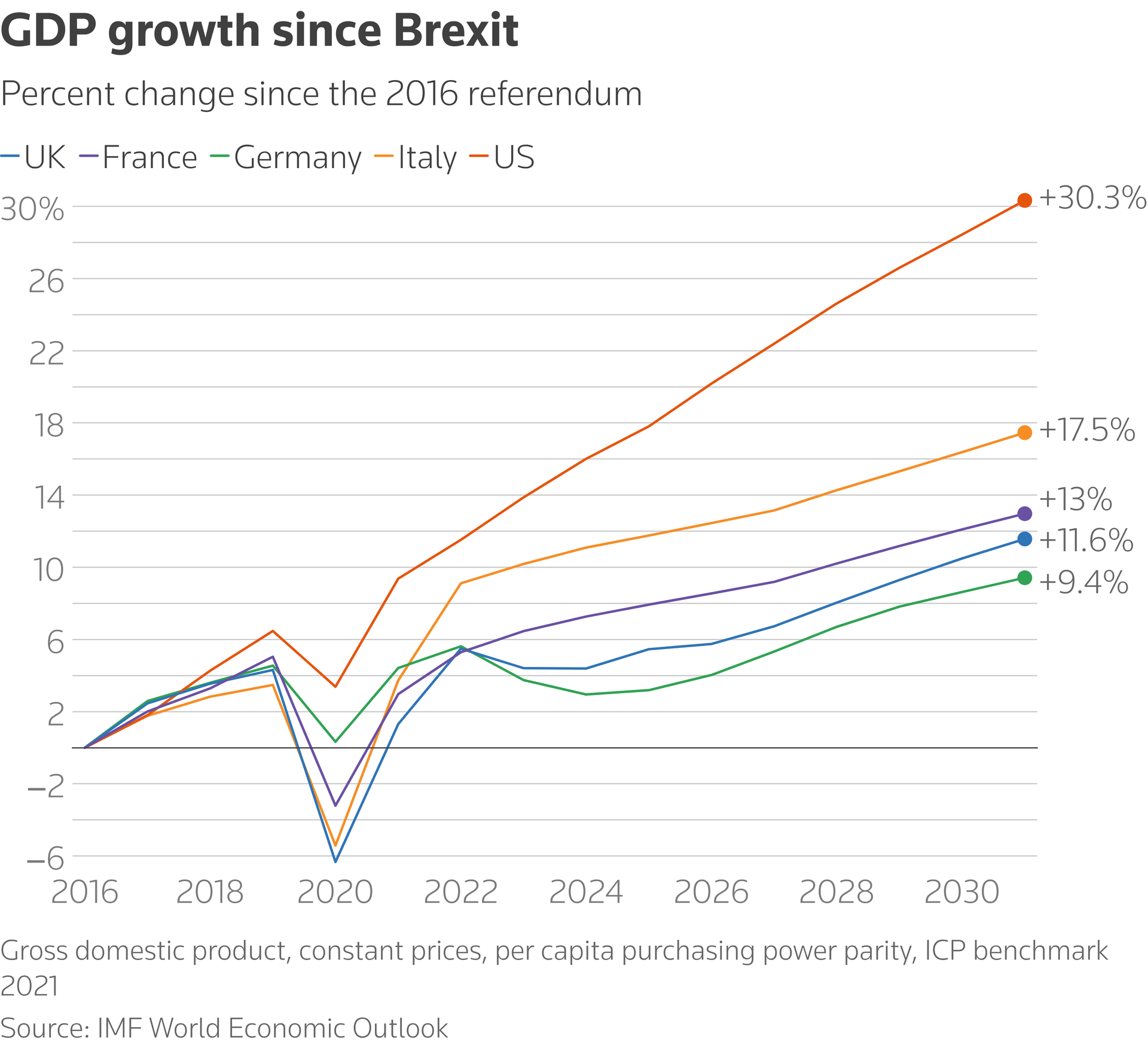
British markets seem wearily resigned to a seventh prime minister in the decade since the seismic Brexit vote of 2016. But unless this latest government really delivers, ingrained political volatility will only drag on an already hobbled economy and further limit the space to fix it.

There is a sense abroad that the United Kingdom is increasingly ungovernable, with its main parties riven by factions and unable to agree for long on leaders or policy directions, despite popular mandates for five-year governments.