Welcome back to Buffering, where we’re already looking past next week’s supersized Independence Day celebrations and counting down the days until pumpkin-spice products and Monster Cereals return to store shelves. (It won’t be long, folks!) As for this week’s newsletter, our main story is all about the holiday weekend news dump Amazon pulled a few days ago when it announced it was canceling plans to distribute a buzzy new Luca Guadagnino–directed movie about OpenAI founder Sam Altman. The decision set off alarm bells in Hollywood, but while the decision stinks, I have some thoughts about how the thinking that led to the call is nothing new. We’ve also got a piece about what it’s like to be an independent filmmaker in 2026 plus our usual Briefering roundup of some of the week’s most interesting stories. Thanks for reading.
|
|
|
|
Subscribe now to get unlimited access to everything New York, including subscriber-only newsletters, exclusive perks, the New York app, and more. |
|
|
|
In this edition: Sam Altman, Jeff Bezos, Andy Jassy, Luca Guadagnino, Elon Musk, David Ellison, Tim Cook, Brady Corbet, Marc Maron, Sophy Romvari, and Peppa Pig …? |
|
|
|
➽ A24 Shakes Hands With Google
|
If you tracked this story, first reported by the Wall Street Journal, through the headlines on Reddit or on Film Twitter, it probably looked like an extinction-level event: “A24 has sold out to AI!” And, well, in the most literal sense, yes, it has: A24 took $75 million of Google’s money — a drop in the bucket for Alphabet, but about $25 million more than the budget of A24's most expensive movie, Civil War — to access Google’s DeepMind, an AI unit at the company that A24 hopes will help power its filmmaking future.
If there’s any reason to feel optimistic about the deal, though, it’s that under the terms, A24 films will not go into the DeepMind tank for training purposes. A24’s stated rationale for getting in bed with Google is not to sell off its library, but to avoid being left in the dust by tech and their major-studio competitors. And A24 is at least aware of how its audience has reacted, given how it sent spokesperson Sophia Shin to some damage control this week. “This is a research partnership,” Shin stressed to Wired. “Truth is we don't necessarily love any of the current AI outputs onscreen in Hollywood,” she said. “I don't even know if ultimately we'd create tech on that front. This partnership is about learning and helping pain points in workflows behind the scenes more than anything else.”
Fair enough. But the company’s own tech arm, A24 Labs, is already reportedly building an AI storyboarding tool, one that artists came out strongly against online. It’s worth noting that storyboarding is a specific skill and represents a knowledge-share between the storyboard artists and the director. “It’s more than just taking dictation, it’s a creative partnership,” the director Peter Ramsey (Spider-Man: Into the Spider-Verse) wrote on BlueSky. “If the redundancy you’re talking about eliminating is human taste, experience and creativity, you’re just ignorant of what the process actually is in creative terms, and you just want to curry favor with the money people.” Whatever ultimately comes of this deal, it’s another example of Big Tech cozying up to Hollywood, and it’s not even the only big example this week, as our main story below explores. —Eric Vilas-Boas
|
|
|
|
➽ Peppa Pig and the Terrible, Horrible, No Good, Very Bad AI Training
|
A new open letter signed by hundreds of members of the entertainment industry takes aim at the “Use of Child Actors’ Voices in AI.” It alleges that a popular “international children’s franchise” is pushing contracts on its child actors that would require that they sign over their voices for AI training purposes — data that the studio could use to reproduce and exploit those children’s vocal performances across media and merchandise. The letter doesn’t name the title or the studio, but Deadline reports that it refers to Peppa Pig and Hasbro, the toy and media behemoth that owns the franchise.
You don’t have to be a parent to imagine how convenient owning the rights to all these performances would be for a conglomerate that reproduces and distributes untold piles of loud and parentally cloying Peppa Pig–themed toys and devices. “Consent must be treated with the greatest of care,” the letter demands. “Children cannot provide fully informed legal consent and a parent or guardian’s approval should never be used as a blanket licence to capture, clone, train, or reuse a child’s voice indefinitely.” Most child actors will tell you how susceptible to abuse their corner of the business could be even before AI use became omin-present. As with everything else, this sort of performance capture makes the decision-making that goes into their work and guides their careers a lot more complicated. —E.V.B.
|
|
|
|
➽ It’s Not TV, It’s IG on Your TV
|
We’re talking longer, episodic, and horizontal. To put it another way: old-school television. The Meta-owned platform is gussying up its app offerings this week to lay track for a future where serialized microdramas reign and ambitious creators bring deeper and richer storytelling to the platform. As The Hollywood Reporter notes, specific changes include horizontal video coming to their Instagram for TV app this week, creator experiments on episodic storytelling, the ability to watch IG’s Stories on the TV app, and the ability to cast reels from phones to TVs. It’s all still in the testing stages, but the calculus is obvious. Instagram is now competing for user attention with the likes of YouTube and Netflix — apps that are now seen as indistinguishable from traditional television in the eyes of many of those same users. —E.V.B.
|
|
|
|
➽ Like and Subscribe, Mate
|
The BBC is in the middle of pretty painful budget-cutting, so it only makes sense that Britain’s iconic public broadcaster is also furiously looking for ways to increase revenues. Inside the UK, the Beeb’s options are limited because its charter doesn’t allow advertising. But no such rules apply outside of Blighty, which is why the network is now said to be exploring distributing its BBC News channel via YouTube in select international markets, per a report this week from Deadline. Australia is apparently one of the first markets where the BBC will test this strategy of simulcasting the BBC News feed; there’s no word if the U.S. is under consideration, too. American viewers have been able to stream BBC News for free on services such as Pluto TV since 2024, part of the company’s extensive plans to seed its content on various FAST platforms here in the colonies [states]. But YouTube is the most-used free streaming platform in the world, and making BBC News easily accessible there feels like a no-brainer. At the very least, the BBC needs to emulate the strategy of fellow UK platforms Sky News and ITV or Canada’s CBC, all of which livestream some of their most popular programming on YouTube for us Yanks. —Joe Adalian
|
|
|
|
Photo: Chris Jung/NurPhoto via Getty Images |
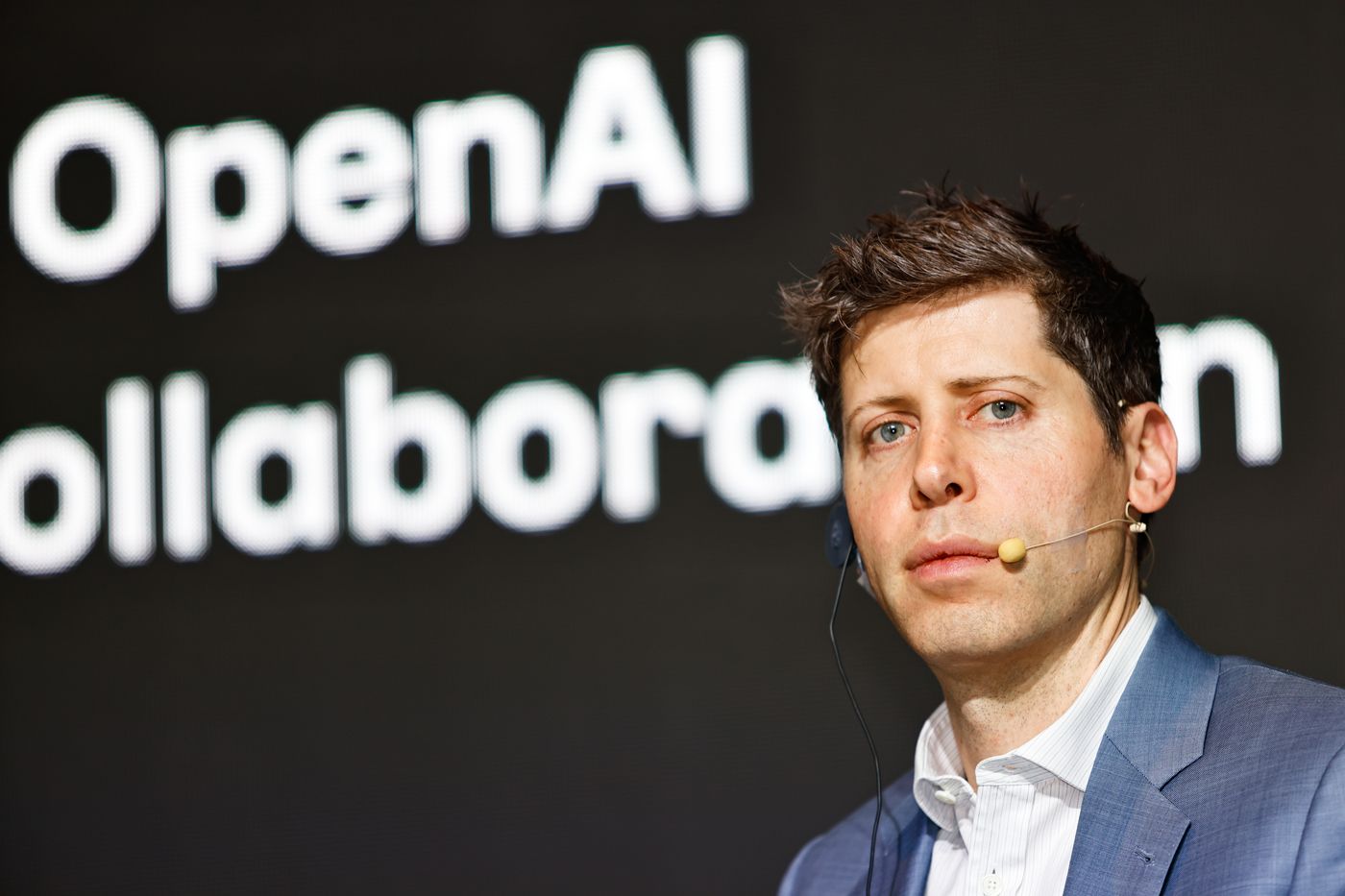
Did Amazon MGM Studios just kill Artificial, its Luca Guadagnino movie about OpenAI, because of its new business relationship with the company and to protect the ego of Sam Altman? Well, ChatGPT, OpenAI’s flagship product, is certainly open to the idea. “Short answer: there’s no confirmed evidence that Amazon ‘killed it to protect Sam Altman’s ego,’ but the timing strongly suggests a conflict-of-interest/business-relationship decision rather than a purely creative one,” the resource-draining, intellectual-property-grabbing search engine told me when I asked it that exact question yesterday.
ChatGPT, of course, doesn’t actually have an opinion on the matter; its answer simply reflects the aggregate consensus of the hundreds of thousands of words that have been written about Amazon’s decision since it was announced last week. And while you certainly shouldn’t be in the habit of blindly trusting an AI-generated summary of anything, in this case, ChatGPT pretty much got it right: While there has been no smoking gun to suggest that Altman asked Amazon to kill the film, or even that founder Jeff Bezos or current CEO Andy Jassy pressured the studio to do so in order to protect the feelings of Altman or Elon Musk (portrayed in the film by Ike Barinholtz), the timing of the company’s decision is absolutely lousy with the stink of corporate capitulation — or, if you want to be generous, mere cowardice. It simply strains credulity to suggest that Amazon’s February announcement that it was entering into a multiyear “strategic partnership” with OpenAI and investing $50 billion in the company did not at all influence the decision to dump Artificial. Of course it did.
|
|
|
|
Even Amazon hasn’t flat-out denied any concerns about the content of the film. In his original story last week breaking this news, Puck’s Matt Belloni said a company rep simply “wouldn’t elaborate” on why the studio was walking away from Artificial and instead offered up a statement with nice words about Guadagnino and a commitment to try to find the project a home at another studio. But while the tech giant didn’t have anything official to say about its move, Belloni also reported that “one source familiar with Amazon’s rationale” told him that Guadagino’s near-complete movie featured a “markedly darker” tone than what had been evident in early drafts of the script or during the development process.
Perhaps, but it’s not as if Amazon last year thought it was buying some light comic romp. In his first story about Artificial last year, Belloni got his hands on the film’s script and described it as a “straightforward indictment of the reckless culture behind the commercialization of artificial intelligence, as well as a drive-by hit on Altman, who is depicted as a liar and a master schemer — or, in the dialogue of Geoff Hinton, the British computer scientist and Sutskever mentor: ‘One of the most manipulative people on the planet.’” Amazon, it seems, was perfectly fine with making an edgy, Social Network–like takedown of Altman in 2025 … and less tolerant of actually releasing such a film once it got into business with Altman.
The idea that Amazon MGM Studios might kill the project of a major director to avoid angering a business partner of its parent company has understandably provoked fears in Hollywood about creative freedom in the age of tech monopolies consolidating control over media platforms. People are right to be worried: Whether it’s David Ellison’s Paramount trying to “murder” 60 Minutes or Tim Cook reportedly putting the kibosh on a possible Apple TV show about Gawker, the combination of shrinking competition and the Trump administration’s regular attempts to intimidate platforms makes it likely we’ll see more of the sort of cowardice Amazon demonstrated when it dropped Artificial.
Maybe it’s because of how craven the corruption in D.C. has gotten or a result of giant companies like Amazon not really caring how their actions are viewed by potential creative partners or viewers, but major studios and platforms walking away from or burying green-lit projects has already become disturbingly commonplace. Some of it has been just about the awful economics of the last decade, namely the David Zaslav–led wave of write-downs a few years ago that saw entire shows and films locked away in vaults or hidden on FAST platforms (RIP, Batgirl). More serious has been the steady drumbeat of stories about politically motivated decisions: The way the Donald Trump exposé The Apprentice struggled to find distribution; Jimmy Kimmel’s suspension and Stephen Colbert’s cancellation; Apple pushing back the premiere of Jessica Chastain’s The Savant for nearly a year; Amazon dramatically overpaying Melania Trump for the privilege of making a “documentary” about her.
And yet, even if the degree of corporate surrender feels particularly high right now, it is also important to keep in mind that this is not a new development in Hollywood — at all.
Back in 2003, CBS made the stunning decision to pull a four-hour miniseries about Ronald and Nancy Reagan just days before it was set to be the centerpiece of the network’s November schedule. While The Reagans had generated conservative backlash from the moment it was announced — simply because those on the right didn’t trust the project’s liberal producers — all hell broke loose when the New York Times got its hands on a copy of the script and pointed out aspects likely to anger Reagan defenders. The story resulted in the entire Republican media machine shifting into overdrive to denounce a movie it hadn’t seen, followed soon after by CBS chief Leslie Moonves announcing he wouldn’t air the film — even though he and his team had seen the script and had full awareness of how the movie was coming together....
|
|
|
|
|