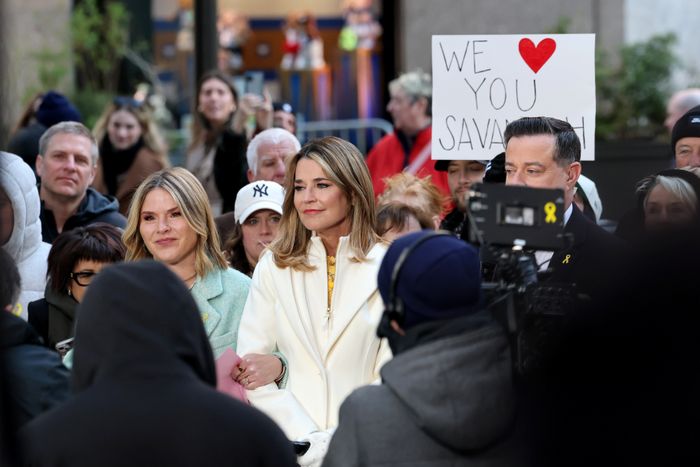
Happy July, and more importantly, happy (almost) birthday, America. Compared to the festivities surrounding our 200th back in 1976, this year’s semiquincentennial celebration has felt a tad … muted, and at times even downright embarrassing. Still, America has accomplished many amazing things over its two-and-a-half centuries of existence — last weekend’s Sunday Morning did a good job chronicling some of them — and if nothing else, the next few days offer a good excuse to eat some barbecue and (hopefully) enjoy an extra day off. But before you kick into Independence Day mode, we’ve got thoughts on the big Comcast/NBCUniversal split, an interview with Apple TV programming chief Matt Cherniss, and an excerpt from Irin Cameron’s riveting examination of the Today show in the wake of Savannah Guthrie’s personal tragedy. Have a safe (and sane) holiday.
|
|
|
|
Subscribe now to get unlimited access to everything New York, including subscriber-only newsletters, exclusive perks, the New York app, and more. |
|
|
|
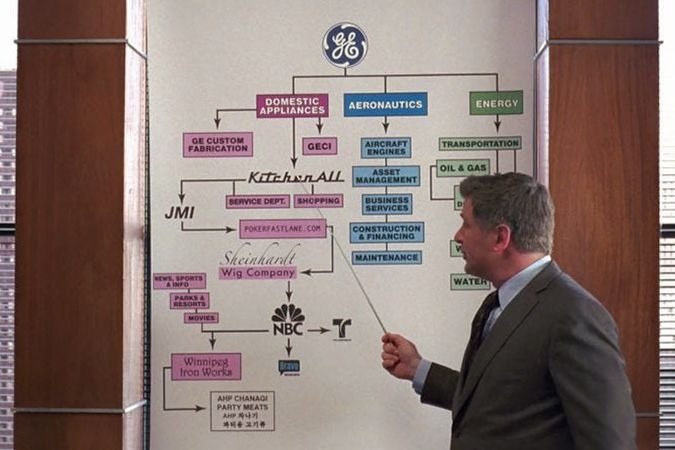
Jack Donaghy breaking down the (fictional) corporate structure that surrounds NBC. Photo: NBC |
Six months ago, a Wall Street analyst used a Comcast earnings call to ask co-CEO Mike Cavanagh about the possibility of spinning off NBCUniversal into its own company, separating the home of Law & Order, Fast & Furious, and other non-ampersand based entertainment from Comcast’s cable and broadband business. His reply was pretty direct: “We don’t really see that there’s strategic advantage, or making NBCUniversal stronger, by separating it from the cable side of the house,” Cavanagh told the analyst. “The advantages we have — it’s sitting inside the company. It doesn’t get stronger by being smaller as a standalone entity.”
Who knows if Cavanagh really believed what he said in January, but on Monday, he and co-CEO Brian Roberts did a complete U-turn, announcing a plan to spin-off NBCU and Comcast into separate companies, just as they were before Comcast took control of NBCU in 2011. While things change very quickly these days in the media business, Cavanagh at least isn’t trying to pretend new circumstances prompted this course reversal. “Where we previously believed that scale and the diversification benefits warranted operating these businesses as one company, we’ve now simply changed our mind about that,” he told investors Monday. It was perhaps the biggest media CEO flip-flop since 2022, when Reed Hastings suddenly announced that Netflix would start carrying advertising — after insisting for a decade that it would never do such a thing.
Netflix’s decision back then was in part aimed at mollifying shareholders, who at the time were flipping out over a slowdown in subscriber growth. Agreeing to accept ads was Hasting’s way of telling them he had a plan to get through a rough patch. Roberts and Cavanagh aren’t facing any sort of sudden crisis, but their moves may also be about satisfying their Wall Street masters: Comcast’s stock has been an underperformer for years, and this sort of restructuring tends to get investors excited. So far, Comcast stock hasn’t exactly surged on the news, but it did gain about 5% after the news was announced Monday.
The real impact of this week’s announcement, however, likely won’t be seen for a while. News of a split has prompted all sorts of speculation about what will become of the newly independent NBCU and Comcast once they go their separate ways sometime next year (the spin-off still needs to be approved by regulators). All sorts of scenarios are already getting spun out, and most involve other companies snapping up the Comcast/NBCU assets: Maybe Netflix, which lost its bid to take over Warner Bros., will make a run for Universal; perhaps Elon Musk wants to merge SpaceX (home of Starlink) with Comcast’s broadband business; what if Amazon decided it wanted to reinvent linear TV by buying the parent of NBC and Bravo?
For their part, Cavanagh and his Comcast colleagues moved quickly Monday to throw cold water on the notion that this spin-off is about selling off bits and pieces of the company. “Absolutely not,” Comcast co-CEO Brian Roberts told investors when asked whether this conscious uncoupling was “a step towards potential strategic transactions,” as one questioner put it. Cavanagh concurred that NBCU was not for sale — but he did seem more open to the idea of a slimmed-down NBCU buying another company or hooking up with new partners. “We have the freedom now to explore adjacent businesses,” he said.
Of course, given what Cavanagh & Co. declared earlier this year about the possibility of a split, there’s no reason to take them at their word about post-separation deals. Indeed, some analysts were quick to predict that there will never be a spin-off at all, arguing that Monday’s announcement was really just a way for Comcast to signal to any interested parties that it’s open to being acquired. Peter Supino, an analyst at Wolfe Research, wrote this week that he expects “one or both Comcast units to merge with peers or competitors” before a spin-off happens. That’s basically what happened with Warner Bros. Discovery: David Zaslav announced plans to split up WBD in June, and a few months later, Paramount and Netflix were angling to take over the whole company.
Perhaps history will repeat itself, but right now, I tend to agree with Wall Street analyst firms MoffettNathason and Lightshed Partners, both of which issued notes Monday saying they didn’t think the Comcast-NBCU spin-off is a prelude to a big sale. “We’re not ready to buy into the inevitable M&A narrative that is sure to emerge from today’s announcement,” MoffettNathanson co-found Craig Moffett wrote, pointing to a Netflix acquisition as particularly unlikely. Lightshed also doesn’t think an NBCU sale is in the offing — but its analysts do think the Comcast-less Peacock parent will now be a buyer, and made the case for NBCU going after Sony Entertainment (even though it has not shown any interest in being sold) or even game giant Roblox (think of the synergies with the theme parks!).
Both of those ideas may sound like a bit of a stretch, but given how wild the last few years have been in the media business, it’s probably a good idea to not rule out any scenario these days. |
|
|
|
Matt Cherniss on Why Widow’s Bay Worked |
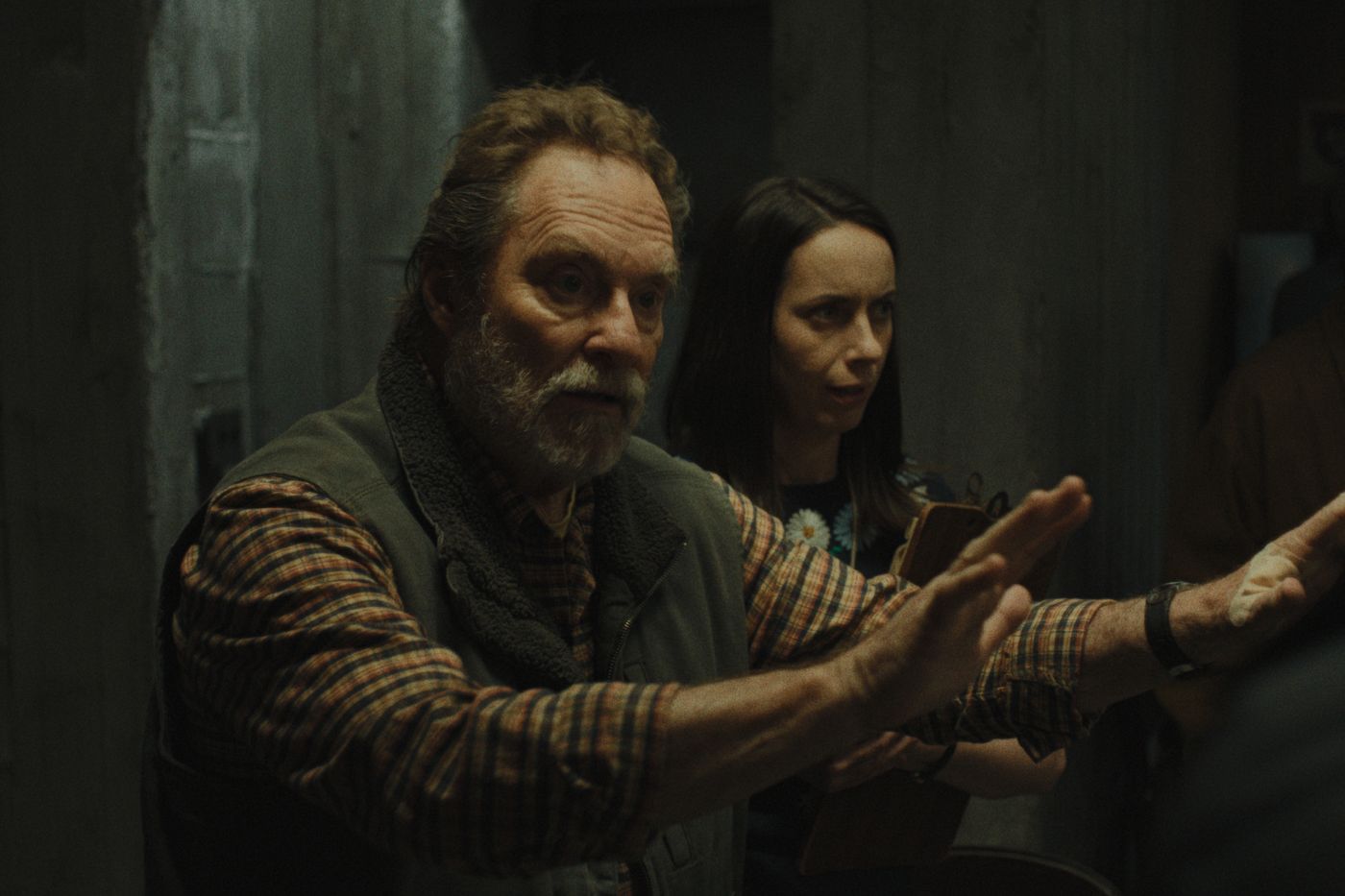
If you’re looking for indoor activities during the long (and in much of the country, very, very hot) holiday weekend, Widow’s Bay on Apple TV makes for a perfect summer binge. It’s set in a seaside resort, has plenty of thrills and chills, and the tightly edited episodes (most are under 40 minutes) fly by. And as we noted last month, it’s also become one of the most talked-about shows of the year, with creator Katie Dippold, director Hiro Murai and at least a couple of the show’s stars very likely to hear their names announced when Emmy nominations drop next week.
As part of my reporting on Widow’s Bay, I had the chance to talk with Apple TV programming chief Matt Cherniss about why the service was so quick to embrace Dippold’s vision, how her show fits into the platform’s broader content strategy, and why he’s hopeful there won’t be a long wait for season two. |
|
|
|
So what made you say, “I’ve got to do Widow’s Bay?” You bought it in the room when it was pitched, which isn’t an everyday occurrence — particularly for a project from a first-time showrunner. |
Well, a couple things. I mean, very specifically to the show, it was just the writing. The script was fantastic, and it's different. People oftentimes think that “different” is risky. I think doing things that everyone else is doing is what's risky, right? And doing something different is what allows a show to break out. This felt fresh and exciting. The whole team just immediately responded to the material. Also, Katie is obviously the vision behind the show, but Hiro is so talented as a director. The combination of Katie and Hiro together was something that I would bet on any time.
|
|
|
|
Was there any point once you got all the episodes where you watched and you thought, Okay, we’ve got something special here? |
In the reading of the episodes, the one later on with the Jason-like character who's chasing her — that read specifically jumped out at me. There's a line where she runs into the gas station, and she's like, “$20 on six.” That speaks to the uniqueness of the show, and the ability in the most terrifying of scenes to find a moment that is strangely relatable and has humor to it without undoing all of the tension that exists in the storytelling. |
|
|
|
The buzz around Widow’s Bay started slowly but seemed to build throughout its run. When did you start to realize how popular the show was getting?
|
It really seemed to pick up right around the fourth or fifth episode. We launched with a couple episodes, to try and give the audience a sense of the world and pull them in. And certainly there was a good, immediate response. But I think midway through the run, we really started to feel a momentum that's kept up, frankly, to right now. |
|
|
|
How would you compare the response to this show to some of your other breakouts?
|
It’s similar to a lot of our biggest successes. I think about the experience with Severance, with Ted Lasso. You feel it internally as well. There are a lot of people here that don't get to experience the shows until they are either on the service or close to airing. And when they, unprompted, stick their head into your office and just want to tell you how much they're loving a show, that's usually a good sign. That happened on shows like Lasso and Severance, and you feel the same thing in the halls here.
|
|
|
|
Unlike Netflix or some bigger streamers, you don’t have 500 or 1000 originals that you’re looking to push audiences to via an algorithm. You’re a much more curated service. So how much of your marketing relies on guiding subscribers to a title while they’re on the platform vs. trying to recruit them through ads on paid TV ads or social media?
|
We try really hard to make every show that we launch feel like the most important show on the service at the time of that launch. We’re not relying solely on some algorithm to tell the audience what show they should watch. We want to tell you what show we're excited about, that we're proud of, and that we want you to watch. And I do think that that helps when it comes to a question of how you market something. Part of that is that you position it front and center. When the audience comes to Apple TV, they see and feel that this is a show we're excited about and that they should be excited about too.
|
|
|
|
Is part of that limiting how many shows you make overall? You make a lot more programs than an FX or HBO, but a lot fewer than Netflix and some other streamers.
|
It's never been about quantity. It's always been about quality. There's a certain reality to the number of shows that you need to have a successful service. We look at certain genres, particularly ones that are successful, and we want to make sure that we're always providing something for that audience, twelve months out of the year. But we want to balance that against our ability to platform these shows and let the audience know that they're there, not count on some other way for them to find them.
|
|
|
|
So how soon would you like season two of Widow’s Bay?
|
You know, it's a really competitive landscape out there. There's a lot of shows, and I think that there is an advantage to bringing things back as quickly as you can. It keeps the momentum of the show up, keeps the excitement up, and it keeps it on the front burner for the audience. So I think all of that's important. You do have to balance that against the fact that these shows are not easy to make. Katie pours her heart and soul into every one of these episodes, not just through the writing, but through the production. And that takes time. So the answer is, we'll take it as soon as she can make it available to us. And, yeah, sooner is better.
|
|
|
|
|