|
Hey Tomasz,
Strumming is great. But there's a moment where you hear someone play a chord with their fingers instead of a pick, and it sounds like a completely different instrument.
Fingerpicking isn't as hard as it looks. Your thumb handles the bass strings. Your index, middle, and ring fingers handle the top three strings. That's the whole system.
The PIMA System
P = Thumb (bass strings 4, 5, 6)
I = Index (string 3)
M = Middle (string 2)
A = Ring (string 1)
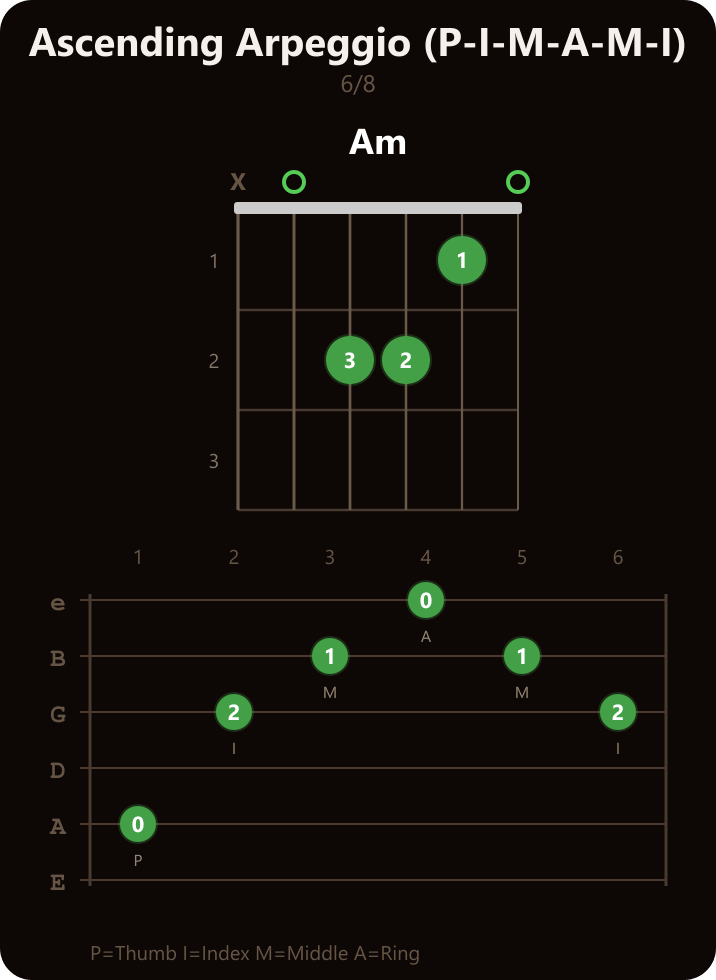
Pattern 1: The Ascending Arpeggio
P → I → M → A → M → I
Hear it in: "House of the Rising Sun"
Start Here
Hold an Am chord. Thumb plucks the bass string, then your fingers walk up the treble strings and back down. Go slow. This is the foundation of everything else below.
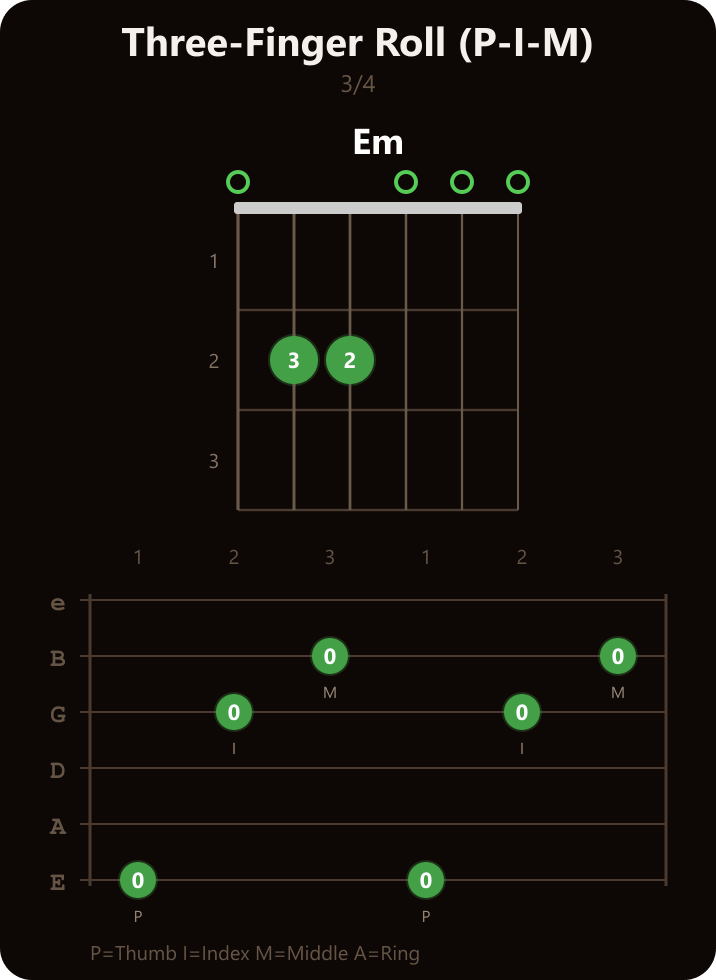
Pattern 2: The Three-Finger Roll
P → I → M (repeat)
Hear it in: "Romanza" (Spanish Romance)
Three fingers, three strings, repeating. This is the waltz pattern. Hold an Em chord and let it roll. Once this feels natural, you can play it on any chord and it sounds like you've been doing this for years.
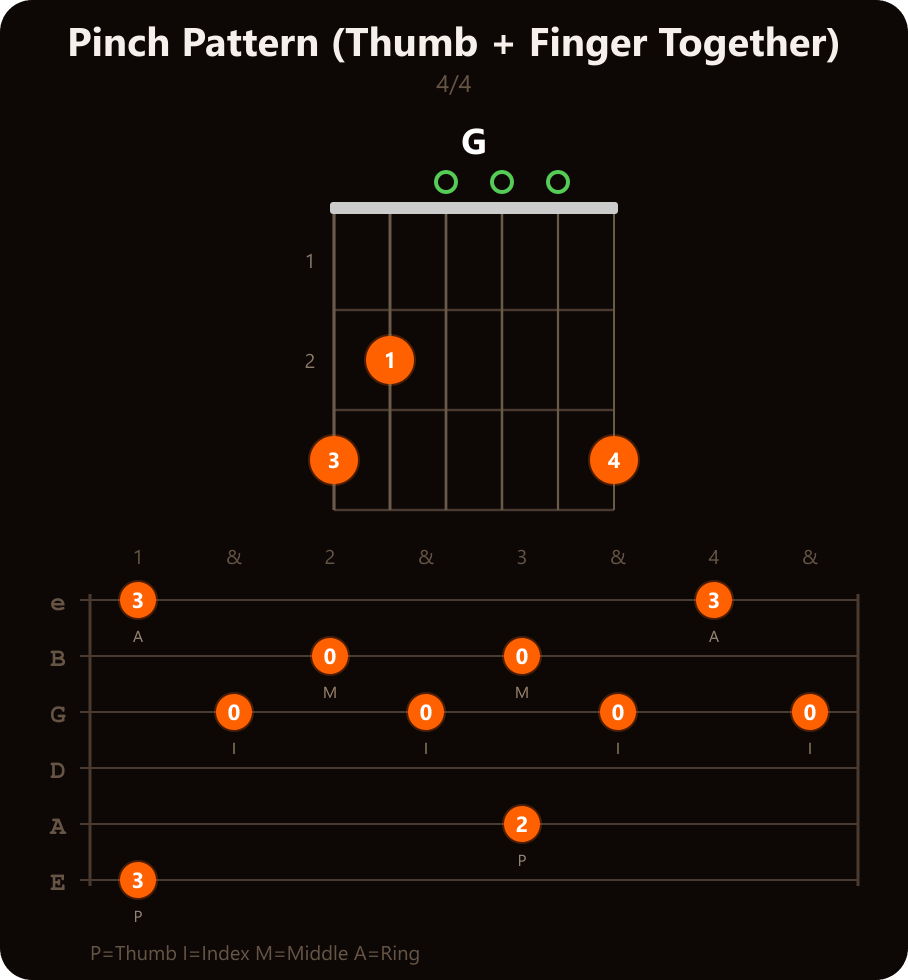
Pattern 3: The Pinch Pattern
Thumb + finger together, then fill
What's a Pinch?
Your thumb and a finger pluck at the same time. Bass note and treble note together. Then you fill in between with single notes. It's the building block of country and folk guitar.
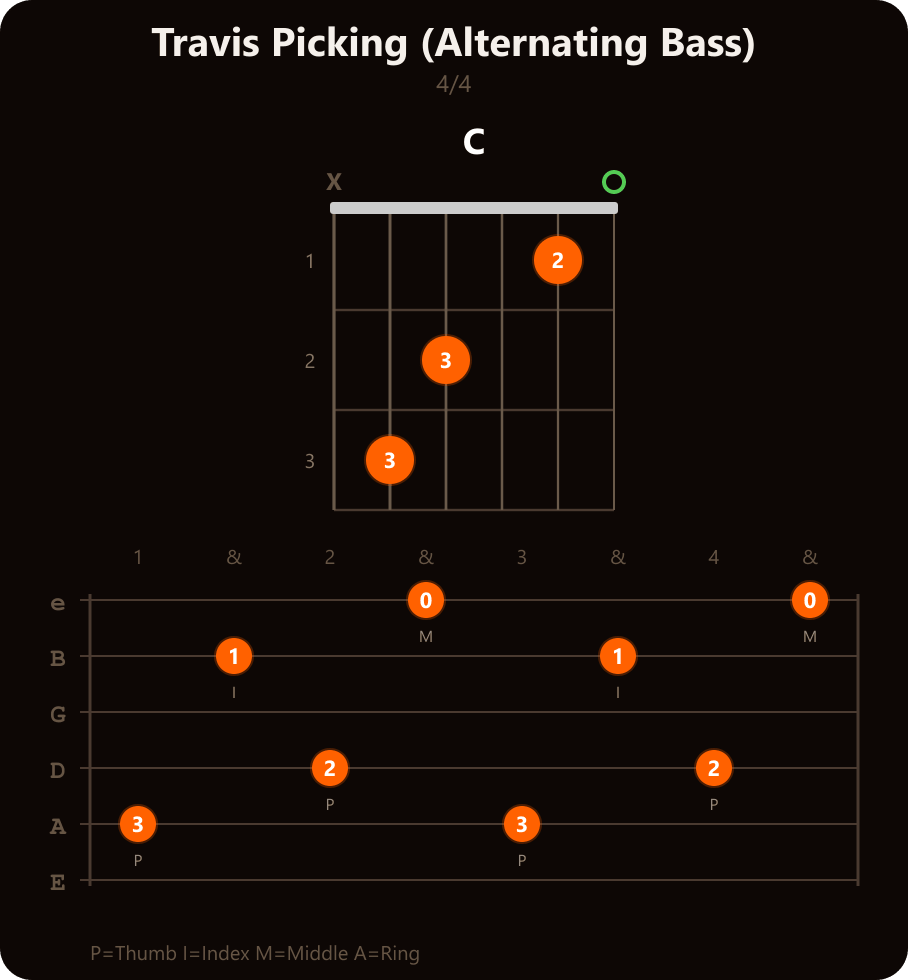
Pattern 4: Travis Picking
Alternating bass: P → I → P → M
Hear it in: "Landslide" by Fleetwood Mac
This is where it gets interesting. Your thumb alternates between two bass strings while your fingers pick the melody on top. It sounds like two guitars playing at once.
The key is getting the thumb on autopilot. Practice the bass pattern alone first. Once your thumb keeps a steady beat without thinking, add the fingers on top.
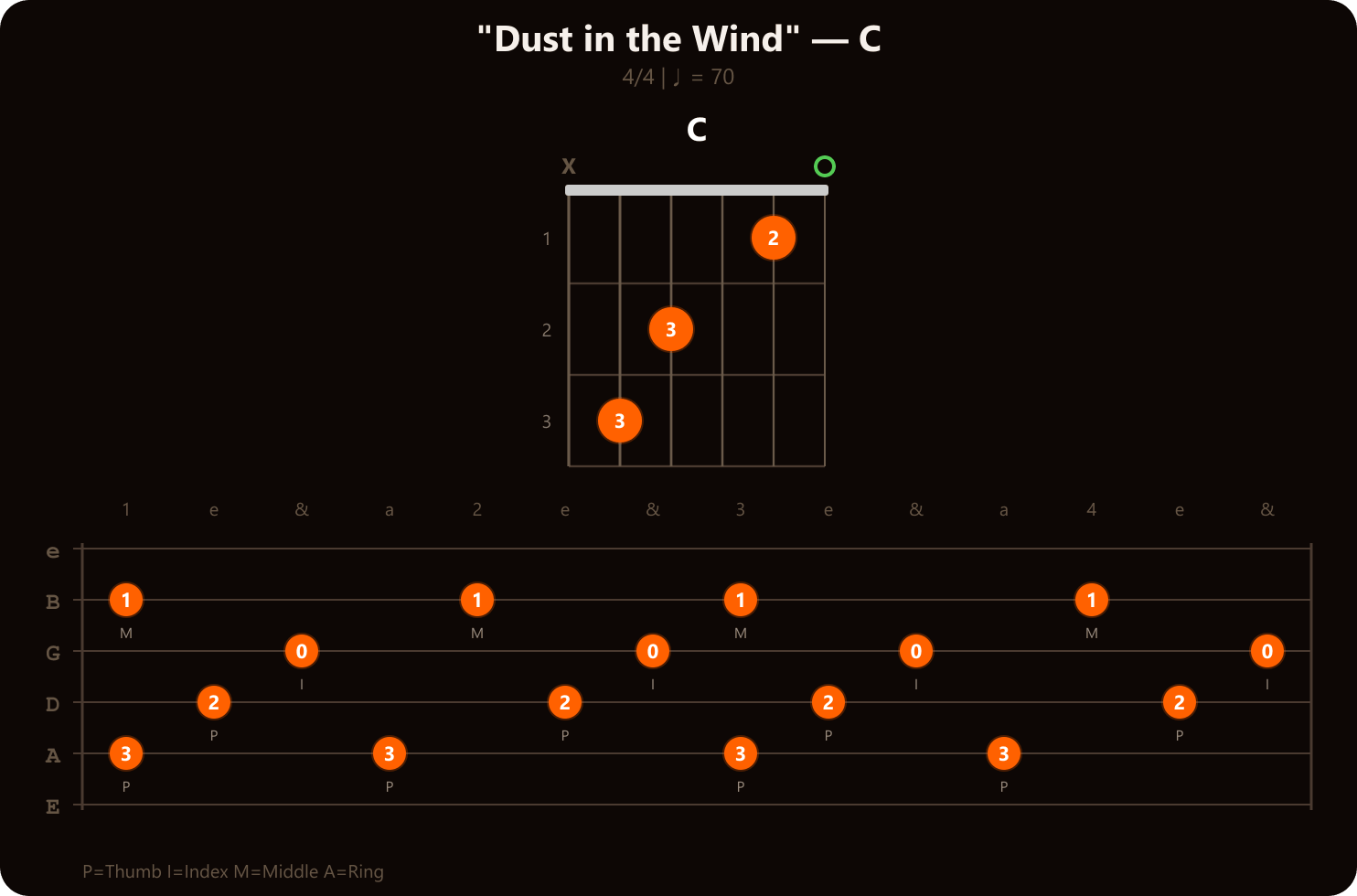
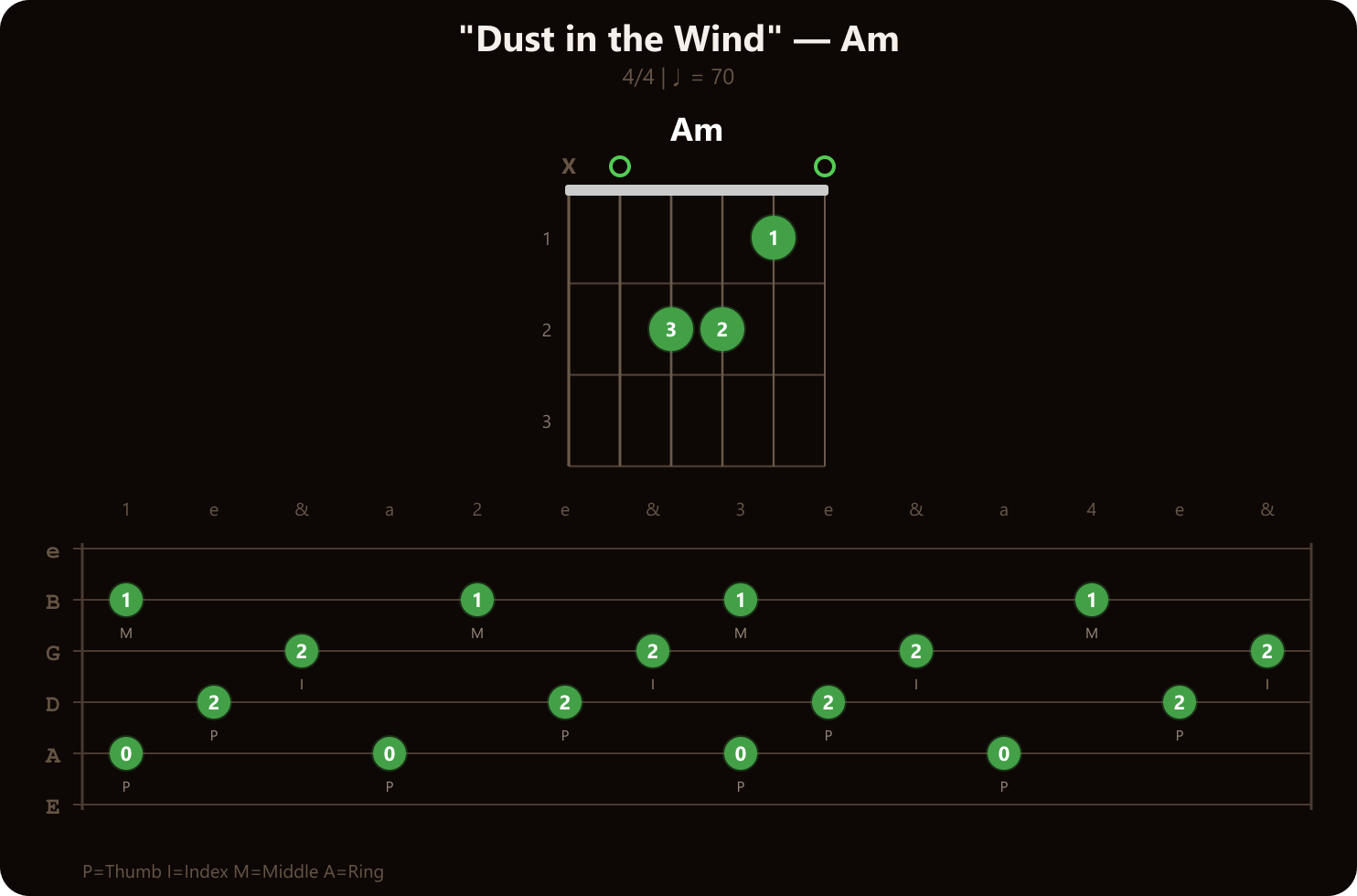
Pattern 5: Dust in the Wind
Pinch(P+M), P, I, P, M, P, I (16th notes)
Hear it in: "Dust in the Wind" by Kansas
Only Three Fingers
This pattern only uses your thumb, index, and middle finger. It starts with a pinch (thumb and middle hit together on the bass and B string), then the thumb alternates between two bass strings while index and middle fill in on top. The song goes back and forth between C and Am. Two chords you already know, one pattern, and suddenly you're playing Kansas.
Your Practice Order
1. Ascending arpeggio on Am. Slow and steady. Get each note ringing clean.
2. Three-finger roll on Em. Focus on keeping the rhythm even.
3. Pinch pattern on G. Get comfortable hitting two strings at once.
4. Travis picking on C. Get the bass thumb on autopilot first.
5. Dust in the Wind. Take it slow. Speed comes later.
Five patterns. Four chords you already know. And suddenly you sound like a completely different player.
Inside Acoustia, you can paste a YouTube link for any fingerpicked song. The software slows it down, shows you the chord shapes, and waits at every change until your fingers catch up.
Try it on a fingerpicked song you love.
Talk soon,
|