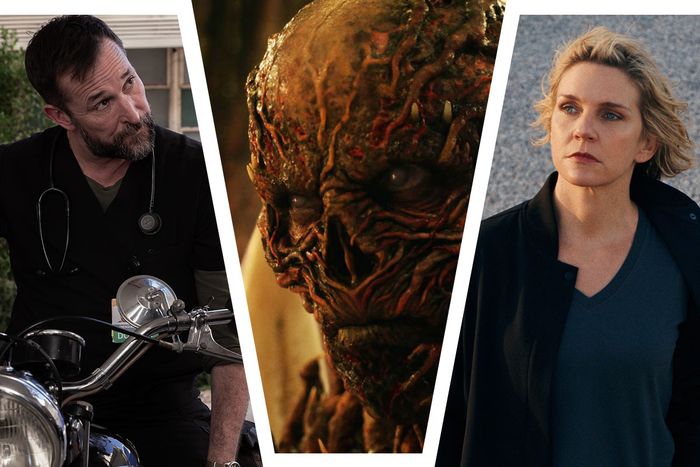
Welcome back to Buffering, where in addition to oohing-and-awing at all of this weekend’s impressive fireworks displays, we’ve been impressed by how well some of the network TV coverage of said festivities. Disney has to be happy with how its day-long America 250 celebration did: The company estimates roughly 50 million people caught at least part of its David Muir-anchored coverage on TV or streaming, including its big Saturday night concert/fireworks special, which snagged 5.4 million viewers just on ABC. The network’s three-hour special managed to beat NBC’s Macy’s Fireworks spectacular, marking the first defeat for the Peacock network on the night since 2010. That said, thanks to streaming, an encore showing, and a Telemundo simulcast, the NBC special still managed to reach 11.2 million viewers across all platforms, with its best overall performance since 2018. Not so lucky: CBS and CNN. The latter’s big Anderson Cooper-Andy Cohen Friday night Times Square special was a ratings dud, and didn’t even crack 1 million viewers for the night. And CBS’s three-hour event, anchored by Tony Dokoupil, also underperformed, with just 2 million viewers.
As for this week’s newsletter, our focus is on yesterday’s Emmy nominations. Even though awards season recognition isn’t the most important factor in the minds of streaming execs — subscribers, engagement, and their own pay packages all rate notably higher on their list of concerns — what the TV Academy says still carries some weight. My Vulture colleague Nick Quah and I dove into the nominations to see what they reveal about the biggest platforms. Thanks for reading.
|
|
|
|
Subscribe now to get unlimited access to everything New York, including subscriber-only newsletters, exclusive perks, the New York app, and more. |
|
|
|
By Josef Adalian and Nicholas Quah |
Photo-Illustration: Vulture; Photos: HBO, Netflix, Apple TV+ |
The 2026 Emmy nominations are in, and while most of the awards-season drama over the next two months will focus on which shows and performers can take home the gold, the annual kudos competition also serves another function in Hollywood: as a yardstick for measuring the creative health of TV’s major platforms. For example, when Netflix snagged more nominations than HBO (or anybody else) in 2018 — just five years after it started making original shows — it signaled the tech giant’s arrival as a programming force. There’s no longer anything novel about a streamer dominating the Emmys, of course, and many platforms seem slightly less obsessed about earning awards recognition now than they were at the start of the decade. But most still care a lot about those little gold statuettes — and even if they don’t, how well individual services and the conglomerates behind them perform in the Emmys race still says a lot about streamers’ overall offering.
|
|
|
|
Apple TV: A Focused Strategy Pays Off |
Joe Adalian: When it jumped into the streaming wars in 2019, Apple got so much flack from industry critics who said it was making a big mistake not investing in a deep library of older TV shows and movies like nearly every other major streamer. Not having that kind of programming means Apple snags a much smaller share of overall TV watching than its rivals. But it also has meant that instead of spending hundreds of millions for reruns of Friends or The Office, Apple has instead been able to spend that money on taking more creative swings on scripted comedies and dramas. Plus, because Apple’s platform isn’t crowded with shows most people will never watch, its original titles actually stand out more than they might on a Peacock or Netflix. I’m not saying the other streamers are wrong to pursue their strategy; people love catalog content.
Apple chose a very different lane from day one, and that approach has greatly helped turn it into the Emmy powerhouse it has become. Having so many nominations, and so many shows nominated — more in the outstanding comedy and drama categories than any other streamer — cements Apple TV’s brand as a premium offering.
Nick Quah: The macro-question with Apple TV has always been what its measures of success are, and whether it’s playing the same game as everyone else. Every other streamer faces the pressure of subscription conversions, churn prevention, time spent on platform, and so on. Apple TV never really feels like it’s pressured to meet those same benchmarks, and so if the focus is instead on building a premium brand — whatever way that fits into the tech giant’s broader priorities — then yes, mission accomplished.
Their portfolio of Emmy nominations this year is nothing short of stellar. Widow’s Bay was an honest-to-god word-of-mouth phenomenon that also happens to be a fantastic, thoroughly original work; Pluribus is one of the most audacious takes on the dystopian genre from one of the greatest TV creators of our time, Vince Gilligan; Slow Horses is an ever-reliable work horse (har har); and though I’m not particularly a fan of Shrinking or Margot’s Got Money Troubles, I get why they’re beloved. Apple TV’s 87 noms is lower than HBO Max’s 122 and Netflix’s 111, but they come from a smaller slate in general, so let’s call that a great hit ratio.
What I’ve always found interesting, and a little funky, about Apple TV is that the brand isn’t necessarily “premium.” Its portfolio tends to cluster around specific lanes — hard sci-fi (For All Mankind, Foundation, Silo, the upcoming Neuromancer), well-executed pure genre (Slow Horses, Hijack), prestigey dramas that are actually a little soapy (The Morning Show, Presumed Innocent), cozy comedies (Ted Lasso, Shrinking, Margo) — each maintaining a baseline of polish that passes for quality until something truly special comes along, like Severance, or in the case of this Emmy’s cycle a Pluribus or a Widow’s Bay. In the latter cases, they’re still able to get that Whoa, this is the real good stuff pop.
Nevertheless, two things can be true at once. Apple TV has the luxury of being able to focus on building a brand that signals quality to viewers and voters, and this puts them in command of their narrative. But behind the scenes, it’s hard not to wonder whether the lack of a deep back catalogue makes core metrics like subscription retention or time spent on platform will eventually become a genuine point of worry if things start to get shaky around the rest of Apple. In that scenario, what is the value of awards? (An eternal question.) But as far as who I’d want to be right now, I’d probably want to be Apple.
|
|
|
|
JA: It wouldn’t be too bad to be HBO Max right now, either. While it had slightly fewer noms this year, it still dominated overall. What’s most interesting to me is that of the 122 noms attributed to the platform, 49 came from two shows — The Pitt and Hacks — which carry the branding of Max Original rather than HBO proper. They’re not TV, they’re not HBO; they’re Max Originals. Now, I don’t think this matters at all to the audience in 2026: The Pitt is every bit of an “HBO show” as Task or DTF St. Louis for most viewers. But the fact that Casey Bloys has been able to extract stellar results from both major development brands his team oversees — old-school HBO and Max Originals — is impressive. Warner Bros. Discovery hasn’t given HBO Max the content budget that Netflix or probably Apple TV have, and yet it’s still been able to translate that smaller spend into programming that cuts through.
And big picture, it means that the goal of HBO Max when it launched is finally bearing out despite all the messy behind the scenes drama of the last seven years. If Paramount’s David Ellison is successful in his bid to take over Warner Bros. Discovery, I can’t imagine a bigger mistake than messing with this formula.
NQ: Totally agreed. Ownership shenanigans and uncertain future aside, HBO Max is in a fine position awards-wise. The Pitt is still running the table on the drama side, and I don’t see anything on the horizon that’s likely to seriously challenge it. (And shout-out to The Gilded Age for earning a second consecutive Outstanding Drama Series nomination.) Hacks is all but certain to dominate in its swan-song season — barring a Widow’s Bay upset, which seems wildly unlikely.
The bigger question is what eventually steps into that void for the streamer, but that’s a tomorrow problem. While Task proved to be weaker than expected, HBO Max still showed it can produce an awards contender out of nowhere with DTF St. Louis, a show I genuinely didn’t expect to factor into the conversation. And I can’t help but think that if Heated Rivalry qualified for Emmy contention, the streamer could’ve added at least a couple more nominations to the tally. In sports terms, this is a well-rounded team that knows how to win in multiple ways. HBO Max is still a complete package.
|
|
|
|
Netflix: Lots of Noms, But … |
JA: And then there’s HBO Max’s perennial rival for awards-season glory. It wasn’t that long ago that it felt like Netflix was starting to challenge HBO’s long reign as King of the Emmys. But nobody’s talking about that anymore, are they?
NQ: Netflix is tricky to think about. Yes, it tied with Disney for second-most nominations, with 111, trailing only HBO Max. But I’m wont to think that top-line number reflects volume more than anything else — the sheer glut of content Netflix churns out — and it obscures the company’s actual weaknesses as a producer of quality television in 2026, let alone programming that’s still able to move culture.
So many of these nominations feel soft. Stranger Things, once a world-beating phenomenon, limped out a truly terrible final season, picking up a handful of polite craft nods but none of the marquee ones. As our colleague Joe Reid has noted, this is a particularly weak year for the limited series category, which makes it hard not to read the noms for Beef’s second season as voter inertia, or the love for The Beast in Me as partly riding the coattails of Matthew Rhys’s Widow’s Bay moment (and, frankly, of just how likeable a guy he is). The fact that Netflix couldn’t or perhaps wasn’t interested in generating much critical or audience heat for Death by Lightning, one of its best creations in recent memory, perhaps says something fundamental about the streamer’s current priorities and its blasé relationship with awards recognition in general.
Maybe that should change. As has been recently reported, something’s been going on with its viewers dropping off in droves between the first and second seasons of its shows, and so there may be some renewed value in reconfiguring its relationship with the marketing and attention potential of the awards game.
JA: I will actually disagree with you a bit here, Nick: Whatever Netflix’s issues are with sophomore seasons, I don’t think it’s reflected in these nominations. Wednesday and The Diplomat and, yes, Beef (for whatever reason) still got plenty of Emmy love. And I’d argue Netflix is still pretty aggressive touting its titles to Academy voters.
That said, I do think that Netflix’s overall lack of focus does make it harder for its best stuff to stand out in the culture. Apple and HBO Max’s entire brands are really built around original, distinct programming, whereas Netflix is about content and engagement, and soaking up as much of its subscribers’ time as possible (hence its efforts to expand into video podcasts and video games). And the big top-line number Netflix boasts is inflated by a ton of nominations in crafts categories or unscripted; it’s telling that of the 16 outstanding comedy and drama nominations, only two are from Netflix.
On the other hand, I honestly am not sure that it matters. A decade ago, Netflix desperately craved awards recognition because it needed validation, both to convince audiences to sign up as well as to help woo talent still not sold on the idea of producing for a “streaming” platform. That’s no longer the case in 2026. Netflix still plays the awards-season game — mostly for the benefit of its talent — but I don’t think it’s all that concerned about winning. NQ: Let’s wait till the TV Academy finally folds on its anti-new-media bias and starts recognizing podcasts and the creator economy in the marquee categories. They can further run up the tally then. |
|
|
|
Disney: Revenge of the Network
|
JA: One thing that shouldn’t get lost here is this stat: Of Disney’s 111 Emmy nominations, by far the most came not from any of its digital platforms, but the good ol’ American Broadcasting Company. Thanks to Dancing With the Stars, Jimmy Kimmel Live!, and Abbott Elementary, ABC snagged 38 nominations, more than any other broadcaster but also more than Disney’s own FX (23) or Hulu (22) brands. In fairness, the latter two did much better in the marquee scripted races, but I’d argue that’s a function of modern-day Emmy voters being biased against network TV. (Case in point: Kaitlin Olson getting nominated for Hacks but not her equally great, and more pivotal, role on ABC’s High Potential.)
JA: And then there’s HBO Max’s perennial rival for awards-season glory. It wasn’t that long ago that it felt like Netflix was starting to challenge HBO’s long reign as King of the Emmys. But nobody’s talking about that anymore, are they?
NQ: Netflix is tricky to think about. Yes, it tied with Disney for second-most nominations, with 111, trailing only HBO Max. But I’m wont to think that top-line number reflects volume more than anything else — the sheer glut of content Netflix churns out — and it obscures the company’s actual weaknesses as a producer of quality television in 2026, let alone programming that’s still able to move culture.
ABC’s hot run this year helped make up for slightly cooler years at other Disney brands, while also underscoring the power of Disney’s relentlessly marketed Disney Bundle. Even if Disney+ or Hulu individually are not seen as Emmy powerhouses — Disney+’s teeny tally of 14 nominations is, if we’re being real, kind of pathetic — the overall offering of Disney+ and Hulu, which includes everything that airs on ABC and FX and National Geographic, is remarkably potent. And not just as a force at the Emmys: Multi-platform ratings demonstrate how ABC’s top hits are among the most-watched shows in all of television.
NQ: Ah, the joys of being a media megaconglomerate. For a snobby TV critic like myself, the top-line Disney story in this Emmy cycle is critical darling FX’s muted year. The Bear picked up a handful of rollover nominations for a fourth season that was better than its third but still far from the show’s peak. Yet the absence of Jeremy Allen White and Ebon Moss-Bachrach from the acting categories underscores just how much the series’ awards star has faded. (Its much-improved final season, which will compete next year, could reverse that trend.) Alien: Earth never quite broke through, while the one FX series that did become a genuine cultural phenomenon — Love Story: John F. Kennedy Jr. & Carolyn Bessette — didn’t achieve the kind of domination once expected from the network. It’s a far cry from FX’s 2024 high-water mark.
But what you emphasize about how Disney’s awards strength this year comes from grand ol’ ABC is the real headline here. ABC racking up nominations for three very different kinds of shows (Dancing With the Stars, Jimmy Kimmel Live!, Abbott Elementary) is a reminder of the pervasive, multi-tentacled ways Disney can still compete for the center of gravity.
The paltry Disney+ showing is fascinating, though. I do find some hope in The Muppet Show getting recognition. A future awards behemoth in training? |
|
|
|
The Rest of the Pack: Paramount+, Peacock, and Prime Video
|
JA: I would love for there to be more of The Muppet Show. Give Kermit & Co. all the awards.
Anyway, that leaves us with the other three major streaming platforms: Paramount+, Peacock, and Prime Video — or, as they’re known in some circles, the also-rans on Emmy day. In terms of their overall tallies, none of them comes close to our big four Emmy players. Even when you add in nominations for NBC (30) and Bravo (5) to Peacock’s official tally of 18 nominations, NBCUniversal’s streaming total of 54 nominations pales next to its peers; Paramount+’s count of 34 is even more meager and would be virtually nonexistent without the 32 nominations for CBS. And the fact that a company as mighty as Amazon can only manage 28 nominations for Prime Video says a lot about its TV ambitions — none of it good. On the other hand, I’m not really sure it matters all that much that the Emmy gods are indifferent to these platforms.
NQ: Indifferent indeed. The question we always raise is whether awards recognition ultimately matters for the health of these streamers in the same ways, and so it’s germane that each of these three “also-rans” also happen to be strong around specific areas that the Emmys tend not to honor or emphasize as marquee achievements: Peacock with reality television, though, yes, there are categories dedicated to them; Prime Video with a consistent track record of excellence in YA programming (and dad-core stuff, I guess); and Paramount’s Taylor Sheridan–verse, though I’d also argue the streamer whiffed on promoting the potentially Emmy-friendly good stuff, like The Agency.
Then again, I reckon the conversation around Paramount’s awards narrative is due to change with the WBD merger anyway; provided HBO Max gets to keep doing what it is doing, we’ll probably soon be talking about it in the way we were just talking about Disney.
JA: Plus, whatever happens with regard to the Paramount-WBD merger, and the exec structures of both companies, Paramount+ is already undergoing a transformation of sorts under new boss Cindy Holland. The former Netflix content chief is currently deep in development on a number of glitzy projects that sound genetically engineered to win awards (just as her early shows at Netflix did), so if P+ still exists in two years, there’s a good chance it’ll be a more significant Emmys player. Prime Video has also recruited a Netflix vet (Peter Friedlander) to run programming, though it’s too soon to say what sort of impact he’ll have on the streamer’s kudos prospects. But it seems likely that he, like Holland, will want his new slate to make a splash — and one sure way to do that is with Emmy recognition.
| |
|
|
|