|
|
|
|
Good morning. I’m Salmaan Farooqui, and I cover the housing and mortgage market for The Globe. Today, we’ll take a look at data that show housing markets in the Prairies and Maritimes are starting to feel the impact of immigration cuts, which have already been plaguing the Toronto and Vancouver markets for months. |
|
|
|
|
|
|
|
|
|
|
|
|
|
|
|
|
Energy: Five First Nations have agreed to pay up to $1-billion for a majority equity stake in a massive storage tank that would be constructed if LNG Canada forges ahead with expansion plans at its export terminal in British Columbia. |
|
|
|
|
Markets: ‘An ugly moment for IBM and software stocks’: IBM shares suffer their biggest ever one-day plunge after earnings warning. |
|
|
|
|
Mideast: Iran’s Islamic Revolutionary Guard Corps has threatened to close
“all other export corridors that benefit the U.S. and its allies,” Iranian media reported, after Iran shut the Strait of Hormuz and the U.S. reimposed a naval blockade of Iranian ports. |
|
|
|
|
|
|
|
|
|
|
|
|
|
|
|
A development site in Halifax last October. Maria Collins/The Globe and Mail
|
|
|
|
|
|
|
|
|
|
|
Three cities where home prices are changing fast |
|
|
|
|
Price growth is slowing to a halt in cities like Edmonton and Regina, while prices are actually beginning to decline in Halifax, according to data from Wahi, a digital real estate platform, and Real Property Solutions (RPS), a Canadian property valuation service provider. |
|
|
|
|
|
|
|
|
We’ll take a look at the data below, and what I heard from realtors and Wahi economist Ryan McLaughlin. |
|
|
|
|
|
|
|
|
|
|
|
|
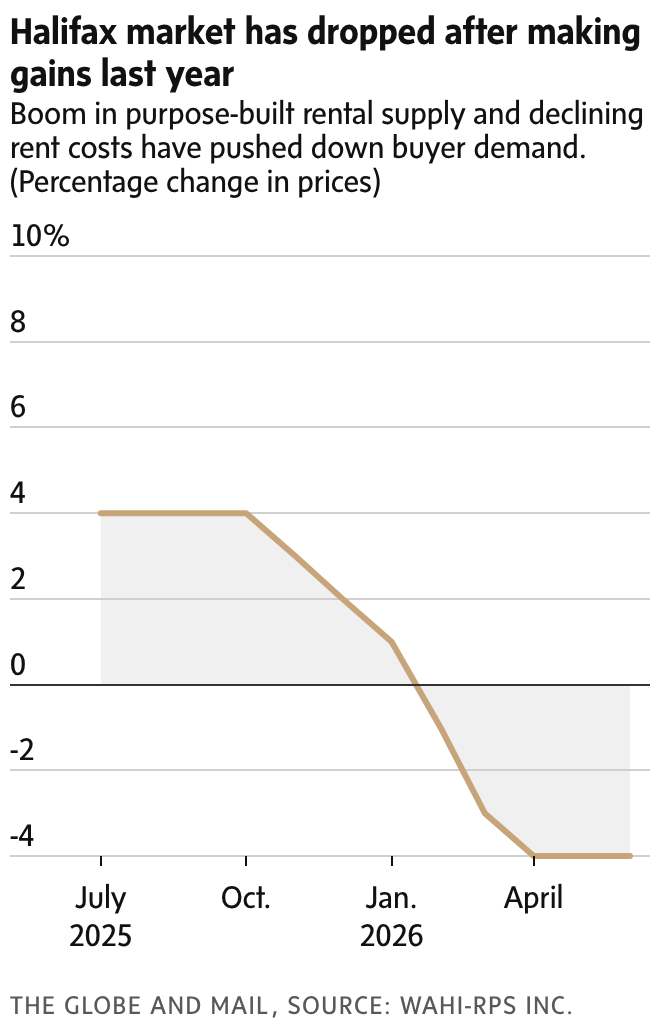
Halifax has posted year-over-year home value declines of 4 per cent for three months straight. That’s flipped the script from the property market’s consecutive months of 4-per-cent growth toward the end of 2025. |
|
|
|
|
Matt Honsberger, broker and owner of Royal LePage Atlantic in Halifax, said one unique factor in the Maritime city is a boom in the development of purpose-built rental buildings. He said there are currently 13,000 units at some stage of approval or construction – a large number for a region of just more than 500,000 people. |
|
|
|
|
“That’s a lot for our market to absorb,” Honsberger said. He added that the city has more post-secondary institutions than most, and the reduction in foreign students is having an outsized impact on it. |
|
|
|
|
|
|
|
|
|
|
|
|
When Edmonton realtor Eddie Chang would list a home for sale in previous years, two out of five inquiries would come from people in other provinces. Today, that kind of interprovincial interest has mostly dried up. |
|
|
|
|
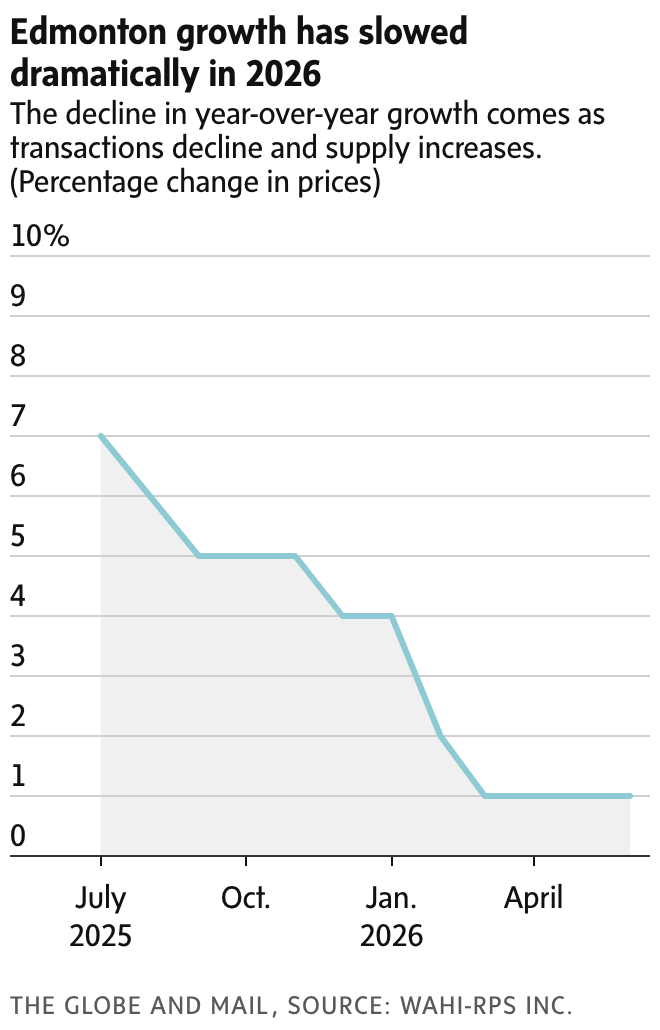
Chang said the market currently has 10-per-cent more listings than the same time last year, and sales are occurring at a 4-per-cent slower rate. |
|
|
|
|
It’s a major reason why Edmonton’s Wahi-RPS data show that the city went from posting 7-per-cent year-over-year price gains in mid-2025, to just 1-per-cent growth in June. |
|
|
|
|
Market conditions are also becoming tougher for sellers. Resale listings are staying on the market for longer, as they compete with newly built homes that are eligible for GST rebates. |
|
|
|
|
“If you’re in a neighbourhood where you’re competing with new home inventory ... competing against them getting their GST rebate is going to affect resale prices,” Chang said. |
|
|
|
|
|
|
|
|
|
|
|
|
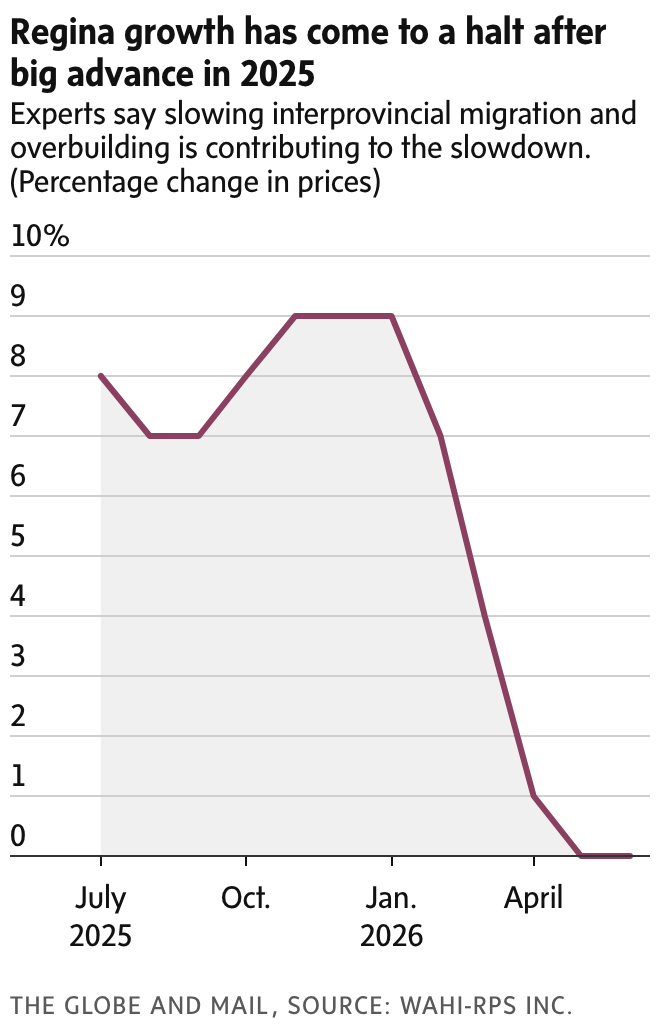
Regina was among the strongest real estate markets in the country as recently as this January, when it saw values increase by 9 per cent on a year-over-year basis. In June, that growth stopped completely and the Saskatchewan capital saw no change to prices. |
|
|
|
|
McLaughlin said cuts to immigration mean that fewer people are feeling the pressure to move from larger centres to smaller, more affordable cities like Regina. |
|
|
|
|
Prairie cities also often suffer from a boom-bust cycle, since there are few restrictions on building and developers tend to overbuild when the market is hot. |
|
|
|
|
The cross-country picture |
|
|
|
|
The national real estate association further downgraded its sales forecast for the year, saying the tepid increase in Ontario would not offset declines in other parts of the country. This marks the second time in six months that the Canadian Real Estate Association or CREA has lowered its sales estimate. |
|
|
|
|
|
|
|
|
|
|
We’re just passing the peak time for home sales in Canada. At least, when it’s usually supposed to be. On Thursday, July 16 at 1 p.m. ET, I will be joining Globe real estate reporters Rachelle Younglai, Carolyn Ireland and Shane Dingman to answer your questions about the state of the housing market. |
|
|
|
|
Submit your questions ahead of time |