| | In this edition, open-source AI models have a stolen goods problem, and payment processor Stripe mak͏ ͏ ͏ ͏ ͏ ͏ |
| |  | Technology |  |
| |
|
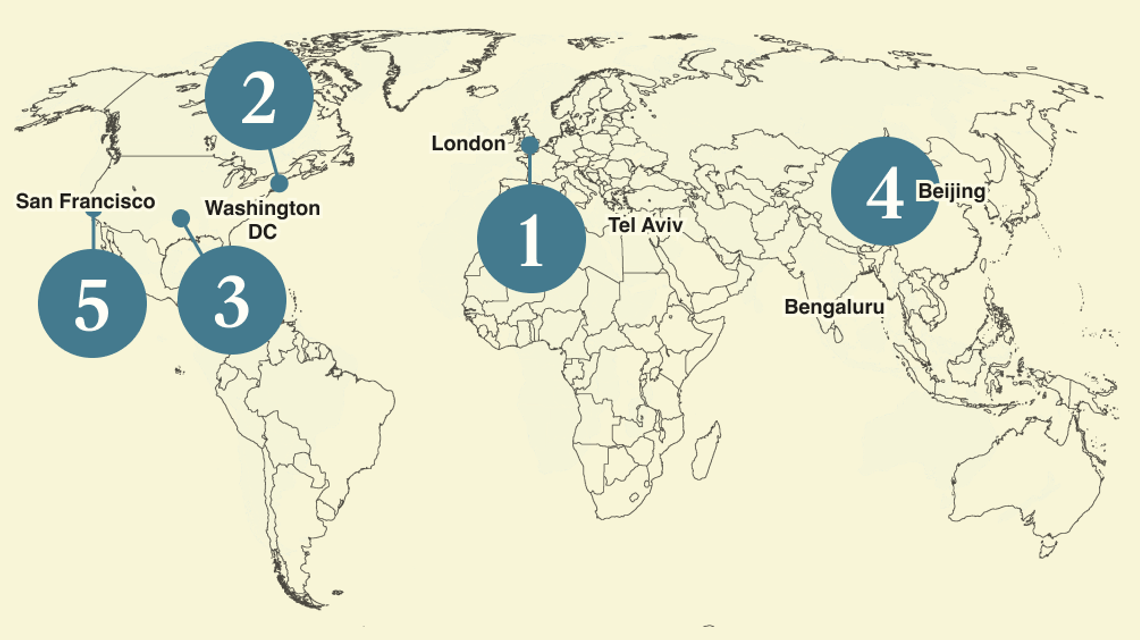 - AI’s unifying voice
- NY data-center ban
- Dating is better IRL
- DeepSeek plans IPO
- Stripe’s PayPal bid
 Mapping the government’s strategies for stemming the use of Chinese models, and how Americans are using AI to help decide their midterm votes. |
|
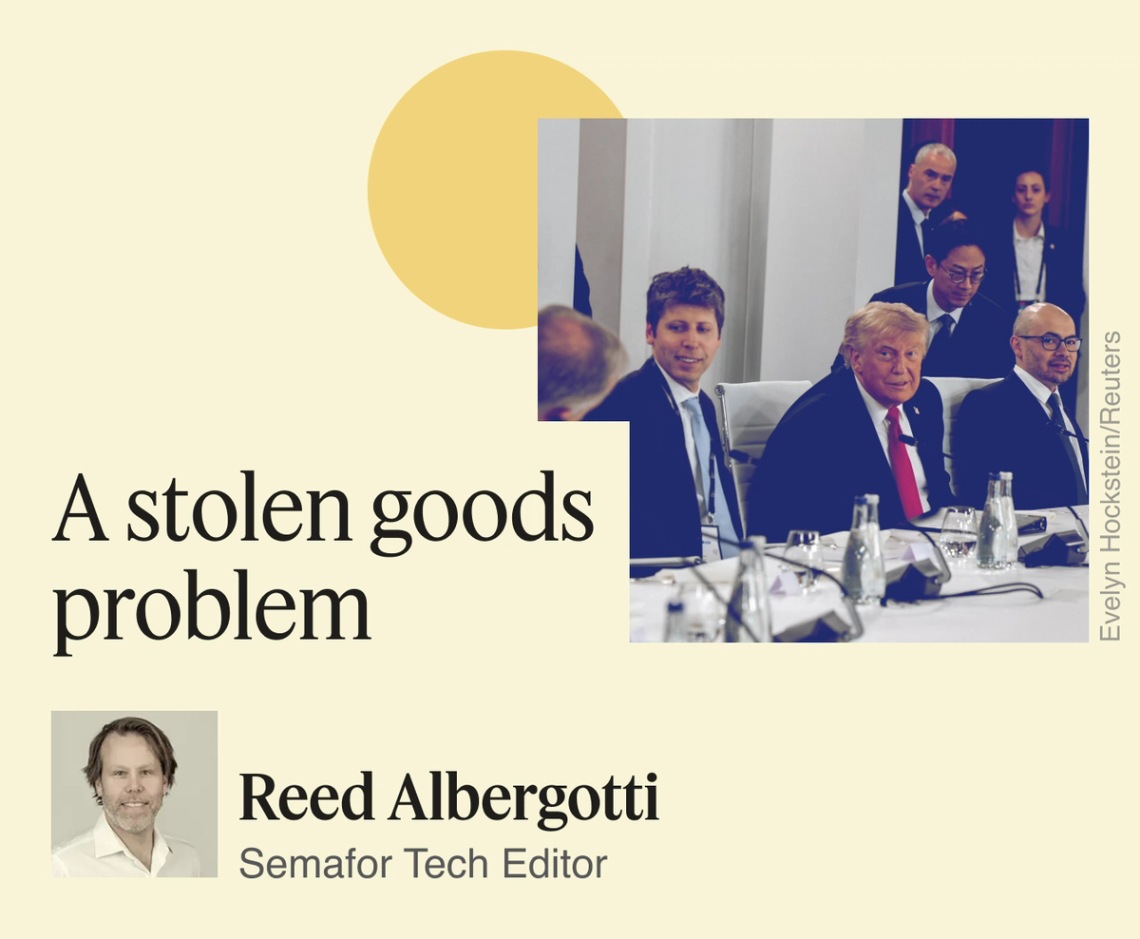 For weeks, there have been murmurs in DC about a coming White House move to address the inevitability of powerful, open-source Chinese AI models being used by people and businesses across the globe. Such government intervention could take a number of forms, but none address the true problem with them: American AI labs view the models as essentially stolen goods, built with the help of American frontier models to generate synthetic training data — a process known as distillation. AI companies and the US government have called out Chinese firms for distilling US models. And while US companies have tried to prevent Chinese companies from doing so, they’ve so far been unable to stop it completely. Without a true technical solution, government officials have limited tools to prevent the practice. The government has been citing national security concerns around using Chinese models, which is one way to prompt US companies to stop using them. Officials have already been probing the models for whether they contain built-in censorship mandated by Beijing, or potentially hide back doors that could put US companies at risk. In one possible strategy, US officials could designate the models as a supply-chain risk, which would limit how they could be used by companies that do business with the US government. Another option involves imposing tighter export controls to further limit the compute capacity in China. So far, export controls have prevented China from developing full-blown frontier models. But they haven’t prevented the development of efficient, distilled versions. While US-based frontier labs might yearn for even tighter export controls, Nvidia is arguing the restrictions should be loosened. The rationale: It keeps China dependent on US infrastructure. The conflicting interests put the White House in a tough spot. Both the frontier labs and Nvidia play a critical role in the US economy and national security. And while officials debate the right path forward, China is gleefully giving away the technology for free, enabling companies all over the world to reduce their token expenditures with US labs, just as they prepare to go public. |
|
DeepMind’s Hassabis is AI’s unifying voice |
 Manuel Orbegozo/Reuters Manuel Orbegozo/ReutersIt’s a critical time for the AI industry in the US, which is confronting lawmakers and a general public looking for careful policy planning and an answer to rising populist anger. Unfortunately, a lot of the industry’s leaders are carrying baggage that’s getting in the way of sending a unified, clear message. OpenAI’s Sam Altman has been painted as a capitalist mercenary. Anthropic co-founder Dario Amodei has been accused by critics of spreading fear. Elon Musk and Mark Zuckerberg have similarly distracting histories. On Tuesday, Google’s DeepMind co-founder and CEO Demis Hassabis emerged as a unifying voice with an article calling for a self-regulatory body of AI experts modeled after the US’ Financial Industry Regulatory Authority. He even received words of encouragement from the unabashedly accelerationist All-In host Chamath Palihapitiya and competitors at Microsoft and OpenAI. Hassabis, who won the Nobel Prize in chemistry in 2024 for pioneering the use of AI in protein prediction, is based in London and has largely avoided the viper pit created by the bare-knuckle AI race playing out in Silicon Valley. That could be one reason his message was so well received: It required an unassailable messenger. |
|
Centrist Democrats adopt data center NIMBYism |
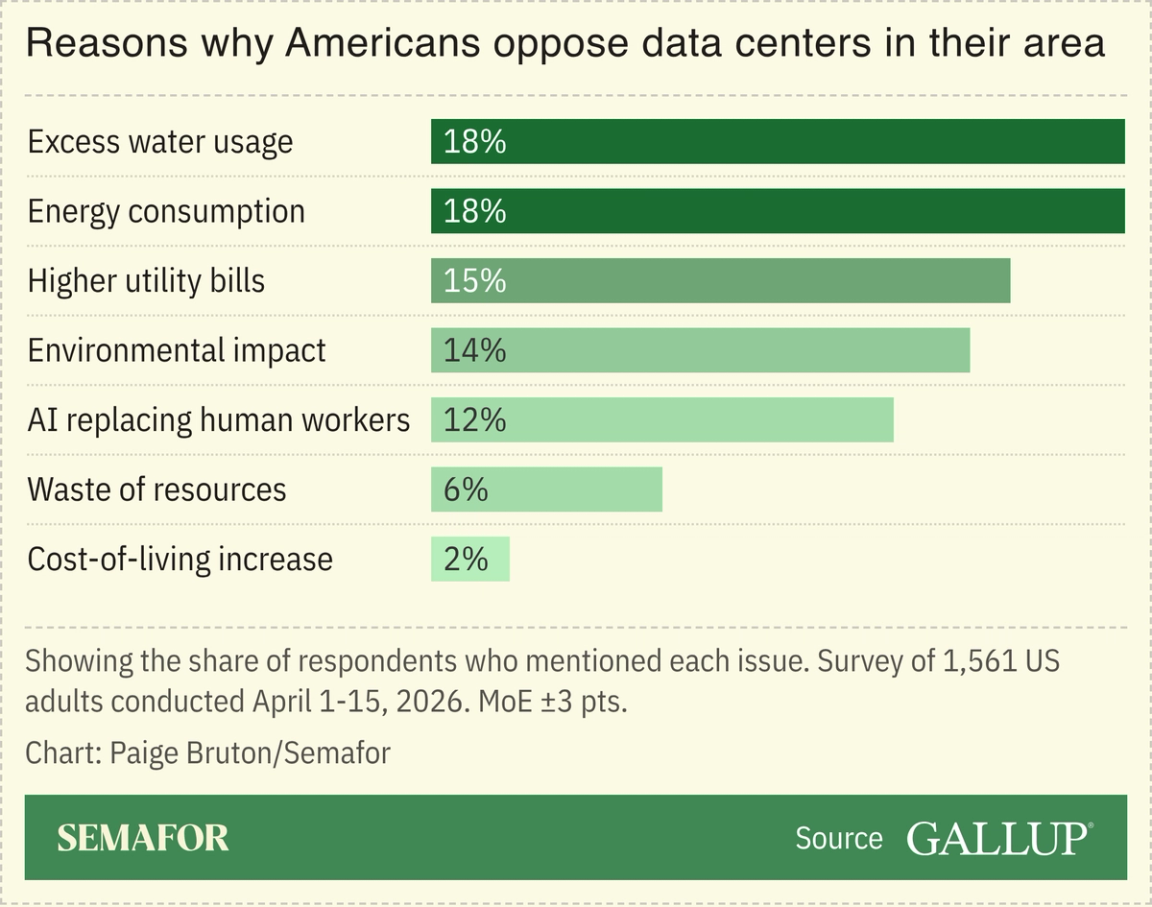 Data center NIMBYism — once a talking point for the most progressive politicians — is moving closer to the Democratic mainstream in the lead-up to the midterm elections, Semafor’s David Weigel writes. New York Gov. Kathy Hochul’s Tuesday executive order pausing permits for large data centers is a prime example. A centrist Democrat, Hochul said: “New York will lead the way in creating the strongest standards in the nation for data center development, ensuring that when companies succeed because of New York, New Yorkers succeed too.” Data centers are deeply unpopular among members of both political parties in the US, but progressives like Sen. Bernie Sanders, I-Vt., and Rep. Alexandria Ocasio-Cortez, D-N.Y., have made their opposition the loudest. Hochul’s moratorium shows that the rest of the party wants to claim some of that resistance. In addition to environmental concerns, some of the backlash against data centers focuses on how their size and noise impact neighborhoods. Companies, including OpenAI, are thinking about how data-center neighbors can benefit economically from the facilities, including owning a piece of them or using funds to support local schools, OpenAI Chief Global Affairs Officer Chris Lehane said at Semafor World Economy. At the Tuesday press gaggle, Hochul said, “I want to make sure that … [communities] know what they can ask for and that they can derive the maximum benefits for their residents.” Facilities in New York that have already been approved can move forward with construction. |
|
Some things are better IRL |
 Courtesy of Hinge Courtesy of HingeDating apps, which have been losing users in droves, are now attempting to inject community into their platforms as younger generations increasingly swear off technology. Hinge on Wednesday announced that friends and family of its users will be able to add commentary to profiles, in an attempt to “help potential matches see your full self,” the company said. Tinder and Bumble, meanwhile, have started organizing in-person meetups for daters. Tech’s ambition is to work so well that it fades into the background of our day-to-day, but removing friction in some of the most personal aspects of life may not actually improve an experience — as the dating apps are showing us now. In entertainment, things have come full circle as well: Platforms that originally threatened to upend how we watch television have drifted back towards live programming, ads, and week-long breaks between new episodes. Corporate managers are demanding real attention rather than AI notetakers in meetings, and professors are turning from online exams to in-person tests. If past cycles have shown us anything, it’s that some friction is worth keeping. — Rachyl Jones |
|
DeepSeek weighs IPO as Zhipu embraces AGI |
 Dado Ruvic/Illustration/Reuters Dado Ruvic/Illustration/ReutersDeepSeek could reportedly file for an IPO as soon as this year, joining its rivals in capitalizing on investor enthusiasm for low-cost Chinese AI. The startup is also considering raising new funds from private investors weeks after completing its first financing round that valued the company at $52 billion. DeepSeek upended the AI industry last year with its cheap and effective open-source model, but Chinese AI is moving from the “DeepSeek moment” to the “Zhipu moment,” Goldman Sachs analysts wrote in a recent note. Zhipu, which went public along with fellow Chinese AI lab MiniMax earlier this year, bucked a recent tech-stock rout in Hong Kong and the mainland, which investors have credited partially to its bet on frontier model research over quick revenue from consumer apps. The startup’s strategy marks a shift in China’s AI scene, which is known for prioritizing widespread adoption over the loftier frontier research often championed by Silicon Valley. — J.D. Capelouto |
|
PayPal-Stripe merger could reorder digital money flow |
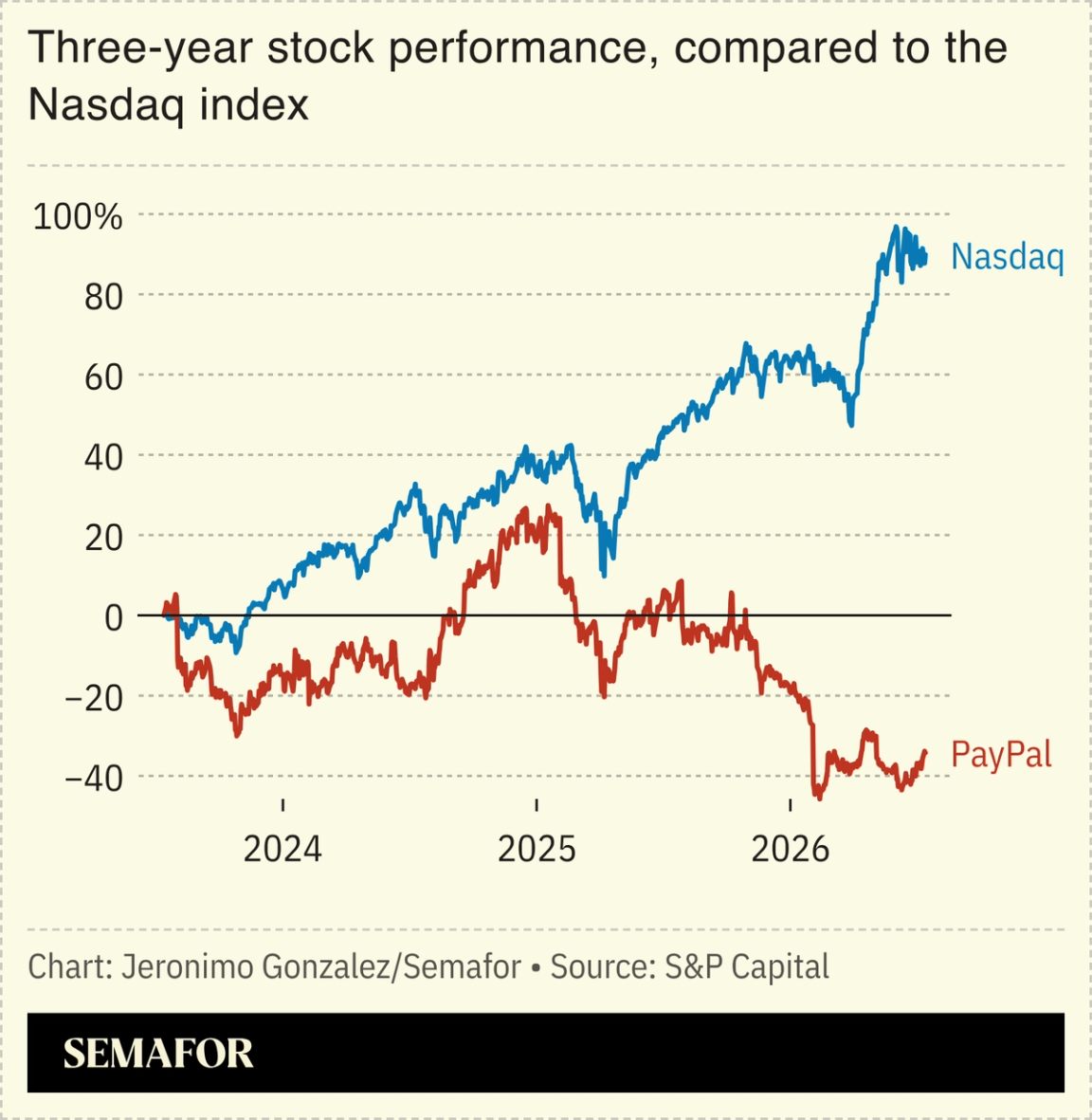 Payment processor Stripe and private-equity firm Advent International have made a $53 billion joint bid to buy PayPal, in a deal that could reorder the way digital money flows around the world, Semafor’s Rohan Goswami writes. PayPal, whose shares have lingered close to 10-year lows, remains uninterested in a deal with the bidding group at this time, but PayPal’s board will still meet to discuss the offer in the coming days, according to a person familiar with the matter. Stripe is the US’ fourth-largest credit-card processor; PayPal is the sixth. While a combined Stripe-PayPal would still be outmatched by Global Payments and JPMorgan, combining forces would help both companies compete (Stripe is focused on merchants, while PayPal is focused on its 430 million consumer accounts). Stripe’s growth — and the combined scale of the businesses — presents antitrust risk both at home and abroad, but people close to PayPal say they’re aware of the frustrations investors feel toward a company that has, time and again, failed to turn itself around. A profound credibility gap — one that predates CEO Enrique Lores’ and predecessor Dan Schulman’s tenure — presents an opportunity for Stripe to strike, and an impetus for PayPal to engage. |
|
 Semafor Gulf is now expanding to five days of coverage per week, reflecting the growing need for deeper reporting on the region. More than ever, developments in the Gulf are reverberating around the world, affecting events, energy markets, and entire economies. We are growing our network of reporters and editors across the region and the world and, starting this week, are expanding our coverage of the Gulf into a daily briefing. Subscribers will get even more of the sophisticated, scoopy journalism they’ve come to expect, every weekday. For the deepest, most comprehensive, most insightful reporting on one of the most complex parts of the world, subscribe to Semafor Gulf. → |
|
|
 “Al Muratsuchi,” by mark6mauno via Flickr, licensed under CC BY 2.0. “Al Muratsuchi,” by mark6mauno via Flickr, licensed under CC BY 2.0.Some US voters are using AI to guide their choices ahead of November’s midterm elections. The models will rarely give direct political advice, but can point users towards politicians’ beliefs: One man asked ChatGPT to find those with more libertarian voting habits, while another looked for those best placed to block a particular Republican mayoral candidate. The models’ results may contain “factual errors or… flawed assumptions,” The New York Times warned, but then, so do human-made inputs like newspaper endorsements. The AI-fascinated writer Scott Alexander spent two hours using Claude to compare local candidates in San Francisco with his own political beliefs, and ended up “about 50% happier with my choices than I would have been without AI.” |
|
|


