| | Oil traders grow anxious over dwindling global supplies, US tech executives warn over open-source Ch͏ ͏ ͏ ͏ ͏ ͏ |
| |  | Flagship |  |
| |
|
The World Today | 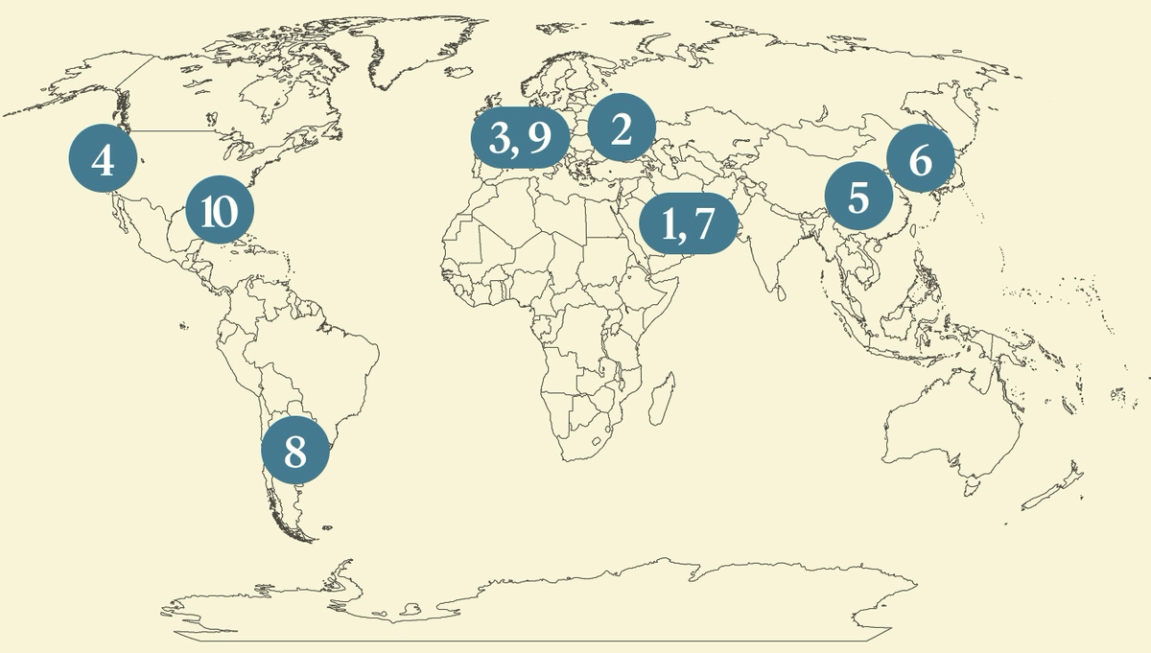 - Oil market supply worries
- Ukraine’s Crimea strategy
- EU’s reliance on US, China
- Warnings on Chinese AI
- Blockbuster China chip IPO
- Worker strike over humanoids
- Smartphones’ vulnerabilities
- Argentina in World Cup final
- EU population decline
- Mars rover’s marathon
 A podcast episode delves into why everything on the internet feels so exhausting and divisive. |
|
Fresh anxiety over global oil supplies |
 Kim Soo-hyeon/Reuters Kim Soo-hyeon/ReutersThe renewed fighting between the US and Iran again jeopardizes global oil supplies, after stockpiles were drained earlier in the conflict. “We’ve burned through all of the buffers we had. Everything,” one trader told the Financial Times. Energy markets had some slack to absorb the first shock, but that cushion is “smaller and shrinking further,” International Monetary Fund researchers wrote. The industry is also anxious over the possibility that Iran could exploit another chokepoint in global commerce by closing the Bab el-Mandeb Strait at the entrance to the Red Sea, which has served as a critical relief valve for oil shipments from the region. Tehran “is willing to go all the way,” a Middle East scholar said. |
|
Ukraine locks in on Crimea strategy |
 Stringer/Reuters Stringer/ReutersUkraine’s escalating attacks in the Sea of Azov have zeroed in on a new Russian pain point: Crimea. Kyiv’s barrage of drone strikes targeting Crimea — which Russia illegally annexed from Ukraine in 2014 — have dried up the water and fuel imports it relies on Moscow for, causing a state of emergency, recurrent blackouts, and rationing among the peninsula’s 2.5 million residents. In targeting Crimea, Ukraine is trying to demonstrate Russian President Vladimir Putin’s failure to defend what was seen as a “sacred symbol of Russia’s imperial might” but has now become a “critical vulnerability” for him, Politico wrote. |
|
EU defense push meets reality |
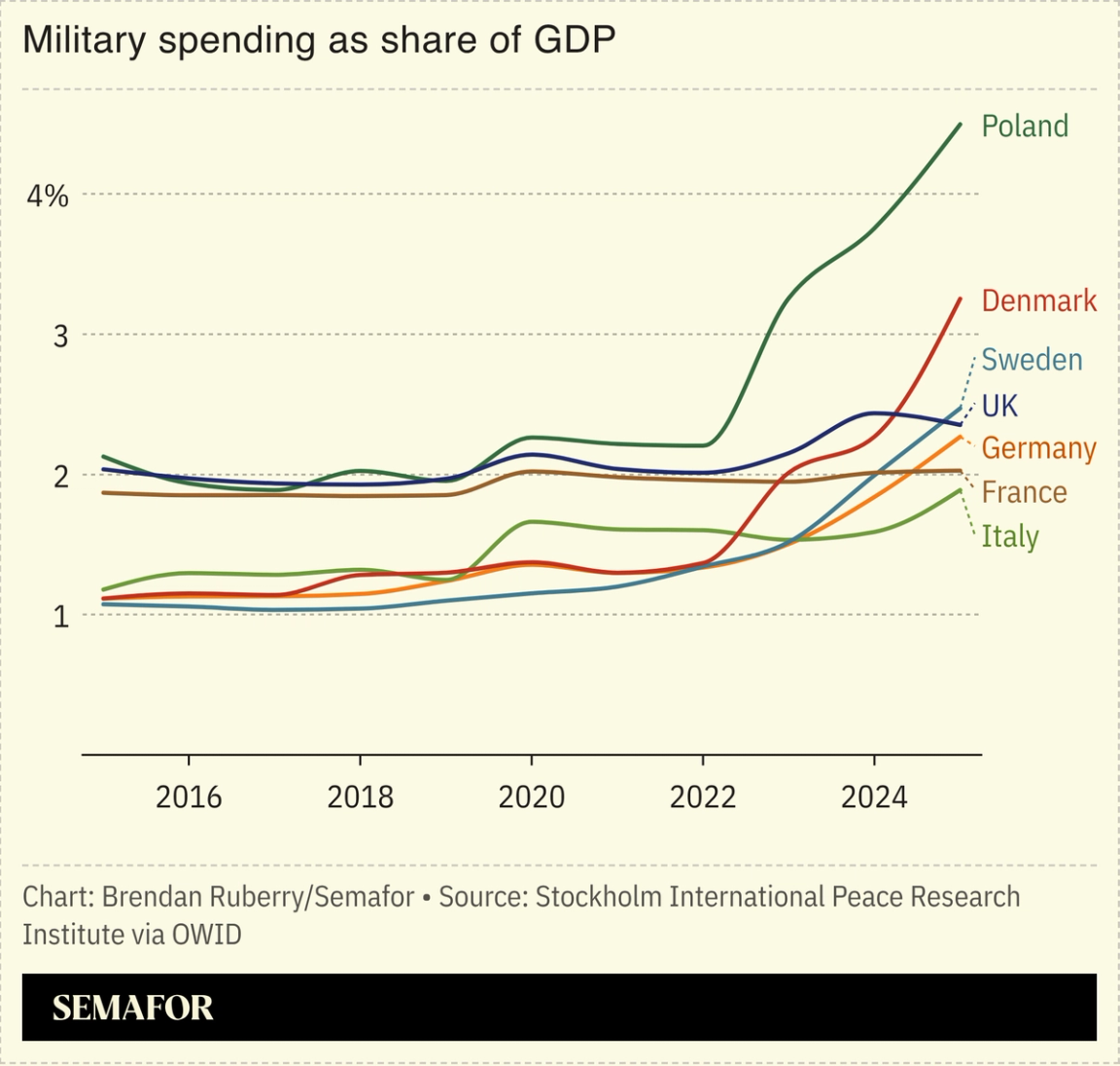 Europe remains reliant on China and the US for critical military components even as it projects confidence in shouldering its own defense. Brussels is allowing Ukraine to spend EU funds on Chinese drone parts, the Financial Times reported, underscoring “the gaps that remain in the EU’s domestic defense production.” And Germany’s air force chief said the country will need to keep buying weapons like fighter jets from the US amid Russian aggression. “Developing our own capabilities takes time. Right now, we do not have time,” he told Politico. Europe’s defense sovereignty push, spurred by Washington’s retreat as the continent’s security guarantor, has hit several hurdles in recent months, including the demise of a joint German-French fighter jet project. |
|
US grapples with rise of Chinese AI |
 Evelyn Hockstein/Reuters Evelyn Hockstein/ReutersThe ascendance of Chinese open-source AI poses an economic threat to the US, Palantir’s chief technology officer said, joining a chorus of American executives sounding the alarm on Beijing’s growing AI clout. Chinese AI companies have been accused of ripping off the top American models through a process known as distillation, and US government officials “have limited tools to prevent the practice,” Semafor’s tech editor wrote. While the US could attempt to stop American companies from using cheap Chinese open-source models by citing national security concerns, Washington should instead invest in building domestic alternatives, a Bloomberg columnist argued. That strategy could also help counter China’s efforts to present its tech “as a gift to the world,” The Economist wrote. |
|
Chinese chip giant’s growing ambitions |
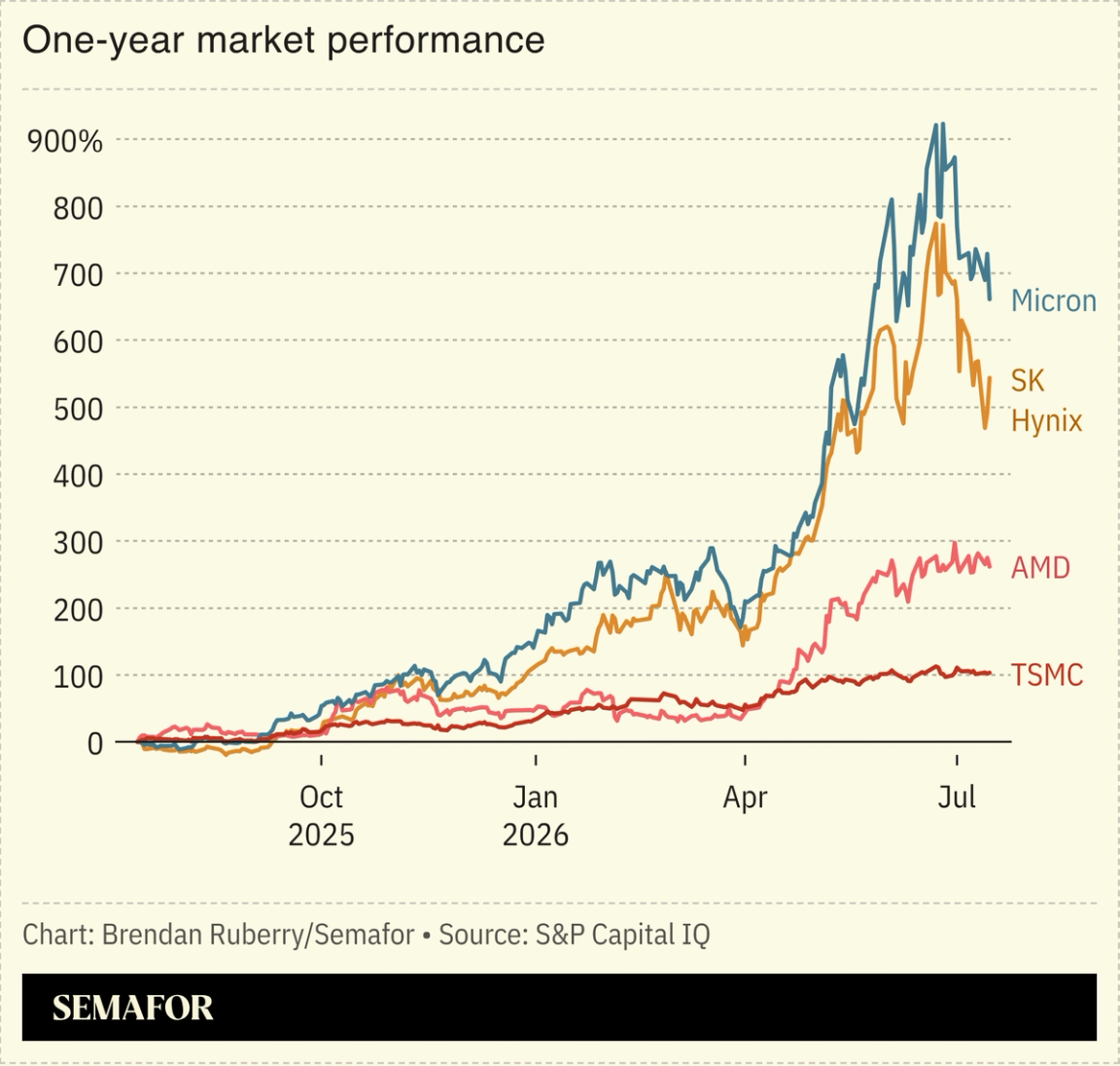 A Chinese chip giant is poised to go public in Asia’s largest market debut of the year, as it benefits from intense demand for memory. CXMT, which nearly doubled the fundraising target for its Shanghai offering, is increasingly central to Beijing’s efforts to achieve technological self-sufficiency. The chip industry also provides an economic boost to an otherwise sluggish Chinese economy. “CXMT encapsulates many of China’s technology ambitions in a single company,” a tech expert said. Investors and governments around the world are heavily investing in the chip sector: South Korea’s SK Hynix raised $26.5 billion in its US debut last week, and India’s government approved $13 billion to support its domestic semiconductor sector. |
|
Hyundai strike over humanoids |
 Hyundai humanoid robot. John Sibley/Reuters Hyundai humanoid robot. John Sibley/ReutersHyundai workers in South Korea began a partial strike this week after the company unveiled plans to introduce humanoid robots on the factory floor. The work stoppage is the first in the global car industry’s history addressing humanoids, The Wall Street Journal wrote; the company and union are also at an impasse over wage increases and performance bonuses. Automakers around the world, including BMW and General Motors, are experimenting with putting humanoids in their manufacturing facilities. The strike at Hyundai, which owns US-based robot-maker Boston Dynamics, could preview the labor pushback car companies may face as they deepen their automation push. |
|
US officers’ phones targeted in Gulf |
 Karim Sahib/Reuters Karim Sahib/ReutersUS military personnel in the Gulf were targeted using their smartphones, the Financial Times reported. Cyberattacks on mobile networks allowed adversaries — likely Iran or its allies — to seek the locations of specific phones. Tehran is also suspected of using commercial ad-targeting software to identify hotels housing US government staff. Smartphones are often security weak points: This year, the location of a French aircraft carrier was identified by an officer’s Strava activity; in 2024, the app let Le Monde trace the movements of world leaders like Joe Biden, Emmanuel Macron, and Vladimir Putin through their bodyguards’ accounts. And a pub-rating app called Untappd inadvertently exposed the whereabouts of US and UK officers in 2020, when revelers checked into venues near military bases. |
|
Argentina returns to World Cup final |
 Paul Childs/Reuters Paul Childs/ReutersArgentina will face Spain in the FIFA men’s World Cup final on Sunday, after the defending champions beat England 2-1 in a testy showdown on Wednesday. The match spotlighted a bitter, decadeslong rivalry between two teams that hadn’t played each other in 21 years. The feud centers around the 1986 quarterfinal in which Argentina’s Diego Maradona scored the illegal “Hand of God” goal that went unnoticed by the referee. Other controversial clashes included a 1998 knockout match in which English star David Beckham received a red card. Geopolitical tensions also loomed over the game: Argentina and the UK warred over the Falkland Islands in 1982. Argentina’s vice president this week described England as “invaders” and “usurping pirates.” |
|
EU’s population to peak in 2029 |
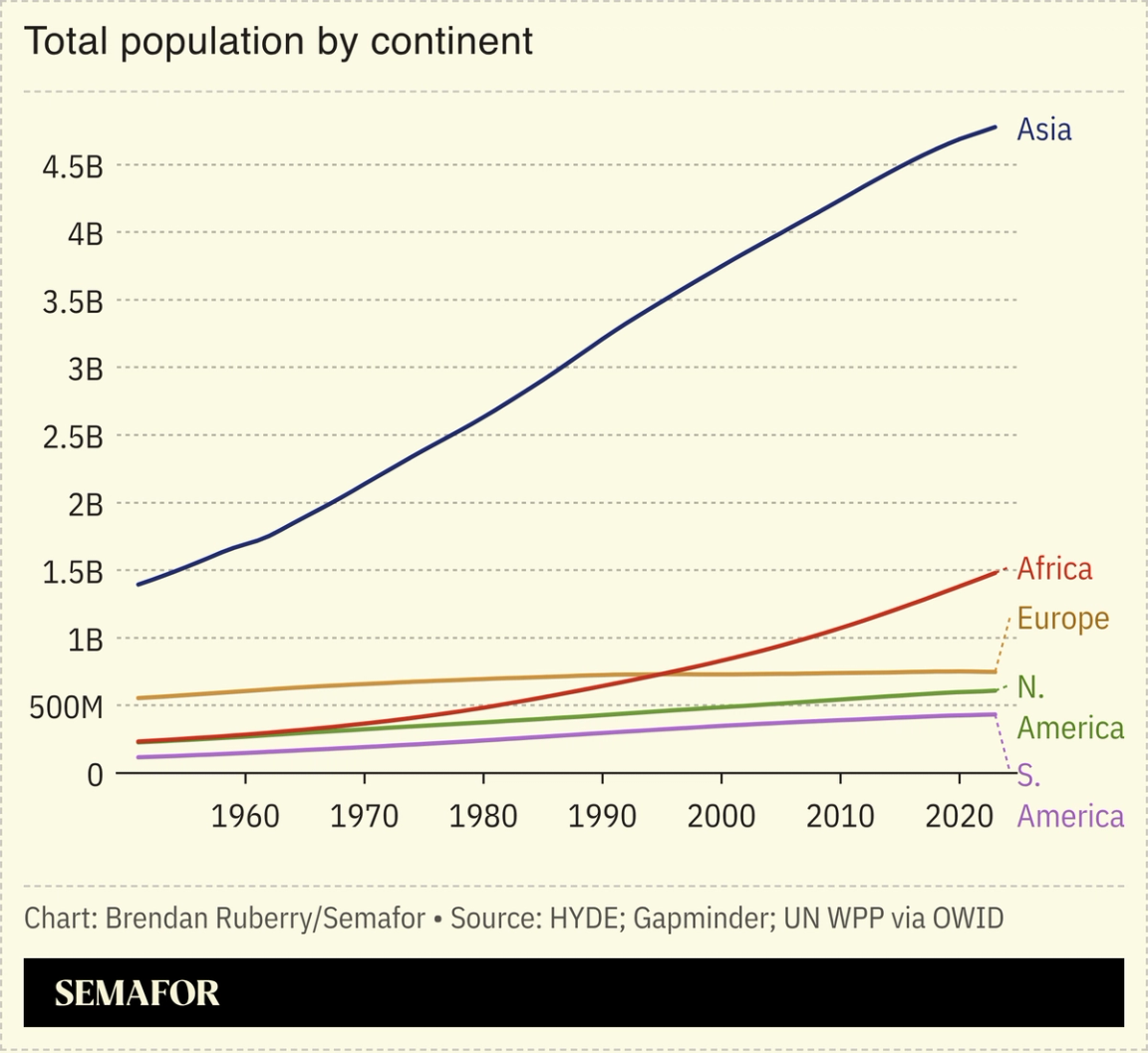 The EU’s population will peak in 2029 and will be 53 million smaller by the end of the century, a European Commission report found. Italy and Poland in particular will see huge drops, but 18 of 27 member states will experience population decline. Even in those countries projected to maintain or grow their numbers, the only reason is inward migration. The language hints at the Commission’s changing attitude toward migration, with the report saying inward flows can only slow, not reverse, demographic decline, and the commissioner in charge calling migration “a challenge, but also a necessity.” “This Commission is clearly struggling to say anything positive about the arrival of foreigners in the Union,” La Matinale Européenne argued. |
|
Mars rover completes marathon |
 NASA/JPL-Caltech/MSSS/Handout via Reuters NASA/JPL-Caltech/MSSS/Handout via ReutersThe Perseverance rover completed a marathon on Mars. The NASA robot’s time over 26.2 miles, five years four months, will not trouble Sabastian Sawe, who recently ran the first official sub-two-hour marathon. But it is nonetheless a record: The previous fastest Mars marathon was Opportunity’s, at 11 years. Perseverance is quicker because it can drive while thinking. Opportunity and other older rovers like Curiosity had to stop to assess their surroundings before deciding each next move. Perseverance has faster cameras and a dedicated second computer, allowing it to plan in motion. Both machines still need humans to plan each day’s overall journey, and radio signals take up to 40 minutes to make the round trip. |
|
|


