| | Trump risks an Iran ‘forever war,’ China’s rare-earth export curbs threaten a $6.5 trillion blow to ͏ ͏ ͏ ͏ ͏ ͏ |
| |  Rio de Janeiro Rio de Janeiro |  Mexico City Mexico City | Kyiv |
 | Flagship |  |
| |
|
The World Today | 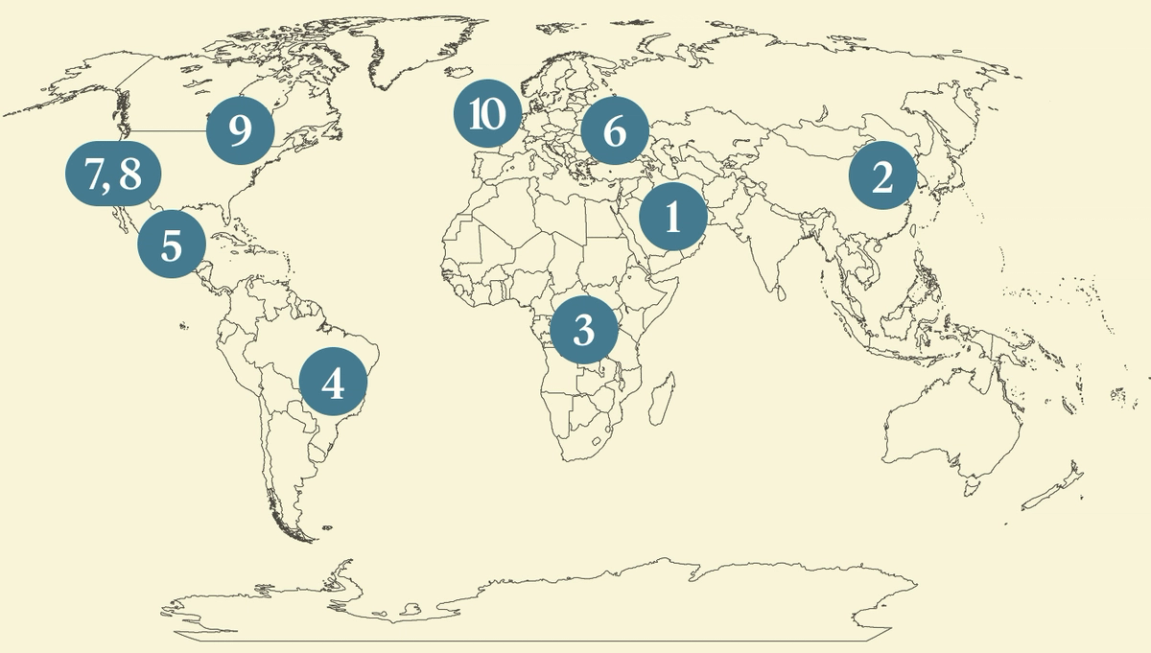 - US risks Iran ‘forever war’
- China’s rare earth curbs
- Ebola hits DRC economy
- US imposes Brazil tariffs
- Sheinbaum in US cartel row
- Zelenskyy fires minister
- US startup’s open-source AI
- Threats to AI executives
- Heatwaves cause wildfires
- UK’s ‘Temu Range Rover’
 The 75th anniversary of the ‘purest of the Great American Novels.’
|
|
Hopes fade for US-Iran ceasefire |
 Francis Mascarenhas/Reuters Francis Mascarenhas/ReutersThe US and Iran exchanged a new wave of attacks, quashing any hopes of a rapid end to the conflict. Washington struck a tanker and targets in northern Iran, while Tehran fired on US military facilities in Bahrain, Kuwait, and Jordan. US President Donald Trump claimed the Strait of Hormuz was open, but the renewed exchanges have largely shut the waterway, and analysts told The Wall Street Journal that keeping control would require either risky naval escorts or a major land invasion of Iran. Trump risks a “forever war” comparable to those in Afghanistan, Iraq, and Vietnam, a security expert wrote in The New York Times, because he overestimated his ability to turn military might into “political and diplomatic success.” |
|
China rare earth curbs risk $6.5T |
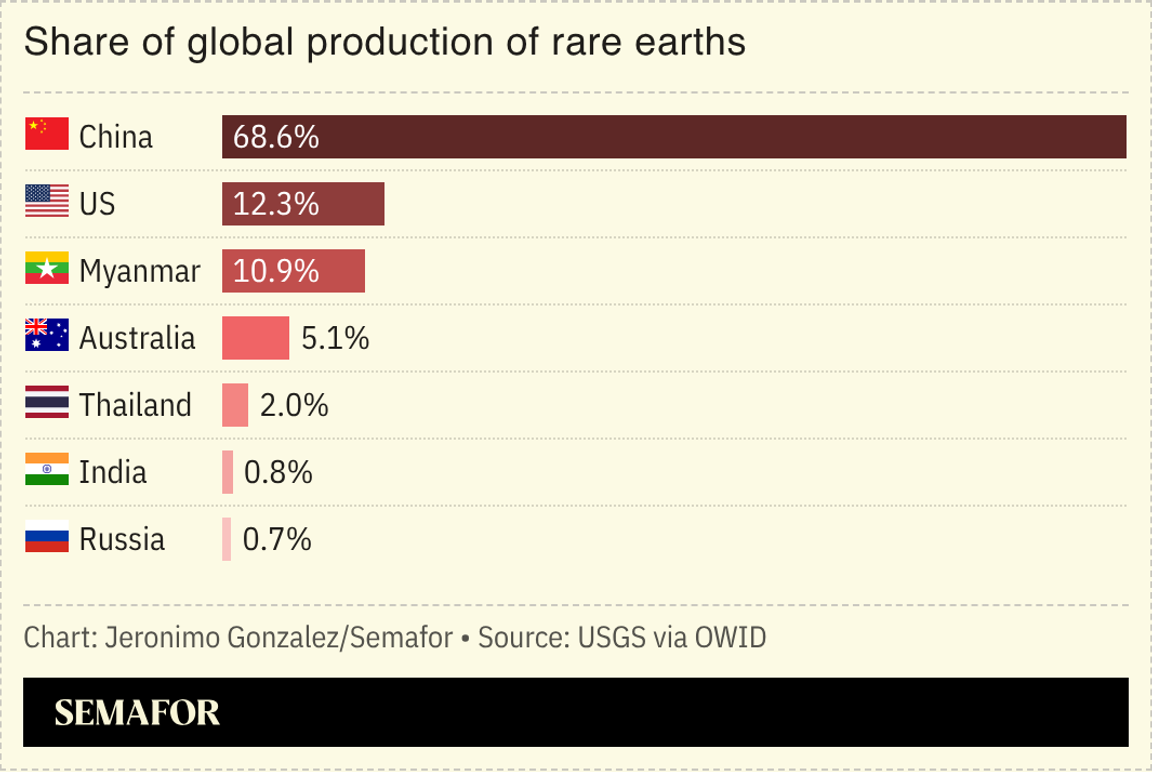 China’s planned restrictions on rare earth exports could put $6.5 trillion in downstream production at risk, the International Energy Agency said, underscoring Beijing’s chokehold over an industry critical to the global economy. Last October, China decided to expand export controls in response to tariffs imposed by Washington, though Beijing later postponed implementation by a year. While the US and other Western countries have vowed to reduce their reliance on China’s rare earths, experts say the shift could take years to play out. “China built its leverage by making the world believe it was the sole supplier,” a senior White House economic advisor wrote. “America’s task is to work with our free-world allies to make sure there is an alternative.” |
|
DRC minerals deal in danger |
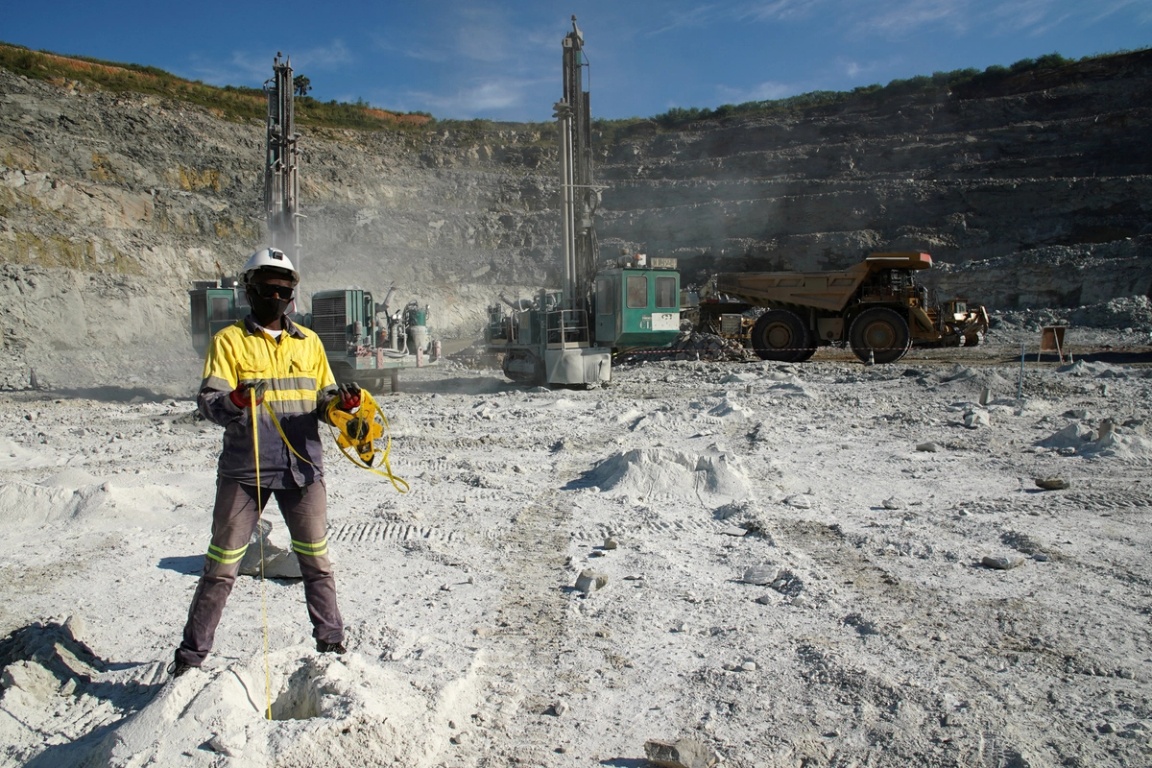 Discussions about a critical minerals deal between the US and the Democratic Republic of Congo are being upended by the African country’s Ebola outbreak, threatening a potential economic bonanza in one of the world’s poorest countries. Washington has accelerated its push for control of the DRC’s critical minerals — including nearly all the world’s reserves of coltan, a key component in electronics — as regional competition with China heats up. However, the recent Ebola outbreak, which threatens to become the worst ever, has delayed progress, with the US recently imposing a 21-day quarantine on all Americans returning from the DRC. The outbreak also threatens to paralyze parts of the DRC’s economy, dealing a further blow to the war-torn country. |
|
US slaps 25% tariffs on Brazil |
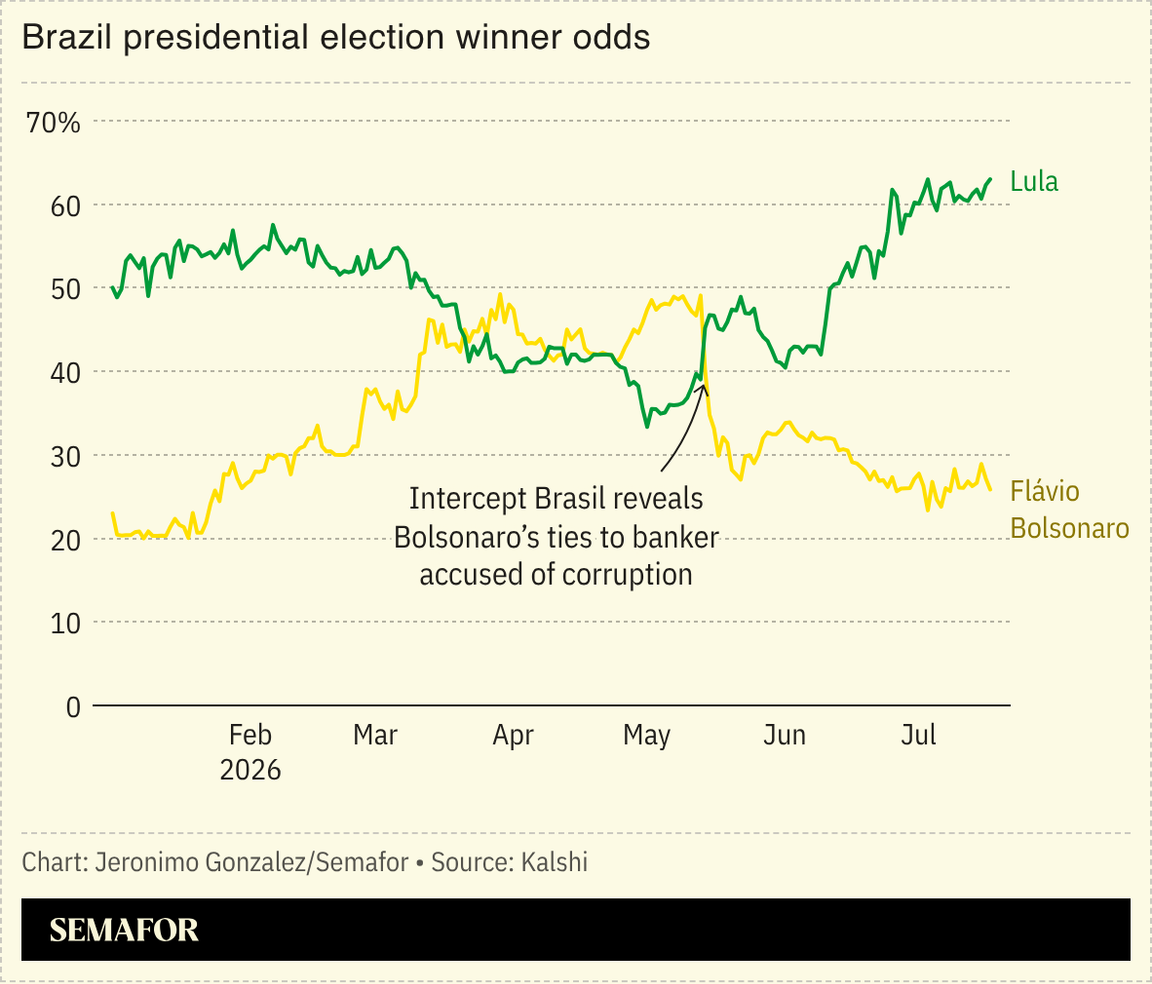 The US imposed 25% tariffs on some Brazilian imports over alleged “unfair” practices, a decision that could upend the South American country’s economy and politics. President Donald Trump has repeatedly threatened to impose tariffs on Brazil — even though it is one of the few Latin American countries with which the US has a trade surplus — in response to what he said is the unfair prosecution of the former Brazilian president and his close ally, Jair Bolsonaro. However, the US tariffs may weaken the standing of Bolsonaro’s son, who is running in October’s presidential election: The last time Trump imposed levies on South America’s biggest economy, support for leftist incumbent Luiz Inácio Lula da Silva increased. |
|
Mexico rejects US cartel claims |
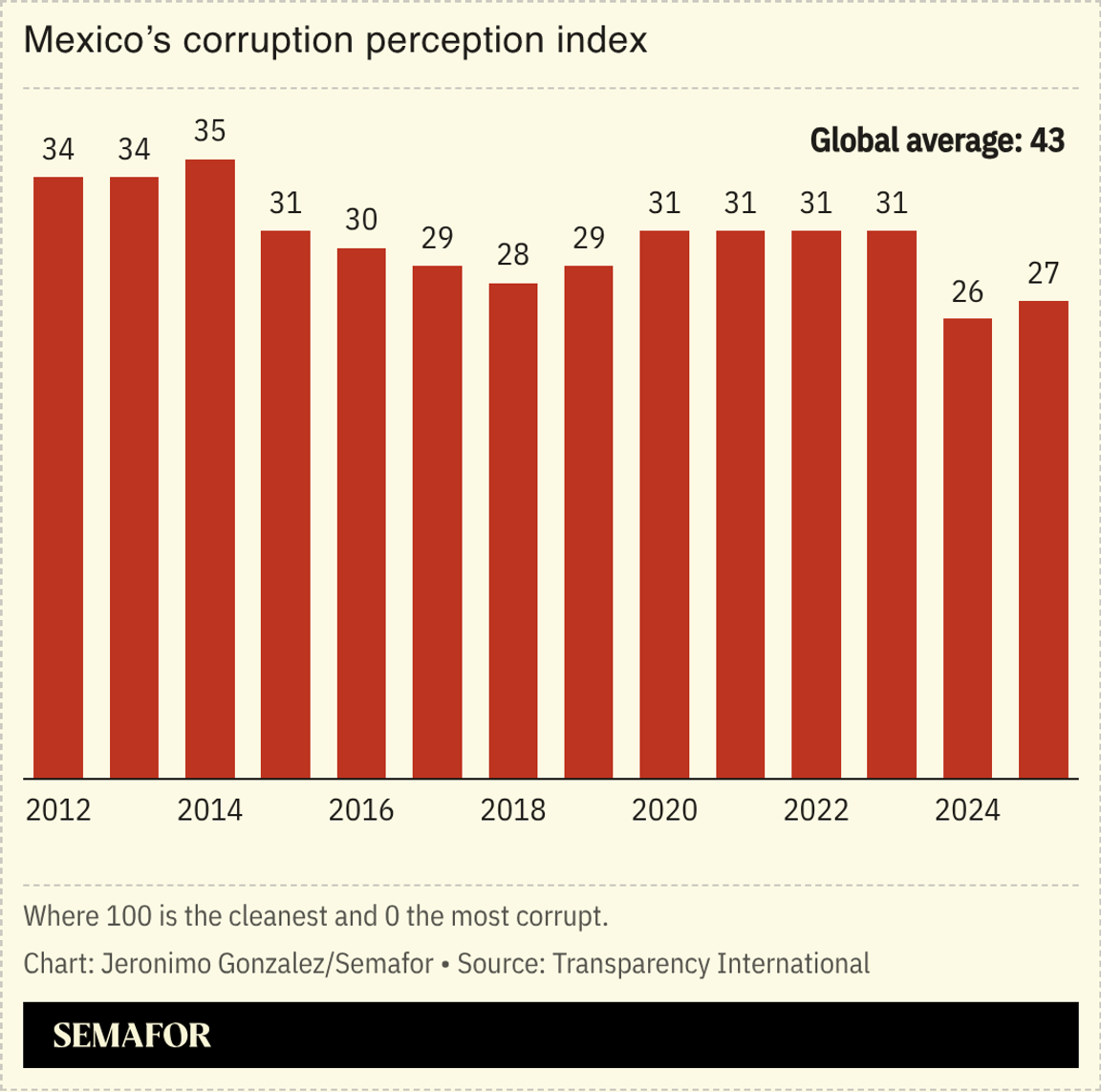 Mexico’s president rejected allegations from the head of the US Drug Enforcement Administration that there is a “deadly connection” between her government and cartels, the latest escalation in bilateral tensions. Washington has in recent months pressured Claudia Sheinbaum to extradite senior Mexican officials it says have ties to organized crime: The Department of Justice accused a governor belonging to her Morena party of protecting the infamous Sinaloa Cartel in exchange for political support. But Sheinbaum has resisted those calls — despite bilateral agreements requiring extradition — drawing threats of tariffs and military intervention from US President Donald Trump. Though both could cause long-lasting damage to relations between the neighbors, “Trump just doesn’t care,” a prominent expert told ProPublica. |
|
Ukraine drops defense minister |
 Demonstrators in Ukraine protesting against Fedorov’s dismissal. Thomas Peter/Reuters Demonstrators in Ukraine protesting against Fedorov’s dismissal. Thomas Peter/ReutersUkrainian President Volodymyr Zelenskyy dismissed a popular defense minister, leading to public protests. Mykhailo Fedorov had only been in post for six months, but was credited with convincing SpaceX to block the Russian military’s access to Starlink, causing chaos for Kremlin forces, and with pushing the successful strategy of using drones to attack logistical targets behind the front line. Still, Fedorov was not universally admired: Critics said he didn’t adequately reform mobilization — manpower is still Kyiv’s biggest constraint — while his reforms also put him in conflict with senior generals. His removal, part of a wider reshuffle, suggests Zelenskyy is choosing the military establishment over the technocratic innovator, a risky move when Ukraine’s strength has been its speed of adaptation. |
|
Thinking Machines has an Inkling |
 Thinking Machines Lab CEO Mira Murati. Carlos Barria/Reuters Thinking Machines Lab CEO Mira Murati. Carlos Barria/ReutersThinking Machines Lab, the AI startup founded by former OpenAI executive Mira Murati, launched its first model. “Inkling” is open-source — unusual among US models — and uses architecture and training data drawn from Chinese rivals. Thinking Machines raised eyebrows last year when it held a $2 billion funding round, despite having no product or revenue; Inkling, meanwhile, remains less powerful than leading US and Chinese models. The news comes as Washington threatens intervention due to concerns about the rise of powerful Chinese open-source AI. None of the US proposals “address the true problem,” Semafor’s Reed Albergotti noted: Chinese firms using US-made frontier AI models to train their systems, employing illicit methods known as distillation attacks, despite efforts to stop them. |
|
 An antidote to doomscrolling. When was the last time the news made you feel hopeful? Nice News can do that for you — every single day. The free newsletter covers interesting, uplifting stories that prove there’s more good out there than we think. Start reading for free. |
|
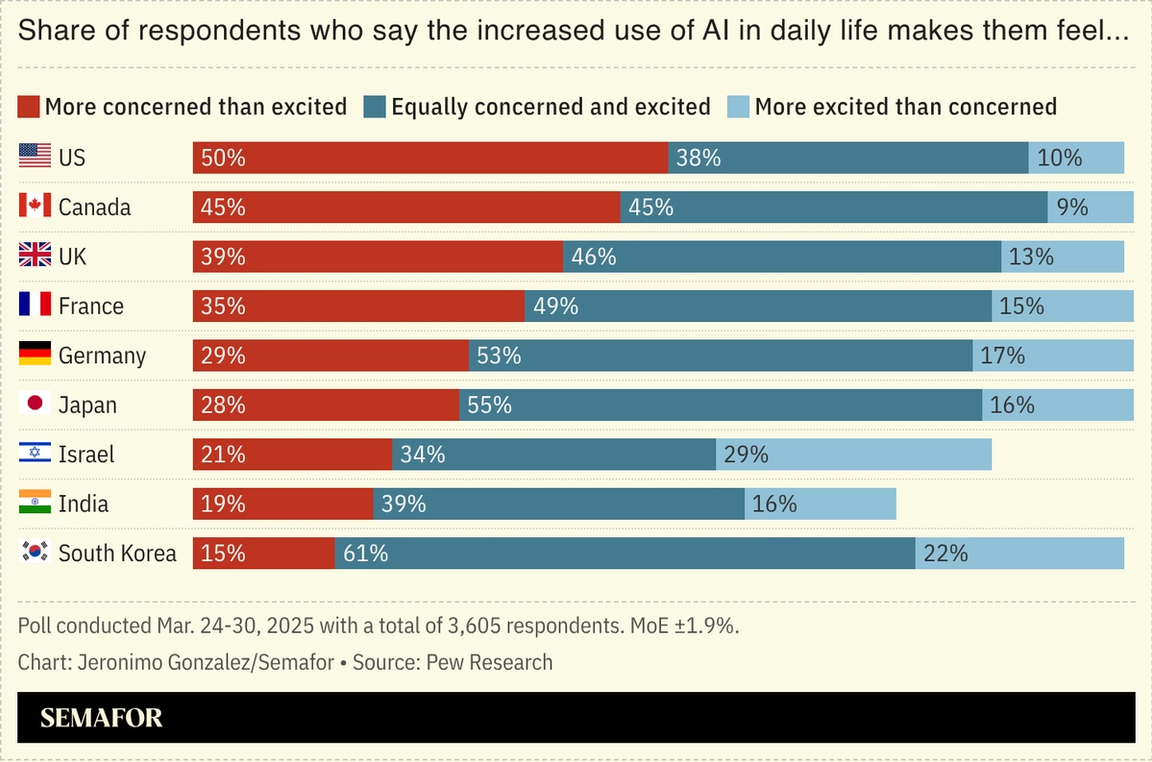 The AI backlash has led to a series of threats and attacks against tech leaders. San Francisco police have responded to several threats against employees of Anthropic and OpenAI, The Wall Street Journal reported, and a man attempted to firebomb CEO Sam Altman’s house in April. Some executives have begun travelling with armed guards. AI’s potential impact on jobs is one reason — Palantir’s CEO said recently that if “your job is going to disappear… people go for the pitchfork.” The vast data center buildout is also stoking concerns over its impact on electricity prices and (sometimes overstated) fears about water consumption. New York recently banned new construction, and 71% of US citizens polled oppose data centers in their communities. |
|
Smoke engulfs Canada and US |
 Smoke over Toronto. Carlos Osorio/Reuters Smoke over Toronto. Carlos Osorio/ReutersHuge wildfires have shrouded much of Canada and the northern US in smoke. Nearly 3,500 fires have burned more than 4.8 million acres of southeastern Canada this summer. Though the fires have not reached the levels of 2023 — the worst wildfire season on record — a heat dome has trapped the polluted air in place, bringing warnings of poor air quality to around 100 million people. The US, UK, and continental Europe have all recently experienced repeated heatwaves and record-breaking temperatures caused by an unusual number of heat domes: areas of high pressure that block clouds and rain. The heat has led to dangerous wildfires in France and Spain, with a high risk of more spreading across Western Europe. |
|
< |


