What matters in U.S. and global markets today.

Start the day with Reuters on the stories moving U.S. and global markets. Subscribe for $1/week.


Morning Bid U.S.

Morning Bid U.S.

A Reuters Open Interest newsletter

What matters in U.S. and global markets today


By Mike Dolan, Editor-at-Large, Finance & Markets

Another day, another test for chip stocks. While Taiwan’s TSMC delivered a blockbuster earnings beat, Asian equities still slid. Meanwhile, the U.S. inflation picture remains highly uncertain, as investors weigh softer data with the escalating violence in the Middle East.

I'll get into that and more below.

But first, check out my latest column on Federal Reserve officials’ flip-flops and why Chair Kevin Warsh may be right to call for less chatter.

And listen to the latest episode of the Morning Bid daily podcast. Subscribe to hear Reuters journalists discuss the biggest news in markets and finance seven days a week.


Data refreshes every time you open this email. For more U.S. market news, click here. Please send any feedback to morningbid@thomsonreuters.com.


Today's Market Minute

  • Recent waves of U.S. strikes on Iran aimed at forcing open the Strait of Hormuz are also targeting Iranian military capabilities the U.S. would want to destroy before executing more complex operations against ‌Iran, three U.S. officials said.
  • Uber on Thursday launched a public takeover offer for Delivery Hero that values the German food delivery company at $14.8 billion and ‌would create the world's largest food-delivery firm outside China.
  • The dip in SpaceX's shares below its blockbuster IPO price of $135 a share is an ominous sign ‌for Elon Musk's internet and rocket company as it faces more potential volatility in early August, when the number of shares available for trading on the Nasdaq stands to increase significantly.
  • China caught the oil industry by surprise during the Iran war, pulling powerful levers to shield itself from the biggest energy shock in decades. In the process, it established itself as a new force in global energy markets – an independent, opaque, massive power, argues ROI Energy Columnist Ron Bousso.
  • Europe's energy traders have spent recent weeks glued to maps of the Gulf. They should also be watching the Rhine. Check out the latest column from ROI Energy Transition Columnist Gavin Maguire.
 

Damp Squib

While the sharp shakeout in semiconductor stocks continues, Taiwan’s TSMC may just steady the chips as the world’s largest contract chipmaker reported another blowout quarter with a forecast-beating 77% surge in profits.

The bar is high, however, as Europe’s ASML found out on Wednesday when it posted a similar beat and still saw its stock end the day in the red. South Korea’s high-flyers also tumbled again, as the central bank there lifted interest rates to steady the won and as regulators cracked down on new listings of leveraged funds on single stocks that have helped to fuel volatile trading.

IPO fever cooled too as SpaceX’s stock retreated back below its offer price for the first time since the blockbuster listing last month.

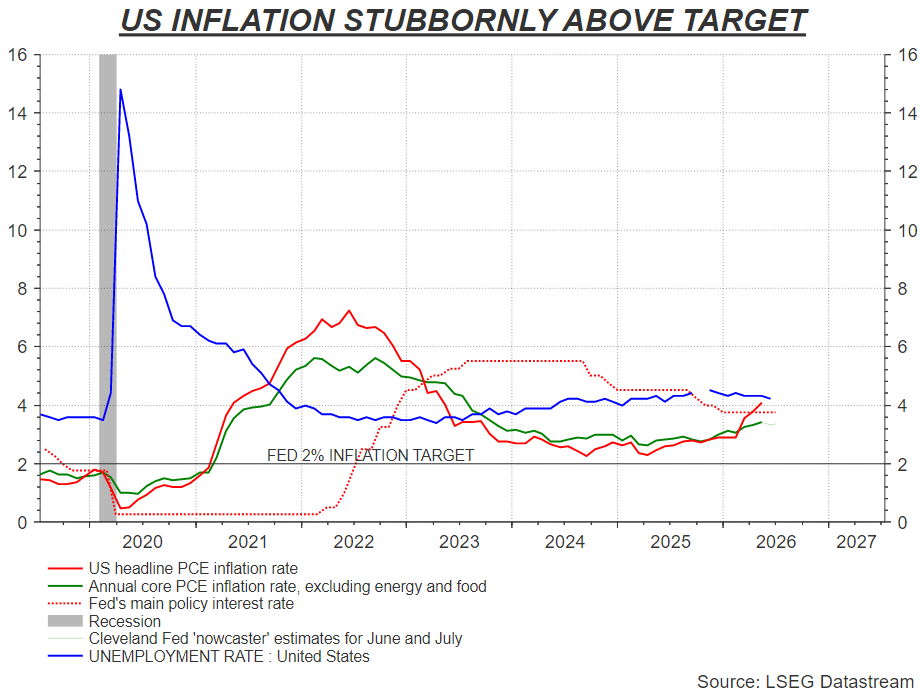
Stock sector rotation, however, saw the S&P 500 eke out another small gain on Wednesday, and the mood was better in bond markets as another June inflation readout - this time the U.S. Producer Prices Index - came in much softer than expected, helping to remove speculation of a Fed rate hike this month from futures pricing.

Still, the reheated Iran war in July may mean that inflation relief is fleeting as world oil prices are back well above $80 per barrel. What’s more, the Fed’s favored core PCE inflation gauge is still tracking annual rates of over 3% for June and July.

Elsewhere, sterling was buoyant, hitting its highest in over a year against the euro on Wednesday amid reports that the relatively conservative Labour Party Home Secretary Shabana Mahmood was the favourite to be the new UK finance minister.

With that, onto today's column.


Fed flip-flops make case for less talk

Federal Reserve chief Kevin Warsh's push to scrap forward guidance is gaining traction at the central bank. Curbing the stream of Fed commentary may benefit everyone, given the erratic U-turns by many senior officials over the past year.

The apparent lack of conviction among many of the Fed's top officials is unnerving. It also risks focusing attention on individual personalities, if not their politics, rather than the hard-nosed data they all claim to live and die by. If such swings on the economy and inflation are part of what Warsh calls a "family fight" over decision-making, it may be best to keep them behind closed doors.


Graphics are produced by Reuters.

Read the full column