Hi there,
The term limbo has two main usages. One is the sketchily defined border place in Catholic theology between heaven and hell; the other is a Caribbean dance that requires the participant to pass forwards under a progressively lower bar.
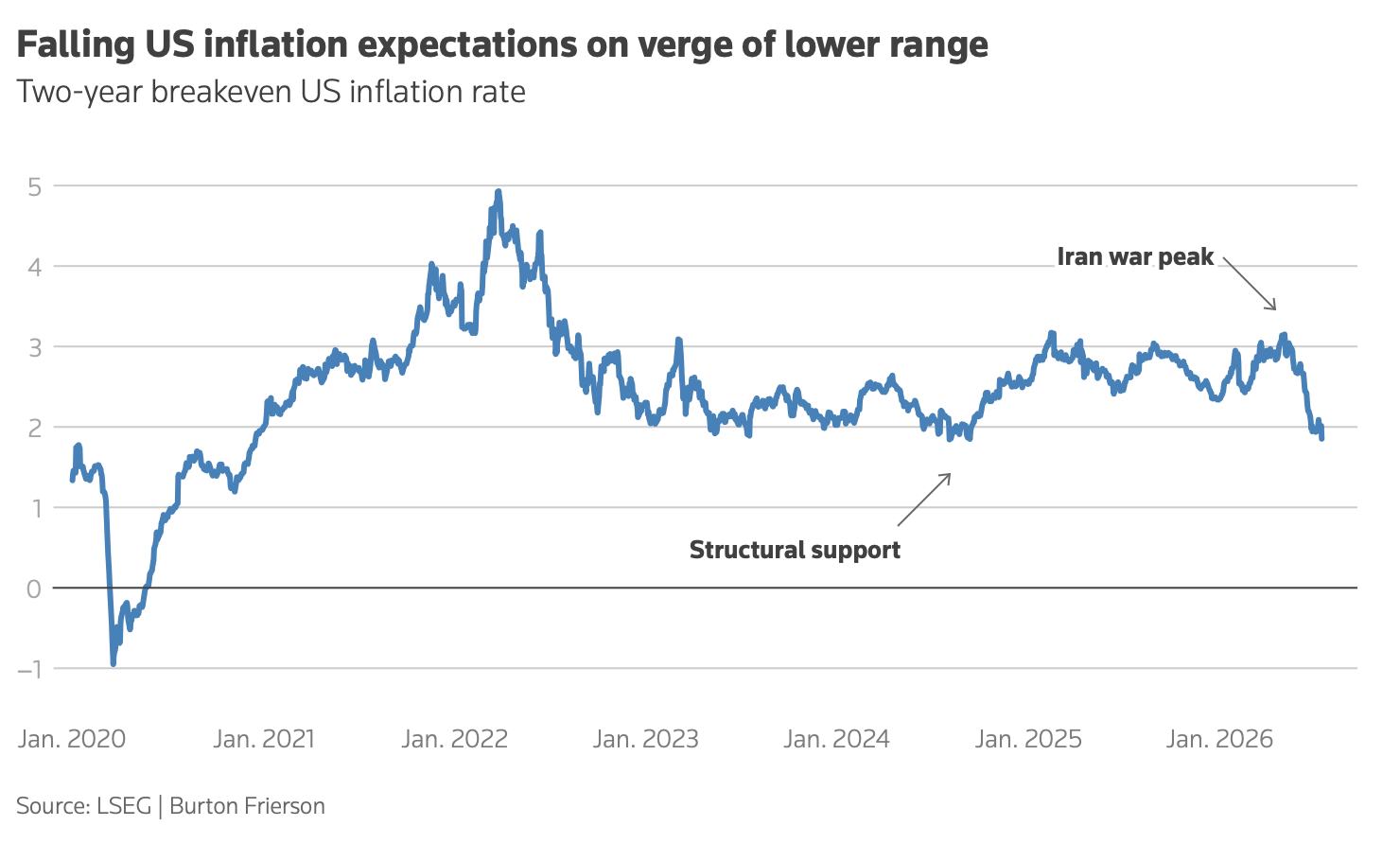
Together, the two meanings describe both the uncertain state of global inflation right now and the limited room for maneuver available to the world's top central banks as they set policy in meetings over the next two weeks.
The main issue is, of course, the continued blockage of the Strait of Hormuz after the collapse of the truce between the United States and Iran and what that does to the price of oil.
The surprisingly moderate U.S. inflation numbers for June — when the truce was still just about holding — may well give the Federal Reserve just enough leeway not to hike rates when it meets on July 28-29.
But pressure to act at some point remains. Inflation at 3.5% is still well above the Fed's official 2% target and gasoline prices are again close to the $4-a-gallon level that is a price point of financial pain for many U.S. motorists. New Fed chair Kevin Warsh insisted this was no "mission accomplished" and markets are still betting on at least one hike by year-end.
Yet one curious feature of the Hormuz standoff — which has left one-fifth of the world's oil and LNG stranded — is why energy prices aren't higher.
Brent crude this week is trading around $86 a barrel. That's well below the $110-plus highs hit in May and even below the $90 level the European Central Bank is using for its "baseline" for judging the conflict's impact on the euro zoneeconomy (for reference, a more "adverse" scenario is based on oil going up to $119 and a "severe" one on $145).
This is one reason why, ahead of next Thursday's policy meeting, a couple of ECB rate-setters were able to say they were still seeing no obvious ripple effects on prices through the wider economy. That suggests that, after raising rates in June, a second ECB move may not come in July.
Likewise, Bank of England Governor Andrew Bailey, while expressing concern about the collapse of the Iran truce, said this week he was seeing no big impact on the inflation outlook and put risks at the lower end of the bank's three scenarios ahead of its July 30 meeting.
It's true that in Japan, fears of an unaccustomed bout of higher prices are growing. With inflation at around 1.5%, the Bank of Japan is likely to hold rates on the same day, even as it insists it will remain on the lookout for rising pressures.
How long this state of inflation limbo could go on for is anyone's guess.As a parting thought, though, one thing it is doing is deflecting attention from the bigger forces that may shape prices in the longer term.
There are a number of these, ranging from ageing populations through to the impact of artificial intelligence. But with some predicting that the current El Nino weather pattern could prove the strongest on record, climate impacts are worth watching.
One forecaster, London-based Oxford Economics, estimated that this summer's extreme weather will do more to push up food price inflation in the euro zone next year than the Iran war, due to damaged crop yields and their impact on food supply.
Mark