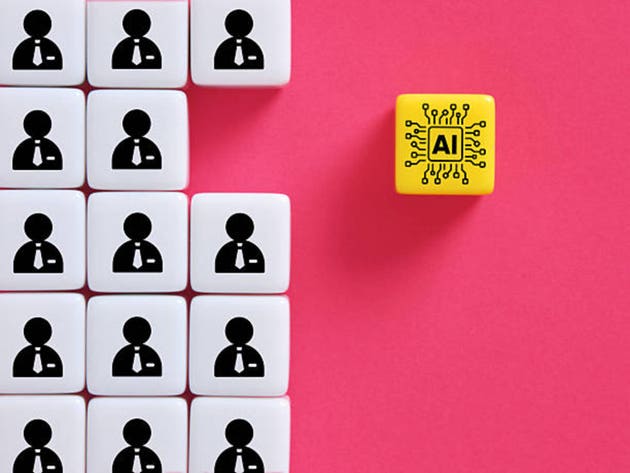
Several U.S. companies are looking to expand their workforce after months of holding back, signaling a potential shift in hiring trends amid the artificial intelligence boom. Even so, companies are still announcing AI-driven layoffs – the latest of which include Amazon (
AMZN), Uber (
UBER) and monday.com (
MNDY).
Dig deeper: AI brought on a wave of layoffs, with U.S. tech firms cutting nearly 140,000 jobs this year. Amazon, Oracle (
ORCL), Meta (
META) and Microsoft (
MSFT) accounted for about 50,000 of these job cuts, according to a
Financial Times analysis. But Keith Waddell, CEO of staffing firm Robert Half (
RHI), noted that AI's impacts on the job market "are playing out to be more benign than some have feared." On an earnings call last week, Waddell said, "hiring demand
continues to improve and market conditions are increasingly more supportive of our business." Booz Allen Hamilton (
BAH) laid off thousands of employees last year as the Trump administration slashed federal contracts. Now, the government contractor is hiring again. "We actually need to accelerate hiring a bit," the company's COO Kristine Anderson said on Friday. "We're a little bit behind right now, some supply constraints, particularly around hiring those with clearances."
Kevin Boone, CFO of railroad company CSX (
CSX), said its train and engine service headcount will increase modestly in the coming months. "We expect to leverage process improvements and technology to absorb attrition in other areas of the business," he added. Alphabet (
GOOGL) CFO Anat Ashkenazi said the company expects to continue hiring in key investment areas such as AI and Cloud. Ford (
F) rehired hundreds of experienced engineers to train younger staff and reprogram AI tools to address quality issues. IBM (
IBM) said it would triple its U.S. entry-level hiring this year. Interestingly, Gartner predicted that up to 30% of roles displaced by AI will be rehired by 2029 – often at a higher cost. "Rehiring expenses, compensation premiums and recruitment costs can collectively exceed the original savings," Gartner stated.
Bigger picture: Fears of an "AI job-mageddon" may be premature. Data from the Texas Manufacturing Survey revealed six consecutive prints indicating a
boost in current hours worked by Texas manufacturers, breaking a previous trend of firms cutting hours. The U.S. average weekly hours for total private employees stood at 34.3, a level that slightly trailed pre-pandemic levels. However, with the upward trajectory seen in the Texas survey — rebounding sharply from negative territory — experts have reason to believe the national average could soon follow suit and head higher. Previous spikes and dips in the Texas metric have closely mirrored shifts in national labor hours. Ultimately, these strong prints suggest that workers are increasing their hours, signaling resilience in the broader U.S. economy despite concerns over AI automation.
Take the WSB survey.