Lumina Foundation is working to increase the share of adults in the U.S. labor force with college degrees or other credentials of value leading to economic prosperity.
The Trump administration is launching a new initiative to reform higher education, with Education Secretary Linda McMahon sending a public letter to university presidents and governing boards. The effort adopts a noticeably less confrontational tone than the previously rejected "Compact for Academic Excellence." The new letter avoids divisive topics, instead asking institutional leaders to describe their commitment to rigorous teaching, research, and national service, and to post these statements “prominently” on their websites before the end of 2026.
Colleges are also asked to provide answers to seven key questions, covering areas like admissions transparency, free speech, intellectual pluralism, affordability, and prioritizing American interests. Some higher education groups, however, say the true intent behind this softer approach—genuine partnership versus political pressure—remains a central question.
A year and a half after President Trump signed the executive order that set the U.S. Department of Education's unraveling in motion, the Senate's education committee pushed back.
Last week, the Health, Education, Labor and Pensions Committee voted 13-9 to advance S. 5046, legislation that would block several of the interagency agreements U.S. Secretary of Education Linda McMahon has used to shift Education Department functions to other federal agencies. Many education advocacy groups are calling the move long overdue.
Low-income students in Colorado will soon be eligible for short-term job training through an expansion of Pell Grants, the federal program that provides need-based aid for higher education.
But it’s unclear whether the new Workforce Pell program will deliver quick access to high-wage, high-demand careers, as its supporters envision. According to recent research, earnings outcomes vary dramatically across Colorado’s job certificate programs, with about one-third failing to produce higher wages than a high school diploma alone four years after graduation.
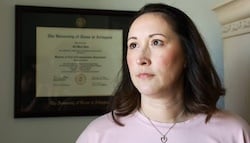
Jill Bold, 43, returned to college in her 30s and graduated from the University of Texas in Arlington in 2022 with a 4.0 GPA. Her degrees led to higher-paying jobs, but health problems and an unpredictable job market kept her from steady employment. If not for her husband's income, Bold says she would have defaulted on her student loans by January 2026.
Others have not been as fortunate. An Associated Press analysis of federal data found that about 19,000 borrowers who attended Tarrant County colleges were at least 90 days behind on their federal student loans as of May—a strain that loan specialists expect to continue as pandemic-era repayment protections unwind.
Suddenly, there's a new market in abandoned campuses, an outgrowth of the accelerating rate of colleges closing in the face of falling enrollment, rising debt, and other challenges. Among the most endangered are small, rural, and religiously affiliated institutions.
But disposing of the real estate is one of the smaller issues facing shuttering campuses and the students they serve. Fewer than half of students at colleges that close continue their educations, according to a study by the State Higher Education Executive Officers Association. Of those who do, only half go on to earn degrees.
State policymakers are quietly rewriting what a bachelor’s degree is, letting community colleges grant them outright, compressing four years into three, and dissolving the line between high school and college altogether.
The moves are separate, disconnected, and rarely discussed as a single trend. But together they amount to a wholesale redesign of the undergraduate degree, who provides it, and a real test of whether American higher education can build more than one model for getting a diploma.