The Weekend

|
Aug 8, 2026
|
|
|
|
| Welcome, Weekenders! In this newsletter: |
| • The Big Read: Sequoia’s new leaders go all out on AI. |
| • Why U.S. robotics startups are stuffing parts from China in their luggage. |
| • Plus, Recommendations—our weekly pop culture picks: “What to Carry, What to Burn,” “The Secret Dinner” and “Arco” |
| |
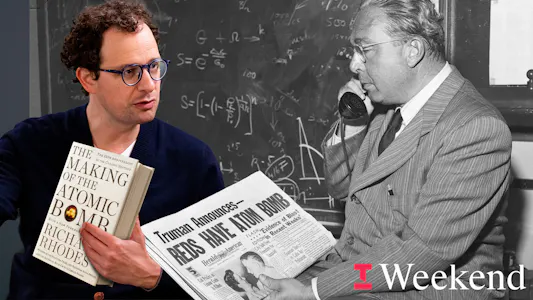
| The West Seattle hillside home of Richard Rhodes, with views overlooking Puget Sound, is a good place to ponder the end of the world. Walk up a series of steps, through the front door and enter Rhodes’ home office, where his Pulitzer Prize hangs. He won it for his 1986 book “The Making of the Atomic Bomb,” a sprawling, 900-page account of the scientific discoveries that led to one of the greatest weapons ever created. |
| I made the trip to Rhodes’ house because his 40-year-old tome has become essential reading for employees at Anthropic and their leader, Dario Amodei, who counts it as one of his favorite books. Amodei has said he identifies with a central character in Rhodes’ book: Leo Szilard, the physicist who first conceived of the nuclear chain reaction and then aggressively advocated to keep it under human control. |
| The Anthropic CEO’s affinity for the historic account isn’t surprising if you read the profile of Amodei that my colleagues and I wrote this week. It traces how Amodei has long grappled with the weight of the technology he was building. He used air-gapped computers, machines disconnected from the internet, to compose early OpenAI memos to prevent remote hacking. |
| He worried about getting kidnapped in China, a U.S. adversary he feared was after key AI research secrets. These days he concerns himself with the security of the data centers that house the clusters of chips training Anthropic’s next frontier-chasing model. He and his sister, Daniela, another Anthropic cofounder, grew up wanting “to save the world together,” Dario has said. |
| Rhodes, 89, has never met Amodei. But he and his wife traveled to downtown San Francisco late last year to speak to Anthropic’s employee book club, which had ordered 100 copies of his book. Rhodes said he gave them a perspective that appears to cut against the “once-in-a-civilization” technology moment that Amodei and employees think they are building. Rhodes, who has also written about the history of technology changes, said he has watched the AI wave with a sense of déjà vu. |
| “The first thing that struck me most of all was what always strikes me with new technologies: the moral panic side. The general sense that this is going to destroy the world. It’s come up every time,” he told me. He went back in history. When 17th century Brits started using coal as fuel for the first time, preachers called it the “devil’s excrement,” he recalled. The rise of the automobile, last century, also stirred protests, he said. |
| “We get a new technology. It has its dark side and its bright side, and we slowly surround it with social, legal, moral, cultural controls until we turn it into a human artifact,” he said. |
| That might not be a stance that Amodei and his employees agree with. Amodei has pegged a 25% chance of AI going “really, really badly” for civilization. A big part of Anthropic’s technological and commercial success stems from the employees’ and Amodei’s deep belief that they are important, historic actors in an existential scientific historical moment. Its sensitive safety culture is an essential part of it. |
| Maybe they’re right, particularly as a series of cybersecurity attacks from AI agents are raising alarm bells recently, and the rest of us will be glad we had such responsible (and newly wealthy) stewards along the way. |
| Rhodes, meanwhile, has a different, perhaps more optimistic perspective. Rhodes is now working on a work of fiction about robots who take over the world, and all that’s left on Earth is a group of children. But the book is a comedy. “The robots are so stupid and the children are so bright,” he said.—Cory Weinberg |
| |
|
| On Monday of this week, Aaron Tilley wrote a colorful story for us that sought to clear up a mystery: Why do so many former Apple employees end up with access to confidential Apple documents after they leave the company? The answer, he reported, is that the company encourages new hires to mingle their personal and workplace digital identities using iCloud. That practice makes it hard for them to expunge all of their Apple files when they leave the company. |
| The story was prescient. In the days that followed its publication, an OpenAI blog post and filing in its legal battle with Apple described the very same iCloud issues at the heart of Aaron’s story. OpenAI argued that those issues, among other things, undermine Apple’s accusations that two of its former employees stole trade secrets when they went to work for OpenAI. |
| “For years, Apple encouraged employees to use personal iCloud accounts for work, intermingling company and personal data, while failing to manage access cleanly across multiple Apple systems when employees departed,” OpenAI wrote in a motion to dismiss Apple’s suit. “Those practices created precisely the confusion and unwanted access issues that Apple now characterizes as intentional misappropriation.” |
| Apple previously told Aaron the iCloud issues had nothing to do with its allegations in the OpenAI case. We’ll see as the case plays out. Meantime, maybe don’t intermingle your work and personal online accounts just to be safe.—Nick Wingfield |
| |
|
| The Big Read |
 |
|
| Since Sequoia Capital’s former leader, Roelof Botha, left the storied venture capital firm late last year, its two new co-leaders, Pat Grady and Alfred Lin, have been on an investing tear. Their goal: Reestablish Sequoia’s top dog status in the AI age in the face of aggressive competitors. |
 |
|
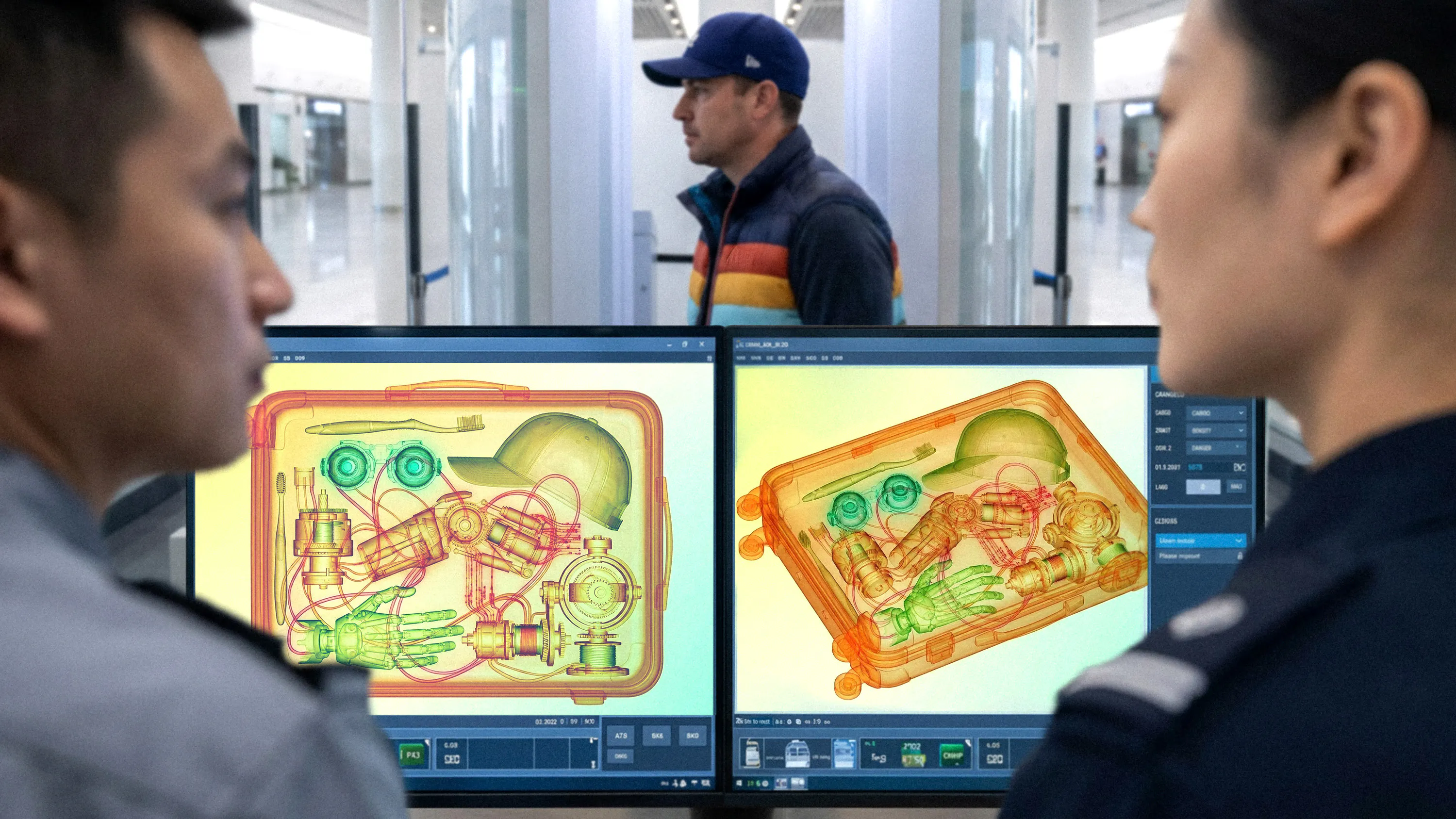
| If you’re a scrappy startup building humanoids or quadruped robots in the U.S., you’ve got little choice but to source parts for your prototypes from China. That’s happening at a time when Chinese-made robots are becoming an increasingly sensitive geopolitical issue for the Trump administration. |
| |
 |
| Listening: “What to Carry, What to Burn” |
| Blair Braverman has enjoyed her fair share of adventures—racing in dog-sledding treks like the Canadian Challenge (300 miles), the Kobuk (440 miles) and in the granddaddy competition of mushing, the Iditarod (1,049 miles). Braverman, a contributor to The New York Times, Outside magazine and other publications, is also pretty good at recounting other people’s adventures, which she does in her new podcast, “What to Carry, What to Burn.” And it is a testament to her innate likability as a storyteller that she does the pod mostly as a solo narrator—just her recounting various tales of perilous, remarkable survival. So far this has included an early 20th century Arctic expedition to Wrangel Island, a trek that involved, truly, an unpaid internship from hell; a 1970s plane crash in the Sierra Nevadas; and the Salvadoran fisherman lost for 13 months in the Pacific Ocean a decade ago, who was later sued for cannibalism (a charge he denied). I appreciated the little details that only a seasoned explorer like Braverman could add to the episodes, like the fact that well-made igloos can indeed get pretty toasty (well past 75 degrees!) and that bear just tastes pretty similar to beef.—Abram Brown |
| Reading: “The Secret Dinner” by Raphael Montes |
As the world’s tenth largest economy, Brazil exports great quantities of soybeans, coffee and sugar. It has also introduced the world to many other wonderful things, like caipirinhas. But there’s something else that the country has largely managed to quietly keep and enjoy to itself: the clever, demented talent of thriller-horror writer Raphael Montes, who has been a mainstay on Brazilian bestseller lists for over a decade but remains a non-entity abroad.
“People have told me that if I were American, I‘d be a millionaire by now—and I just tell them, ‘Yeah, but then I wouldn’t have Carnival,’” Montes told Folha de São Paulo, Brazil’s largest newspaper, last year. “When a Brazilian author gets translated, their defining trait in the eyes of foreigners is usually just being ‘exotic.’ What I would truly love is to be recognized globally simply as a great thriller author—who happens to be Brazilian.” |
| His wish may well come true very soon. The 2016 book that first cemented his fame in Brazil, “The Secret Dinner,” has been translated into English for the first time and debuts in the U.S. on Aug. 18. As a gruesome dark comedy, I do not suggest reading it while eating. |
| The novel’s title refers to a scheme hatched by four broke young men in Rio de Janeiro: catering an ultra-luxe cannibalistic dinner. (It’s “Rope” meets “Sweeney Todd” meets “Chef’s Table.”) Initially, they envision the soiree as a one-off ploy. But as you might expect, they attract a crowd of unsavory types, including a desperate heir of a prominent family who sees the evening as a great opportunity for capitalistic expansion, with himself as the, well—venture investor. Soon, he has strong-armed the boys into running a thriving underground supper club. One of the foursome, Miguel, is a gourmet sous-chef, so he does the cooking. (Where Mrs. Lovett had her pies, Miguel prepares braises, terrines and ossobuco.) The narrator, Dante, an underemployed bookshop clerk with a fondness for weed and Klonopin, takes up maitre d’ duties. The butchering, meanwhile, falls to a chainsaw-wielding girlfriend. |
| In depicting the wealthy of Rio as rapacious man-eaters, Montes makes obvious his distaste for how his country has grasped for prosperous modernity: Brazil, with its enormous economy, has the third largest disparity between rich and poor on the planet. (“Money is all that matters,” the villainous heir says at one point, practically twirling his moustache. “Nobody gives a damn about the rest.”) To Montes’ credit, he manages to make the point and still delivers a taut page-turner, one complete with a twist that hits like a double-strength caipirinha.—A.B. |
| Watching: “Arco” |
| Many films correspond to a specific time of year. Christmas movies abound, and the scaries populate October. “Ferris Bueller’s Day Off”? Back to school. “The Graduate?” End of school. |
| “Arco,” an imaginatively animated feature film from 38-year-old French director Ugo Bienvenu, corresponds to a point on the calendar with increasingly eerie, grim importance: forest fire season, making it a timely watch. (It initially came out last year, caught an Oscar nomination and recently got to Disney+.) The titular character, Arco (voiced by Juliano Krue Valdi in the English dub), is a boy from our far-distant future—the year 2932—where mankind has mastered time travel. It involves Superman-esque flight, with rainbows left in a time-traveler’s wake just as real-life planes emit plumes of white. |
| But Arco hasn’t learned how to fly, and when he impishly steals his older sister’s flying suit, he crashes in our near-distant future—the year 2075. In the accident, he loses the suit’s power source, a diamond-shaped crystal; desperate to find it, he enlists the help of Iris (Romy Fay), a girl around his same age. They are pursued by a trio of stooges, Dougie, Stewie and Frankie (Will Ferrell, Andy Samberg, the musician Flea), who previously witnessed another person traveling via rainbow and want proof that time travelers exist. |
| 2075 is no high-water mark for humanity, and the adventure is made more dire when a forest fire engulfs Iris’ suburban town, and the pair flee along with Iris’ robot au pair, Mikki, who has been raising her in her parents’ absence. In this dystopia, adults do not do remote work—they do remote parenting: With their office in a distant city, Iris’ mother and father check in on her occasionally via hologram. (They’re voiced by Mark Ruffalo and Natalie Portman, and in an inventive touch that seems entirely like something that might actually happen in future robotics, the film uses a digital blend of their voices for Mikki—the nanny bot a combination of father and mother.) |
| “Arco” issues many of the stern environmentalist warnings sounded by Studio Ghibli films, and like a Miyazaki film, the high emotions and dramatic stakes of “Arco” give it a distinctly grown-up register, presenting a prismatic-colored fable that winds to a poignant denouement.—A.B. |
|
|
|
|
| |