| | Houthis claim additional attacks on Saudi Arabia, a new status quo in the Strait of Hormuz, and a po͏ ͏ ͏ ͏ ͏ ͏ |
| |  QUITO QUITO | CLACTON-ON-SEA |  SHENZHEN SHENZHEN |
 | Flagship |  |
| |
|
The World Today | 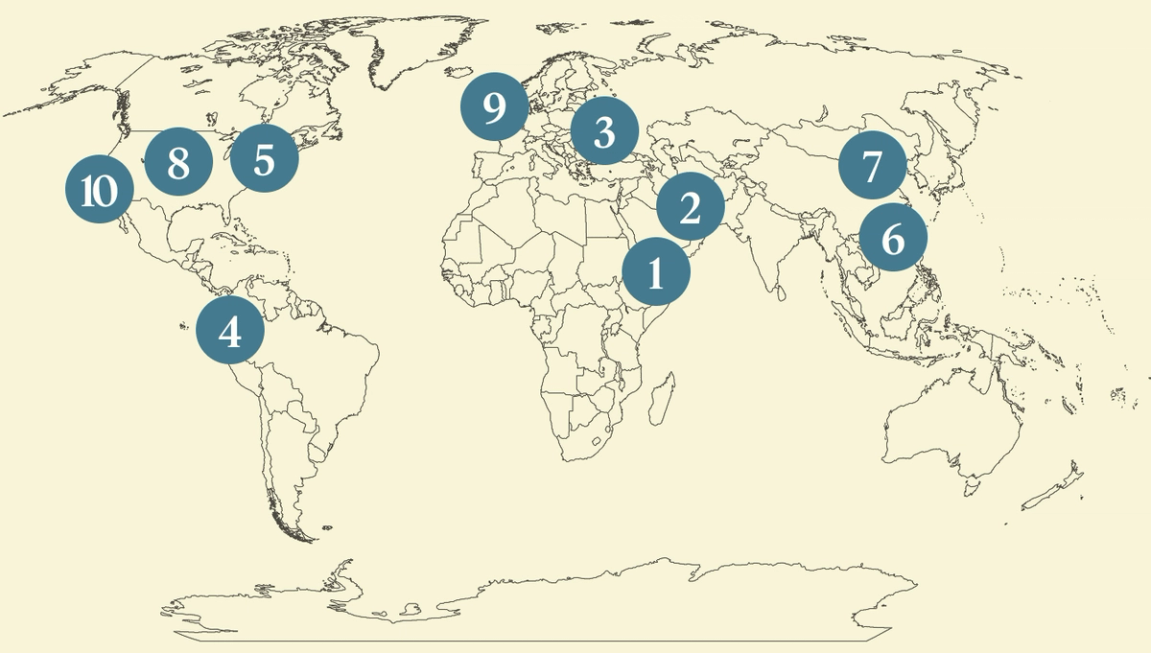 - More Houthi strikes
- Hormuz’s new status quo
- Washington faces drone woes
- LatAm security copycats
- US’ jobless boom
- CXMT tops Tencent
- Chinese AI aims higher
- Renewables spending boost
- Binface, Farage clash
- AI disrupts music
 An ‘achingly poignant’ synth record made during chemotherapy. |
|
Houthis claim strikes on Saudi refinery |
 Khaled Abdullah/Reuters Khaled Abdullah/ReutersYemen’s Houthi rebels claimed new attacks on a Saudi Arabian oil refinery Thursday, as the US-Iran war threatened to expand further. The strikes could impact the kingdom’s efforts to maintain shipping volumes amid ongoing disruptions in the Strait of Hormuz, Bloomberg reported. Riyadh is weighing support for a new ground offensive in Yemen, The Media Line reported, which an already-stretched Washington could be obligated to support. The kingdom hasn’t yet called upon new “Mecca Pact” treaty partners Türkiye and Pakistan for support, and Islamabad has only “offered Riyadh statements of solidarity and no soldiers,” commentator Bobby Ghosh noted. Still, the treaty could herald an end to the “US-led order” in the region, a Council on Foreign Relations expert argued. |
|
 Ambrey/Handout via Reuters Ambrey/Handout via ReutersStrait of Hormuz traffic could already be approaching a third of pre-war totals, a maritime analyst estimated — a new status quo that risks eroding Iran’s leverage in the months-long conflict. There are now about 70 tankers, many Greek- and South Korea-owned, making lucrative “dark” runs hugging the coast of Oman that open the oil flow wider than previously thought; though one, believed to belong to Russia’s “shadow fleet,” has run aground and leaked crude for weeks. Tehran and Washington are locked in a contest of wills over Hormuz, but US President Donald Trump is “the only player with an election looming in which energy prices could become a decisive factor,” Semafor’s climate and energy editor noted. |
|
US develops cheaper drones |
 Pavlo Palamarchuk / SOPA Images via Reuters Pavlo Palamarchuk / SOPA Images via ReutersThe US has lost upwards of 25% of its Reaper drones during the Iran war, The Washington Post reported Thursday, as the conflict taxes diminishing American stockpiles. Costing up to $50 million each, the slow, low-flying drones present easy pickings, and represent something of a bygone era. The Pentagon is now shifting to developing cheap drone swarms, but there’s a learning curve: Ukrainian operators “easily” defeated US forces in exercises earlier this year, The Wall Street Journal reported, as both Ukraine and Russia search for the next battlefield breakthrough. Ukrainian intelligence said that Moscow is making “much faster” progress in standing up a Starlink copycat than anticipated, with 40 satellites in orbit and nearly 300 planned for 2027. |
|
LatAm mimics Bukele’s crackdown without results |
 Leaders across Latin America are trying to emulate El Salvador’s effective, if draconian, crackdown on crime, but experts challenged their capacity to replicate the Central American country’s experience. Salvadoran President Nayib Bukele has overseen a dramatic reduction in murder rates by carrying out mass arrests that have resulted in the detention of 9% of the country’s men aged 25-29. Despite allegations of human rights abuses — including mass trials — leaders across the region have vowed to copy his tactics, with 15 megaprisons in the works. However, El Salvador is among the region’s smallest nations and its crime problem was dominated by street gangs, rather than transnational cartels. “No other country has managed to replicate its results,” InSight Crime reported. |
|
AI ushers in a ‘jobless boom’ |
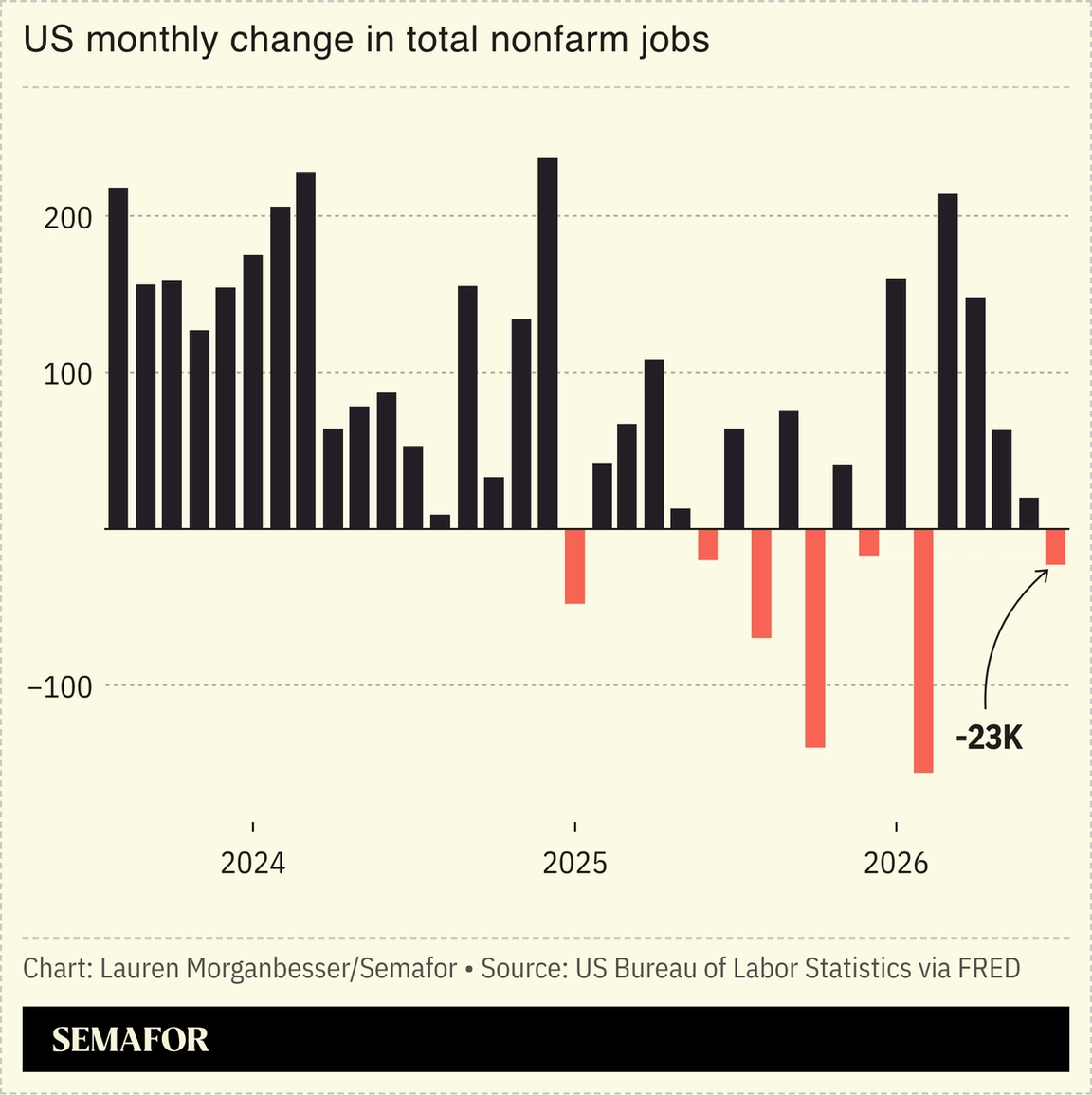 Fears of an AI “jobpocalypse” have bubbled over in recent months even as the US stock market hit record highs. Growth has become detached from hiring: Companies continue to report record profit, but payrolls last month shrank for the fifth time in a year, a juxtaposition The Wall Street Journal’s Greg Ip termed the “jobless boom.” According to payment processing firm ADP, however, AI’s impact on the job market isn’t so much an eradication of jobs as it is a revaluation of individual tasks within roles, meaning the tech stands to transform jobs rather than replace them. Maria Black, the company’s CEO, told Semafor’s Andrew Edgecliffe-Johnson the focus should home in on “upskilling, reskilling, converging, education.” |
|
 Get the world in your inbox with The World This Week. Every Friday, Council on Foreign Relations President Mike Froman analyzes an important foreign policy story from the past week and shares the best news coverage that has crossed his desk. For more than a century, CFR has guided leaders and citizens alike through moments of profound change. Subscribe today. |
|
CXMT becomes China’s most valuable company |
 Maxim Shemetov/Reuters Maxim Shemetov/ReutersChinese chipmaker CXMT overtook Tencent on Thursday to become the country’s most valuable company, as memory makers surf a tidal wave of AI-fueled demand. The changeover occurred after Tencent, itself a CXMT customer, reported it had doubled its quarterly AI spending, worrying investors; Tencent has invested heavily in AI but is challenged by its fellow tech giants and smaller Chinese rivals like Moonshot and DeepSeek. Another large Chinese chipmaker, the partly state-owned SMIC, reported a tripling of annual revenues Thursday, comfortably beating estimates. The Wall Street Journal reported last week that Apple is testing CXMT chips for products sold in China, as consumer electronics makers cast about for alternate sources of the memory supplies being hoovered up by hyperscalers. |
|
Chinese AI sets sights on US firms |
 Go Nakamura/Reuters Go Nakamura/ReutersChina’s AI ecosystem is trying to intensify its push to meet and surpass leading US models. ByteDance is reportedly developing an AI model rivaling Anthropic’s most advanced Mythos system, and DeepSeek is touting its efforts to build a challenger to Claude Code. Meanwhile, as Beijing attempts to erect a firewall around its homegrown tech, some of Manus AI’s former investors bought the Chinese startup back from Meta this week after Chinese regulators’ order to unwind the purchase. Still, China’s policymakers are contending with persistent volatility in high-value tech stocks that’s complicated Beijing’s efforts to ensure a steady upward trend in markets, and a price war among domestic AI firms threatens to snuff out corporate profits. |
|
Renewables could boost consumption |
 Stringer/Reuters Stringer/ReutersIncreasing adoption of solar panels and EVs could unlock a wider pool of consumer spending and usher in broader economic shifts, an economist predicted. The increasing adoption of both technologies requires significant up-front investment, but will result in freeing up the money spent on energy (in the case of solar panels) or potentially a fraction of the outlay (as with EVs in homes that rely on solar power), a total displacement of up to 10% of consumer spending in most economies, HSBC economist James Pomeroy wrote. “As the share of the population that has these products rises, this could unlock discretionary spending” elsewhere, he suggested in a note to clients. “These transitions are likely to be supportive for the economy.” |
|
UK populist faces novelty candidate |
 Toby Melville/Jack Taylor/Reuters Toby Melville/Jack Taylor/ReutersA small British seaside town voted Thursday in a special election between a hard-right populist and a man who wears a trash can on his head. Reform UK leader Nigel Farage resigned to call the by-election after being accused of accepting an unlawful gift, but no major parties ran against him, and one of British politics’ many novelty candidates, Count Binface, is his only noteworthy opponent. It is “an unserious politics for a time of decadence,” an observer wrote in The New York Times; Farage will likely win, but at some cost to his reputation. Adding to Reform’s woes, their recent nationwide poll lead has evaporated, with new Prime Minister Andy Burnham boosting incumbent Labour’s standing. |
|
|


