| | In this edition: Zambia vote-counting suspended, Jumia raises $50 million, and Chinese tech firms be͏ ͏ ͏ ͏ ͏ ͏ |
| |  | Africa |  |
| |
|
 - Zambia vote count suspended
- Jumia raises $50M
- China tech bets on Africa
- Manufacturing solar
- Kenya’s drought crisis
- Weekend Reads
 How Benin is reviving history. |
|
Zambia vote counting suspended |
 Jean Mandela/Reuters Jean Mandela/ReutersZambia’s election commission suspended the counting of votes and announcement of election results after Thursday’s polls following reports of violence targeting election officials in some districts. The commission also said some marked ballot papers had been stolen, and that it would review the suspension within 24 hours. Zambia is widely considered to be a resilient multiparty democracy thanks to a number of peaceful power transfers. The election campaign has pitted President Hakainde Hichilema’s economic record against his main challenger’s focus on the cost of living. Africa’s second-largest copper producer has rebounded from a pandemic-era debt crisis, partly thanks to high prices for the metal, but main opposition candidate Brian Mundubile argued the recovery has not eased living costs or created jobs. A candidate must win more than 50% of votes cast to secure a first-round victory, otherwise the top two contenders head to a runoff. Investors are watching closely as Lusaka aims to secure a new IMF agreement by year-end. At the heart of the race is a familiar African economic paradox, in which national balance sheets may look better on paper than the wallets of ordinary citizens — a disconnect seen in other commodity producers, like Nigeria. — Tiisetso Motsoeneng |
|
Jumia secures $50M cash injection |
| |  | Alexander Onukwue |
| |
 Afolabi Sotunde/Reuters Afolabi Sotunde/ReutersAfrica’s largest ecommerce vendor Jumia raised $50 million from existing investors, a cash injection that will help the New York-listed company absorb price shocks, its CEO told Semafor. Higher fuel prices linked to the Iran war, and lower smartphone supply due to a global shortage of chips were among Jumia’s strongest challenges in the second quarter of this year, results published on Wednesday showed. These factors made the climate for ecommerce in Africa more “volatile and risky” than a year ago, said CEO Francis Dufay. Founded 15 years ago, Jumia has served as the test case for the viability of online commerce in Africa. But its progress has been hampered by a tough macroeconomic environment and strategic missteps: In the last four years, it has slashed the number of African countries in which it sells from 14 to 8, and cut several services. |
|
Chinese tech takes its Africa bet public |
 Joyce Zhou/Reuters Joyce Zhou/ReutersTwo Chinese tech firms with major African businesses are turning to the Hong Kong Stock Exchange to raise hundreds of millions of dollars in fresh capital, in the latest test of whether global investors see the continent as a source of scalable growth. Shenzhen-based Transsion — whose Tecno, Infinix, and itel phones are top sellers across Africa — has cleared a regulatory hurdle for a Hong Kong listing. Separately, PalmPay, the fintech company launched in Nigeria with backing from Transsion and China’s NetEase, is seeking about $200 million ahead of a potential Hong Kong IPO that could value it at more than $1 billion. Hong Kong gives both companies access to international investors and deeper capital markets while keeping them close to their Chinese ownership base. — Yinka Adegoke |
|
Boosting local solar manufacturing |
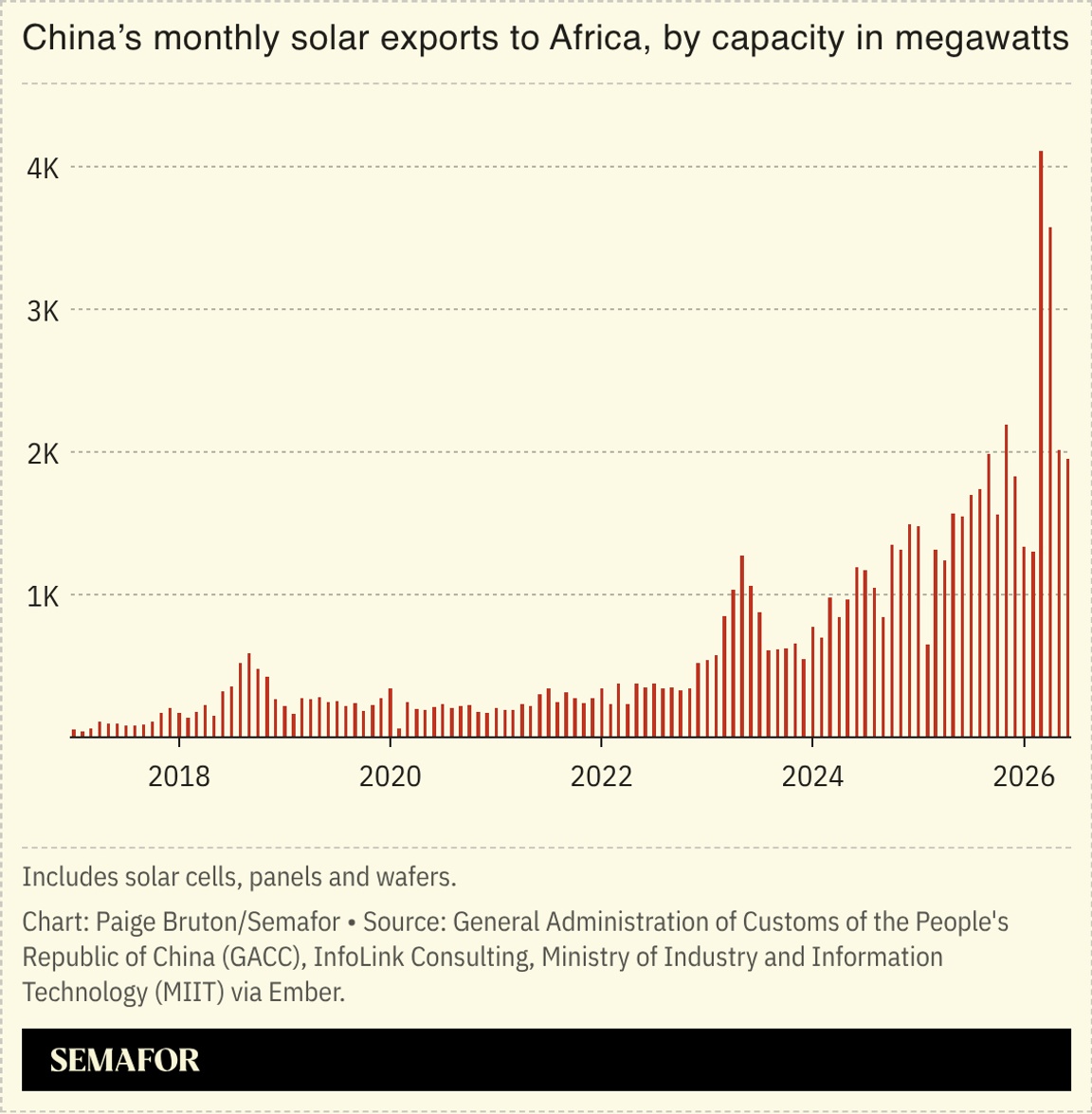 Growing demand for solar power in Africa’s largest economies is driving governments to strengthen local manufacturing of components for panels. But China’s dominance of the supply chain means those ambitions could take years to materialize, energy analysts told the Associated Press. Solar use has surged in South Africa and Nigeria as households and businesses look for alternatives to unreliable state-run grids. Both countries are developing domestic manufacturing, although limited industrial capacity means most production is confined to assembly. China remains the continent’s leading supplier of solar panels, photovoltaic cells, inverters, and batteries. But China’s trade pressures may create an opening: US tariffs on Chinese imports of polysilicon, a core solar-panel component, could encourage manufacturers to shift some production to Africa. Ethiopia could be one potential destination, the analysts said. |
|
Kenya imports corn to fight drought |
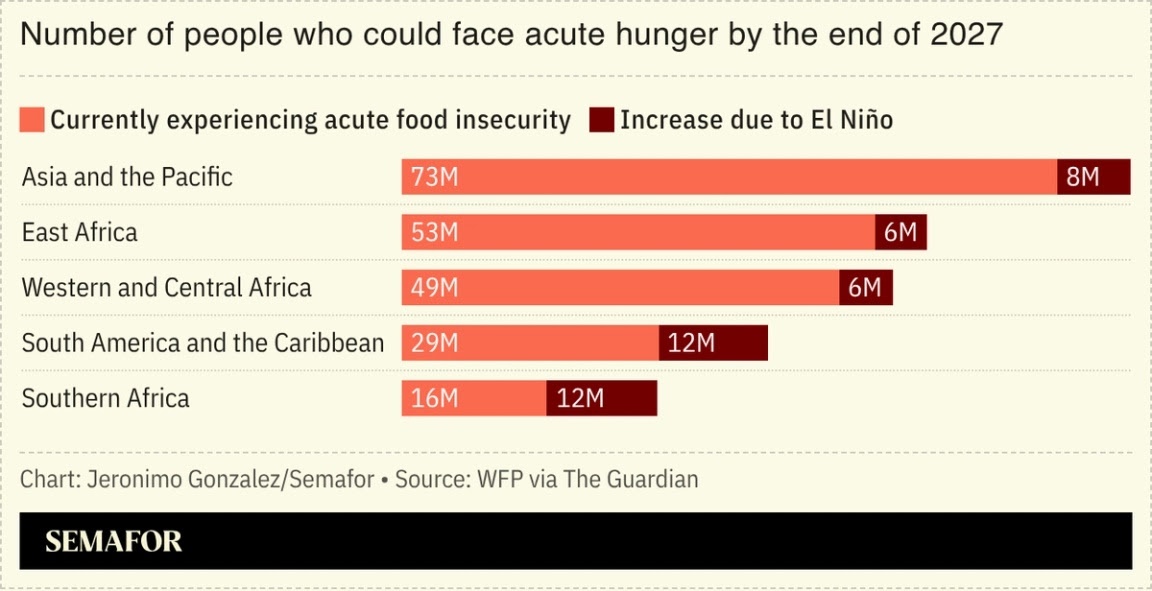 Kenya announced plans to import millions of tons of corn as part of “urgent policy actions” to tame the impact of a massive crop failure. Kenya’s extended drought is part of a wave of erratic weather systems that have compounded the toll for farmers across Africa, who are already contending with fuel and fertilizer shortages stemming from the war in the Middle East. An extraordinary El Niño — a warm weather pattern originating in the Pacific — could make such crop failures more common, with experts at the UN warning as many as 50 million additional people, most of them in Africa, could be left facing acute hunger before the end of next year, The Guardian reported. |
|
 - A multicountry highway being built along West Africa’s Atlantic coast has the potential to open a new artery for trade, travel, and economic growth, a multimedia article from NPR shows. Reporter Emmanuel Akinwotu follows the 600-mile corridor from Lagos through Benin, Togo, Ghana, and Côte d’Ivoire, exploring how the road could reshape commerce across a region where borders and poor infrastructure have long held back trade. Akinwotu’s report showcases the scale of the ambition and the challenges of building a seamless economic corridor across five countries as the subregion seeks to turn its growing markets into a more integrated economy.
- The debate about migration into Ceuta — a Spanish exclave on the North African coast — exposes the shallow historical understanding of Europe’s immigration debates, argues Howard W. French in Foreign Policy. Tracing Ceuta’s origins to Portugal’s 15th-century pursuit of trans-Saharan gold and its accidental transfer to Spain during a succession crisis, French contends the territory is a colonial relic that Spain will eventually relinquish to Morocco. He also argues Europe’s aging demographics make continued reliance on policing, rather than economic partnership with Africa, an unsustainable response to migration.
- Africa’s traditional path to industrialization, following East Asia’s export-manufacturing model, no longer fits a world reshaped by geopolitical trade weaponization, automation, and China’s enduring manufacturing dominance, argues Jonathan Munemo in The Conversation. Pointing to the Strait of Hormuz crisis as a warning sign of the continent’s exposure to global shocks, Munemo proposes a structural transformation around continental market integration and boosting sectors tied to Africa’s comparative advantages.
- After decades at the top of Nigeria’s influential Redeemed Christian Church of God, Pastor Enoch Adeboye’s consolidation of power has left the 84-year-old leader without a clear successor. Reporting by Ibukunoluwa Omole in The Republic follows Adeboye’s selection in 1980 to the RCCG’s modern growth into a 50,000-parish global megachurch. Omole examines how Adeboye’s political machinations and resistance to retirement created a succession crisis with sons, in-laws, and high-ranking pastors all touted as potential heirs.
|
|
 Business & Macro |
|
|


