| | Iran awaits an ‘economic D-Day,’ anger grows against data centers in the US, and spending increases ͏ ͏ ͏ ͏ ͏ ͏ |
| |  Tehran Tehran |  São Paulo São Paulo | Hong Kong |
 | Flagship |  |
| |
|
The World Today | 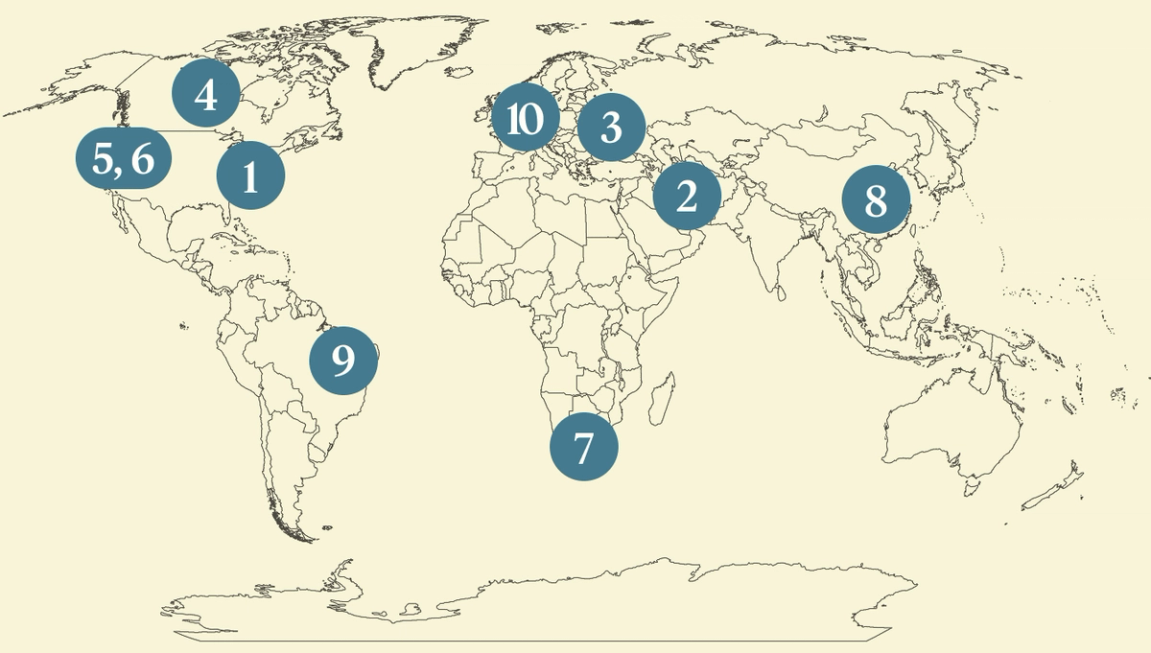 - Iran’s ‘economic D-Day’
- Hormuz reshapes trade
- An increasingly global war
- Tariffs’ impact on US races
- Growing data-center anger
- Criticism of AI health hopes
- Broadband expansion effort
- Alibaba aims to up AI spend
- Lula’s election lead narrows
- Lagarde ‘ready to serve’
 The London Review of Substacks and a Booker-longlisted book lauded for ‘the strange, impressionistic beauty of its prose.’ |
|
US warns of ‘economic D-Day’ |
 Majid Asgaripour/West Asia News Agency/Reuters Majid Asgaripour/West Asia News Agency/ReutersThe US warned of an impending “economic D-Day” against Iran that could envelop some of Washington’s allies and trading partners. The US Treasury secretary will today unveil a raft of measures against Tehran and its financial and commercial “enablers,” he wrote in the Financial Times. Diplomacy is ostensibly still underway — Pakistan’s leader is due in Iran today, Oman’s foreign minister tomorrow — and Iran’s politicians have called for an end to war with the US. But its powerful security forces are defiant: Iran’s security chief warned Gulf states against joining US efforts, while the Institute for the Study of War noted “there is no indication that economic pressure … has changed [top officials’] anti-concessions position.” |
|
Global impact of Hormuz tensions |
 Yonhap via Reuters Yonhap via ReutersPersistent tensions surrounding the Strait of Hormuz are reshaping the economies and trade routes of the Gulf and the wider world. Fewer than 20 ships transited the waterway over the weekend, with little sign of a US-Iran truce on the horizon. Qatar, which has built its international profile off liquefied natural gas sales through the strait, has slashed spending, while Saudi officials are talking with brokers in London about devising a political risk insurance program to support shipping companies operating in the region, the Financial Times reported. Further afield, South Korea dispatched a ship to Europe via the Arctic, days after China announced a similar route, as Asian nations look to reduce their reliance on trade via the Middle East. |
|
Experts warn of worldwide war |
 Gleb Garanich/Reuters Gleb Garanich/ReutersIncreasingly intertwined conflicts are raising the specter of a single, global war, analysts suggested. Recent reports have pointed to Russia ferrying materiel to Iran and North Korea deploying drone operators in support of Moscow, while China and Taiwan are both learning lessons from the conflict in Ukraine. “There’s going to be no gap between East Africa, North Africa, what we used to call the Middle East, and what used to be called AfPak, India, Pakistan, and all of that,” a leading historian said on a Financial Times podcast. A new “world war” may not be as violent as 20th century’s conflicts, one expert wrote in World Politics Review, “but that doesn’t mean it lacks the potential to remake the world order.” |
|
US-Canada tariffs’ political fallout |
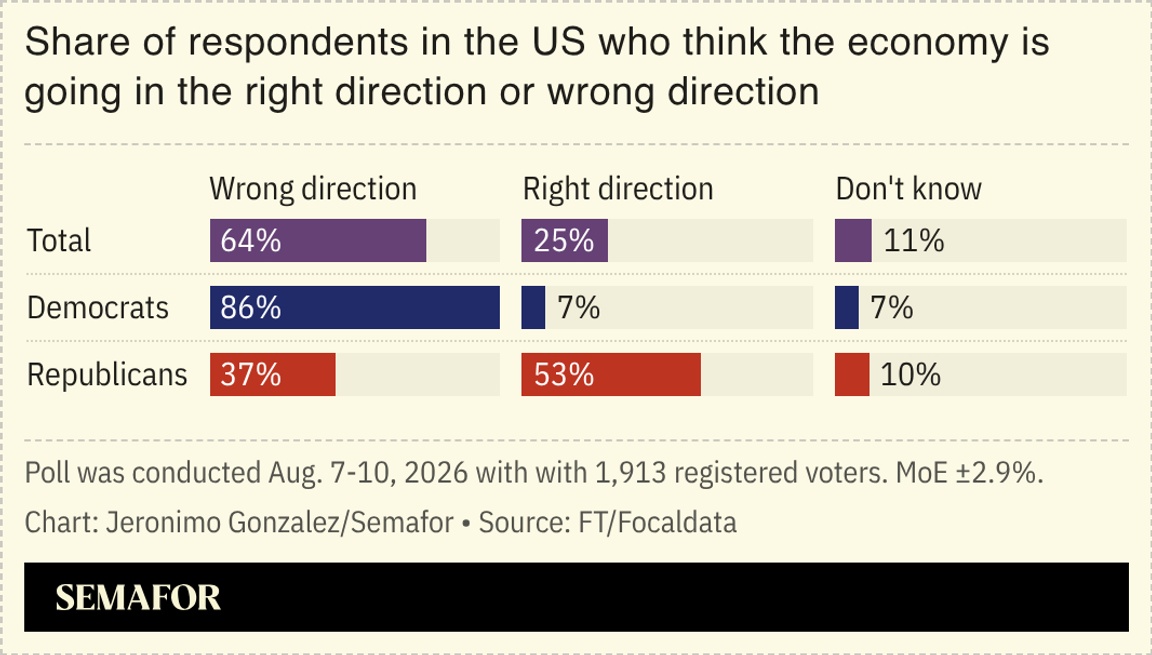 The US-Canada trade war could stoke inflation, piling pressure on the Trump administration ahead of November’s key midterm elections. Canada vowed to match 50% US tariffs after talks broke down over the weekend. Though the US levies only apply to a subset of Canadian goods, the move could add to price rises sparked by the war in Iran. The increased uncertainty driven by the Trump administration’s trade policies has helped drive up the cost of goods domestically, an analyst at the libertarian Cato Institute argued. The moves come as US President Donald Trump’s approval on the economy plummets: A recent poll showed more than half of respondents said they felt “worse off” financially since the start of his second term. |
|
AI opposition builds in US |
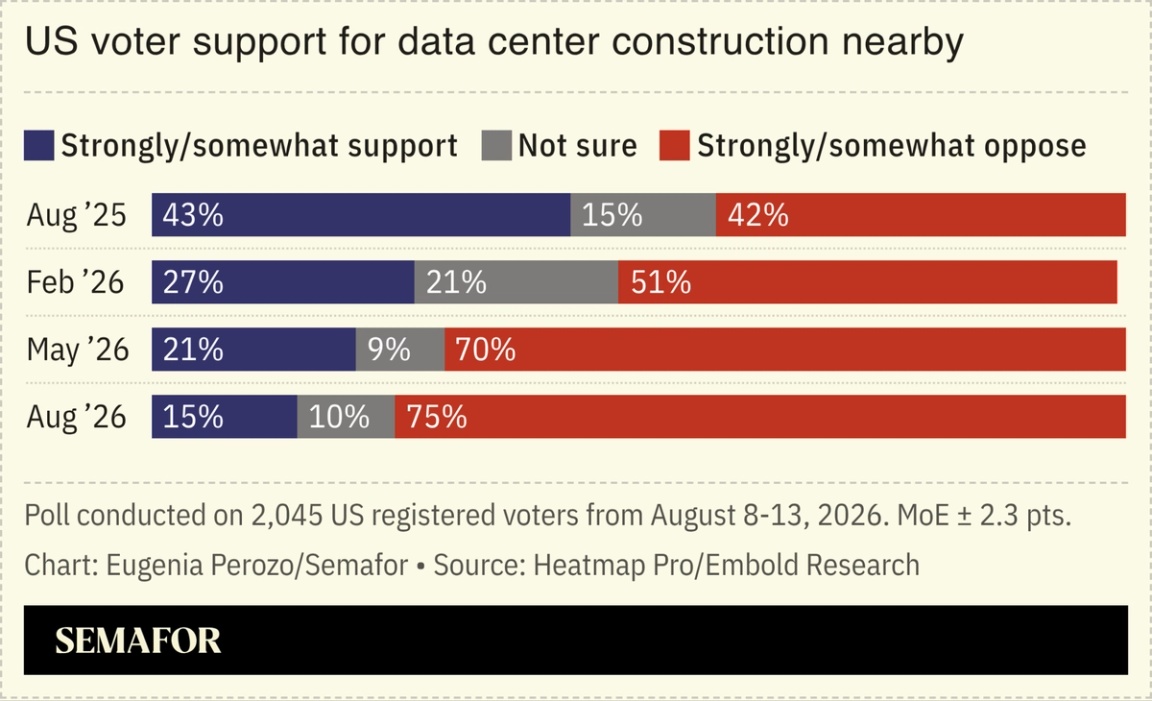 Public opposition to the construction of AI data centers is broadening in the US ahead of midterm elections. A recent Heatmap poll showed 75% of voters opposed new data centers in their area, compared to 42% a year ago — a shift the outlet said was “represented across age, gender, income, partisan ID, and the rural-urban divide” — while more than 500 local governments have announced construction bans in their jurisdictions, according to The Information. The issue is tangled in what the tech-focused analyst Azeem Azhar characterized as “a Gordian knot,” connected to “hapless messaging from AI firms” as well as the notion that data centers offer little benefit to local communities and instead drive profits for faraway titans. |
|
Doctors question AI health claims |
 Bernadett Szabo/Reuters Bernadett Szabo/ReutersLeading AI firms are overselling the short-term prospects of the technology transforming healthcare, scientists and doctors warned. One longtime health and science-focused reporter at The Information noted a “steadily mounting drumbeat of social media posts, podcast interviews, and blogs” in which scientists have characterized AI companies’ bullishness as “dangerous hubris,” while a prominent cardiologist posted recently that projections of coming cures for a litany of diseases were “wildly off-base and impossible.” As a top computer-scientist put it, such a “magic-wand promise rests on an assumption that turns out to be false: that we already understand human biology well enough for a clever enough reasoner to find the cures hidden in what we know.” |
|
New funds to drive Africa connectivity |
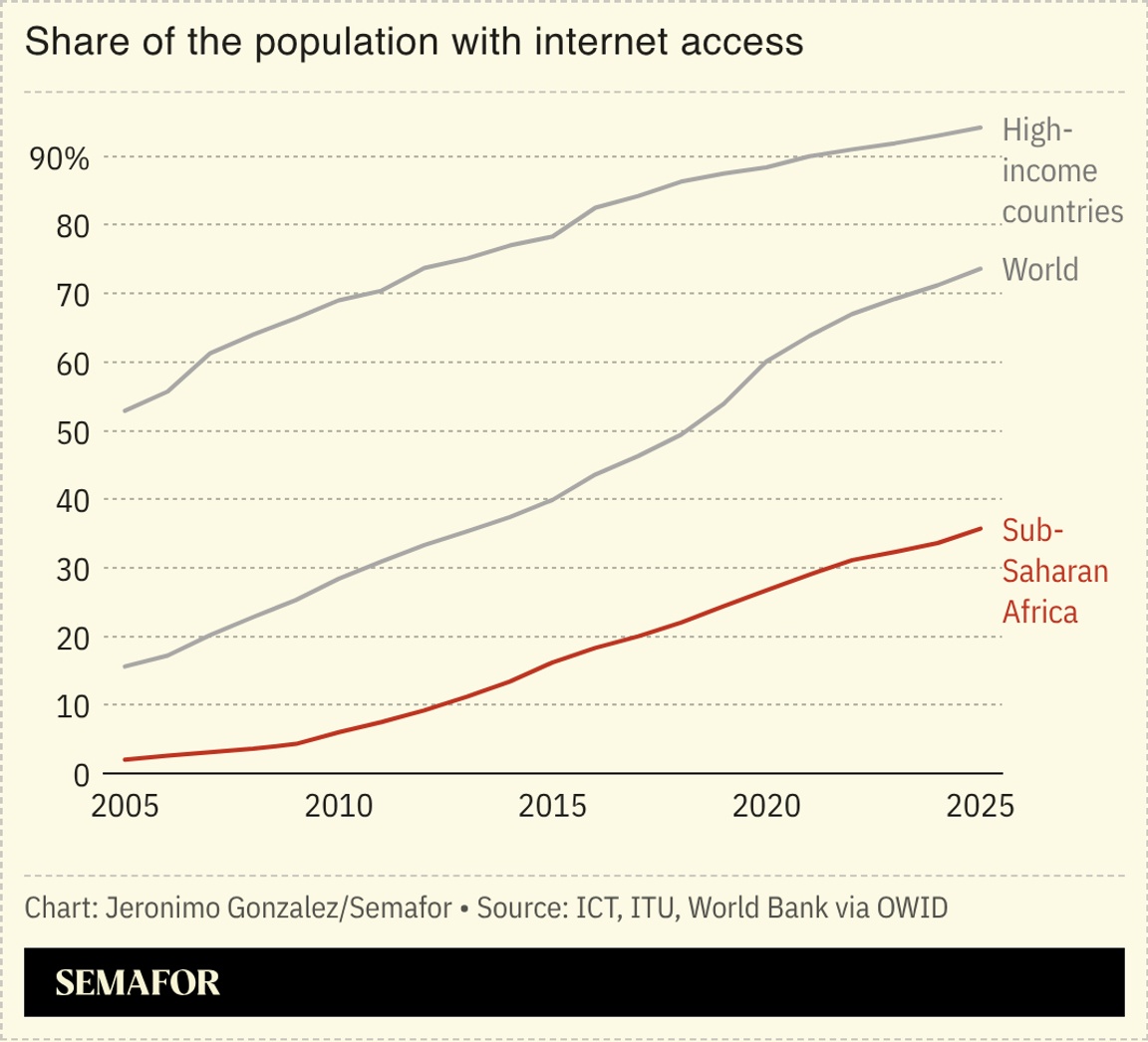 A South African telecoms consortium raised almost $1 billion as it looks to expand its services in a continent still held back by poor internet access. Though many African countries have made considerable strides in recent years in connecting their population, just 36% of sub-Saharan Africans can get online, less than half the global average. A recent United Nations study suggested better connectivity could lift the continent’s GDP by almost $1.5 trillion by 2030. As the AI revolution expands, countries lacking internet access risk falling further behind; Africa has just 1% of the world’s data center capacity, despite making up almost a fifth of its population, a 2025 Brookings report said. |
|
Alibaba raises $10B for AI |
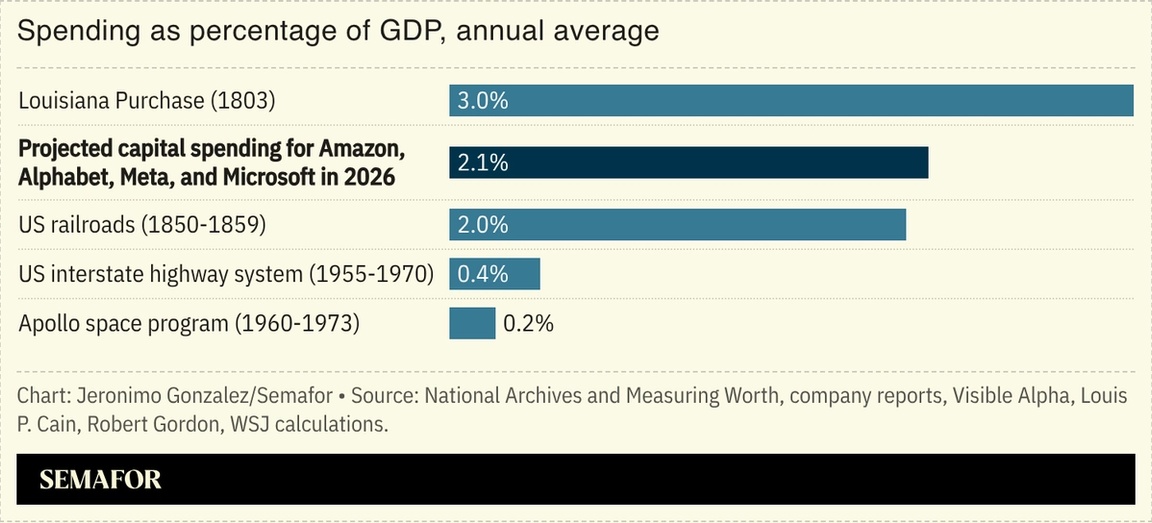 Chinese tech giant Alibaba raised $10 billion in Hong Kong’s biggest-ever secondary share sale in order to keep up in the global AI race. However, some traders appeared unconvinced by the company’s plans, with its stock tanking almost 10% in trading on Monday, its steepest single-day drop in more than a year. Investors worldwide fret that tech firms’ revenues are struggling to keep up with the AI spending spree, which has added substantially to their debt piles, part of the reason some have pivoted to selling equity as Google also did in June. “If end uses and costs remain so uncertain, the ultimate scale of investment, the financing needs and the eventual payoff remain finger-in-the-wind estimates,” a Reuters columnist wrote. |
|
Lula’s election lead narrows |
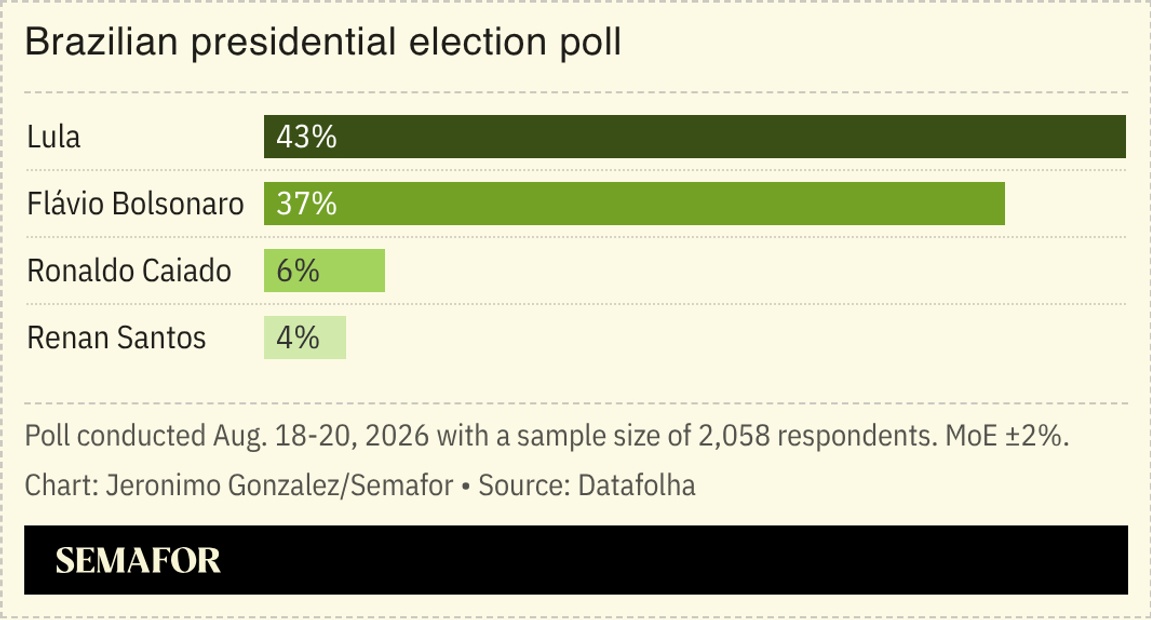 Brazilian President Luiz Inácio Lula da Silva’s lead ahead of October’s election narrowed slightly, a new survey showed, though he maintained a substantial advantage over his closest challenger. Brazilians say their main worries are rising crime and the economy — two areas where the left traditionally polls poorly — but Lula has managed to maintain his advantage largely owing to errors by his competitors: Former President Jair Bolsonaro is banned from running after being convicted of attempting a coup, while leaked tapes show the conservative leader’s son, who is trailing Lula in the October vote, asked a jailed banker for $27 million. A Lula win would buck a trend: Latin America’s last seven elections have been won by rightist politicians. |
|
|


