| |

|
Stacy Morford
Senior Environment + Energy Editor
|
|
|

As lightning lights up apartment buildings, the thunder creates useful vibrations.
Philip Fong/AFP via Getty Images
Nolan Roth, The Ohio State University; Tieyuan Zhu, Penn State
With the help of thunderstorms and everyday fiber-optic cables, these scientists are revealing a hidden world underground.
|
Ethics + Religion
|

|
Laura Yares, Michigan State University; Sharon Avni, Borough of Manhattan Community College, CUNY
To understand what religion looks like in 21st-century America, researchers may need to ask different questions.
|
|
|
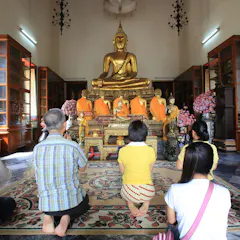
Brooke Schedneck, Rhodes College
Thai Buddhism involves daily rituals and collective acts of worship, unlike the individual-focused emphasis on meditation often found in Western Buddhist communities.
|
|
|
Environment + Energy
|

|
David Duvernell, Missouri University of Science and Technology
A fish-finding expedition not only detects unexpected species but also uncovers a living link to Missouri’s geological past.
|
|
|
Science + Technology
|

|
Dannell D. Boatman, West Virginia University
False claims that COVID-19 mRNA vaccines cause cancer could, ironically, lead to worse cancer outcomes by undermining a promising tool to prevent and treat it.
|
|

|
Matthew Koss, College of the Holy Cross
Energy transfer is the secret ingredient that makes iced tea a particularly refreshing drink on a hot day.
|
|
|
Arts + Culture
|
|
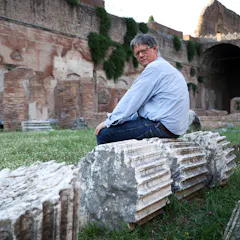
Christopher Coffman, Boston University
His latest – and possibly last – book tackles America’s foreign policy before and after 9/11. Could it also serve as an antidote to the fragmented attention and political duplicity of our current moment?
|
|
|
International
|

|
Michael Wahman, The University of Texas at Austin; Lindsay Favero, Michigan State University
How the re-elected government uses its new dominance will influence Zambian politics well beyond this election.
|
|
|
Reader Comment
|

|
It’s probably not completely binary, but beliefs could be categorized as decorative or nondecorative (i.e., important). Both types may or may not map to reality. Surely the majority of tolerant individuals can disagree about decorative beliefs without dire consequences. It is the disagreements about nondecorative stuff, like climate change, that we need to concentrate on.
| | |