| | US rivals shrug off its sanctions threats, Canada readies its tariff response, and Washington helps ͏ ͏ ͏ ͏ ͏ ͏ |
| |  | Flagship |  |
| |
|
The World Today | 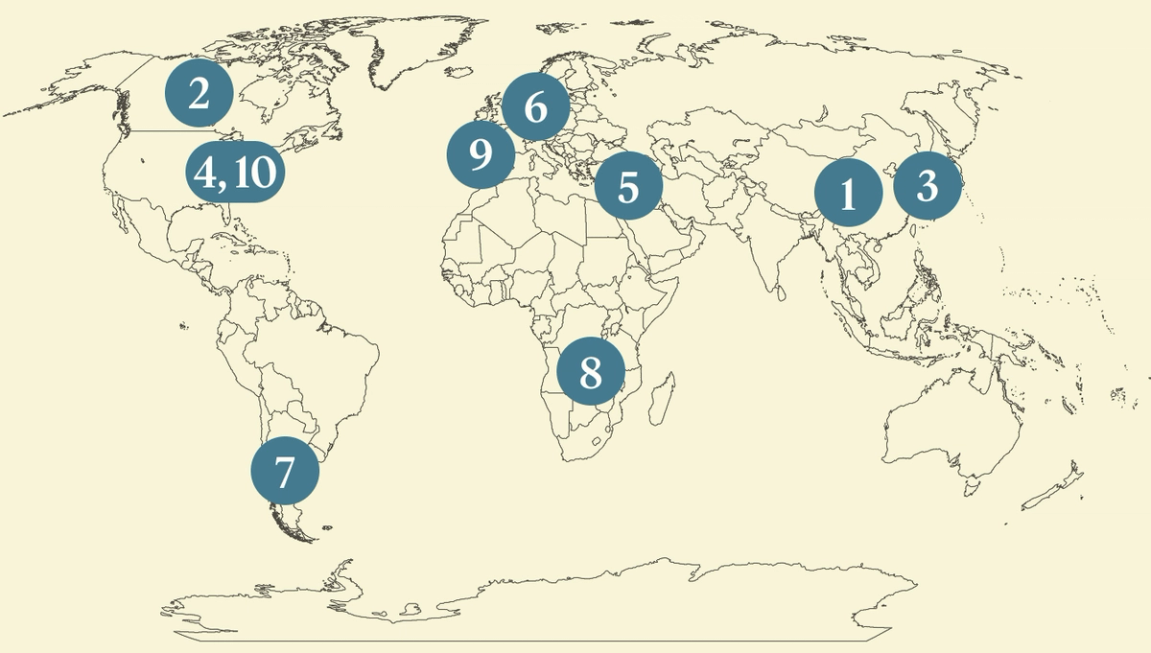 - US rivals shrug off threats
- Canada readies response
- S. Korea drills cancelled
- US immigration crackdown
- Syria taken off terror list
- Germany’s upside surprise
- Milei crude bet paying off
- Zambia election concerns
- Wildfires spread, globally
- STEM books for babies
 A classic Simpsons episode as one of its legendary voice actors says the show is nearing an end. |
|
China, Iran shrug off US sanctions |
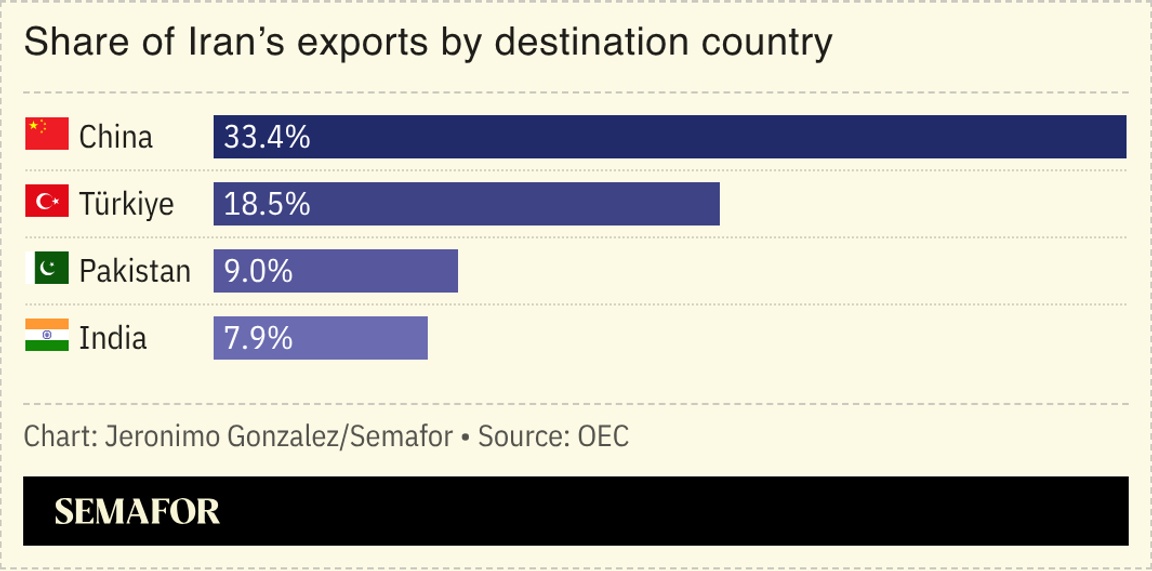 The principal targets of a US effort to use economic leverage to end the Iran war largely shrugged off Washington’s announcement. The US Treasury secretary yesterday threatened wide-ranging secondary sanctions against countries doing business with Iran, but he didn’t outline any specific sanctions against Chinese banks: Beijing is the main buyer of Iran’s oil, and the economic plan consequently had a “China-sized hole,” Semafor’s climate and energy editor noted. Beijing largely downplayed Washington’s threats, saying it would “safeguard its own rights and interests.” Iran, too, dismissed the US measures, with its foreign minister saying American leaders “are desperate.” Markets, meanwhile, appeared “largely unfazed” by the announcement, ING said, with oil prices steady. |
|
Canada prepares US tariffs |
 Carlos Osorio/Reuters Carlos Osorio/ReutersCanada is set to unveil retaliatory measures against the US in an expanding trade war between the erstwhile allies. US President Donald Trump yesterday threatened 50% tariffs on Canada’s auto and steel sectors, demanding Ottawa “fall in line”; his northern neighbor appears set on fighting back, with Canadian Prime Minister Mark Carney arguing that “the Americans want to destroy our major industries.” Trump’s offensive against a once-close ally has international and domestic implications: China’s Global Times propaganda outlet lauded Canada’s “Chinese-styled counterattack” at a time when Ottawa-Beijing ties are warming, while in the US, tariffs on Canadian goods could complicate efforts by Trump’s Republican party to win three states key to it maintaining control of the Senate in the midterms. |
|
US drops more S. Korea drills |
 Kim Hong-Ji/File Photo/Reuters Kim Hong-Ji/File Photo/ReutersThe US cancelled planned military exercises with South Korea just weeks after scaling back separate drills with Seoul’s forces, amplifying worries in Asia over American support. The latest pullback was because of limited availability of US troops as a result of shortages caused by the Iran war; US President Donald Trump curtailed previous exercises in part over South Korea’s lack of support for the conflict. Though the two countries insist they remain close partners, US allies in the region have voiced alarm over the moves, which analysts say raise questions over American commitment to seeing off a rising China. Beijing, for its part, is reportedly completing construction of an artificial island in disputed waters of the South China Sea. |
|
US plans new migrant crackdown |
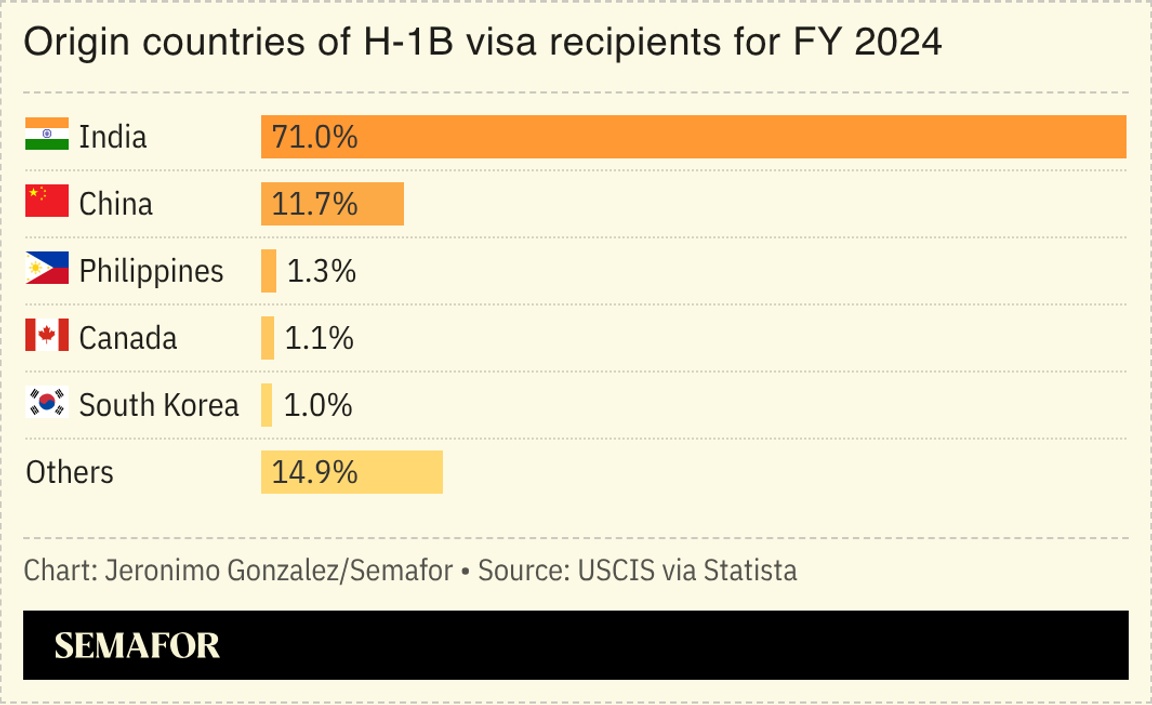 The Trump administration readied a fresh immigration crackdown that experts said could permanently damage the economy. White House officials said they would cancel the visas of 200,000 asylum seekers, potentially representing the single largest mass visa revocation in US history. The Trump administration also proposed charging more than $100,000 for visas granted to skilled workers, despite bipartisan support for a program that has helped attract an array of talent to the US; an earlier effort ran into legal challenges. Academic studies have also backed up the success of the H-1B visa program: A recent paper showed the visas lifted incomes for foreigners and locals alike, with gains accumulating along the supply chain. |
|
US cuts Syria from terror list |
 Jonathan Ernst/Reuters Jonathan Ernst/ReutersThe US removed Syria from its list of state sponsors of terrorism, the latest step in Damascus moving to close the book on the Bashar al-Assad era and a decade-long civil war. Assad’s brutal dictatorship presided over mass human rights violations, an economic collapse, and ultimately a vicious internecine conflict that left huge numbers dead and millions displaced until he was overthrown in 2024. Syria’s current government, led by the former Islamist Ahmed al-Sharaa, has taken steps to cast off the country’s pariah status: Most recently, the IAEA said it had found “tons of nuclear materials” at a previously undisclosed Assad regime site, while a court this week sentenced a top religious cleric for inciting violence during the dictator’s rule. |
|
 Maryam Majd/Reuters Maryam Majd/ReutersGermany’s GDP grew faster than previously thought in the second quarter, defying fears that higher energy costs driven by the Iran war would torpedo Europe’s biggest economy. German firms may have benefitted from the fact that Asian rivals were hit even harder by the choking off of trade via the Strait of Hormuz, reducing competition, but the figures nevertheless bolster a growing case among economists that markets have been unnecessarily downbeat on Europe’s prospects. Huge challenges remain, however, with European companies facing intensifying competition from China. German automakers are under particular pressure: Volkswagen’s chief executive is due to present cost-savings measures to workers today, and unions warn that up to 140,000 jobs may be affected. |
|
Argentina’s two-track growth |
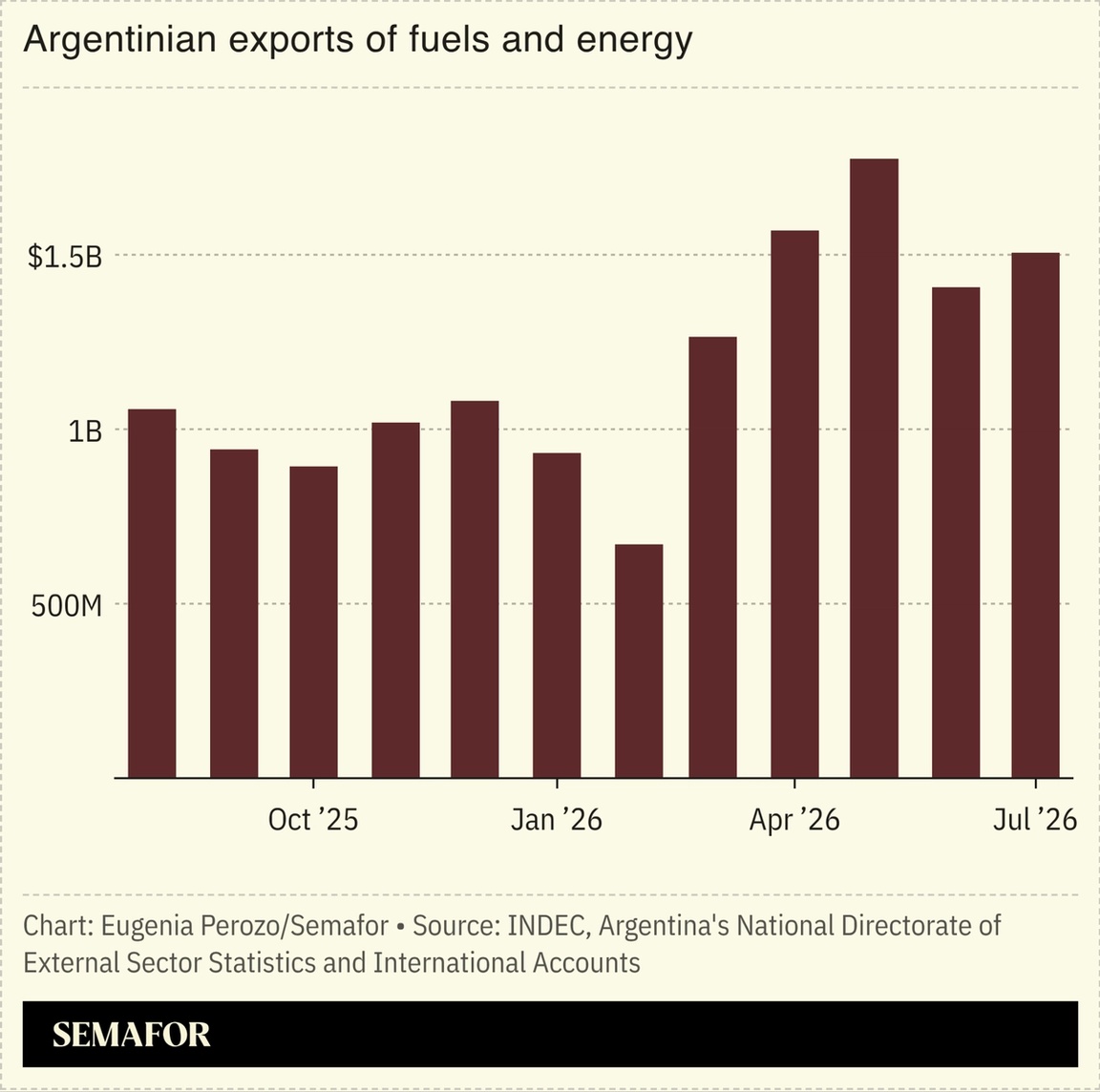 Argentina is producing oil and gas like never before, helping make crude the country’s leading export for the first time, though worries persist that the economy is running along two tracks. President Javier Milei made exploiting the Vaca Muerta field — believed to hold billions of barrels of oil — a key campaign promise, saying it could be an economic “panacea.” Investors, including US billionaire Peter Thiel, have piled in, helping drive a surge in output. However, critics question whether the project can catalyze the rebirth of Argentina, once one of the world’s richest countries. Consumption declined last year and consumer sentiment has worsened, tanking Milei’s popularity as he gears up for a reelection bid next year. |
|
Zambia poll concerns mount |
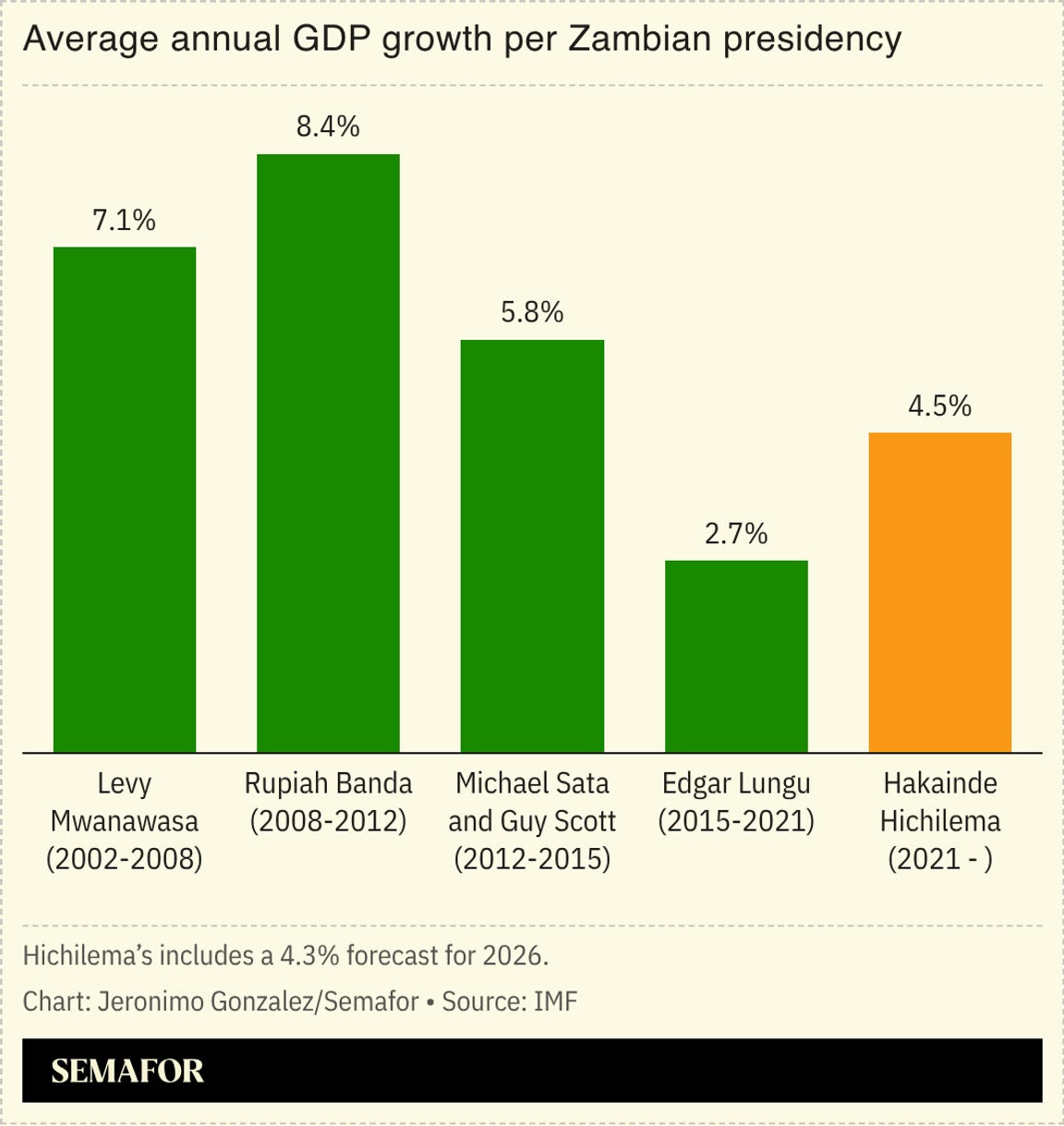 Zambia’s government closed the country’s courts, preventing opposition parties from mounting legal challenges over this month’s disputed election. Candidates had until today to lodge their claims against the vote, won by incumbent Hakainde Hichilema: Experts have not questioned the ultimate result, but say the poll was marred by violence and government interference that likely affected the extent of Hichilema’s victory. While Hichilema has overseen a turnaround of Zambia’s copper-rich economy, critics say he has also overseen a rapid erosion of democratic norms. Since the vote, authorities have summoned the main opposition candidate over what they say was a planned insurrection. “The repression of critics and opposition poses a risk to the nation’s democratic progress,” the Carnegie Endowment wrote last year. |
|
 Umit Betkas/Reuters Umit Betkas/ReutersSoaring temperatures driven by the El Niño warm weather pattern have compounded the effects of climate change, sparking wildfires globally. Blazes in Nevada have forced tens of thousands of people to flee their homes, as a firestorm threatened the city of Reno. Authorities in Indonesia, meanwhile, are racing to control wildfires that have dramatically worsened air-quality levels even before fire season typically peaks. And Europe — the world’s fastest-warming continent — has been beset by extreme weather that has caused widespread droughts and blazes, marking some of the region’s gravest natural disasters on record. Authorities have scrambled to respond, but emergency services are struggling and analysts warn of long-term economic impacts. “The situation is extremely difficult,” Serbia’s interior minister said. |
|
Backlash against baby books |
|
|


