| | More aggressive interventions against Chinese banks and state-owned companies will be needed to full͏ ͏ ͏ ͏ ͏ ͏ |
| |  | Energy |  |
| |
|
 - Total arbitrage
- China’s peak oil
- Gas power boom
- Winds of war
- Power gap
 Nuclear fusion startups have a branding problem, and Chinese wind companies are still pressing into Europe. |
|
 There’s a China-sized hole in the Trump administration’s plan to wage an “economic D-Day” against Iran. When US Treasury Secretary Scott Bessent announced new sanctions on Monday targeting a range of individuals and entities alleged to support Tehran, and threatened more to come, Beijing was conspicuously absent from the list. China is Iran’s most important economic lifeline, and prior to the war, the two countries had a mutually beneficial oil arrangement: China bought nearly all the crude Iran managed to export at a significant discount, in exchange for ignoring Western sanctions. All told, Iranian oil provided about 12% of China’s imports. “We are level-setting with every country to tell them our expectations,” Bessent said. This year the US did step up sanctions on one of China’s biggest refineries over its purchases of Iranian crude, and the American naval blockade in the Strait of Hormuz has for now effectively halted most Iranian crude exports. But with Chinese leader Xi Jinping due to meet with Trump in Washington next month, the administration is clearly aiming to avoid a full-on economic war with Beijing — and that puts its Iran strategy at risk. “Only measures that materially sever Iran-China trade — including sanctions on Chinese banks, state-owned enterprises (SOEs) and economically critical ports/terminals — would accelerate Iran’s economic breaking point, and we do not expect Washington to go that far,” Rapidan Energy Group analysts wrote on Monday. Still, there’s another strategy available, Sen. Bill Cassidy (R-La.) told me this week: Pushing forward tariff legislation to crack down on China’s massive industrial overcapacity. Sanctioning Iranian oil effectively subsidizes the Chinese economy, Cassidy said, by creating a pool of cheap crude that only China is willing and able to snap up. Stronger trade barriers that prevent China from flooding US and global markets with underpriced manufactured goods would curb oil and gas demand inside China, he said, and that would mean less revenue for US adversaries like Iran and Russia. |
|
Total’s Gulf oil arbitrage |
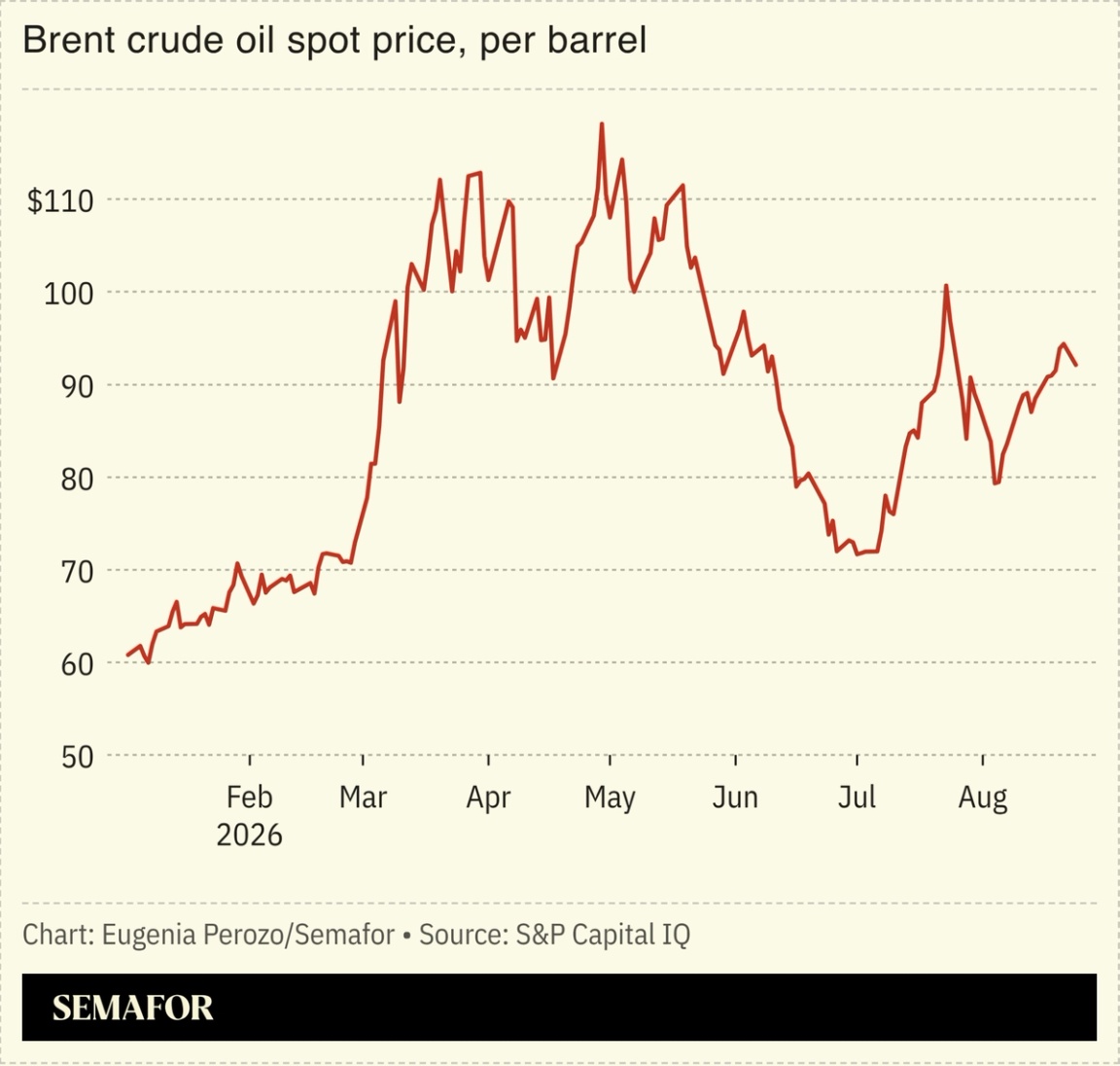 Oil prices ticked down on Tuesday as traders seemed to take new US financial sanctions against Iran as an indication that escalating military disruption to oil flows is unlikely, for now. Oil is flowing out of the Persian Gulf, but “very quietly, not publicly,” TotalEnergies CEO Patrick Pouyanné said at an industry conference in Norway. Although the cost of moving crude tankers through the Strait of Hormuz is far higher than it was before the war, he said, it’s well worth the added cost because Iraq and other exporters are offering extremely steep discounts to anyone willing to take their barrels. The same isn’t true of refined fuels, which are carried on much smaller ships and are therefore still uneconomic to transport, he said. Meanwhile, with half of the world’s oil now coming from countries embroiled in some form of conflict, the quest for alternate exits continues: Saudi Arabia is weighing a state-backed tanker insurance program, and potential pipeline investors are looking for better security guarantees. Inside Iran, the US blockade is contributing to fuel shortages and long lines at gas stations. |
|
 Chalinee Thirasupa/Reuters Chalinee Thirasupa/ReutersThe rapid electrification of China’s transportation sector means that oil demand in the country probably peaked in 2025, Sinopec chairman Hou Qijun said. Sinopec, the world’s largest oil refiner, posted a surge in profit for the first half of the year, reaching nearly $4 billion despite the company’s heavy reliance on crude from the Persian Gulf. The Chinese state-owned company processed less oil than it did during the same period last year, but was able to capture a much higher refining margin as fuel prices surged. There could be a slowdown ahead, however, and not just because of the war: China’s oil demand has been structurally reduced by the energy transition and “very likely” peaked two years earlier than government forecasts, Hou said. |
|
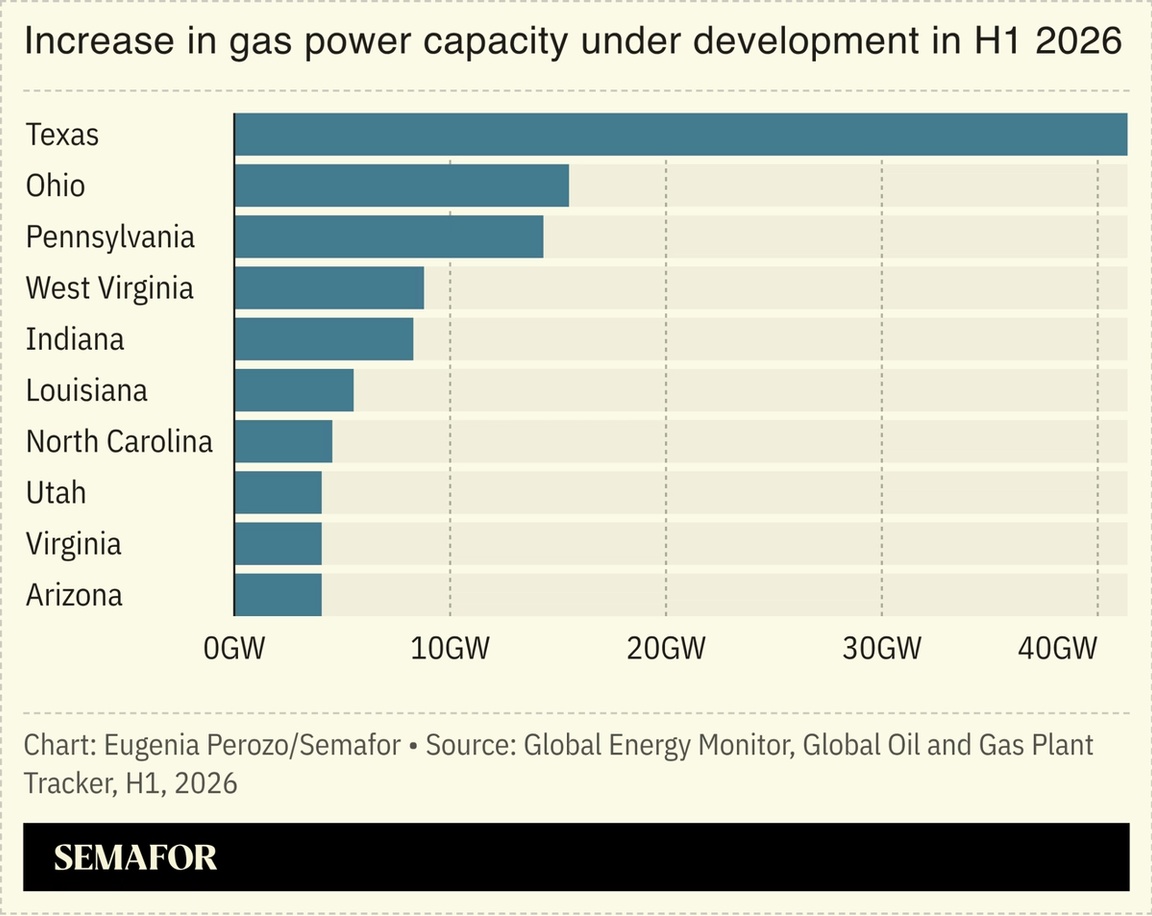 The capacity of gas-fired power plants currently being planned to supply power to US data centers nearly doubled in the first half of 2026. A new study from Global Energy Monitor counted 189 gigawatts of gas-fired capacity in development in the first half of 2026. But it remains unclear if all of those plants will ultimately be built, since most projects are in early development and the demand surge has led to a bottleneck for gas turbines, with some suppliers warning of yearslong lead times. The buildout could also be affected by the growing political backlash to data centers, which is increasingly bipartisan. A Heatmap poll showed 75% of US voters oppose new data centers in their area. Texas — which the report highlights is the epicenter of the gas boom — has recently backtracked on its welcoming stance towards data centers and passed a moratorium on new projects. — Eugenia Perozo
|
|
Denmark bets on Ukraine wind farm |
 Anatolii Stepanov/Reuters Anatolii Stepanov/ReutersDenmark’s state-owned export bank lent €100 million to build a large new wind farm in Ukraine. The project, which will use turbines from the Danish manufacturer Vestas and be operated by the Ukrainian agricultural company Kernal for both its own use and power sales to the country’s battered grid, stems from the Export and Investment Fund’s decision that “as a principle, we will ignore the fact that there is a war” and evaluate potential investments strictly on their economic merits, CEO Peder Lundquist told Semafor. Out of a portfolio of several dozen projects the fund has backed in Ukraine since the 2022 invasion across the energy, agricultural, and other sectors, Lundquist said, none have yet sustained major damage from Russian attacks. Wind farms in particular are extremely difficult to knock out with drones or rockets, he said, and therefore a fairly safe investment despite the war; last year the fund made another major investment in a separate wind project with the Ukrainian energy company DTEK. More similar investments are forthcoming over the next year or so, he said: “There’s huge potential for energy infrastructure investment in Ukraine.” |
|
Africa’s persistent power gap |
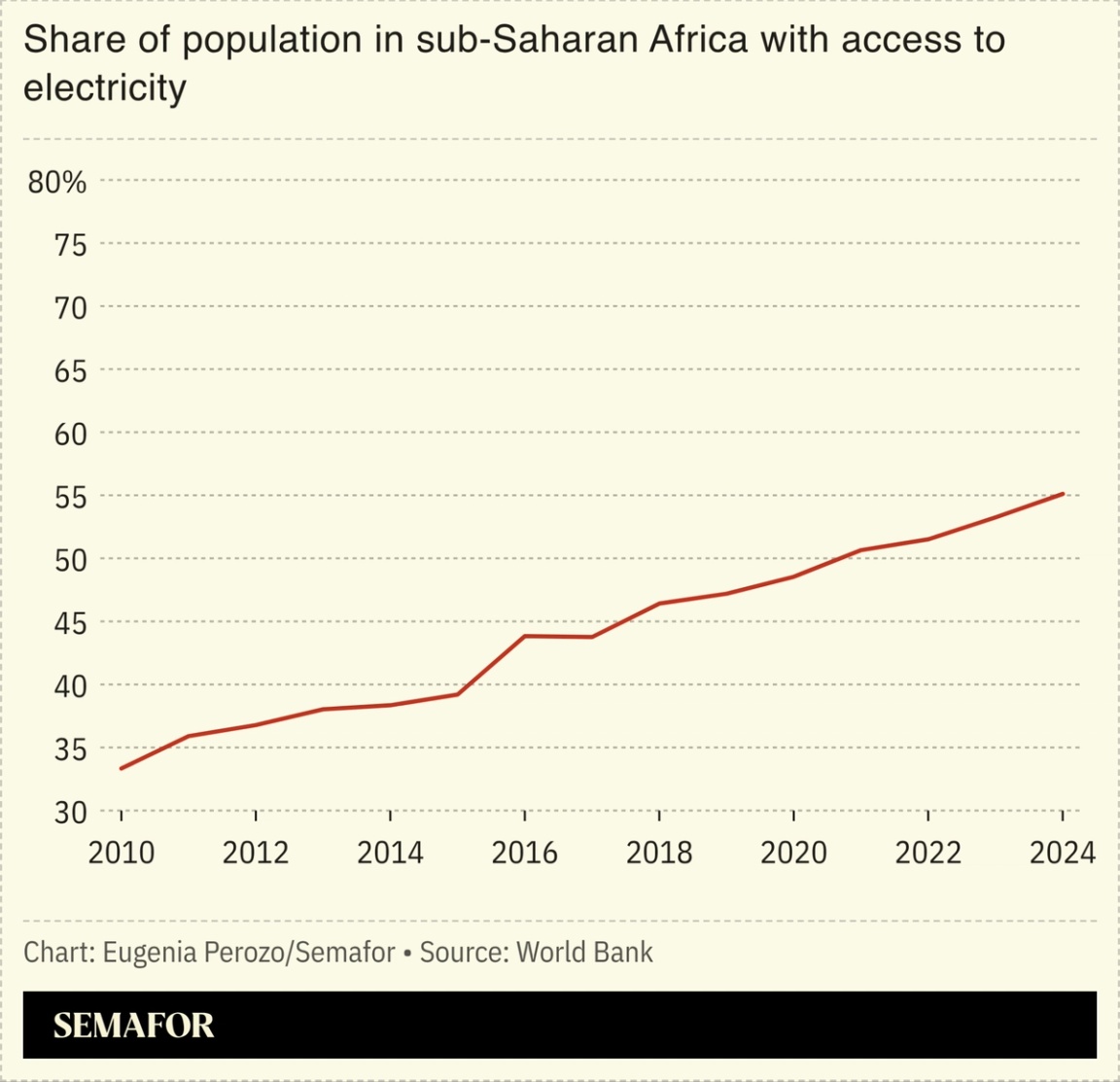 Africa continues to face the world’s largest electricity access gap, with a shortfall in investment “the central constraint,” the latest Africa Sustainable Development Report said. Access to electricity increased from approximately 46% in 2015 to about 53% in 2023, yet nearly 600 million people remain without power. Urban electrification rates exceed 80%, the report found, while rural access remains below 40% in many countries. Annual investment to improve access to energy on the continent is estimated at $4 billion, according to the report, which was jointly prepared by the African Development Bank, African Union Commission, UNDP, and Economic Commission for Africa. “Without a rapid scale-up of financing and regional energy integration, energy poverty risks becoming further entrenched,” wrote the authors. |
|
 New EnergyFossil FuelsTechPolitics & PolicyMinerals & Mining |
|
|


