Partner Updates
 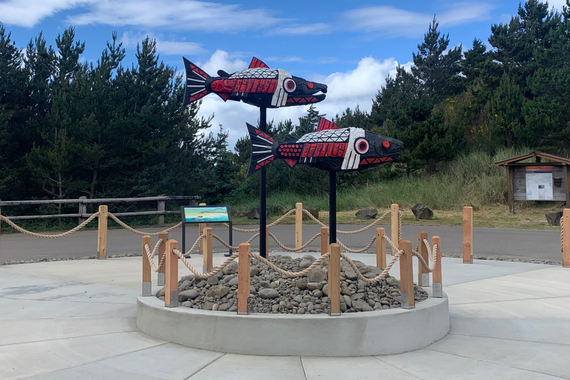 Permanent marine debris art installation recently installed at Sunset Beach Start Park (Photo Credit: Elizabeth Roberts).
New Marine Debris Display At
Sunset Beach State Park
On June 6, a stunning new permanent marine debris display was unveiled at the Sunset Beach State Park Fort to Sea trailhead parking lot. Created from debris collected along the Oregon coast, this artwork tells a deeper story about our connection to the ocean and the growing impact of marine pollution on coastal ecosystems. It honors the cultural and ecological importance of salmon in the Pacific Northwest and invites us to reflect on how everyday actions affect the health of our beaches, waterways, and marine life.
Thank you to marine debris artist Elizabeth Roberts, designer Tony Johnson of the Chinook Indian Nation, Lewis and Clark National Historical Park, Oregon Parks and Recreation Department, Oregon Shores, Oregon Coast Visitors Association, and community partners for making this possible.
This project was made possible through an agreement between the NOAA Marine Debris Program and the National Park Service to install educational marine debris displays in 15 coastal national parks around the country.
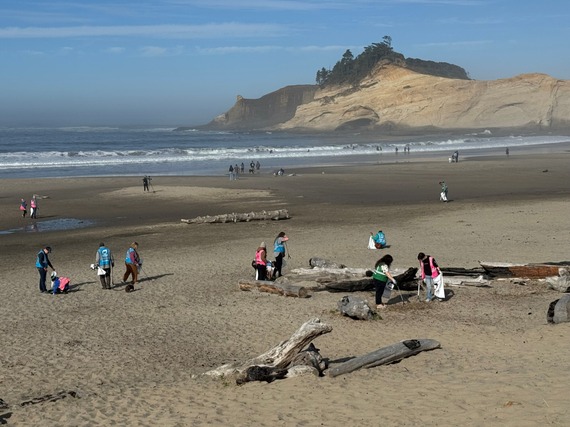 Photo volunteers picking up litter along the Oregon coast during the annual Beach and Riverside Cleanup (Photo Credit: SOLVE).
Volunteers Show Up for the Coast
The day after Independence Day, volunteers across the Oregon coast turned celebration into stewardship. Through 18 coastal cleanups, 667 volunteers removed 7,393 pounds of litter from beaches and coastal communities—helping prevent marine debris from reaching the ocean and protecting wildlife during one of the busiest weekends of the year.
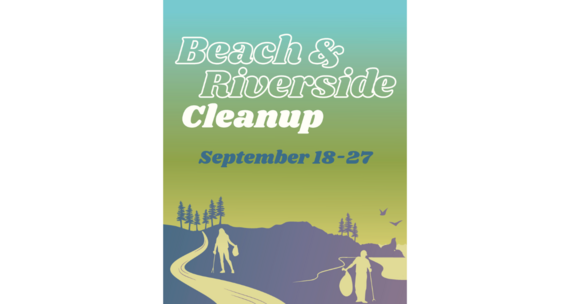 The success of July 5 cleanups is just the beginning. From September 18–27, SOLVE's annual Beach & Riverside Cleanup brings volunteers together to remove litter, marine debris, and invasive species while caring for Oregon's beaches, rivers, and waterways. It's not too late to host your own cleanup! Whether you're organizing your first event or returning as an experienced leader, SOLVE provides the support to make it easy: from cleanup supplies and permitting guidance, to volunteer registration and project resources. Join the effort this September and help protect the places that make Oregon's coast so special.
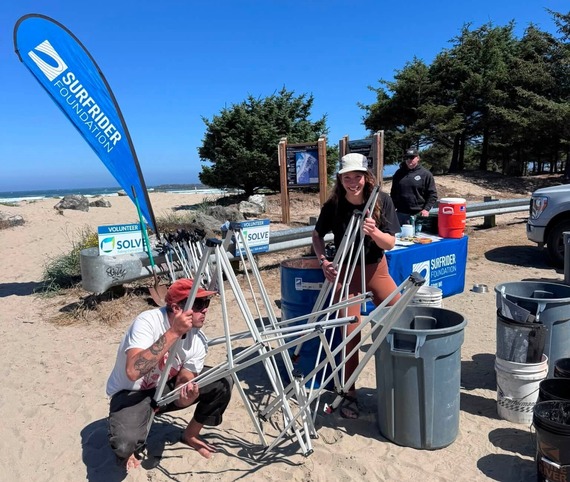 Cleanup participants pose with a mangled canopy frame collected from the beach during a cleanup (Photo Credit: Jaime Belanger).
Surfrider Volunteers Clean Up After the
“Dirtiest Beach Day of the Year”
Despite fireworks being illegal on Oregon beaches, each Fourth of July results in hundreds of pounds of spent explosives, food wrappers, plastic bottles, broken chairs, party supplies, and other debris being left behind by revelers.
To combat this harm, Surfrider chapters diligently host “afterglow” cleanups every year on July 5 in partnership with SOLVE. This year, Oregon Surfrider hosted eight cleanups stretching from Coos Bay to Portland. All together, 157 dedicated volunteers turned out to remove nearly 2,000 pounds of trash from our beaches! Thank you to everyone who joined us at a cleanup this month—there’s nothing more patriotic than taking care of our beloved beaches!
Check out highlights from each chapter’s cleanup efforts on the Surfrider Oregon blog, and visit the Surfrider Oregon website to find a chapter near you!
 NOAA Marine Debris Program Updates
 |
|
Celebrating 20 Years of the NOAA Marine Debris Program
This year, the NOAA Marine Debris Program is celebrating its 20th anniversary of cleaning our coasts. As we mark this milestone, we are reflecting on two decades of collaboration, progress, and shared commitment to addressing marine debris across the United States and U.S. Territories. This anniversary also offers an opportunity to recognize our partners, including the entire marine debris community, educators, students, families, and volunteers, whose contributions have helped shape the program’s impact over the past 20 years. We invite you to follow along by subscribing to our blog as we highlight stories from the program over the years, showcase current ongoing efforts, and look ahead to a future where our global ocean and its coasts are free from the impacts of marine debris.
To learn more, please visit the NOAA Marine Debris Program website.
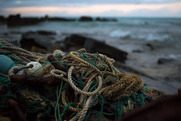
Photo caption: Derelict fishing nets litter the shoreline (Photo Credit: NOAA).
|
 |
|
Registration Now Open for 2026 Turning the Tide Summit to Examine Removal of Abandoned and Derelict Vessels and Boating-Related Waste
Registration is now open for BoatUS Foundation’s 2026 Turning the Tide Summit, scheduled for December 6–9, 2026, in New Orleans, Louisiana. The in-person event will focus on exploring existing and emerging technologies and best practices for responsible and sustainable disposal of abandoned and derelict vessels, fiberglass and composite recycling, shrinkwrap, and other boating-related waste.
The Turning the Tide summit is open to everyone including environmental experts, boating and waste industry leaders, policymakers, and anyone interested in deepening the conversation on responsible and sustainable management of end-of-life vessels and other boating-related waste.
Visit the Turning the Tide website to register for the summit.
|
|