This issue: The debut novel that New Yorkers are fighting to get their hands on, Rachel Cusk recommendations that aren’t Life of M, and two titles well worth grabbing from your local bookstore. |
|
|
|
| Senior newsletter editor, New York |
|
|
|
The Transatlantic Fruit Fly Buzz A debut novel from across the pond is selling out across New York City bookstores. Will its publisher meet the demand?
|
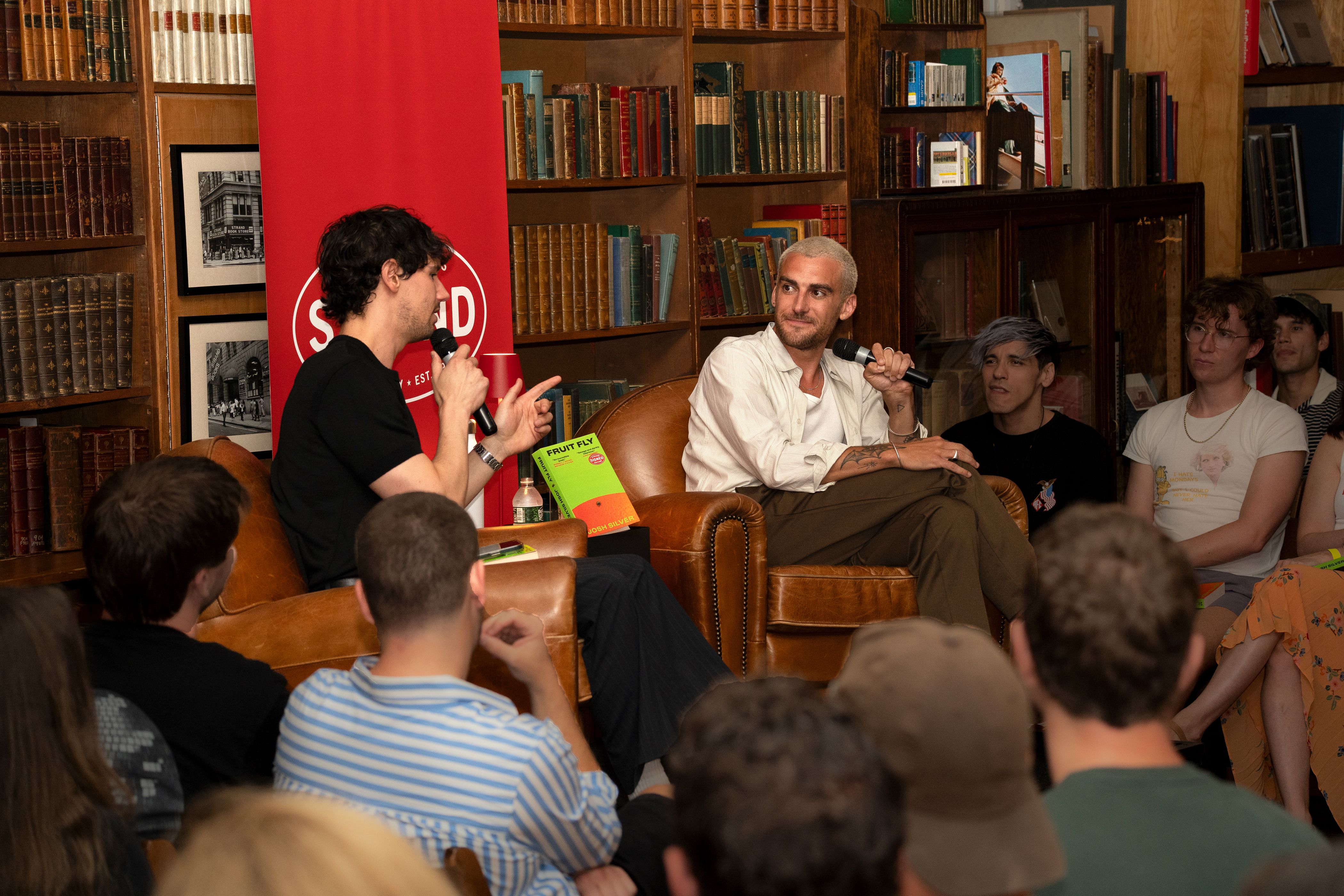
Fruit Fly author Josh Silver in conversation with actor Cory Michael Smith. Photo: Christi McQueen, Strand Bookstore |
|
|
|
Last month, a video clip of bookfluencer Jack Edwards gifting Anne Hathaway Josh Silver’s debut adult novel, Fruit Fly, made the rounds. Edwards repeats its logline: A woman searches up how to write a best-selling book and stumbles upon the advice to “Go sad, go dark, go gay.” “Gimme, gimme, gimme,” Hathaway says, reaching for it. Three days after the video went up, Deadline announced that the novel had been optioned for TV by A24. And ever since Fruit Fly hit the shelves in the U.S. a few days later (it was first released in the U.K. in April), booksellers across New York have been struggling to keep the book stocked amid overwhelming demand.
“Oh no! This bestseller is too bestselling,” read a sign on McNally Jackson’s best-seller walls last week where Fruit Fly — released by Crooked Lane in hardcover and paperback simultaneously on August 4 — would have been. McNally’s director of marketing Jack Kyono told me that all but a few paperbacks were sucked up by prepub preorders, and the rest sold out on release day. “That doesn’t really happen,” he said. An additional order of hardcovers landed in stores the next day, which promptly sold out too. Kyono compared the phenomenon to what happened with Yesteryear (also plugged by Hathaway, who is adapting the novel for film), which has remained on the New York Times best-seller list since its April release. Over at Greenlight, buying manager Matt Stowe mentioned that the publisher had sold out of copies of Fruit Fly before the pub date, which is uncommon for an indie release. “It’s been impossible to have in stock. It’s rare that we are out of something that a lot of people are looking for,” Stowe said.
The proximity of the A24 announcement to the Hathaway video may have played a role, even though Hathaway need not have read the book to seemingly influence sales. “I think people thought that they were connected,” Silver said the day after his sold-out launch at the Strand last week. The 36-year-old from Manchester, who has previously published YA fiction, explained that the A24 deal, the result of a cutthroat auction, had been in the works since closer to the book’s U.K. release. What’s noteworthy is the book’s quiet rollout compared to the fervor surrounding it. “No one expected this,” said Silver. “There was no real plan. I'm sure some books get real marketing way before the book comes out. This has all been organic, and so a little bit of it is playing catch-up.”
It’s also been an uncanny case of life imitating art. In the frenetically paced Fruit Fly, Mallory, who has suffered from writer’s block since her first novel and is stuck in a marriage to a cartoonishly awful man, encounters Leo, a gay sex-worker who is an addict and a frequenter of chemsex parties. Their meeting inspires Mallory to covertly begin to write Leo’s story, which she draws from him through a combination of outright stalking and pro-bono therapy. The manuscript Mallory produces earns her a six-figure American book deal and an executive-producer title on its adaptation; Silver will have the same title on the A24 show.
As Silver told the crowd at the Strand, it was only weeks ago that he was still working full-time as a mental-health nurse. The attendees I spoke to had mostly encountered Silver’s own promotional videos on their Instagram or TikTok “Discover” pages two to three months prior and were dying to get their hands on the book. It didn’t hurt, admitted one, that the author, formerly an actor, was so good-looking. He also mentioned that he’d “fought a girl” who was trying to purchase a store’s last two copies on pub day. “It’s like gay Harry Potter,” quipped a book editor, appraising the crowd. Even Marlon James had turned out.
I wondered whether Fruit Fly might parallel in the book world what Obsession and Backrooms — two recent low-budget indie films that overperformed at the box office — represented in the film industry. Silver’s American advance, I hear, was under $10,000. (Silver declined to confirm the details of his deal.) BookScan — the leading industry tracker for print sales — reports that, during its first two weeks, Fruit Fly moved only a fraction of what Yesteryear managed in its first week alone: a whopping 21,000 copies. Because booksellers can hardly keep Silver’s novel on their shelves — and with many new shipments getting eaten up by special orders — it seems that the publisher may have let spoil what could have been low-hanging fruit.
“The numbers are like that because there are no books,” says a former Crooked Lane employee who worked on the novel. She shared that most literary agents who have done business with Crooked Lane are aware that low print runs at the publisher are not a new concern, but one that Fruit Fly has painfully brought to bear. Even when a title like Silver’s gains enthusiastic in-house support and shows early signs that it could overperform, it ultimately comes down to how many copies the highest-level bosses decide to print. “I’m bummed that this book wasn't able, due to logistics, to make the splash that we had wanted,” says the former employee, who believes it could have made the Times best-seller list. “That doesn't mean it won't, now that the reprint is making its way to stores.”
Fruit Fly has now gone back to press multiple times (though Crooked Lane did not respond to an inquiry as to how many copies it has printed so far), and it could take weeks for new orders to reach stores. Silver recently sold many foreign rights and shared that Hathaway’s influence likely moved sales across the pond, too. Soon, though, copies will multiply in New York bookstores like you-know-what. And no, Silver has not yet heard from Hathaway, but I suspect his DMs are open. |
|
| |
Subscribe now to get unlimited access to everything New York, including subscriber-only newsletters, exclusive perks, the New York app, and more. |
|
|
|
Read These Rachel Cusk Books Instead Take it from this bona fide Cuskhead: There’s so much else to enjoy than faux celebrity gossip.
|
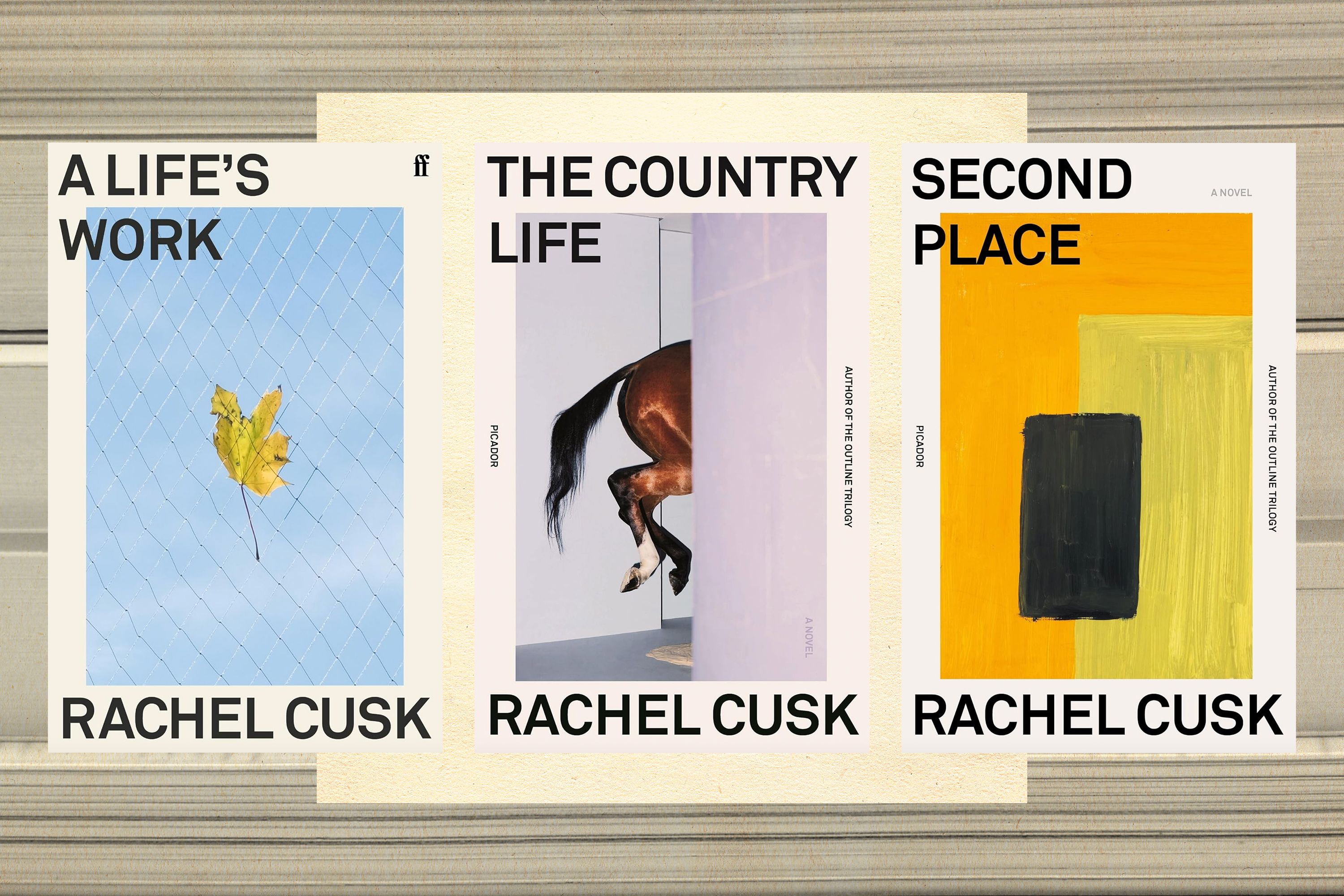
Photo-illustration: New York Magazine |
|
|
|
It’s fascinating that Rachel Cusk, who has been courting controversy for much of her career, appears so taken aback by the maelstrom of gossip around Life of M. The writer’s candid accounts of motherhood and divorce earned her disdain and accusations of hard-heartedness, and she has already faced legal action for writing about a real person. It’s now been reported ad nauseam that Cusk’s latest novel is rumored to have been inspired by Natalie Portman, and the parallels to the actress’s life are many. The two Paris-based celebrities, albeit of very different degrees, run in overlapping social circles, and Portman, who has previously heralded Cusk’s work, is reportedly pissed. “Natalie is big on girl power and sisterhood, so this is a gross violation of her code. She believes women’s bonds should be nurtured and not manipulated for commerce,” an alleged friend of Portman’s told the Daily Mail.
I’d heard that Cusk wasn’t planning to do press around Life of M, but it seems she felt compelled to clear the air last week. The stressed-out author told the New York Times that “Everyone who is projecting onto Natalie Portman a sense of betrayal over her alleged appearance in the book is in fact enacting the very projection and storytelling that the book is thinking about, and is critiquing as kind of dehumanizing.”
Reviewers argue that the writer who has often claimed cruelty — or “rudeness,” as our reviewer Emma Alpern puts it — as her subject has now adopted it as method. But what’s really remarkable about Life of M is that it’s a flop, and not just because of its central premise. Exhaustive descriptions that read almost as linguistic exercises overwhelm the novel, as well as sections in a slippery first-person plural, a “we” that reaches for the universal but that actually, as Becca Rothfeld points out, describes Cusk’s own material and emotional circumstances. And yet! Cusk is a great writer, possibly one of our greatest. Below, the best Cusk books to read that aren’t Life of M.
|
|
|
|
This novel, which has been called a retelling of Jane Eyre, is the most compelling evidence that Cusk is a comedian, or that she was once. I packed it in my honeymoon bag last summer, and it had me shrieking. The first-person narrator, Stella, flees her life and partner in London to touch grass in Sussex and take a post caring for Martin, the physically disabled teen son of a formidable country aristocrat called Pamela. But it’s not the bucolic escape Stella was hoping for. Instead, she finds herself unable to rise to the country life’s many logistical and social challenges, ranging from terrible sunburn sustained while walking miles to buy herself food to overhearing Pamela’s unflattering comments about her status and upbringing. Slowly, Stella’s own reasons for leaving behind her city life are uncovered. In summary: No book has any business being this delightful.
|
|
|
|
The first novel to follow the Outline trilogy, the surprisingly plotty Second Place, was not a critical knockout when it came out, but I was enraptured by its social triangulations and simmering tensions. (Later, I found others who loved it too, including New York’s Andrea Long Chu.) Cusk has described the novel as a refurbishing of Mabel Dodge’s account of D.H. Lawrence’s fateful visit to Taos, New Mexico. In Second Place, though, the artist is a painter, L, a stranger whom the narrator, M — a writer who doesn’t think much of her creative contributions — invites to her secluded, marshy home by letter, hoping her proximity to genius might ennoble her own modest life. Once arrived, however, L is as distant as M is clingy. L is far more interested in M’s daughter and husband, bestowing onto them the status of muse that M so desperately craves. The book has the feel of a Bergman film, but with more humor. It’s a brutal melodrama about yearning to be seen and the humiliation of being rejected.
|
|
|
|
Cusk’s first memoir — a fiercely honest if often unflattering account of the ambivalence of motherhood, the consequent loss of self, and Cusk’s gradual attempts to regain a sense of freedom — while praised by some, was also met with haughty disapproval. "If everyone were to read this book," one critic lambasted, "the propagation of the human race would virtually cease, which would be a shame." Perhaps Cusk was ahead of her time. Today, this book reads as a closely observed self-portrait in the early months of her daughter’s life, one that’s as moving as it is desperate, undercut with a humor so pointed it hurts.
|
|
|
|
4. The Outline Trilogy (2014–2018) |
Cusk is most famous for her trilogy, in which she chucks aside dialogue and plot and a classic understanding of character in favor of a kind of oceanic chorus in which a bunch of people talk at the writer-narrator as she goes about her paratextual obligations, travels to conferences, attends dinners with journalists, and even renovates her apartment. Of the three, my favorite is Transit, which has some of the most memorable opening pages I’ve ever read, followed by Kudos and Outline. One need not read them in sequential order, in my opinion; Cusk herself did not conceive of these a trilogy from the jump.
|
|
|
|
The author’s post-trilogy essay collection contains some of her strongest first-person writing, particularly in its first section. Cusk examines what she calls “the story,” as well as the limiting and liberating consequences of belonging to a shared narrative or removing yourself from it. In the title essay, she writes about her parents going dark on her — being “sent to Coventry,” as the expression goes — and finding that she accepts her place of exile. “Driving As Metaphor” is a digressive yet sharp exploration of how people allow themselves to treat others when they feel they won’t be seen. (Also included is a shorter version of “Aftermath,” the opening essay of the author’s captivating but uneven 2012 divorce memoir that veers into gender essentialism.) The standout essays are a master class in the braided essay form, balancing the tangible with the cerebral and the personal with what reaches beyond it.
|
|
|
|
Two Recent Titles to Take Home With You |
|
|
|
|