Lumina Foundation is working to increase the share of adults in the U.S. labor force with college degrees or other credentials of value leading to economic prosperity.
On most campuses, general education is instead presented as a menu of options: a science class here, a history class there, so that students can sample several disciplines before diving into their major. This approach, Roosevelt Montás argues, fails to meet the moment.
As executive director of the new Chang Chavkin Center for Liberal Education and Civic Life at Bard College, which opened this year, Montás is one of the highest-profile academics to argue for bringing back a broad-based liberal education for undergraduates. Montás believes liberal arts can, in fact, save higher education. And he’s building a movement to prove it.
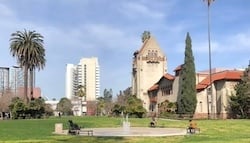
The buildings that frame a grassy quad on a hill above Vermont's capital city are all red brick and white trim, dating from as far back as the 1870s. This quintessential college campus from the 19th century is where a group of business, college, and government leaders is working on the task of reinventing higher education for the 21st century.
This is the site of the Greenway Institute—an entirely new college that emphasizes hands-on learning while stripping away frills that increase costs. It also proposes to highlight ways the current business model no longer works, as evidenced by the 152 colleges and universities that have closed or merged since 2016 and the 442 others that a new projection says are at risk.
Instead of rewarding colleges for their exclusivity, prestige, and wealth, Washington Monthly's "2026 Best Colleges for Your Tuition (and Tax) Dollars" ranking measures how much they help ordinary middle- and working-class students get ahead in life and whether they encourage those students to participate in their democracy.
To do well on this ranking, colleges must recruit students of modest means without overcharging them on tuition or loading them with too much debt, then help them graduate with degrees that bring in decent incomes. Schools earn extra points if they motivate students to vote, serve in the military or AmeriCorps, and enter socially useful professions like nursing and teaching.
Computer science, nursing, and electrical engineering are among the most lucrative fields of study for recent California undergraduates, who on average earn well over $100,000 four years after graduating in these majors.
That’s according to a new analysis of federal earnings data by The HEA Group. The report found that, on average, recent California graduates who received a bachelor’s degree earned nearly twice that of high school graduates, reinforcing the belief that bachelor's degrees help expand opportunities for greater economic mobility.
Kimberly Newson was 45 years old, married, and a mother of six when she enrolled in an associate degree program at Generations College. Her goal was to show her children that you’re never too old to start something new or pursue a degree. But as Newson approached graduation—and ultimately became her class valedictorian—she had already decided her college journey would end there.
That changed when the private nonprofit two-year institution in Chicago announced it would offer bachelor’s degrees for the first time in its 122-year history, starting this fall.
Is this the year that Gov. Gavin Newsom allows students without legal status to legally work at California’s public colleges and universities? A state bill with wide support from Democrats but opposed by Republicans seeks to do just that by adopting an untested legal theory that argues a 1980s federal law banning employment for people without legal status doesn’t apply to state agencies. But university leaders and Newsom worry that implementing the theory could lead to conflict with the Trump administration.
The bill easily cleared the Legislature last week, including a "yes" vote from one Republican. It now awaits Newsom's final decision.



.jpg?width=500&upscale=true&name=istockphoto-2227767639-612x612%20(4).jpg)