|
Dear all,
Please find below your weekly update from the UK Health Security Agency (UKHSA).
If you have any questions please get in touch by emailing externalaffairs@ukhsa.gov.uk
As always, you can also follow UKHSA on X, on Instagram, on BlueSky, and on LinkedIn for all the latest updates. You can also find the latest news from UKHSA on our news page on GOV.UK.
Best wishes,
UKHSA External Affairs Team
New stories
- Flu programme launches for children and pregnant women
- Winter vaccines toolkit and resources
- MenB vaccine limited time offer communications toolkit and resources
- University vaccine communications toolkit
- Latest data shows signs that vaccine uptake by the time children start primary school is stabilising
- New blog post: A guide to keeping kids healthy this school year for parents and carers
- UKHSA, FSA and partners investigate an outbreak of Salmonella in the UK
- Giardia cases in England reach highest level since 2016
Ongoing issues
- Book your place at the UKHSA Conference 2026 - three weeks to go!
- NHS rolls out HPV home-testing kits
- UKHSA blog post: What is HPV and how effective is the vaccine that protects against it?
- Measles continues to circulate
UKHSA communications toolkits
- Information on how to access UKHSA communications toolkits
UKHSA data, analytics and surveillance
- Statistics at UKHSA
- UKHSA data dashboard
- Notification of Infectious Diseases report
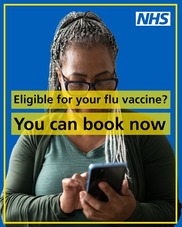
From this week, millions of children and pregnant women can get their flu vaccinations, as the NHS rolls out the first phase of its flu programme to protect families ahead of winter.
Most school-aged children will be offered their flu vaccination at school, while parents of two- and three-year-olds, and of children in a clinical risk group, will be invited to arrange an appointment through their GP practice. From October, parents of two- and three-year-olds will also be able to book an appointment at participating community pharmacies through the National Booking Service.
Pregnant women can get their flu jab at any stage of pregnancy and should speak to their maternity team, GP practice or participating pharmacy about getting protected.
Other eligible groups will begin receiving their flu vaccinations from 1 October, including people aged 65 and over, adults with some long-term conditions, care home residents, carers, close contacts of people who are immunocompromised, people experiencing homelessness and frontline health and social care workers.
Our new blog 'Your guide to who’s eligible for the autumn 2026 flu vaccine' runs through what people need to know about who can get vaccinated this year, and what's changed since last autumn.
We are urging eligible people to book early so they are vaccinated in good time, before winter viruses start circulating widely, to give them you the best possible protection through the autumn and winter months.
|
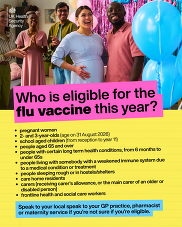
The winter vaccines communications toolkit for stakeholders – produced jointly by UKHSA and NHS England – supports communications and public health professionals to promote winter vaccines including flu, COVID-19 and respiratory syncytial virus (RSV).
It contains key messages, statistics, FAQs and resource links, information on how to order leaflets and posters, and social media assets.
It is available for download via the Campaign Resource Centre, alongside a range of resources to explain the value of winter vaccines, who is eligible and how they can get their vaccines. This includes range of new and updated assets to help explain the eligibility criteria for the flu, COVID-19 and RSV vaccines, which we encourage stakeholders to use on your channels.
For further information about our national vaccine campaign and communications please contact: externalaffairs@ukhsa.gov.uk (UKHSA) or england.vaccinations-screening-communications@nhs.net (NHS England).
|
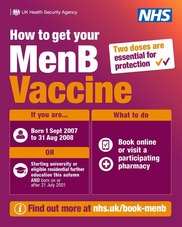
As of 27 August, all eligible young people can book their MenB vaccine by booking online or visiting a participating pharmacy. Our toolkit is being updated to reflect this change and will be available via the same link on the Campaign Resource Centre.
A reminder that the one-off vaccination programme is being offered to:
- Everyone born between 01/09/2007 and 31/08/2008
- Young people under 25 (born on or after 21/07/2001) who will be starting higher education for the first time, or who will be starting further education for the first time as a residential student, in autumn 2026
- International students under 25 entering their first year of university. They should receive their first dose in their home country where possible to give the best chance of protection ahead of the start of the autumn term
Two doses of the vaccine are needed for protection at least 28 days apart.
Our guide for teenagers and young people being offered the Meningococcal B (MenB) vaccine has also now been translated into various community languages, and accessible formats have been added.
|

Our vaccine communications toolkit has recently been updated, and is available to download from the Find Public Health Resources website.
Infectious diseases can be a particular risk for new student students as they start mixing with other students from lots of different locations, and they can spread quickly.
The vaccine communications toolkit provides information to help protect students from vaccine preventable infectious diseases. It includes a range of resources on vaccines including MenACWY, MenB, HPV and MMR and the diseases they protect against.
It is essential for all university and further education settings with residential student populations. It has been produced in collaboration with the devolved administrations, NHS England and meningitis charities.
|
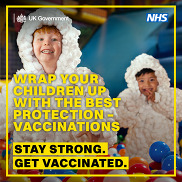
The latest childhood vaccines data shows signs that uptake of key vaccines offered as part of the NHS childhood vaccination schedule shows signs that uptake of key vaccines offered as part of the NHS childhood vaccination schedule by age 5 are stabilising after a decade of slow decline across all vaccines in England.
The annual COVER data on childhood vaccines 2025 to March 2026 show that for children starting primary school uptake rates for vaccines such as MMR and the 6 -in-1 (which includes diphtheria, whooping cough and polio) have remained stable for the past 3 years:
- 2 doses of MMR vaccine measured at 5 years of age: 83.8% in past year (2025-26); 83.7% in 2024-25; and 83.9% in 2023-24.
- 6-in-1 vaccine measured at 5 years: 92.9% last year; 92.8% in 24-25 and 92.6% in 23-24.
However, despite these signs current uptake rates are still well below the World Health Organization (WHO) 95% target and uptake for children measured at age one and age two has decreased again for all vaccines.
We are reminding parents that getting their children vaccinated at the right time is essential to protect them when they are most vulnerable and ensure they are ready to thrive when starting nursery and school.
There are a range of resources available on the Campaign Resource Centre to help stakeholders promote the benefits of childhood vaccines.
|

As children head back to school and we move closer to winter, we are encouraging families to familiarise themselves with some of the common illnesses that can cause disruption to children’s time in school during the colder months.
Our new blog post covers some of the seasonal illnesses that tend to rise during autumn and winter, as well as steps people can take now and throughout the coming term to help protect their family, including from cold weather. It explores available vaccinations, how to recognise symptoms of common illnesses, and how people can make informed decisions on whether a sick student is well enough to attend school or college.
|
The UK Health Security Agency (UKHSA), alongside the Food Standards Agency (FSA) and other public health partners, continues to investigate three clusters of Salmonella Enteritidis (t5.9411, t5.9765 and t0.24068) in the UK that evidence suggests may be linked to imported eggs.
Cases continue to be associated with eating at a range of food outlets, including small cafés, restaurants and takeaway businesses.
Salmonella is the group of bacteria behind one of the most common types of food poisoning in the UK. Most people who have a Salmonella infection experience mild, self-limiting symptoms, but some people can experience more severe disease. The risk to the general public from Salmonella remains low.
Based on FSA guidance, older adults, pregnant women, young children and people with weakened immune systems, can safely eat raw or lightly cooked hen eggs, or foods containing them, if the eggs carry the British Lion mark or are produced under the Laid in Britain assurance scheme. When eating out, the safest approach for vulnerable people is to ensure the eggs they are eating are thoroughly cooked and to avoid dishes containing raw or lightly cooked egg, such as mousses, fresh mayonnaise or hollandaise sauce.
Further information:
|
UKHSA has published new data showing a rise in Giardia cases in the UK.
Giardia is a gastrointestinal illness, caused by a parasite called Giardia intestinalis. The most common symptom is diarrhoea, which is often accompanied by abdominal cramps, bloating, burping, wind and weight loss. If left untreated, in rare cases, children can experience significant weight loss, malnutrition and stunted growth.
Giardia infection can be acquired in the UK as well as during international travel. It spreads through direct contact with infected people or animals, or by swallowing contaminated food or water. The infection can also be sexually transmitted.
Good hygiene - including washing hands with soap and water - can help prevent giardiasis and other common gastro illnesses. Further advice on avoiding food and water borne diseases when travelling can be found on TravelHealthPro.

Join us for the UKHSA Conference 2026 at Manchester Central on Tuesday 22 and Wednesday 23 September. In partnership with the Faculty of Public Health (FPH), this year's conference theme is Securing health together: Partnership, prevention, preparedness.
Alongside leading voices from UKHSA, our plenary programme so far welcomes an impressive line-up of guest speakers and topics, with further announcements still to come -
- Charlotte Refsum (Tony Blair Institute for Global Change) and Saeed Alavi (Vice President for Vaccines and General Medicine, UK, GSK) on how the UK can become a global leader in health security innovation
- The BBC's Disinformation and Social Media Correspondent Marianna Spring and Cambridge University's Professor Sander van der Linden on prebunking misinformation
- Adam Kucharski (London School of Hygiene & Tropical Medicine) and Henrietta Hughes (Patient Safety Commissioner for England) on how AI could shape health security
Our featured abstracts track will also take centre stage for the first time, running alongside the main programme within the exhibition hall.
Visit the conference website for the latest information and to book your place. If you have any questions, please contact the conference team at conference@ukhsa.gov.uk.
|
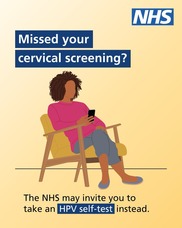
Women who are eligible will start receiving invitations today via the NHS App, text message, email or letter, and once invited they will be able to order a free kit through the NHS App or their NHS online account.
You can read more in the NHS England press release.
|

Last month we published a new blog post explaining what is HPV and the effectiveness of the HPV vaccine.
Research | |