| | Trump and Hegseth give conflicting signals over the length of the Iran war, AI companies race to red͏ ͏ ͏ ͏ ͏ ͏ |
| |  Mexico City Mexico City | Kinshasa |  New York New York |
 | Flagship |  |
| |
|
The World Today | 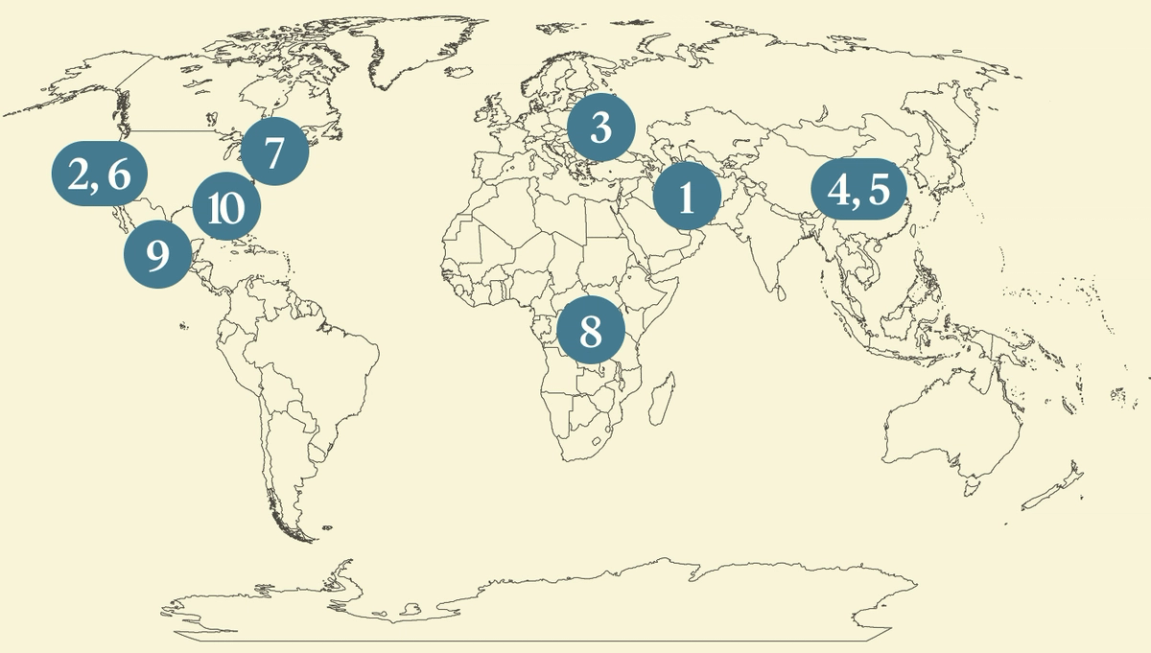 - Iran war’s cloudy path
- AI bioterrorism warnings
- Defense startup irks EU
- US imposes drone tariffs
- China chips years behind
- New legal win for Google
- NYC bans AI in schools
- Ebola deaths pass 3,000
- Mexico murder rate halves
- Star prof’s ‘fake data’
 A Hugo Award-winning science fiction series. |
|
US extends Mideast deployments |
|
 Francis Mascarenhas/Reuters Francis Mascarenhas/ReutersTech firms are scrambling to reduce the threat of AI-driven bioterrorism, the Financial Times reported. AI models are increasingly powerful bioscience tools, already speeding up drug discovery. But as with cybersecurity, those capabilities are dual-use: Information used to make a vaccine can also “create a bioweapon,” one Google DeepMind researcher told the FT, and any advances raise the risk of misuse. An AI safety expert warned of “a ‘Mythos’ moment for AI and Bio,” referring to how Anthropic’s powerful model can find vulnerabilities in most software. Terrorist groups already employ AI, and while AI labs guard against dangerous use, it is harder to assess risks in bioscience than cybersecurity. “All it will take is one screw-up,” an immunologist warned. |
|
Palantir-backed startup irks Europe |
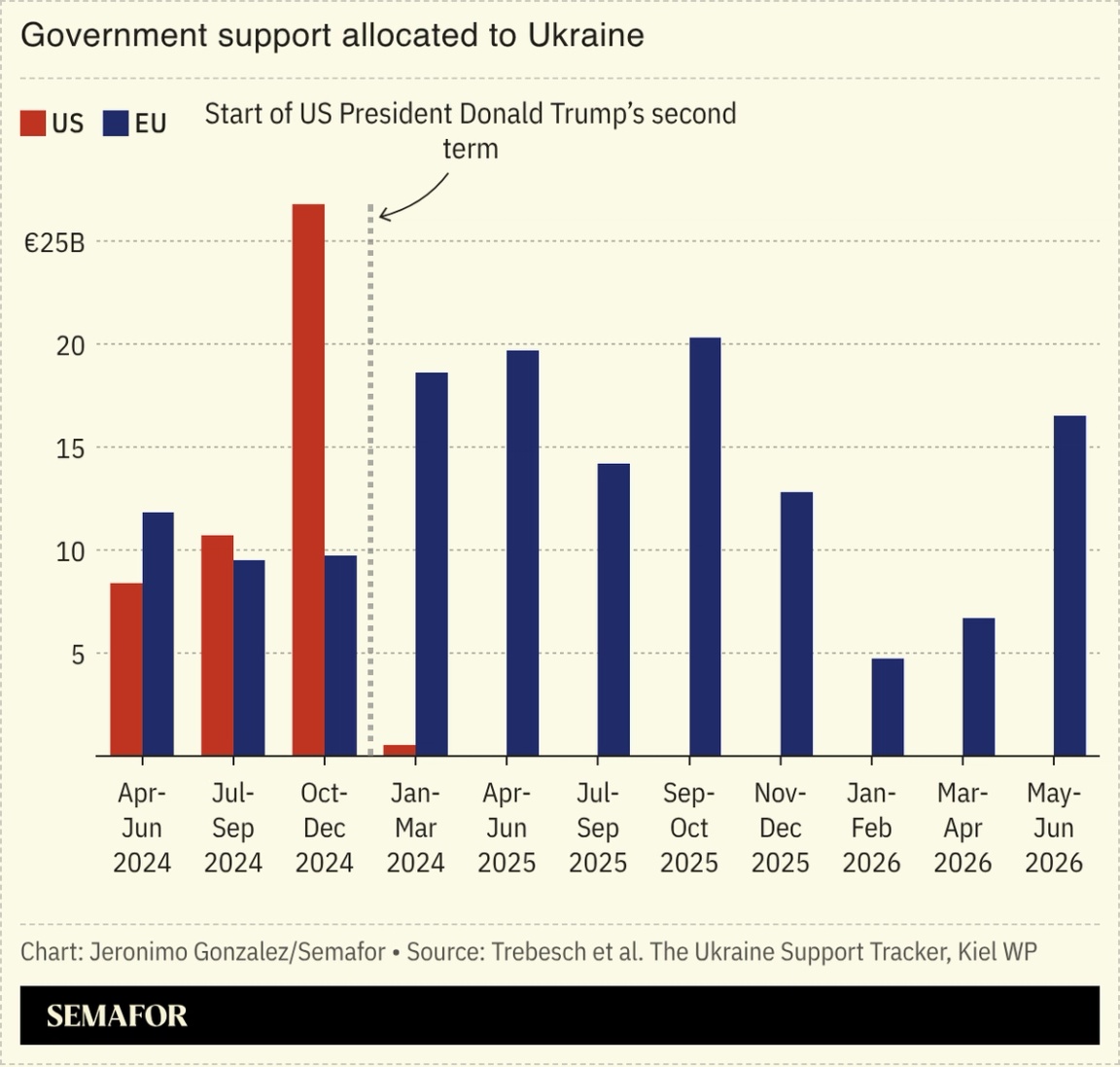 Ukraine’s former defense minister is launching a military tech company backed by Palantir CEO Alex Karp, a decision that risks alienating Kyiv’s European backers. Since US President Donald Trump scuttled aid to Ukraine, European countries have emerged as the country’s main supporters, including with a €90 billion ($104 billion) package approved this year. Several regional countries described access to information and technology as one of the benefits of backing Kyiv, but that expertise may now be shared with US firms instead. Europe is no fan of Palantir, either: The continent is fast trying to wean itself off the company as part of efforts to develop sovereign technological capacity. |
|
US imposes 100% drone tariffs |
 Jason Lee/Reuters Jason Lee/ReutersUS President Donald Trump imposed up to 100% tariffs on drones, targeting Chinese-made models in particular over national security concerns. China’s DJI alone accounts for more than 70% of the global market, and US law enforcement uses its devices to track wildfires and find missing persons. But drones are also increasingly vital for military purposes: Regulators effectively barred the sale of new models in December over national security concerns. Washington is keen to build domestic manufacturing — it has similarly banned foreign-made mobile robots to combat Chinese dominance — but is far behind. One drone user called the ban “industry-killing.” Trump’s family has skin in the game: His sons have financial ties to US drone makers, The New York Times noted. |
|
China chips 15 years behind |
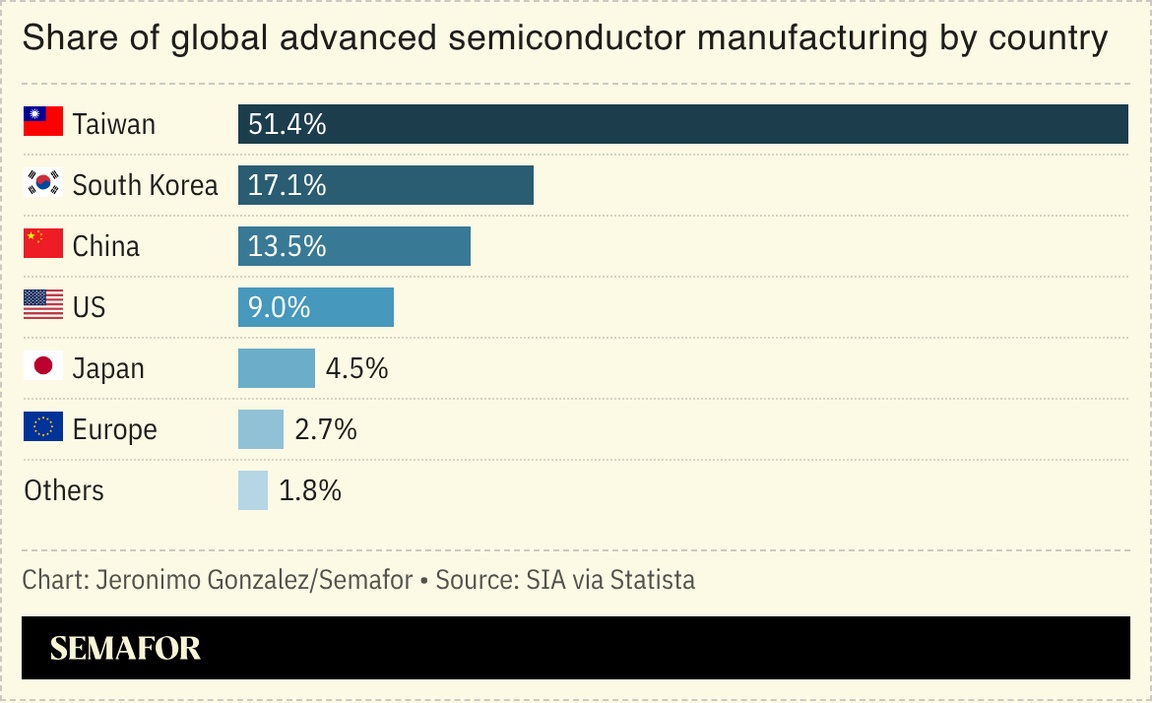 China remains about 15 years behind the West in developing cutting-edge chipmaking technologies, according to a key supplier of the semiconductor industry. The CEO of Zeiss, a German manufacturer of optical systems, said Beijing’s capabilities still trailed the world’s leading producer of top lithography systems, ASML, but warned that China’s progress was hard to quantify. Chinese firms have made significant strides in catching up to ASML — whose machines cannot be sold to China — including recently starting production of deep ultraviolet machines, a step below the world’s most advanced. However, US officials have warned that China may have acquired one of ASML’s most advanced machines, which, if true, experts say could greatly advance the country’s progress. |
|
 Gonzalo Fuentes/Reuters Gonzalo Fuentes/ReutersA US court ruled that Google could keep all of its advertising business, a second defeat for the federal government in its attempts to carve up the tech giant. The Department of Justice argued that Google used its dominance to impose unfair fees; the judge agreed the firm had an illegal monopoly, but imposed lesser remedies than divestment. It is the third consecutive failed US attempt to break up a tech giant: A judge who found Google held an illegal search monopoly declined last year to make it sell Chrome, and another rejected the government’s bid to force Meta to sell Instagram. Private lawsuits have been more successful. Epic Games forced Alphabet and Apple to open up their app stores. |
|
 Jordan Tovin/Reuters Jordan Tovin/ReutersNew York will ban the use of AI in classrooms for under-13s, as concern grows about the technology’s impacts on education. Mayor Zohran Mamdani announced the policy, taking effect during this school year, alongside new screen-time guidelines in school. The ban targets the use of AI tools such as chatbots and AI tutors, although teachers can still use them to plan lessons and do admin. But AI’s greatest impact on education may be outside the classroom itself: An MIT committee found that generative models can now produce “reasonable responses to almost any written assignment,” from history essays to coding projects. Professors are already turning away from homework for assessments because of the risk of cheating. |
|
 It’s a new day in global politics. In a GZERO world, no single power — or coalition like the G7 or G20 — sets the international agenda or acts as a global policeman. Instead, it’s every nation for itself. The GZERO Daily newsletter gives you a foothold in this chaotic new world order through insightful weekday news briefs and analyses. Subscribe for free. |
|
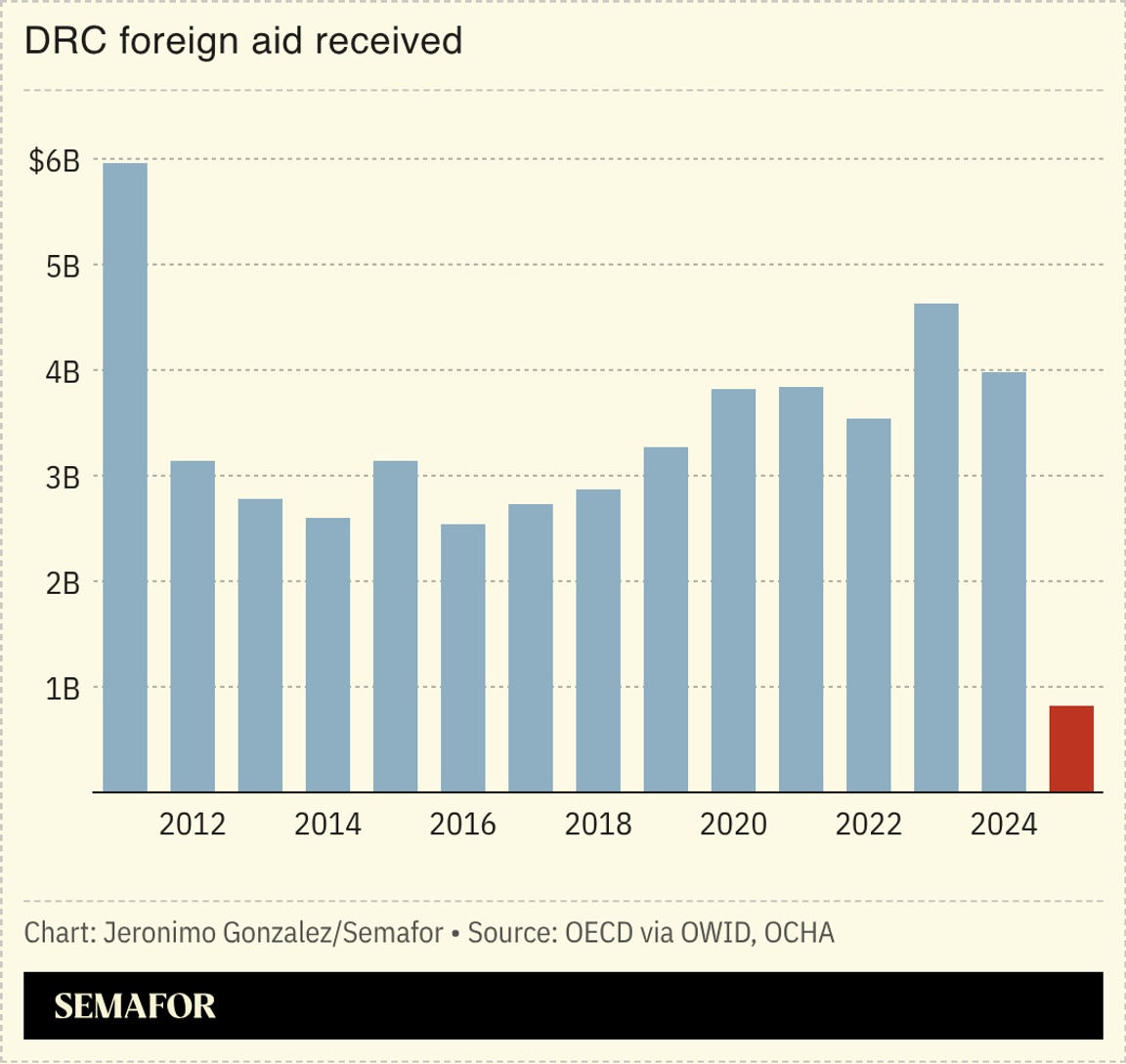 The Democratic Republic of Congo said more than 3,000 people have now died from Ebola, though experts warned the true figure may be much higher as the disease spreads throughout the country. Africa’s Centres for Disease Control and Prevention last month recognized that the outbreak may be three times bigger than officially reported, with authorities struggling to track transmission. Some analysts fear the disease could spread even faster as pupils return to school in the worst-affected parts of the DRC. The head of the World Health Organization once again called for more aid to tackle the crisis, seeking $1.3 billion in funding. “We can control this epidemic if we choose to,” he said. |
|
Mexico murder rate halves |
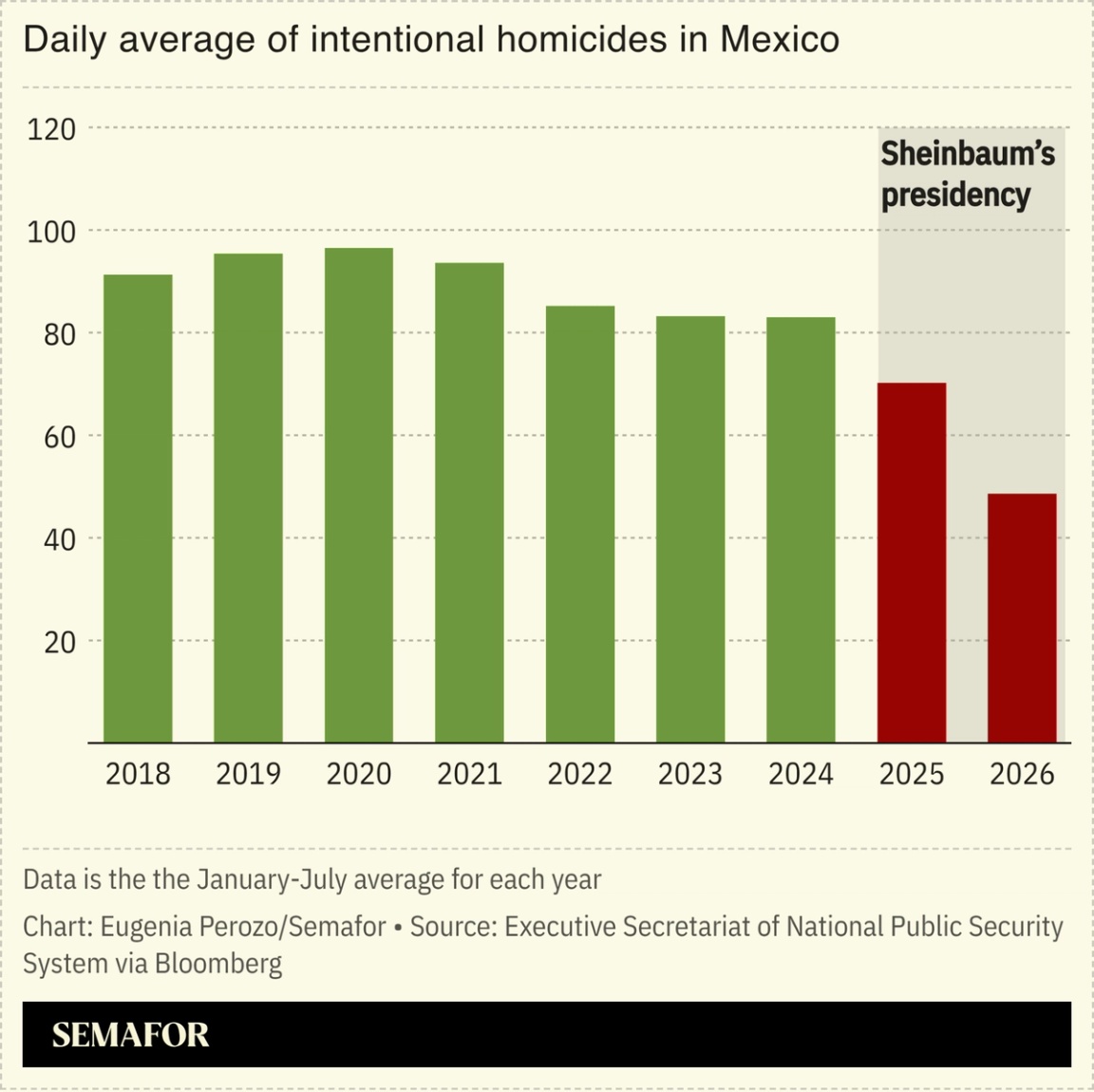 Mexico said its murder rate plunged to the lowest level in years, though critics questioned the veracity of the figures as other reported crimes surge. In her state of the union this week, President Claudia Sheinbaum said homicides had halved from their 2020 peak, putting the official murder rate at around 12 per 100,000 people. H |
|
|


