(Angela Weiss/Getty Images) |
|
|
|
If you’ve been looking into Canadian real estate, be on the lookout for the unexpected. Officials at the utility B.C. Hydro reported that a forested island had mysteriously appeared in a reservoir in British Columbia. Eventually it was confirmed by satellite imagery, only to equally mysteriously disappear entirely from Williston Lake in August. Further investigation found that the island had moved 30 kilometers northward, and authorities hope to soon find out how a beautiful sylvan isle might spontaneously appear in a man-made reservoir.
Markets snapped a three day losing streak and rebounded on Wednesday. |
|
|
|
How the high cost of food is affecting everything else. |
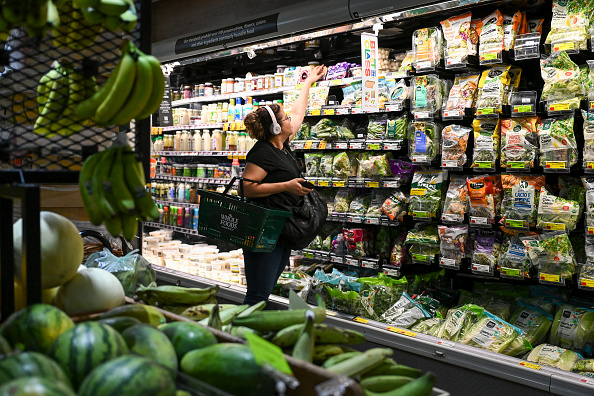
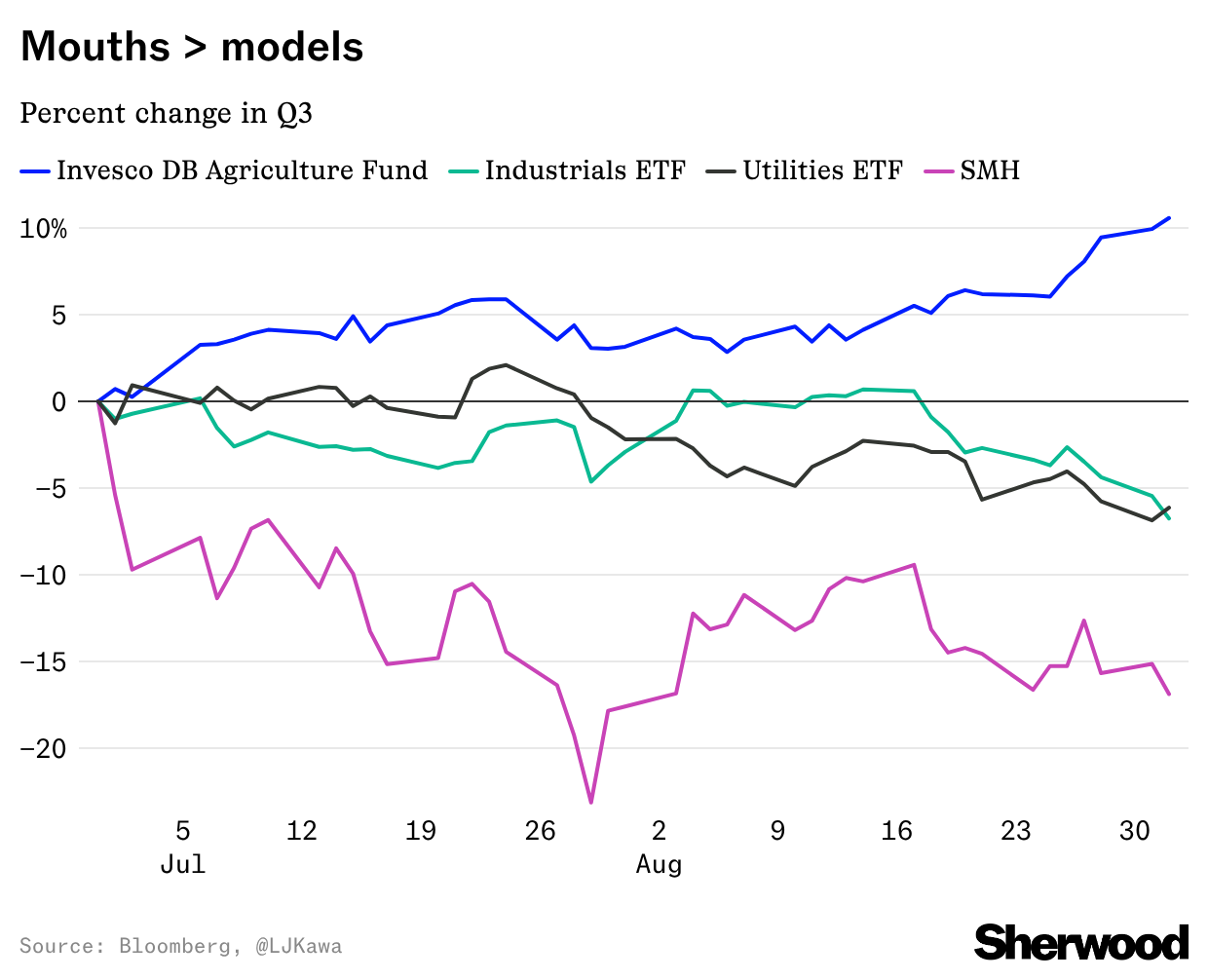
Food has been getting more expensive thanks to an intersecting set of ongoing disruptions, and it’s causing serious problems for the people who eat it, the companies that grow it, the companies that move it, process it, and sell it. The Invesco DB Agricultural Fund, which tracks an index of 10 agricultural commodity futures contracts, is up 50% over the past five years and up 7.4% in the past three months alone.
|
- Some of this is just too big for any one country or company to be responsible for. Even before this year, the Covid-era disruptions were still a serious situation within the food supply change. The El Niño pattern about to hit agricultural markets isn’t going to be a help either.
-
The Iran War made those worse: agricultural commodities require fertilizer and petroleum, and both of those are getting more expensive and harder to get. In corn epicenter Iowa, the average price of a ton of urea fertilizer was $725 in July, up from $537 in February. Those costs get passed on to consumers.
-
Beef prices have spiked; in July, the price of a pound of ground beef was up 10% year over year, thanks to one of the smallest cattle herds on record, with 94.2 million head of cattle in the country, down from 101 million head in July, 2021.
|
Value-seeking consumers have required restaurants and packaged goods companies to make significant and risky changes to their business. Here’s a sampling: |
This isn’t just an issue for consumers and the companies that feed them. Because whe you have to allocate more resources toward basic needs like keeping bellies full, you have less resources to allocate to everything else. |
|
|
|
Luke Kawa in his must-read Entrypoint newsletter pointed out that the increased costs for food are worth paying attention to for broader markets, if only because the prices of agricultural commodities are going up at the same moment that the things that fuel AI momentum (utilities, industrial and semiconductors) are going down. |
Consumers are diverting money away from the assets that might expand our technological horizons and toward the baseline needs that keep us alive day to day, which isn’t exactly investing from a place of strength. |
|
|
|
Solid quarter, good work everybody! |
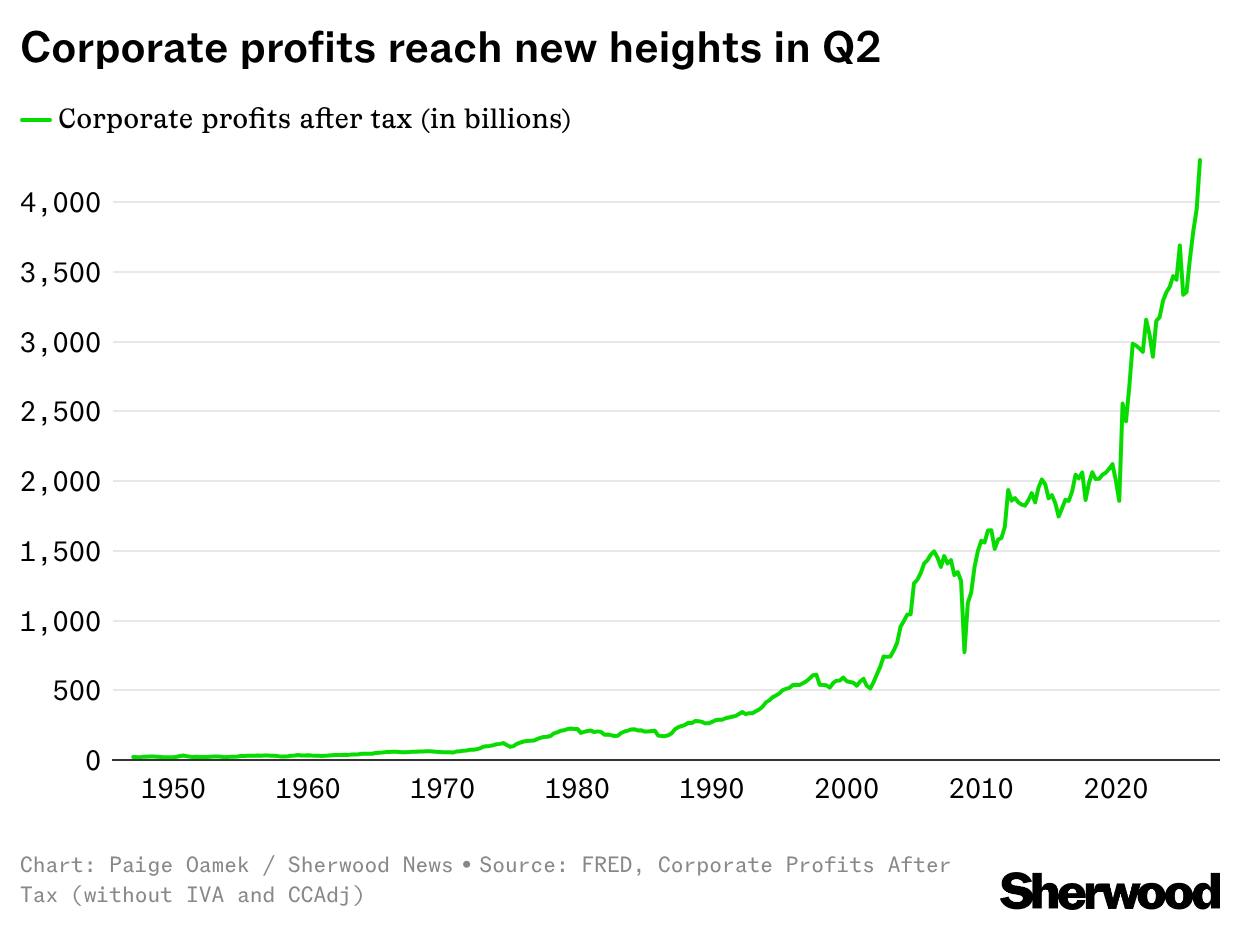
U.S. corporate profits hit an all-time high in the second quarter of this year. According to recent data from the U.S. Bureau of Economic Analysis, businesses brought in approximately $4.3 trillion after tax — or $4.8 trillion when adjusted for inventory valuations and capital consumption (IVA and CCAdj) — an increase of $350 billion from the previous quarter. The gains were propelled by billions in tariff refunds and a resilient consumer that’s been buoyed by the roaring stock market.
Meanwhile, employees’ share of national income fell to 60.2% in August, marking the smallest worker payout share since 1951. So, will those tariff refunds — and other corporate profits — reach consumers who are feeling the pinch? So far, a few retailers like Walmart and Tractor Supply have said they’d lower prices for buyers.
|
|
|
|
|