Many people use AI to make pictures, answer questions, or write a quick message. That can be useful, but it is only the beginning.
The real power of AI is using it like a team of helpers.
An AI agent is more than a simple chatbot. A chatbot answers one question at a time. An agent can have a clear job, follow steps, check information, and help complete a task.
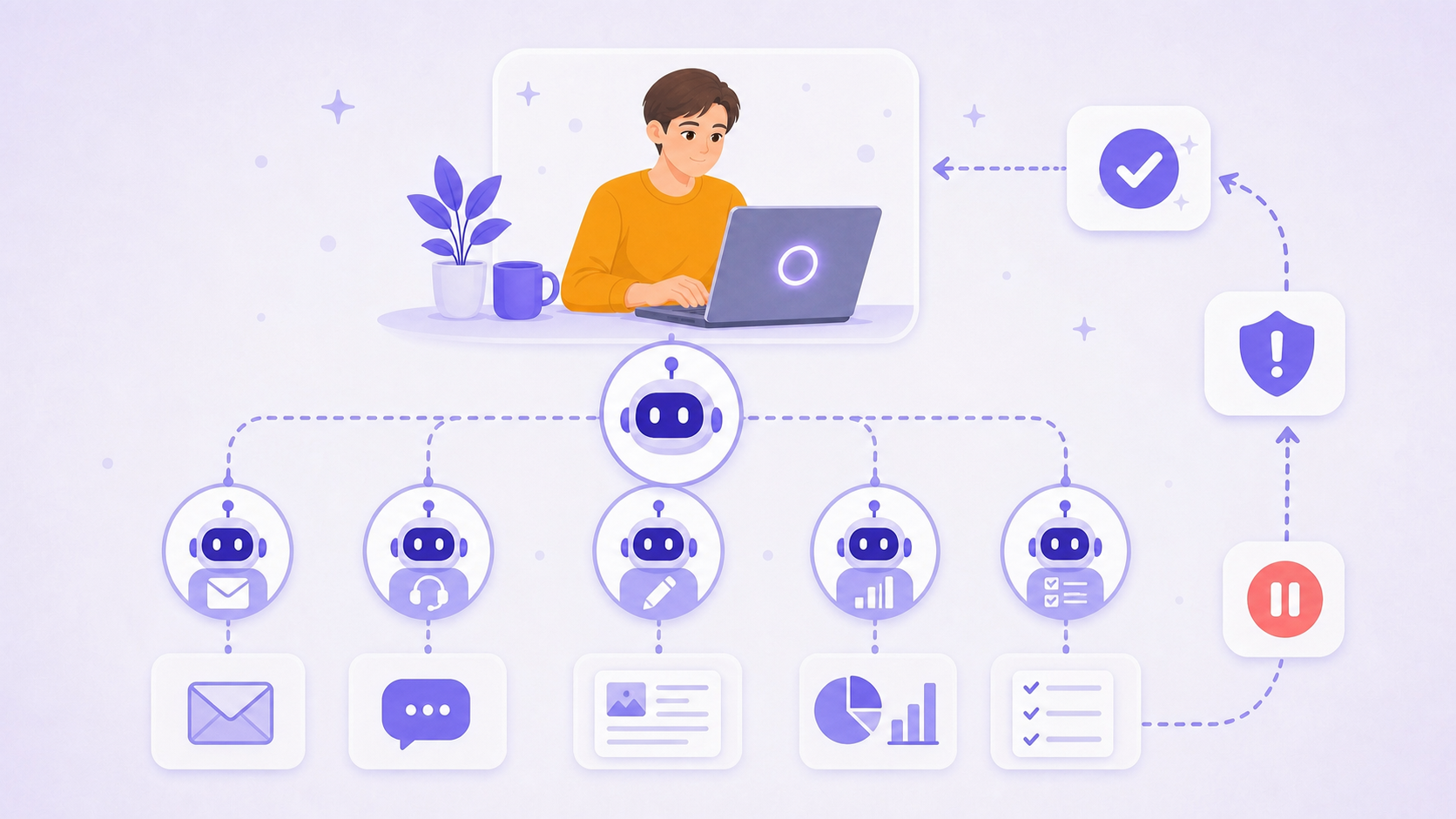
For example, one AI agent could help answer customer questions. Another could organise emails. Another could help create content. You can also use one to review your business numbers or spot problems that need your attention.
Think of it like building a small digital team.
Each AI helper should have three things:
A clear job
A clear result
A clear stop button
The “stop button” matters. AI can make mistakes, so you should always be able to pause it quickly. Important messages, payments, or public posts should still need your approval before they are sent.
AI also improves when you give it feedback. If it gives a poor answer, show it what went wrong and explain how to improve. Over time, it can become more useful because it learns the way you want work done.
A simple example is customer service. An AI agent can respond quickly, day and night, using helpful information about your business. If a customer is unhappy, the agent can flag the message for a human to review. Each day, you can check the problems it found and improve its answers.
This creates a learning loop: the agent works, you review its work, you make changes, and it works better next time.
You do not need to build a huge system on day one. Start with one task that takes too much of your time. It could be sorting emails, answering common questions, creating first drafts, or organising a weekly report.
Then tell AI: “Learn about my business. Ask me questions. Help me design one clear job for an AI helper.”
The goal is not to let AI take over everything.
The goal is to use it responsibly so you can spend more time on the work that matters most.