| | In this edition: Kenya clarifies foreign traders position, Senegal downgraded on debt concerns, and ͏ ͏ ͏ ͏ ͏ ͏ |
| |  | Africa |  |
| |
|
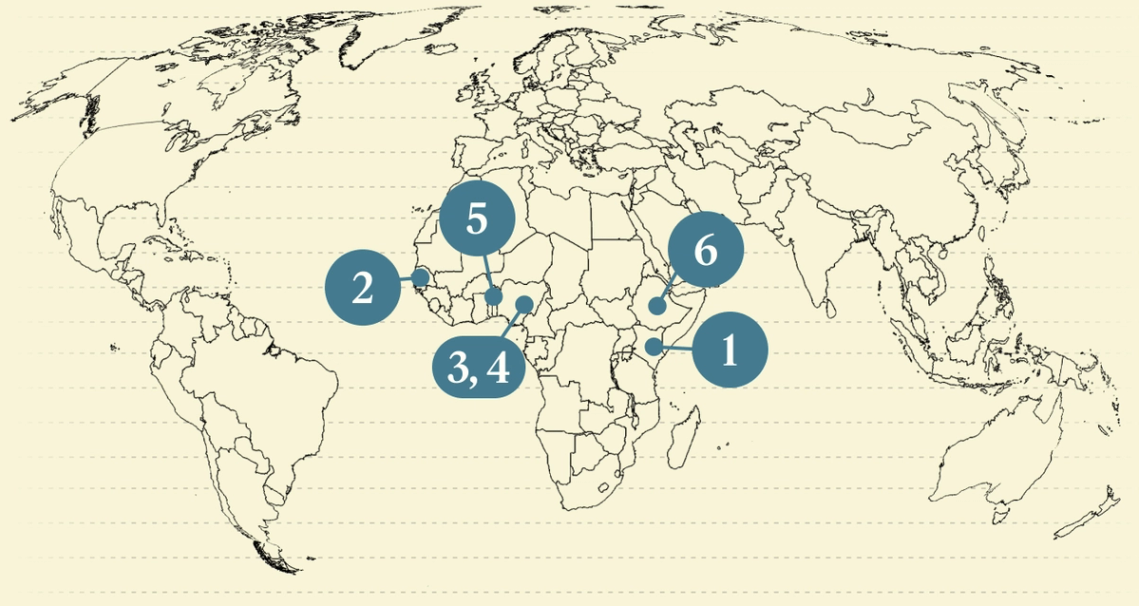 - Kenya’s stance on foreigners
- S&P downgrades Senegal
- Dangote IPO price set
- Moove mulls Nigeria exit
- UN adopts new world map
- Preventing energy crises
 Pineapples come to symbolize Burkinabe food security. |
|
Kenya clarifies foreign trader remarks |
 Monicah Mwangi/Reuters Monicah Mwangi/ReutersKenya’s government sought to reassure foreign traders that they have legal protection to operate in the country after President William Ruto raised doubts over their status in East Africa’s biggest economy. Ruto reportedly ordered authorities to begin shutting down foreign-owned businesses from Sept. 7 as part of a move to restrict small-scale retail to Kenyans. However, the principal secretary for foreign affairs on Sunday said the president’s comments related to a debate about proposed employment legislation. Ruto reportedly made the remarks last week, days before ordering Tata Chemicals to leave the country, accusing it of failing to create jobs and process minerals locally. The president, who will seek a second term in a poll next August, has increasingly focused on employment and wealth creation in his reelection pitch. He took office four years ago, after an election campaign in which he vowed to improve the lives of the poorest Kenyans. But his popularity plummeted amid tax hikes that prompted street protests. — Alexis Akwagyiram |
|
Senegal downgraded on debt fears |
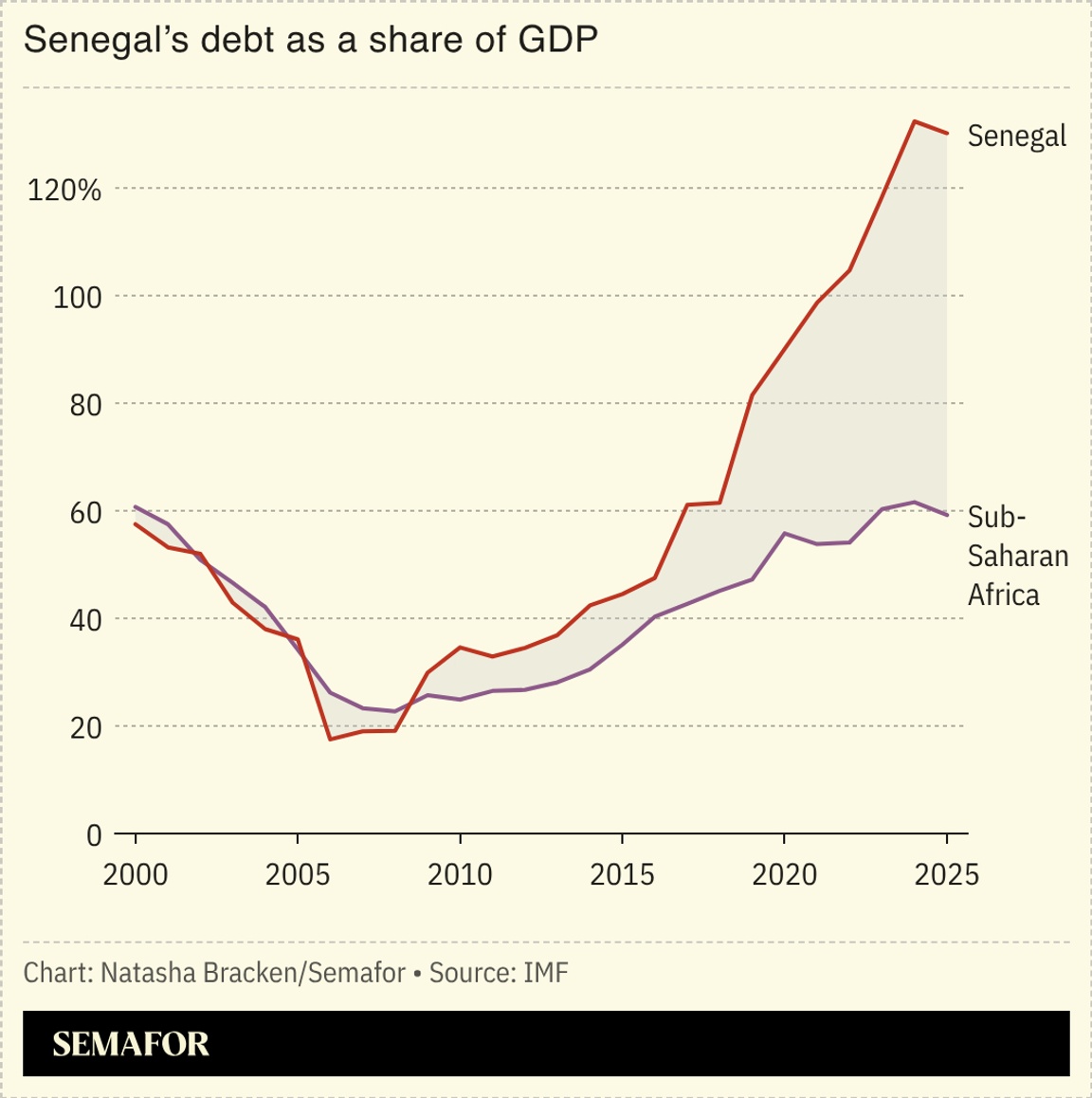 S&P Global Ratings downgraded Senegal’s long-term foreign currency rating, citing a high chance that the country will default on its debt following an agreement reached with the IMF for a $2.2 billion loan. The rating decision drops the West African nation deeper into junk territory and underscores its vulnerability since the government identified billions of dollars in undisclosed debt from a previous administration. Disagreements over how to resolve the problem created a political crisis that ended an alliance between leading figures in the government that came to power in 2024. President Bassirou Diomaye Faye suggested he was open to debt restructuring, which his previous Prime Minister Ousmane Sonko opposed. The schism led to Faye firing Sonko and dissolving his government before appointing new ministers. Sonko, who now holds the influential role of parliamentary speaker, recently softened his stance on debt restructuring. |
|
Dangote Refinery sets IPO price |
 Sodiq Adelakun/Reuters Sodiq Adelakun/ReutersThe Dangote Refinery has secured the approval of Nigeria’s securities regulator to launch an initial public offering on the stock exchange in Lagos. The company, whose 700,000 barrels-a-day oil plant is Africa’s largest, is set to raise about $1.6 billion. The latest step bookends a year-long anticipation for an offer that is poised to represent a landmark moment for Nigeria’s capital markets. Located in a free trade zone on the outskirts of Lagos, the Dangote Refinery opened two years ago and has become the main supplier of fuels to the Nigerian market, as well as a jet fuel exporter to Europe. The public offer is part of a $5 billion fundraising push, half of which the company has already secured from a private placement. The Dangote Group also has plans to list its cement subsidiary in London and is in the early stages of beginning another refinery project in Kenya. Abu Dhabi National Oil Company is in talks to take an ownership stake in the group’s refineries, according to Bloomberg. — Alexander Onukwue |
|
Uber’s unicorn partner mulls Nigeria exit |
 Sodiq Adelakun/Reuters Sodiq Adelakun/ReutersMoove, the Nigeria-born unicorn that has been Uber’s vehicle financing partner in sub-Saharan Africa, is considering an exit from Nigeria following the ride-hailing company’s departure last week. The company, which began offering new cars to Nigerian Uber drivers five years ago with a payment plan tied to daily earnings, is set to leave the country as Uber’s shock exit makes its business untenable, a person with knowledge of the plans said. Moove did not immediately respond to a request for comment. The plan to exit was previously reported by Lagos-based, tech-focused newsletter Notadeepdive. Moove has grown beyond vehicle financing to the management of robotaxis in the US for companies including Waymo, the Alphabet-owned operator. It secured a $2 billion valuation last month to become the latest African tech unicorn. — Alexander Onukwue |
|
UN votes to adopt new world map |
 Thomas Mukoya/Reuters Thomas Mukoya/ReutersThe UN voted to adopt a new map that more accurately depicts the size of nations, a move advocated by African countries looking to right historic wrongs. The Mercator projection — which was introduced in 1569 and is commonly used — distorts the size of countries, with those closer to the equator appearing significantly smaller than they are. Supporters say the Equal Earth map will better present the true area of a country. The resolution, sponsored by Togo and backed by African Union members, passed with the support of 164 nations. The US was the only nation to vote against it. Equatorial nations hope the new map will reflect their economic and political importance: Togo’s Foreign Minister Robert Dussey said a map “shapes perceptions” and “influences how the place of peoples and continents in the world is understood.” The resolution is not legally binding, but is set to prompt changes to the maps used by institutions around the world. A version of this item first appeared in Semafor’s twice-daily Flagship briefing. Subscribe here. → |
|
|
View: Africa needs to rethink energy security |
  Stringer/Reuters Stringer/ReutersAfrican economies need to build energy systems for resilience rather than simply respond to the next crisis, a former Biden White House official argues, as the Strait of Hormuz disruption exposes the continent’s vulnerability to external energy shocks. African governments should use the moment to improve inefficient grids, diversify energy sources, expand domestic refining, and treat energy volatility as a financial risk, writes Nana Menya Ayensu, an energy strategy investment executive. Even oil producers such as Nigeria have struggled to turn domestic resources into reliable local supply, while countries dependent on imported fuel have faced soaring prices and shortages. The broader goal should be to build redundancy into energy systems — investments that can make economies more resilient while lowering costs, strengthening industry, and supporting growth. |
|
 - Sept. 8: South Africa publishes its second-quarter GDP data.
- Sept. 8-9: Seamless Africa, a fintech and digital commerce conference, takes place in Johannesburg.
- Sept. 9: Energy leaders gather for the Angola Oil & Gas Conference in Luanda.
- Sept. 10: South African financial services giant FirstRand releases its earnings results.
- Sept. 10: Escape 2026, a conference for emerging technologies, kicks off in Johannesburg.
|
|
 Business & Macro
|
|
|


