| | In today’s edition: Oil nears $100 a barrel after Houthis attacks, Saudi soccer clubs get thrifty, a͏ ͏ ͏ ͏ ͏ ͏ |
| |  | Gulf |  |
| |
|
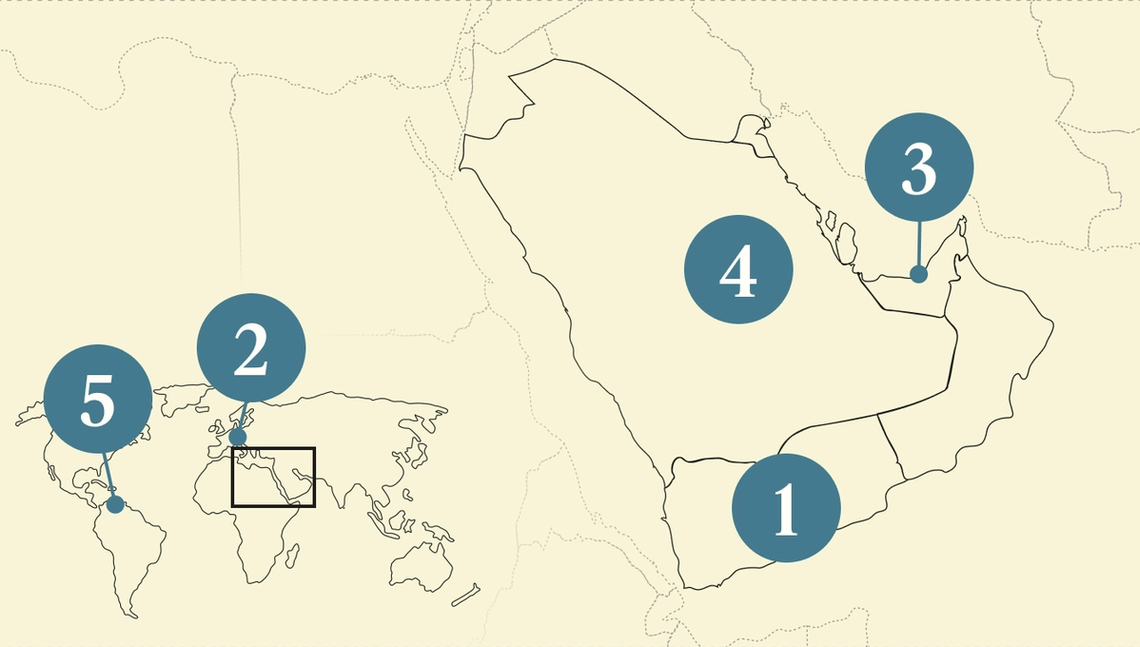 - Oil rises on Houthi attacks
- Gulf leaders on the road
- UAE assembles Chinese cars
- Saudi soccer spending dips
- Venezuela still needs OPEC
 How Etihad Airways kept flying during the war. |
|
Saudi vows response to Houthi attack |
 A satellite image shows smoke in the area around the Saudi Aramco refinery in Jazan. NASA Worldview/Handout via Reuters. A satellite image shows smoke in the area around the Saudi Aramco refinery in Jazan. NASA Worldview/Handout via Reuters.Attacks by Yemen’s Houthis against Saudi energy infrastructure drove oil prices towards the $100 a barrel mark, underlining growing fears that the largely dormant Middle East conflict is worsening. Ballistic missile and drone attacks wounded 73 people and led Aramco to halt operations at some energy facilities in southern Saudi Arabia. The kingdom said it would “take all necessary measures and actions to respond to the threat and neutralize its danger.” In recent days Yemen has seen the worst fighting since a 2022 ceasefire between the Saudi-backed government in Yemen and the Houthis. That had largely held until July, when the Yemeni militia threatened to close the Bab el-Mandeb Strait — a vital outlet for Saudi crude shipments while Iran restricts passage through the Strait of Hormuz. Goldman Sachs raised its oil-price forecast, “reflecting our new assumption that Mideast shipping disruptions continue into 2027.” |
|
Gulf leaders in Berlin, Beijing |
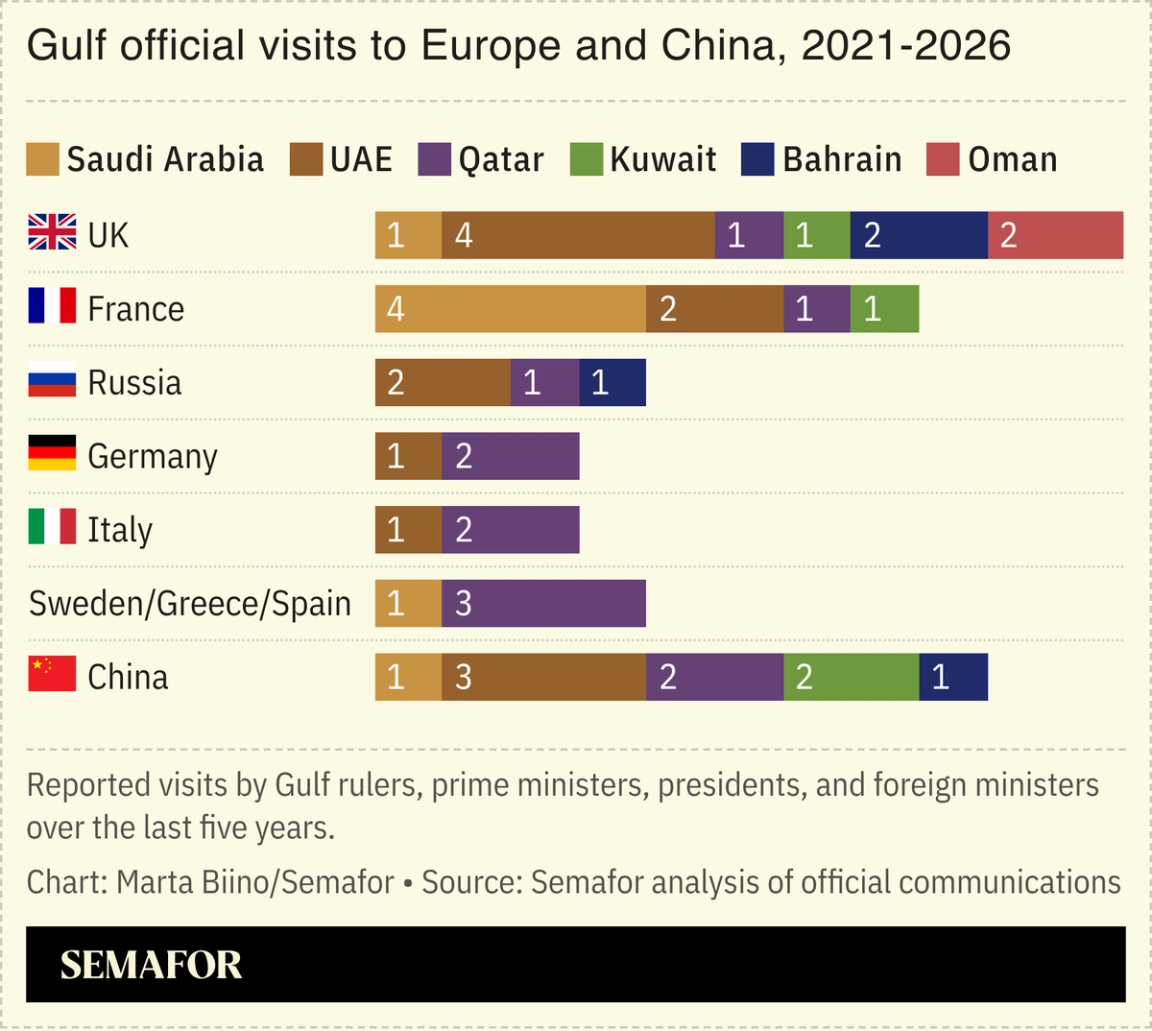 Beijing and Berlin are on the itineraries of Gulf leaders this week, with diplomacy and economic resilience in focus as the Iran war grinds on. UAE President Sheikh Mohamed bin Zayed will arrive on a state visit to Germany tomorrow. The world’s third-largest economy is among Abu Dhabi’s largest European trading partners. German industry has long been in Abu Dhabi’s crosshairs: Its latest prominent deal was ADNOC’s XRG buying a majority stake in chemicals giant Covestro. It’s also a market for UAE products. The country’s non-oil exports hit an all-time high of 453 billion dirhams ($123 billion) in the first six months of the year, the UAE’s foreign trade minister said at the Hili Forum in Abu Dhabi on Tuesday. Meanwhile, Qatari Prime Minister Sheikh Mohammed bin Abdulrahman Al Thani is wrapping up a visit to China, Qatar’s largest trading partner. His trip came as tensions flared in the Strait of Hormuz, a chokepoint for Qatar’s liquefied natural gas exports, which supplies nearly one-third of China’s demand. The Chinese premier expressed support for Qatar’s mediating role with Iran, saying Beijing would work with Gulf states to “restore peace.” — Kelsey Warner |
|
‘Made in the Emirates’ cars roll out |
 Go Nakamura/Reuters Go Nakamura/ReutersChinese carmaker ROX has started producing its ADAMAS SUV in Abu Dhabi, with the first vehicles coming off a new line in the emirate’s Kezad industrial zone this week. The brand, which moved its global headquarters to the UAE last year, plans to have production capacity for 20,000 vehicles in 2027, rising to 300,000 by 2030 for local and export markets. Gulf countries are building up local car industries at varying scales. Saudi Arabia’s sovereign wealth fund backs EV maker Lucid, whose assembly plant near Jeddah will reach full production this year, and owns CEER, the kingdom’s homegrown EV brand expected to roll out this year. Qatar is also interested in the space. ROX is already designing models to local tastes: An Abu Dhabi Edition due in March draws inspiration from Khoos, the Emirati craft of weaving palm fronds. — Manal Albarakati |
|
Saudi soccer cuts spending |
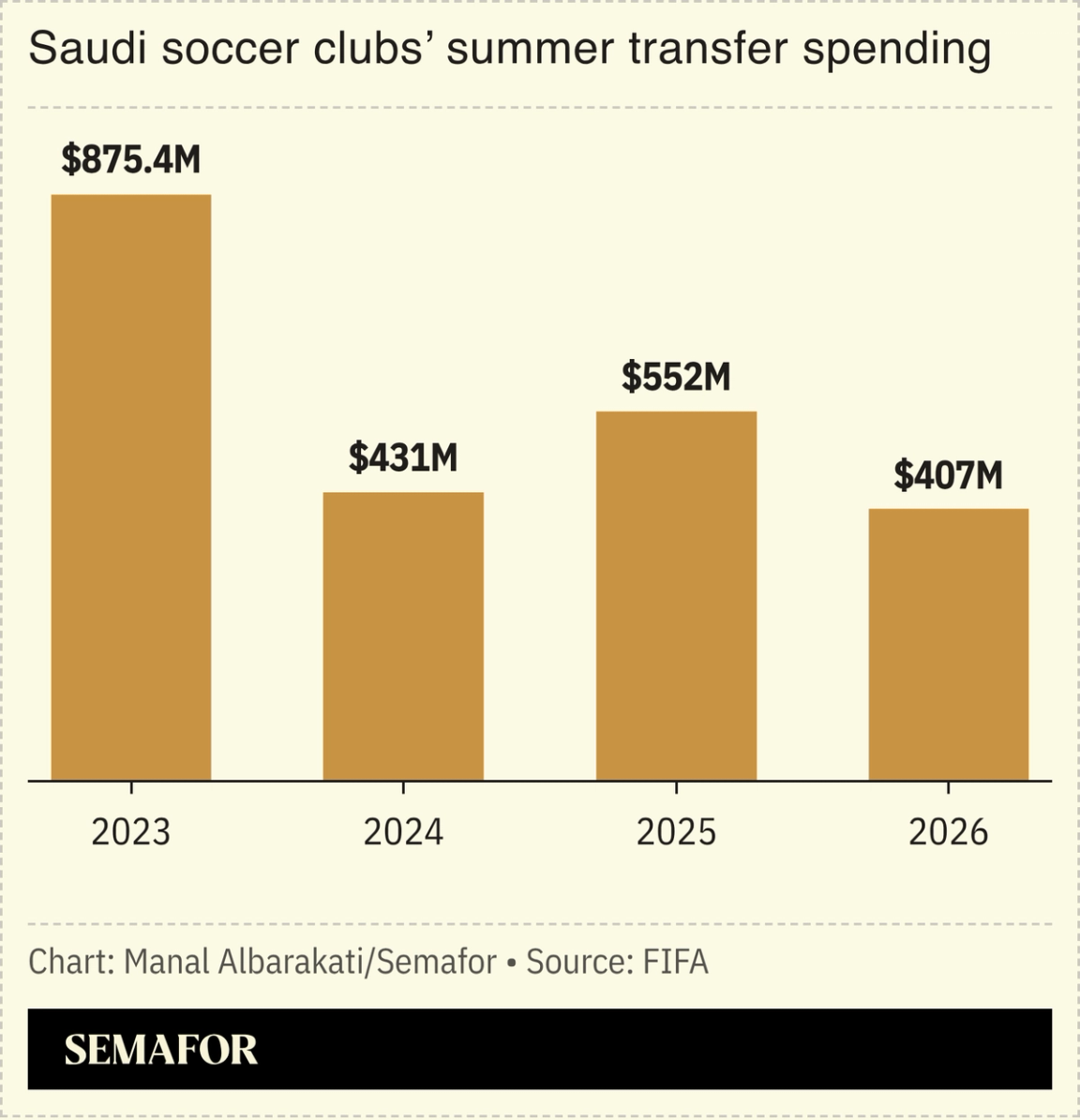 Saudi soccer clubs spent $407 million on international transfers this summer, their lowest total since the 2023 buying spree that aimed to boost its international cachet, according to FIFA’s transfer report. Clubs signed more players this year, but downgraded from the marquee deals that have come to define the league in favor of undervalued European stars such as Gabriel Martinelli, Crysencio Summerville, and Ollie Watkins, who all joined Al Hilal. The team, majority-owned by billionaire Prince Alwaleed bin Talal’s Kingdom Holding, accounted for 42% of the spending. Average fees have fallen by a third since 2023, while player sales hit a record $105 million. Saudi Arabia still ranked seventh globally for spending. The shift reflects the discipline Semafor’s Adrian Elimian reported in July, where clubs were told to buy within their means and sell before they spend more on new talent. — Manal Albarakati |
|
View: OPEC still serves Venezuela |
 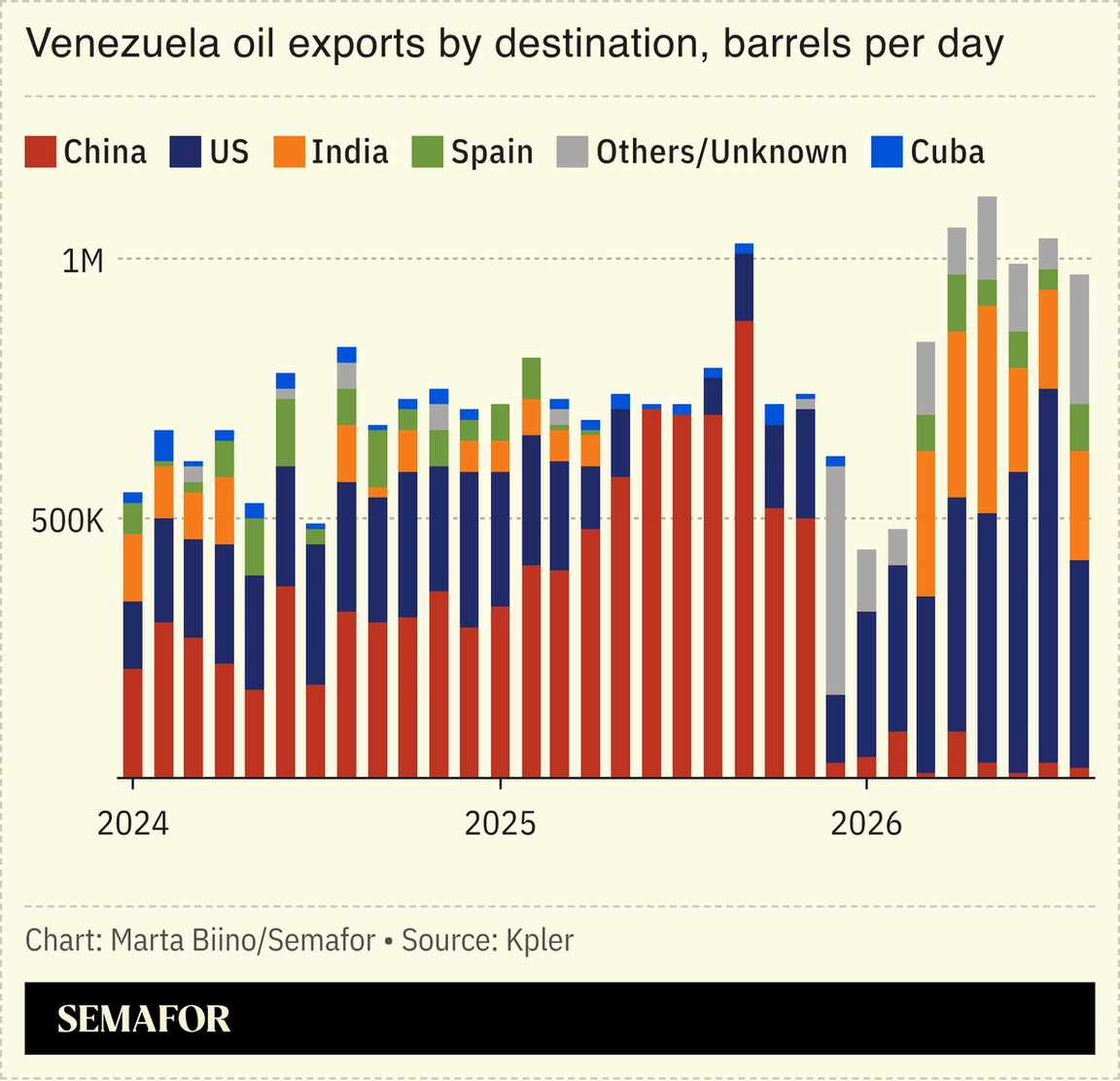 Venezuela, a founding member of OPEC, could deal another blow to the group’s cohesion if it follows the UAE, which left in May, potentially encouraging other members to question the value of staying. But quitting may not serve Venezuela’s long-term interests, Amena Bakr, head of Middle East Energy & OPEC+ research at global commodities data firm Kpler, writes in a Semafor column. “There are no indications that Washington is pressuring Venezuela to leave OPEC — just as there was no US intervention in the UAE’s decision to leave the group,” Bakr writes. “Rather, Venezuela’s interim government appears to be weighing options that align with the interests of US companies considering investments in the country, which would not want to be constrained by OPEC production quotas.” |
|
 Energy- Abu Dhabi’s energy company ADNOC is reportedly in talks to buy stakes in refineries operated by Thailand’s PTT and Nigeria’s Dangote. The deals, which may be reached this year, would help ADNOC secure buyers for its crude and expand its fuel trading business. — Bloomberg
Insurance- The Iran war is driving up the cost of insuring concerts, sporting events, and other large gatherings in the UAE against cancellation. For an event costing $40 million to stage, war-related cancellation cover can now add $5 million or more in premiums. — AGBI
Sovereign Wealth |
|
 Denis Balibouse/Reuters Denis Balibouse/ReutersEtihad Airways ran war-time operations from a crisis center next door to its control room, where executives decided which flights turned back, diverted, or pressed on as the war constrained regional airspace. The second room exists, chief executive Antonoaldo Neves told CNBC’s Dan Murphy, “so that you can take decisions without impacting the ability of the control room to manage the operation.” From those two rooms the airline shrank capacity to 30% in March, then gradually climbed back to 90% by June and exceeded last year’s levels a month later. Neves said running an airline through a war wasn’t his toughest job: a prior stint in Brazil trained him for volatility. “We have to love problems. One day is airspace. The other day is a storm. I cannot pick and choose a problem. It is like picking your favorite son.” |
|
|


