Trouble viewing this email? Read it online
Globe Climate

Add this address to your contacts to avoid spam filters.

September 8, 2026Sign up
Climate
Good afternoon, and welcome to Globe Climate, a newsletter about climate change, environment and resources in Canada.

A recent federal report explains how how climate change is physically transforming the country. At nearly 1,500 pages, it is the country’s definitive statement on the physical state of the climate.

But first, here is the most recent news. Let’s dive in.

If you’re reading this on the web or someone forwarded this e-mail newsletter to you, you can sign up for Globe Climate and all Globe newsletters here.

Bastian Fleury/Supplied
The Himalayan disaster that led to flooding in Nepal is a cautionary tale about the climate crisis
Read Story
Sergei Grits/The Associated Press
World must figure out how to get temperatures below the danger zone and back to safety, officials say
Read Story
Peter Lusztyk/Supplied
Autumn colours delight during these excursions both in and on the water
Read Story

Darren Calabrese/The Globe and Mail

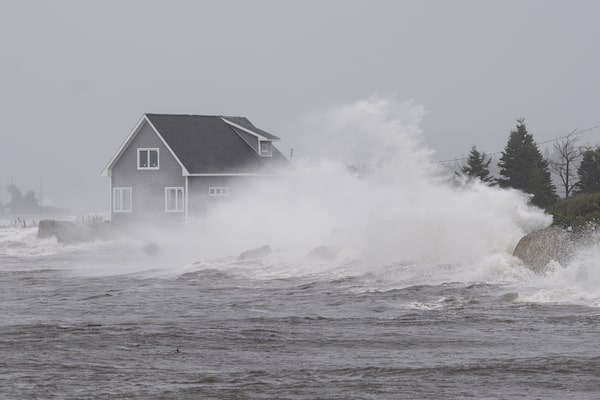
Canadians are feeling the effects of climate change to a greater degree and facing more serious consequences than federal scientists projected less than a decade ago.

That’s the message in a comprehensive federal report released on Thursday. It details how climate change is physically transforming the country and how those trends are likely to become more pronounced in the future, from floods, wildfires and heat waves to vanishing glaciers and permafrost.

A striking feature of the report is the high degree of certainty that ties so many diverse effects to fossil-fuel emissions as the primary driver of climate change.

“Warming temperatures have driven wide-ranging, interconnected, and sustained changes across Canada,” the report notes unequivocally in one of its headline statements.

Running nearly 1,500 pages, Canada’s Changing Climate Report 2026 is the country’s definitive statement on the physical state of the climate. Only the second such document ever issued by the federal government, it is the product of more than 100 experts working over a three-year period.

But unlike its predecessor, whose release in 2019 was widely publicized and accompanied by minister-led press conferences and technical briefings to help the public grasp its implications, the second edition was quietly posted onl