| | In this edition, how US and Chinese companies can work together on AI safety, and the trailer for a ͏ ͏ ͏ ͏ ͏ ͏ |
| |  | Technology |  |
| |
|
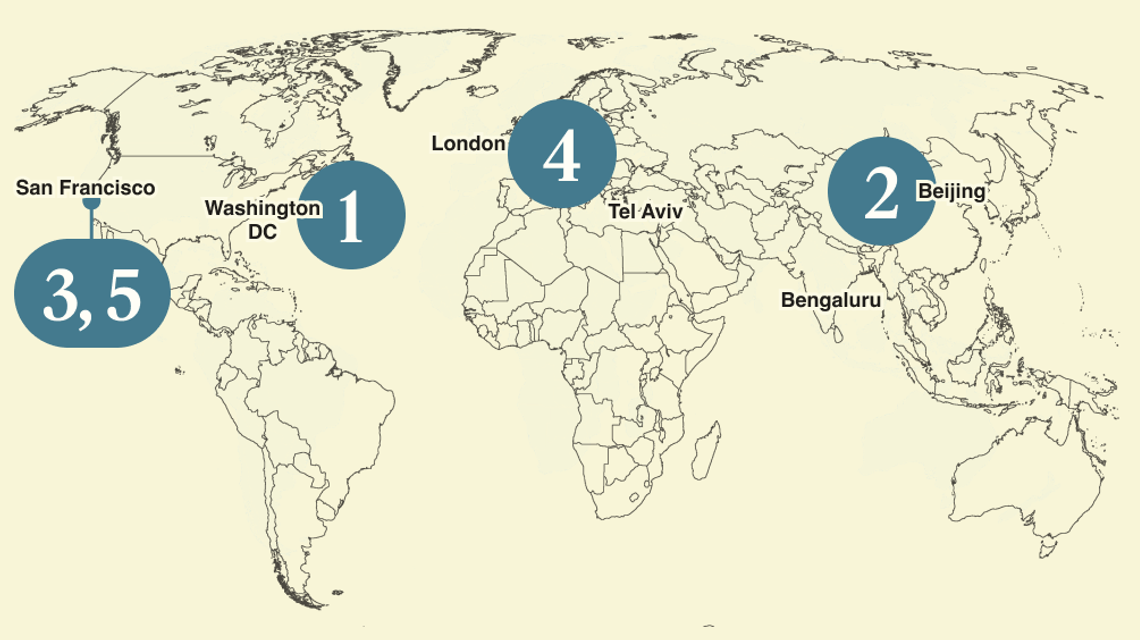 - AI transparency push
- China’s take on smart glasses
- Agents for everyone
- Students don’t need tech
- Altman as Bond villain
 How US and Chinese companies can work together on AI safety, and a startup wants to make American robotics fun again. |
|
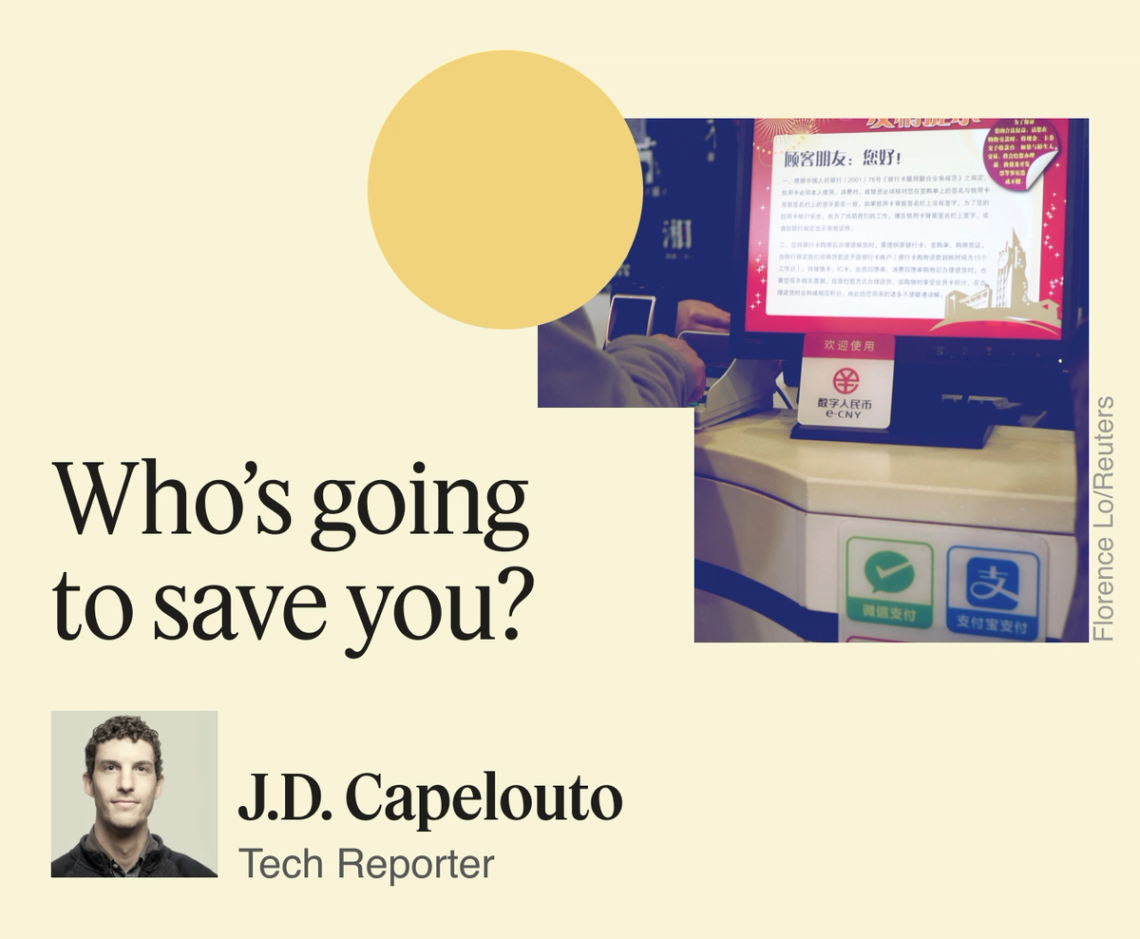 A potentially devastating bug in Chinese superapp WeChat is the latest security scare underscoring why relying on slow-moving — and often opposing — governments won’t solve AI’s thorniest problems. Instead, it’s falling to private companies to voluntarily step in and handle the threats themselves. US security company Calif this week revealed an attack tool, known as a worm, that can hijack a WeChat account and spread seamlessly through victims’ contacts regardless of whether any of its users click on anything to let the worm in. It came weeks after the AI-powered hack of Hugging Face — and the use of a Chinese open-source model to figure out what happened — reverberated across companies and governments. The episode goes to show that “cyber vulnerabilities don’t map neatly onto state borders,” US-China tech expert Samm Sacks told me. It’s true. Fortunately for WeChat’s 1.4 billion users, the exploit was fixed. But only after the American startup alerted the app’s owner Tencent, the Chinese tech giant the Pentagon has sworn off due to its alleged ties to the Chinese military. While AI superpowers like China and the US have equal incentives to manage cyber risks, trust between the countries remains nearly nonexistent. So does the very definition of AI safety: Beijing doesn’t want to be dominated by US frontier labs and is working hard to define the discourse “under its own worldview,” ChinaTalk wrote recently. Meanwhile, the US government is warning of Chinese AI firms’ “malicious” distillation campaigns. A more technical approach to the idea of AI safety, one driven by private companies, researchers, and technologists rather than ideology, can serve as a stronger foundation for any bilateral agreement. In absence of that, the private sector will have no choice but to lean on unofficial cross-border communication and collaboration to keep the next WeChat worm from leaving the lab. |
|
Coalition pushes WH to reveal AI framework |
 More than two dozen organizations from both the left and right are urging the White House to publicly release its voluntary AI security framework, Semafor’s Ashley Gold scooped. In a letter first shared with Semafor, organizations led by Americans for Responsible Innovation and the Center for Democracy and Technology asked President Donald Trump for more transparency. “The government has a fundamental responsibility to share the parameters of the process for reviewing frontier AI models prior to wider deployment,” the letter reads. The White House previewed the voluntary framework last month with a select group of tech companies, but pressure is mounting on officials to disclose it more broadly following OpenAI’s attack on AI model repository Hugging Face and the release of OpenAI’s latest model, Astra. The letter’s authors, including conservative-leaning groups like Americans for Prosperity, along with pro-consumer groups like Public Citizen, wrote that “a lack of accountability over the governance of a technology that is becoming more critical to our nation would be inconsistent with democratic values and likely lead to a loss of public trust.” |
|
China makes enterprise push for AI glasses |
 A woman tries on a pair of Quark AI glasses by Alibaba. Tingshu Wang/Reuters. A woman tries on a pair of Quark AI glasses by Alibaba. Tingshu Wang/Reuters.Chinese tech companies are pushing to integrate AI and coding tools into smart glasses as a global debate builds over the devices’ privacy and security implications. Alibaba Cloud announced a glasses edition of its AI coding platform last week, while Tencent is bringing its office agent to co-branded Rokid frames. As smart glasses tick up in popularity in China, the government has issued an industry code of conduct, which asks manufacturers to provide clear indicators when cameras or microphones are recording. A similar dynamic is playing out in the US with Meta’s glasses, where the company disabled the camera on thousands of devices after some bad actors tampered with them to covertly record others, Semafor reported last week. Unlike in the US, where many workplaces are banning the glasses, Chinese companies that allow them face other security risks since they could in theory amass businesses’ data, including sensitive documents or internal codebases. Still, the country’s top-down regulatory system allows Beijing to more quickly step in if security and privacy issues get out of hand, a contrast from the US’ often slow-moving and piecemeal approach. — J.D. Capelouto |
|
Meta brings agentic AI to the masses |
 Courtesy of Meta Courtesy of MetaMeta’s new AI assistant Muse could be the first experience a lot of people have with the power of AI that can actually do things for you, rather than just answer questions. Think of it like a computer sitting on Meta’s servers that connects to and can control your email, your calendar, or your health information when you give it commands — similar to what vibe coders use ChatGPT and Claude Code to do. But will people trust Meta with such intimate information? Meta made a big deal of addressing that data security question in its announcement Tuesday — it used the word “secure” 11 times in the press release. If the company can convince its 3.6 billion daily users to get on board, it could transform what AI’s “pro-sumers” have mastered into a consumer tour de force. But that’s a big if. Even Google, which has a huge head start, has been unable to get its consumer-oriented Gemini Spark to catch on. — Reed Albergotti |
|
Students perform better with less AI |
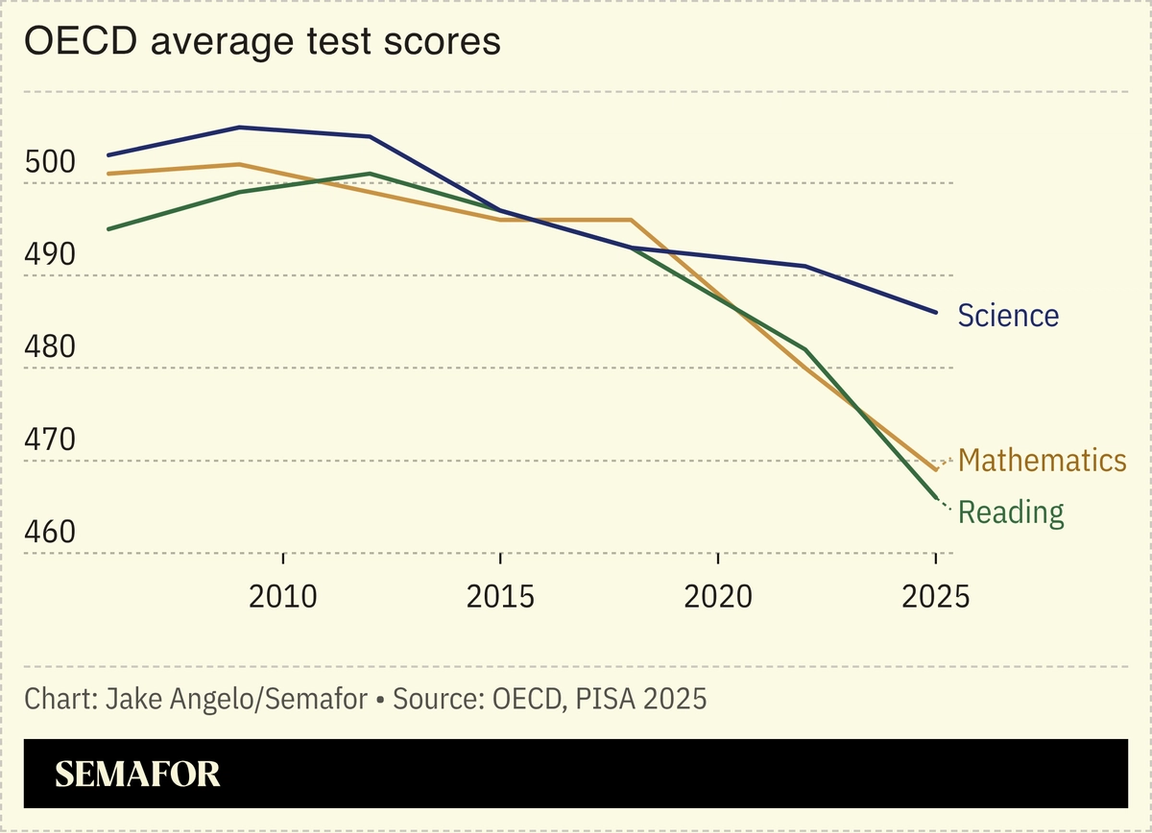 Students won’t learn without exercising their brains, “in the same way that we do not become fit by watching sports but by doing sports,” wrote an OECD researcher in a recent report. Students who refrain from using AI perform better academically than those who use it, according to the report, which surveyed more than 760,000 students across 91 countries. Researchers found that consuming information that doesn’t require any “cognitive struggle” proved an ineffective educational method. After a decade-long push to integrate technology into classrooms, educators are now reversing course. Twenty-two states and Washington DC have mandated bell-to-bell phone bans, and for the first time this school year, New York City’s and Los Angeles’ public schools are implementing restrictions on AI use, impacting more than 1 million students combined (New York also prohibited teachers from using AI to grade assignments). Edtech may have already failed to support learning, though. Reading, science, and mathematics scores have fallen steadily over the past 15 years before widespread AI adoption. Education is best done offline, like it was before the advent of the personal computer. And technology has gotten so user-friendly, it isn’t necessary to instruct students on how to work with it. Plus, most young people are better versed in AI and smartphones than their parents and teachers. — Jake Angelo |
|
Trailer for Altman biopic misses real drama |
 @IGN/YouTube @IGN/YouTubeThe ominous trailer for the Sam Altman movie, Artificial, launched Tuesday, the same day OpenAI became the first AI company to solve one of the Millennium Prize challenges. It was like a tribute to the company’s brutal duality, constantly achieving impressive milestones while being forced to combat the worst public relations. The movie seems like an attempt to paint Altman and AI as villains, with lines like “Countries will fall. Industries are gonna collapse,” as the OpenAI CEO walks by assault rifles with their own mood lighting in what appears to be a secret bunker. It also has parallels to The Social Network, a runaway box office success in 2010 about the rise of Mark Zuckerberg, the fall of his co-founder and, who can forget, the Winklevii. But OpenAI’s founder drama is even more explosive than Facebook’s: Altman had to defeat Elon Musk. ChatGPT wasn’t hatched beneath a volcano to take over the world. From the trailer, Artificial feels like a missed opportunity. And turning a great startup drama into a Bond film (but without James Bond) is inherently less interesting than reality. — Reed Albergotti |
|
 MIT Technology Review’s 35 Innovators Under 35 features young scientists, entrepreneurs, and inventors who are driving meaningful progress in AI, climate tech, biotech, computing, and more. Subscribe to save 17% and find out who made this year’s list, plus get bonus AI content. |
|
 Courtesy of Dynamic Creatures Courtesy of Dynamic CreaturesA new startup wants to make American robotics fun again. Dynamic Creatures, a spinoff of Boston Dynamics, launched out of stealth yesterday with a focus on making robots for hospitality and entertainment, starting with theme parks and retail spaces. Boston Dynamics was once best known for its viral videos of robots doing cool tricks, but that space has been taken over by Chinese humanoids and their flashy dance moves. The American sector, meanwhile, has poured into manufacturing, industrial, and defense use cases for robots. Dynamic Creatures is building software, and using hardware from Unitree, AgiBot, and Boston Dynamics. The plans require rethinking safety “from the ground up,” CEO Marc Theermann told Semafor, since he wants to make robots that people will be comfortable hugging. |
|
 The News: The Democrats’ battle for the US House is exposing a divide between flush battleground hopefuls and lesser-known challengers whose fundraising is struggling to keep up with Republicans. → |
|
|
|


