Welcome back to Buffering, where we’re reading Vulture’s fall preview and eagerly anticipating two big unscripted premieres next week: The return of Dancing With the Stars to ABC and the launch of Traitors: New Blood on NBC. Both are excellent American adaptations of formats which will also have new localized editions airing this fall in the U.K. And yet, for some reason, U.S. audiences won’t be able to (legally) watch either Strictly Come Dancing or Celebrity Traitors as they unfold weekly on the BBC over the next few months. If history is any guide, the British Traitors will make its way to Peacock, but only weeks or months after all episodes have aired on the Beeb — and the twists, turns and ultimate winner of the competition have been spread all over the internet. Meanwhile, Strictly has never been available in the States, other than via performance clips posted to the BBC’s YouTube page. In an age where Netflix and Prime Video have bulldozed borders and made global premieres a regular thing, it’s a major head-scratcher as to why Peacock and Disney+ don’t stream these two massive hits day-and-date (or next day) with their British rollouts. It can only help boost their own versions of these formats.
We actually get into the broader future of DWTS and Traitors in our main story this week, which is a look at some of the biggest questions facing the entertainment business as we march into the fall. I enlisted the help of my colleagues Eric Vilas-Boas, Savannah Salazar, and Chris Lee to tackle the topics we’ll be watching. And we asked Vulture’s Joe Reid for one last gut check before the Emmys on Monday. We’ve also got our usual Briefering section, which has some thoughts on how Apple’s new foldable iPhone might change streaming. Thanks for reading, and Never Forget.
|
— Joe Adalian, West Coast editor
|
|
|
|
Subscribe now to get unlimited access to everything New York, including subscriber-only newsletters, exclusive perks, the New York app, and more. |
|
|
|
In this edition: John Ternus, Bari Weiss, Alan Cumming, J.K. Rowling, David Ellison, Rob Bonta, Ted Sarandos, Greta Gerwig, Danny Boyle, Brad Pitt, Denis Villeneuve, Robert Irwin, Andy Richter, Florence Pugh, and … a potential Emmy for Emmy? |
|
|
|
Hold the phone … or don’t! The newly announced iPhone Duo’s foldability may have been the focus of Apple’s latest rollout event yesterday, but regardless of how subtle or not its middle crease will ultimately look on most units or whether the design will alienate lefties, its ability to collapse on itself is far from the only feature teased yesterday. One arena that CEO John Ternus’s new flagship device plainly aims to excel in is streaming video — so much so that the Apple Event and its press materials hailed it as “the best iPhone for enjoying movies, shows, and games.” And indeed, the company — valued at $4 trillion — seems to have done everything in its design power to emphasize that users can watch stuff better on this thing. —Eric Vilas-Boas (Read more.)
|
|
|
|
8 Big Questions Facing Hollywood This Fall A season of mergers, box-office throwdowns, and culture warring IP is upon us.
|
By Josef Adalian, Chris Lee, Savannah Salazar, and Eric Vilas-Boas |
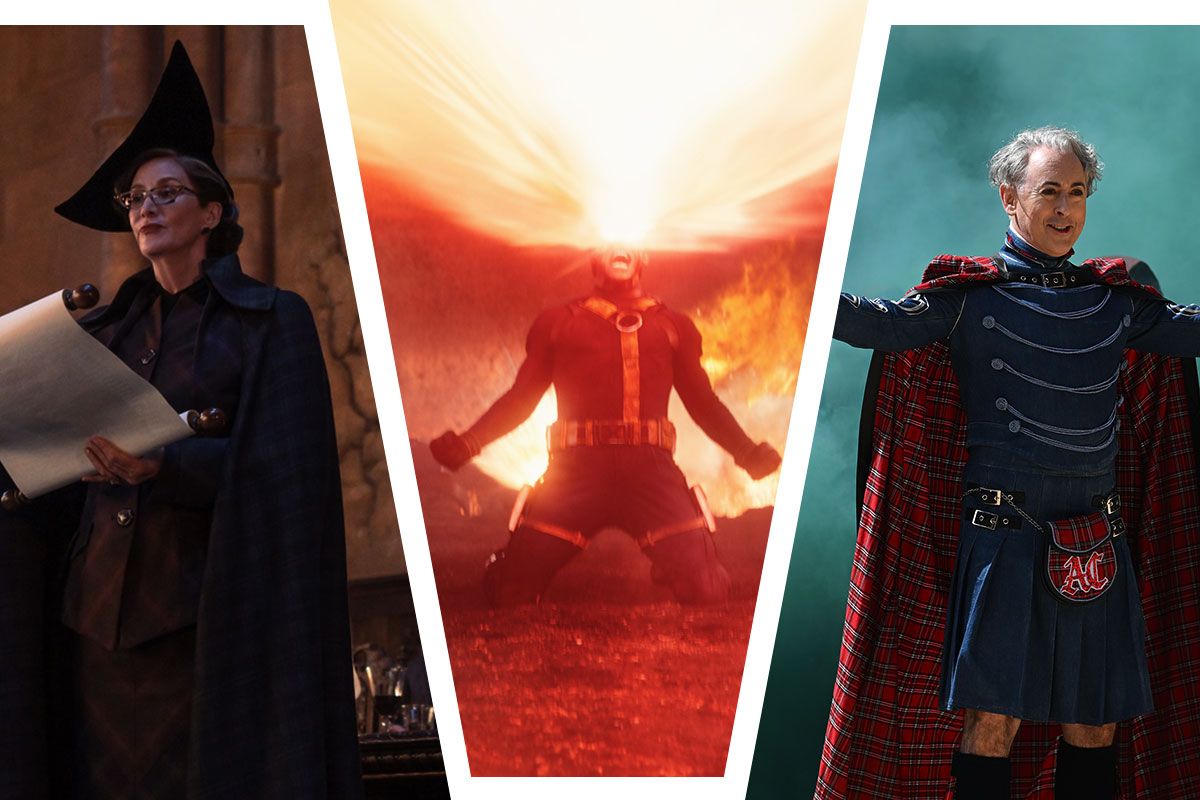
Photo-Illustration: Vulture; Photos: Aidan Monaghan/HBO, Marvel, Euan Cherry/NBC via Getty Images |
Thanks to a monster summer at the box office, new twists in the never-ending saga of the Paramount-Warner Bros. merger, and streaming’s unquenchable thirst for year-round #content, there wasn’t much of a slow-down in entertainment industry headlines over the last few months. But the arrival of fall means the pace in Hollywood is about to quicken. We’ll see the usual flood of Oscar contenders (the documentary race is already looking ridiculously stacked) plus an array of potential holiday blockbusters. There will also be high-profile newcomers on the small screen, though TV’s bigger focus will be on maximizing the impact of returning faves and minimizing the erosion of linear ratings. And hanging over it all: existential dread about shrinking budgets, the rise of AI, and, yes, David Ellison’s relentless quest to gobble up as much of Hollywood as he can.
But that’s the big picture. Much more interesting are some of the micro-dramas (including, yes, micro-dramas) likely to produce headlines between now and the end of the year. Here are eight of the biggest questions facing the entertainment business as we head into fall: |
| |
|
Will 60 Minutes survive Bari-fication? |
While there are still print news magazines called Time and Newsweek, the publications familiar to millions of Americans who grew up in the 21st century disappeared long ago. What were once trusted outlets which regularly helped shape the national conversation now just sort of exist, zombie replicas of once-great institutions. It’s hard not to think of what happened to those publications when pondering the future of 60 Minutes, the first news magazine made for television.
The show that will return for its 59th season on September 13 will be very different from the one which went on hiatus in May. Over the summer, CBS News editor-in-chief Bari Weiss blew up the storied institution by firing its exec producer and key correspondents and bringing in far less experienced replacements, including several right-leaning opinion journalists. And when long-time 60 staffer Scott Pelley confronted Weiss about her moves and accused her of “murdering” the show, he was fired, too. Since then, new exec producer Nick Bilton, a print journalist and sometimes documentarian with no TV news bona fides, has been rushing to rebuild and reimagine 60 into something he and Weiss believe will be more relevant and appealing to younger viewers. In an interview with the New York Times this week, Bilton bragged that he has “made changes to every aspect of the broadcast,” and that while these shifts may appear subtle, collectively they “will make for a new approach to 60 Minutes in its totality.”
That, of course, is what concerns critics of the Weiss way, including former CBS News staffers such as fired 60 managing editor Guy Campanile and former CBS News chief Wendy McMahon. Campanile bemoaned creeping “ideological intrusion” at the network in a social media post that made headlines this week, while McMahon used an appearance at Oliver Darcy’s first annual Status Summit to warn that “the DNA of 60 Minutes is being rewritten in real time.” Viewers will soon get the chance to judge for themselves whether these concerns are justified, though determining just how much damage (if any) the new regime has done to the 60 brand may take a little longer. The massive lead-ins supplied by CBS’s coverage of the NFL means the show is all but assured strong ratings between now and January, and given the continued presence of Lesley Stahl and Bill Whitaker, many segments on the show will likely be indistinguishable from past efforts. The real worry is that, just as with Time and Newsweek, the destruction of the 60 Minutes brand will come not from a sudden collapse but a gradual erosion, in both quality and ratings. —J.A.
|
|
|
|
What will HBO’s Harry Potter and Philosopher’s Stone alchemize? |
Over the objections of haters across the internet, whether they oppose J.K. Rowling’s transphobia or are simply dismissive of a franchise that’s grossed more than $35 billion over the past three decades or so, HBO’s Harry Potter TV adaptation is barreling into homes on Christmas Day and promises to be a massive hit. In April, an early behind-the-scenes look at the series quickly shot up to No. 1 on HBO Max, and its teaser trailers — as by-the-numbers as they look — have generated more than 21 million views on YouTube. Imperfect as those metrics may be, the hype is real: History reminds us over and over again that the Wizarding World’s crossover appeal with audiences is matched only by its regression to the nostalgic mean; its last major video game release, Hogwarts Legacy, was the top-selling game of 2023 even as culture war and the franchise’s familiar designs lingered like a dementor over its release. Do we expect HBO’s debut season of Harry Potter to perform any differently, even though it retells a story that audiences already regularly watch across streaming services and its promotional materials resemble Chris Columbus’s A.I.-microwaved nachos? No.
But another TV adaptation of a turn-of-the-century fantasy behemoth could prove a bellwether for how audiences engage with the new Potter show on a longer timeline. HBO wants Harry Potter to be its next Game of Thrones, but what if it performs more like Prime Video’s The Lord of the Rings: The Rings of Power? Two seasons in, the massively expensive Amazon show and passion project of Jeff Bezos himself is critically liked, but not exactly the ratings dynamo the service probably would have wanted given the series’ reported $1 billion investment. It’s notable that for season three, Rings of Power is switching up its release schedule to a model akin to that used for Andor’s second season — half the season at first, then two episodes every week. In other words, the programmers at Amazon felt something needed tinkering. Rings of Power even has a slight freshness advantage over Potter, in that it tells a story that’s at least new to the screen, whereas the Potter plan is to re-adapt the same books and character arcs the films were based, with likely minimal changes. New viewers may not care, but will it compel the legions of adults to stay tuned?
As far as HBO and WBD’s bottom line goes, the series’ perceived freshness points at the biggest question of all. The show’s success won’t hinge on whether audiences will be willing to watch a Black Snape or compartmentalize the ways J.K. Rowling’s anti-trans views or actions may or may not bother them. It’s what the legacy of this new show’s years-long release schedule will be. Will it blossom into the kind of generation-defining hit that the films and books became? Somewhat unusually for HBO, the bet that the network has placed is on a story that much of its audience has already watched, read, or osmosed over the last quarter-century. —Eric Vilas-Boas
|
|
|
|
Netflix: Cliff Booth, box office star? |
Netflix is not having the best year. Depending how you see it, they may have dodged a bullet in losing out to Paramount for Warner Bros. Discovery, or maybe the close examination the streamer underwent to get the deal done only amplified their current struggles. Several Netflix shows are seeing a “sophmore-season slump,” including Running Point, The Four Seasons, and more recently The Gentlemen. The streamer has overcome doubt before: Remember the “Great Streaming Correction,” which led to ads and a password crackdown. What will Netflix launch next to assuage our, or, well, shareholders’ doubts? One idea is ramping up its theatrical business.
Ted Sarandos has seemed to keep his word at granting a certain number of Netflix films a 45-day theatrical window. La Bola Negra, Charlie and the Chocolate Factory, The Mosquito Bowl, and Danny Boyle’s Ink are all guaranteed a theatrical release. Meanwhile David Fincher’s Once Upon a Time in Hollywood sequel centering on Brad Pitt’s Cliff Booth will be released in Imax over the Thanksgiving holiday. Greta Gerwig’s Narnia:The Magician’s Nephew will have an Imax release in February. Even more surprising is that it’s been reported that Netflix is even willing to release box office numbers for these films. Will that really change much for most subscribers? Probably not, but it will certainly ingratiate Sarandos and Netflix more within the Hollywood crowd — maybe the streamer can finally nab a Best Picture Oscar. They couldn’t buy any of the franchises under Warner Bros.’ roof; perhaps they’ve realized that creating one will require the power of the theatrical experience. —Savannah Salazar
|
|
|
|
Which blockbuster will survive the Avengers: Doomsday vs. Dune: Part Three throwdown?
|
It is all but certain to be 2026’s biggest box-office battle royale: the fifth Avengers installment swooping into the ultra-lucrative Christmas release corridor on the same date as the third and final chapter of director Denis Villeneuve’s visionary Dune saga. But whether DunesDay can live up to the stratospheric financial expectations set by 2023’s record breaking Barbenheimer showdown is hardly a foregone conclusion.
That year, Christopher Nolan’s IMAX-shot, men-in-rooms-talking biodrama Oppenheimer topped out with a shockingly robust $975.8 million while Barbie nabbed a patriarchy-smashing $1.4 billion in torn tickets. By contrast, Dune: Part Two (the franchise’s high water mark) peaked with a comparatively measly $714 million. And since the world-beating attendance for Avengers: Endgame, which remains the second highest-grossing movie of all time after trying and failing to dethrone Avatar, the MCU has been on a cold streak with lackluster returns for Fantastic Four: First Steps, Thunderbolts*, and Captain America: Brave New World. (Moreover, with a reported production budget of between $400 million and $500 million, Doomsday will have to earn in the neighborhood of $1.5 billion to $2 billion just to break even.)
With Avengers: Doomsday and Dune: Part Three both catering to a sci-fi/action fandom (and, incidentally, both featuring Florence Pugh), they could either cannibalize one another’s audiences or trigger mass double feature attendance en route to mutually beneficial boffo box office. Even if Doomsday and Dun3 fall short of the Barbenheimer mark, however, it’s reasonable to expect DunesDay to propel the year’s domestic cumulative tally above $10 billion, the first time moviedom will have flexed such mass-appeal muscle in the post-pandemic era. —Chris Lee
|
|
|
|
|