by Marc Silver, Global health and development digital editor
NPR’s series “Whatever happened to…” came about almost on a whim. The end of August is typically a slow time for news (although this year, not so much). So our global health and development team thought, why not take advantage of the lull and follow up on past stories.
That was in 2018. Back then, we got back in touch with sources from past stories and asked how they were doing now: Whatever happened to the Washington State University student who was trying to get Rwandan farmers to grow and eat quinoa? Or the car mechanic who designed a medical device that could revolutionize childbirth? Or the Nigerian man who recruited teen boys to help him shovel trash from the streets of his hometown?
Laura Gao for NPR
For reporters who always have to look ahead to the next story, it was gratifying to catch up with sources from past reporting and see how their lives have changed — and whether our story had any impact. It turns out that readers enjoyed it too. So every year at the end of August and in early September, we … follow up.
This year's stories may have been rooted in the past, but they were as timely as the day’s headlines.
NPR covered the Taliban threat made in 2024 that “we will flog the women.” Is this cruel punishment being administered in force in 2026, targeting women in particular? A new report holds answers.
Nearly a decade ago, we wrote about a mysterious outbreak of HIV among children in a region in Pakistan. At first, there was no consensus on how they contracted the infection — until it was discovered that some healthcare institutions were reusing contaminated syringes. Has that problem been solved?
What about efforts to end child marriage in the U.S. and elsewhere? Has progress been made?
We hope to see changes for the good, but our stories aren’t always wrapped up in a happy bow. This year, a number of the follow-up stories were quite sobering.
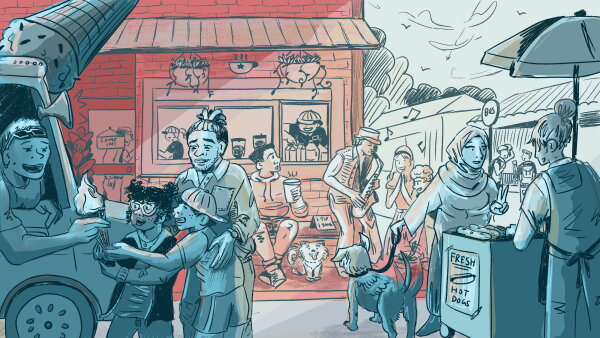
There is one, however, that’s filled with joy. A couple of years ago, correspondent Rhitu Chatterjee reported on research into the unexpected benefits of being kind to strangers — even a chance encounter benefits both the recipient of kindness and the good deed- doer.
We followed up by asking our readers to share a moment when they were kind to someone, even a stranger. As we noted in the headline: “Our readers prove [kindness is] alive and well.”
Check out more great reads from the NPR network you may have missed:
➡️ The escalating trade war between the U.S. and Canada is disrupting automotive supply chains, raising costs and causing delays. Auto parts often cross the border several times during production, and new tariffs are complicating that system. Those added costs could eventually reach car buyers.
➡️ Election officials are preparing for possible disruptions during the midterms. One official who did not have permission to speak publicly told NPR that statewide training sessions have included scenarios in which law enforcement seeks to seize ballots or election materials before results are certified. Such a seizure could complicate ballot tracking and chain of custody, though legal experts say the scenario is unlikely because a judge would have to approve it
➡️ The latest outbreak of Ebola in the Democratic Republic of the Congo is disproportionately impacting children, whose immune systems are less developed. While children have made up 1 in 4 confirmed cases in this outbreak, they represent 1 in 3 overall deaths. The region's healthcare system is already struggling to keep up with regularly treating children suffering from malnutrition and outbreaks of malaria and measles. The ongoing conflict, which is being impacted by cuts to foreign aid, has disrupted routine vaccinations and other essential assistance.
Newsletter continues after sponsor message
Pod Club
Hulton Archive/Getty Images
Thanks for tuning in last week to the It’s Been a Minute episode featuring former Bon Appétit editor Carla Lalli. In this episode, she discussed her cookbook and memoir,Food is a Feeling, which is a collection of stories and recipes that helped her navigate the end to her decades-long marriage. NPR listener Krissi Roland said she enjoyed this episode about mindful eating. She is a widow with two children who experienced the loss of their father at a young age. “The dishes we made helped us as a family, our favorite is salmon soup. This was and still is a dish we come back to often in times of stress for comfort,” Roland said.
Today, we’re listening to an episode of Throughlineabout a renewed interest in Luddites amid the rise of AI. The original Luddites were workers fighting to save their jobs from being replaced by machines. In this episode, the podcast takes on a listener's question: What can the 19th-century Luddite rebellion teach us about technology and human agency? Listen to the episode or read the transcript.
Love podcasts? For handpicked episode recommendations every week, check out Pod Club — a newsletter written FOR podcast fans BY podcast fans. Subscribe here!
And, on this week's episode of The Sunday Story from Up First, host Ayesha Rascoe speaks to WBUR’s Deborah Becker, who covered the murder case of Lindsay Clancy. They discuss why the trial ended without a verdict and the public's interest in postpartum psychosis.
What rhymes with 'city?'
NPR
It's time for the Sunday Puzzle! For this week’s on-air challenge, NPR Puzzlemaster Will Shortz will give rhymes for some well-known cities. Every answer will then name the cities. For example, if you are given the word “cargo,” the answer would be “Fargo,” of North Dakota. Test your skills here. Check the page later to hear the answers, or catch them live on Weekend Edition at 8:41 a.m. ET.
This week's online challenge also comes from NPR’s Puzzlemaster. Name a product in seven letters that people buy in a shop that typically sells only this product. The last four letters backward spell what people often do to this product. Rearrange the first three letters to spell what people then do to this product. What product is it? Submit your answer here, and you could win a chance to play next Sunday's on-air puzzle.
Listen to your local NPR station.
Visit NPR.org to hear live radio from WAMU 88.5 (edit station).
You received this message because you're subscribed to Up First emails. This email was sent by National Public Radio, Inc., 1111 North Capitol Street NE, Washington, DC 20002